In a region hungry for industrial transformation, one man is quietly forging a revolution. Sanjay Awasthi, the reclusive billionaire behind Tembo Steels, has built Uganda’s most advanced and environmentally conscious steel empire. With innovation, vertical integration, and a soft-spoken resolve, he’s proving that you don’t need noise to build a nation—just vision, steel, and heart.
A quiet revolution is underway in the heart of Iganga District in eastern Uganda. At the centre of it stands a man who rarely seeks the spotlight but whose influence has reshaped an entire sector. Sanjay Awasthi, the Chairman and Founder of Tembo Steels Uganda Ltd, is the billionaire industrialist leading Uganda’s green steel transformation.
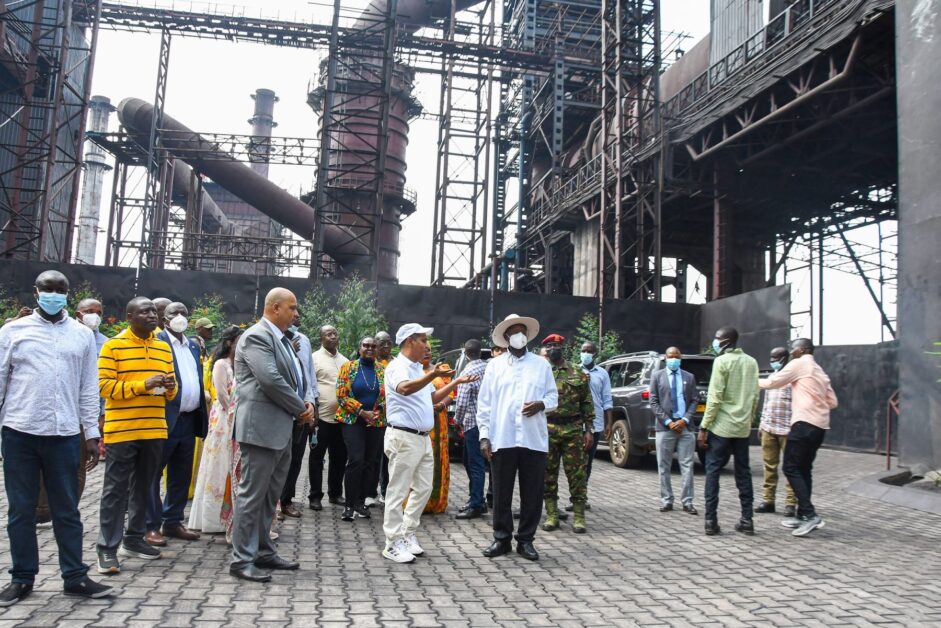
This April, President Yoweri Museveni commissioned Tembo’s second Direct Reduced Iron (DRI) Plant in Kasolo Village, a 250,000-ton-per-year (TPY) facility that significantly enhances Uganda’s industrial capacity and Tembo’s national and regional dominance. Praising Awasthi for his pioneering vision, President Museveni remarked: “He came, did his research, and chose Uganda. Now he has transformed the steel industry.”
The industrialist is tapping into the global steel market, valued at approximately USD 1.47 trillion in 2023, and is projected to grow at a robust rate of 5.3% annually through 2030, as indicated in the latest company corporate profile.
This growth is fueled by increased investment in construction, where steel’s strength, aesthetic appeal, and full recyclability make it essential for residential and commercial projects alike.
The rise of a steel magnate
Sanjay Awasthi’s story is one of deliberate, determined growth. Originally from North India, he began his career in scrap melting with a company called Vaibhav Castings. Even then, his focus on efficiency and innovation stood out. By 1996, his plant was producing at nearly double the regional benchmark, thanks to his adoption of advanced Inductotherm technology.
In 2000, seeking greater opportunity, he explored markets across Africa—Kenya, Tanzania, Ethiopia, Nigeria—before finally settling Uganda. “We needed, good people, and political stability,” he recalled. In 2001, he laid the foundation for Tembo Steel Mills in Lugazi, and by 2002, production had begun. His early success quickly became a launchpad for deeper vertical integration and product diversification.
From the outset, Awasthi set out to do what few in the region dared: full vertical integration. Most steel companies in Uganda operate by importing semi-finished products. Awasthi rejected this model. “There are two types of manufacturers. The ones who import 95% of the material and call it local. And those who start from rock. We are the latter,” he told CEO East Africa Magazine in a January 2024 interview.
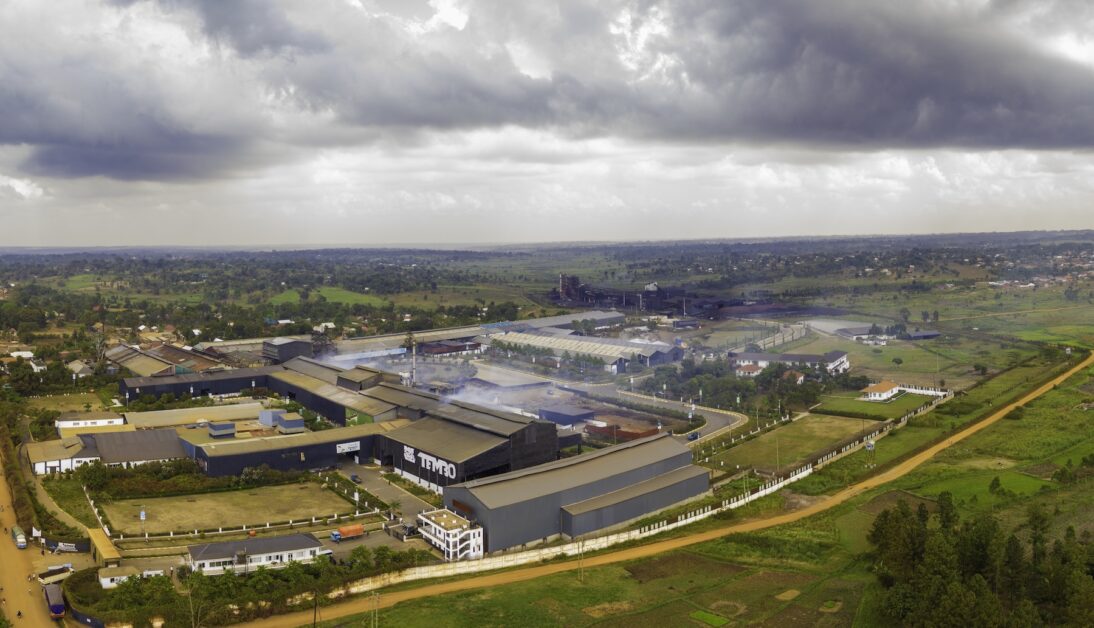
Over two decades, Awasthi and his team have developed Uganda’s most technologically advanced and diversified steel complex. Tembo is the only company in Africa that converts all four major steel verticals from TMT rebars, hot-rolled coils (HRC), structural sections to wire rods, using a fully integrated primary steelmaking process.
Each innovation along the way has marked a milestone for Uganda’s industrial progress. In 2004, Tembo commissioned East Africa’s first structured mill in Iganga District. In 2005, it installed the world’s first Argon Oxygen Decarburizer (AOD) capable of converting cast iron into low-carbon steel—solving a long-standing metallurgical challenge.
In 2006, Tembo initiated hot-rolled sheets (HRC), and has since maintained a number one spot as the only primary steel producer of HRC in the region.
“All other companies still import HRC from various destinations of the world, including China, India, Japan, Indonesia, and many other countries. There are just about two countries in Africa that make hot-rolled sheets i.e. South Africa and Egypt. Not even Nigeria or Ethiopia,” he says.
By 2012, Tembo had introduced East Africa’s first 10-stand block mill for wire rods, allowing production of critical secondary and tertiary products like nails, barbed wire, binding wire, and more.
The 2018 rollout of ultra-thin hot-rolled sheets (as thin as 0.7mm) put Uganda on the global steel innovation map. “These sheets are globally unmatched in continuous rolling technology and are used for various structural and light fabrication applications. “It was an innovation done right here in Uganda. No one in the world has done this,” Awasthi emphasised.
Green Steel
Tembo’s recent milestone—the 250K TPY DRI Plant in Iganga—is a testament to Awasthi’s environmental foresight. Using Uganda’s high-purity iron ore (70% purity) from Kabale and powered by hydropower from the Bujagali Dam, the plant achieves up to 80% fewer carbon emissions compared to traditional blast furnace methods.
Tembo’s DRI-Electric Furnace route is now a model for low-emission steelmaking. It eliminates the need for billet reheating, uses a compact layout for energy efficiency, and integrates direct rolling to reduce waste. Globally, only 7% of steel is currently made via the DRI route, but Tembo is already ahead.
“Green steel should not be an option; it should be a compulsion,” Awasthi declares. Tembo’s integrated complex has cut emissions by up to 70%, planted millions of trees around its factories, and reduced energy consumption with innovations like biomass scrap preheating and smart automation. This is not only a strategic advantage but a significant contribution to Uganda’s climate and energy transition goals.
 Ruparelia Foundation to Hold Free Eye Camp in Bukedea in Honour of Rajiv Ruparelia
1.8 Million Tonnes and Rolling
With production capacity now at 1.8 million tonnes annually, Tembo is by far Uganda’s largest steelmaker. The next competitor trails far behind at just 300,000 tonnes—and not in primary steel. Tembo exports to Kenya, Tanzania, Rwanda, DRC, and Burundi, contributing significantly to Uganda’s foreign exchange and reducing dependency on Chinese and Indian imports.
This dominant position is backed by its philosophy of zero importation of physical steel. Everything—from iron ore to billets to finished product—is processed within Uganda. Awasthi believes that this model is what makes Tembo a true industrial anchor. “We are 100% import substitution. There is no other company in Uganda that can say that,” he asserts.
In 2025, Tembo is not only the largest in Uganda but among the top three in all of Africa when measured by integrated verticals and installed capacity.
More Than Steel
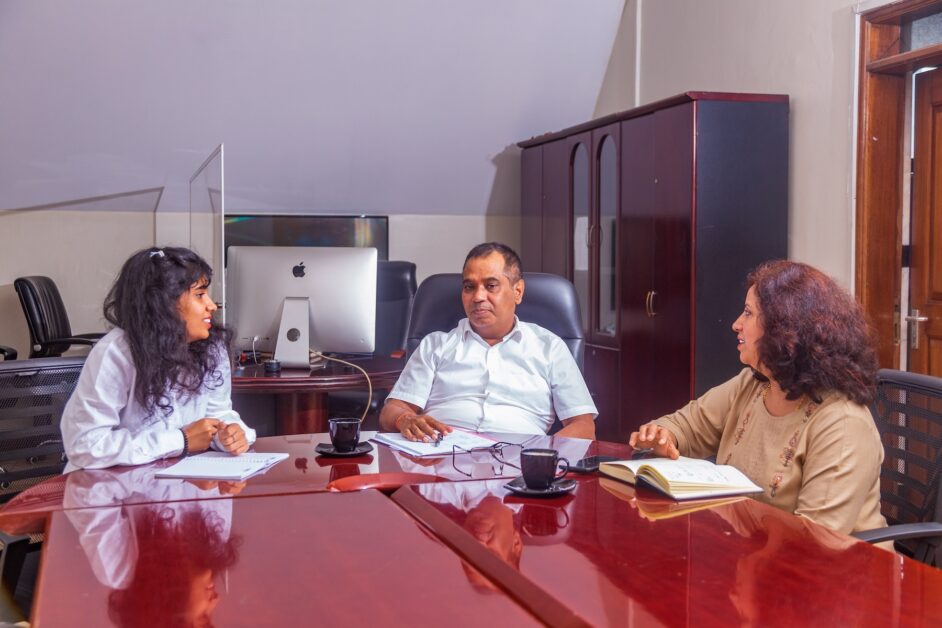
Beyond steel, Awasthi is a family man and a humble entrepreneur. “Steel drives me,” he says. But he is also passionate about cooking, gardening, and exploring Uganda’s natural beauty.
His daughter, a recent graduate from St. Andrews in the UK, is involved in the business, as are his wife and son. He speaks with quiet pride of his family’s contributions and their role in ensuring business continuity and future growth.
His management philosophy is rooted in efficiency, productivity, and delegation. “If you can delegate it, delegate it. Don’t let stress overtake you,” he says. He credits his success to continuous learning and staying “hungry and foolish,” echoing Steve Jobs.
Awasthi is also an admirer of President Museveni, whom he calls a personal inspiration. “At 80, he works harder than many of us. His energy is unmatched,” Awasthi says. It’s a sentiment that mirrors the President’s own praise for Tembo and its founder.
A National Asset and Regional Powerhouse
Tembo’s success is not just industrial—it’s national. President Museveni has promised to protect Tembo and other local manufacturers from unfair competition through import taxes on foreign steel. Tembo, which sources all raw materials locally and completes the entire value chain domestically, is exactly the type of business Uganda wants to promote.
The President emphasised the role of Tembo in meeting Uganda’s steel needs for large infrastructure projects—dams, the Standard Gauge Railway, and modern commercial and residential buildings. “We have steel factories in Uganda, yes, but they recycle old scrap—old cars and tanks of Idi Amin. Those products are okay for small buildings, but not for big infrastructure,” Museveni said. “Tembo is the only one making real, new steel—from rock.”
Tembo’s impact extends beyond industrial policy. The company has created over one million jobs directly and indirectly, significantly influencing Uganda’s employment landscape. It has revitalised economic activity in Busoga and continues to inspire similar investments across the country.
Though rarely in the public eye, Sanjay Awasthi’s legacy is visible in every steel beam, every bridge, and every building made stronger by Tembo steel.
The Softer Side of a Steel Billionaire
Despite being a titan of industry, Sanjay Awasthi’s demeanour is anything but abrasive. Beneath the hard-edged world of furnaces, converters, and wire mills lies a man who finds equal joy in cooking, gardening, and travelling—activities that bring balance to his otherwise high-pressure executive life.
“Steel drives me. Steel is the passion that drives me—other than cooking and gardening,” Awasthi shared, his eyes lighting up not just at talk of innovation, but of spice blends and blooming flowers.
Far from the boardroom, Awasthi is an introvert who cherishes quiet time at home and scenic road trips across Uganda, which he now proudly calls home. “I’ve been to many places around Uganda—Queen Elizabeth National Park, Kabale… But Kabale is the most beautiful. No wonder it’s called the Switzerland of Africa,” he says fondly.
Even as he leads a business producing 1.8 million tonnes of steel annually, Awasthi ensures he is in bed by 10:30 PM, sleeping “like a baby.” His secret? Delegation, peace of mind, and embracing the small joys that soften the edges of a steel-forged life.