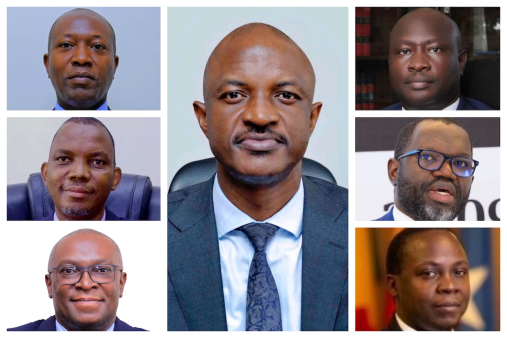
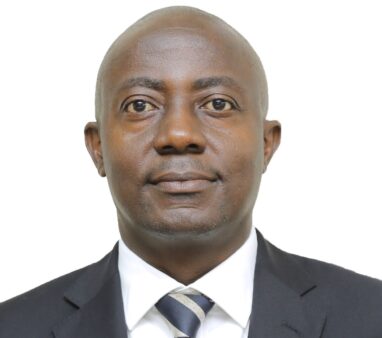
The financial corridors of Uganda have been rocked by an unfolding scandal involving the alleged theft of UGX 62 billion ($16.8 million) from the Bank of Uganda. At the center of the storm is Lawrence Semakula, the Accountant General, who, along with seven other officials from the Ministry of Finance and the central bank, has been taken into custody.
Authorities have linked the missing funds to two questionable transactions. The first involved $6.134 million, which was mistakenly sent to a Japanese company, Road Way Company Limited, on September 12, 2024, instead of its intended recipient, the World Bank. The second involved a larger sum of $8.596 million, which was supposed to go to the African Development Fund but was also diverted to Japan on September 20, 2024.
Investigations are currently underway at Nateete Police Station and Kira Division Police, with authorities working to uncover how these substantial amounts vanished and who precisely is responsible. While official statements remain scarce, the arrests have ignited public concern over financial management within government institutions.
But who is Lawrence Semakula, the man now entangled in one of Uganda’s most significant financial scandals in recent history?
The Rise of Lawrence Semakula
For over two decades, Lawrence Semakula has been a key figure in Uganda’s public financial management. His career began in 2001 when he joined the Ministry of Finance, Planning, and Economic Development as an Assistant Commissioner of Accounts, overseeing foreign funds. By 2003, he had risen to the position of Commissioner of Accounts, heading the Financial Management Services (FMS) department under the Accountant General’s Office. His role in the department involved spearheading the design, development, and implementation of government financial management systems.
In 2013, he was appointed acting Accountant General, a position that was confirmed a year later in 2014. Between 2017 and 2019, he also chaired the East and Southern African Association of Accountants General (ESAAG), reflecting his influence in regional financial management.
Prior to his government service, Semakula spent 11 years at Nile Hotel International, where he joined as a Financial Accountant in 1990. His meteoric rise continued when he was promoted to Acting Chief Accountant in 1993, later taking on the role of Financial Controller in 1995.
A Stellar Academic and Professional Record
 After 29 Years in Court, Government Ordered to Pay UGX 512.9 Million in Kamuli Land Dispute
Semakula’s credentials are formidable. He is a Fellow of the Association of Chartered Certified Accountants (ACCA, UK) and a member of the Institute of Certified Public Accountants of Uganda. His academic background includes an MBA from Heriot-Watt University – Edinburgh Business School and a Bachelor’s degree in Commerce (Accounting) from Makerere University.
In addition to his formal education, Semakula has undergone specialized training in:
- Debt Management at Harvard University Business School
- Public Expenditure Management & Public Policy Management at the Joint Africa Institute
- Strategic Policy Planning at the International Centre for Parliamentary Studies (UK)
His expertise has made him a key player in Uganda’s Public Financial Management (PFM) reform efforts, where he has chaired major projects such as:
- The Integrated Financial Management System (IFMS) workgroup
- The implementation of Electronic Funds Transfer systems
- The Treasury Single Account (TSA) framework
- Salary decentralisation reforms
A Fall from Grace?
Until now, Semakula was regarded as an architect of Uganda’s financial accountability reforms. His current role as Accountant General saw him manage Treasury Operations, oversee the Petroleum Fund, and serve as Deputy National Authorizing Officer for European Union (EU) Funds.
However, with his recent arrest, his once-sterling reputation faces unprecedented scrutiny. Was he knowingly involved in the fraudulent transactions, or is he a victim of systemic weaknesses within Uganda’s financial oversight structures?
As investigations progress, Ugandans wait with bated breath to see whether this scandal is an isolated incident or just the tip of a deeper corruption crisis within the government’s financial sector.
What are your thoughts on this shocking revelation? Share your opinions in the comments, and stay tuned for more updates on this developing story.