QCIL facilities, leadership, and scientists working to produce affordable, high-quality medicines in Uganda — showcasing locally manufactured lifesaving treatments, modern laboratories, reliable supply chains, and the growth of Africa’s pharmaceutical capacity.
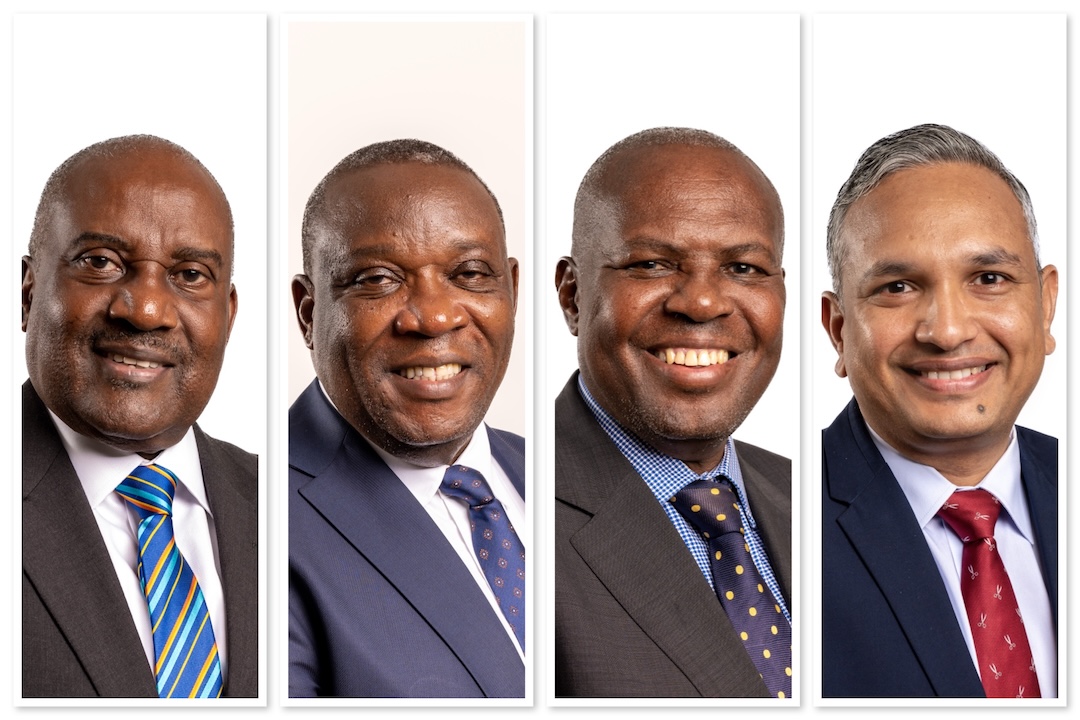
QCIL’s senior leadership team — Emmanuel Katongole, Chairman & Co-founder; Frederick Mutebi Kitaka, Founder & Director (Finance); George Baguma, Founder & Director and Ajay Kumar Pal, current Chief Executive Officer — whose collective vision has guided the transition from a small life-sciences distributor to a regional pharmaceutical manufacturer serving patients across Africa.


But he was never born with a silver spoon in his mouth.  

By the time the young Emmanuel first saw an electric light bulb, he was already old enough to understand what it meant to be left behind.

He grew up in Buleera, a trading centre in what was then Mubende district, in present-day Mityana District, the last born of four children — one boy and three girls —  born to illiterate peasant parents. His father left for Kampala in 1966 in search of casual work and never came back — believed to have been killed in the political turmoil that followed the 1966 Kabaka Crisis. His mother, a house-help for Catholic missionaries, was suddenly alone with four children and no savings.

School was already fragile in Buleera — classes under trees, exercise books in short supply — but the real financial shock came later, when Emmanuel earned a place at the famous Namilyango College. The annual fees were UGX 650 — not UGX 650,000, just UGX 650 — and even that was beyond what his mother could afford. To keep her son in school, she sold off the family’s few goats.

“She could not raise the 650 shillings,” Emmanuel recounted to media personality Crystal Newman, “but she took that decision that I must go to school.”

The girls were not as lucky. In 1969, pressed by poverty and a culture that saw education as a boy’s privilege, his mother pulled his three sisters out of school. One fell pregnant at 15, bled to death during childbirth and was buried with the baby. The other two would later become some of Uganda’s earliest HIV/AIDS casualties. Emmanuel watched one sister waste away to less than 10 kilograms, her body hollowed by a virus for which life-prolonging treatment existed abroad — at a price nobody in Buleera could imagine.  

Those memories would stay with him long after he left the village.

At 14, Emmanuel boarded a vehicle for the first time in his life, on his way to Namilyango College. There, the world opened in a rush: electric light, indoor bathrooms, television. “It was another world,” he says. “It opened up opportunities, because you get out of this village mentality and say: this is what I’ve got to aspire to.”  

But the village never quite left him. To supplement his mother’s tiny income, he had started working as a child — boiling cassava and maize at dawn, hawking it to tea estate workers, then running to school. In hindsight, he calls it his first lesson in value addition: taking something raw, improving it and earning a margin. Years later, he would describe manufacturing in the same language — “you transform a product, change its shape or composition, and create higher value” — only this time, the product would be medicine and the value would be measured in lives extended.  

QCIL facilities, leadership, and scientists working to produce affordable, high-quality medicines in Uganda — showcasing locally manufactured lifesaving treatments, modern laboratories, reliable supply chains, and the growth of Africa’s pharmaceutical capacity.
Founders of Qcil, (L-R) Donald Martin, Emmanuel Katongole, Randal Tiernery, Francis Kitaka, George Baguma and Frederick Mutebi pose together during the formative years of the company — a team whose complementary skills, shared conviction, and willingness to bet on local manufacturing laid the groundwork for what would later become Qcil’s breakthrough into lifesaving HIV and malaria medicines.

If poverty gave him the hunger to change his destiny, education gave him the tools. A gifted mathematician, he won a place at Makerere University and, seduced by an African scholarship that actually paid students to study, chose statistics over engineering. Education, he now says, is “the equaliser” that allows a village boy and a city-born professional to sit at the same table.  

Yet even as he built a corporate career and later joined the once-mighty Sembule Group, the twin ghosts of malaria and HIV/AIDS refused to leave his story. He remembers the countless childhood fevers treated with squeezed leaves of mululuuza, a crude herbal precursor of the artemisinin-based therapies he would one day manufacture. “We would just squeeze it and take a mug,” he says. “We suffered, but we didn’t die.”  

HIV was less forgiving. Watching his sisters die without care was “so frightening, so depressing” that it etched itself into his memory. So when, years later, Emmanuel joined hands with five friends — Frederick Kitaka, George Baguma, Francis Xavier Kitaka (RIP), Donald Martin and Randall Tierney to start Quality Chemicals Limited (QCL) — the subject rarely stayed abstract for long. Each brought something different to the table: finance, science, sales, distribution, and a stubborn belief that Africans should not wait on charity to live. By the time the group began sketching ideas for a small life-sciences company in Katwe, Emmanuel was already preoccupied with what he called “neglected diseases” — the illnesses that stalk the poor but attract little commercial attention. The others recognised the pattern too. The business they were imagining was not just about margins. It was about survival.

The decision his mother took to sacrifice livestock, so her son could study, would collide, decades later, with another decision taken in the State House: President Yoweri Museveni’s insistence that Uganda confront HIV/AIDS openly, and eventually support local manufacture of antiretrovirals. Between these two choices lies the story of Qcil: a company born at the intersection of personal grief, professional preparedness and a government willing to bet on an unlikely dream.  

In the 1980s and 90s, as Emmanuel climbed from village hawker to corporate manager, Uganda’s hospitals filled with patients whose symptoms looked terrifyingly like his sister’s final days. HIV prevalence was at its highest. A generation of breadwinners was wiped out by HIV/AIDs and Malaria.

“I don’t know how many bouts of malaria I suffered as a child,” he says. “But HIV was worse. You would see someone go down to skin and bone, and there was nothing you could do.”  

For many, those years were a tragic backdrop. For Emmanuel, they were a calling. The boy who had once boiled cassava for tea pickers to earn a buck would soon find himself wrestling with questions of patents, technology transfer and global pricing. Long before luck arrived — in the form of a radical Indian scientist, a new global trade regime and a President ready to gamble on pharmaceutical manufacturing — he had already done the slow, unglamorous work of preparing: learning how economies function, mastering numbers, and never forgetting the faces of his sisters.

That is where this story really begins.

From Katwe to Luzira: six friends and a medicine gap Africa could no longer ignore

By the mid-1990s, Uganda’s veterinary supply chain had quietly collapsed.

Government, once the primary importer of livestock medicines, had pulled back under structural adjustment. Across the countryside, ticks, worms and trypanosomiasis began quietly eroding the balance sheets of farmers — and with them, rural household incomes.

It was in that vacuum that the six friends saw both need and opportunity. As Baguma remembers it: “Government was divesting itself from the importation and sale of veterinary medicines. There was that vacuum — and we started the company to bridge that gap.” 

They called it Quality Chemicals Limited (QCL) and planted it not in the polished industrial parks of Kampala, but in Katwe— the gritty workshop suburb long famous for scrap metal, welding sparks and improvised engineering.

Rent was cheap. Respect was not.

One visitor famously joked that Katwe produced only coffins and jua kali metal products. Yet the founders believed the suburb’s ingenuity was an asset — a place where people solved problems creatively, without the luxury of imported parts. They leaned into it, stocking veterinary drugs, hiring sales agents, and launching an aggressive extension program.

Baguma recalls piling into pickup trucks and driving from farm to farm: “We moved throughout the country, introducing our quality products, educating farmers — and the farmers got to take us as part of them.” 

QCIL facilities, leadership, and scientists working to produce affordable, high-quality medicines in Uganda — showcasing locally manufactured lifesaving treatments, modern laboratories, reliable supply chains, and the growth of Africa’s pharmaceutical capacity.
Industrialist and Uganda Manufacturers Association founder James Mulwana (RIP) addresses guests during the launch of KO-Net insecticide-treated mosquito nets by Quality Chemicals Limited — a landmark moment that made QCL the first company to introduce treated mosquito nets in Uganda and signaled its bold shift into directly tackling malaria and other public-health threats.

The model was simple: sell medicine, but also transfer knowledge. They audited livestock practices, trained farmers, demonstrated dosages, and built the kind of brand loyalty that consultants later gave fancy names. Out in the villages, people simply called them “the Quality people.” 

But according to Baguma, the farmers they were helping had a bigger problem than their cows.

Many arrived at the training feverish, coughing, and visibly weak. Some struggled to sit through demonstrations. Others bore lesions from Kaposi’s sarcoma, the telltale cancer linked to advanced HIV. Baguma remembers how that sight unsettled the team:

“You’d see someone attending, scratching these lesions until they bled — and sometimes our attention would get off our subject. You sympathised with this person.” 

The realisation was blunt: the people caring for their animals were themselves dying.

Quality Chemicals could keep livestock alive — only to watch families fall apart.

That is when the founders widened their mandate. First came insecticide-treated mosquito nets, rolled out under the flagship KO-Net brand: “We were the first to introduce insecticide-treated mosquito nets in this country… We wanted to protect our farmers from malaria.” 

Then came the bigger leap — human medicines.

They did not begin by knocking on Cipla’s door. First, they went to the licensed importer — the only Ugandan company legally allowed to bring Cipla’s medicines into the country. Emmanuel explained the crisis, the opportunity and their belief that treatment could be made both affordable and widely available. The man listened, shrugged, and delivered a line that would alter the course of the business:

“If you think you can do something with these drugs, go ahead. I’m not really doing much.”

That casual permission became a turning point. Quality Chemicals stepped in — organising supply chains, educating health workers, building demand and insisting that lifesaving medicines should not be a luxury. As volumes grew, the conversations shifted from mere importation to partnership. Cipla began to see in them not just a distributor, but a serious ally.

For Frederick Kitaka, the pragmatic numbers man in the group, the logic was irresistible:

“Everything starts with the numbers. If the numbers are not there, it is just a dream.”

And the numbers were brutal: tens of thousands of new infections, chronic stock-outs, and a government finally prepared to talk openly about treatment.

But the founders refused to let HIV remain only a commercial category. They helped revive the Philly Lutaaya Memorial Lectures, bringing scientists, clergy, activists and policymakers into the same room to confront stigma head-on. It was business intersecting with conscience — the understanding that medicines alone would not save lives unless shame gave way to honesty.

Still, something bothered them.

They were shipping drugs from India. Shipments delayed. Prices fluctuated. Global shortages could shut them down overnight. As Baguma puts it bluntly:

“For how long are we going to keep importing these medicines?” 

It was the question that would change everything.

QCIL facilities, leadership, and scientists working to produce affordable, high-quality medicines in Uganda — showcasing locally manufactured lifesaving treatments, modern laboratories, reliable supply chains, and the growth of Africa’s pharmaceutical capacity.
The Qcil manufacturing plant in Luzira — the first facility on the African continent to achieve WHO prequalification for antiretroviral production, and the industrial backbone of Uganda’s push to make lifesaving medicines locally rather than rely entirely on imports.

Because while Quality Chemicals had stumbled into human health almost accidentally, the founders had now seen enough to understand a deeper truth: dependence was dangerous. If Africa were always last in the queue, Africa would always bury its people first.

In Katwe, surrounded by welding sparks and cynics, a radical idea began to crystallise: What if Uganda could manufacture world-class HIV and malaria medicines — here?

The idea sounded reckless. Even their friends laughed. But by then, the six partners had tasted both the market and the mission. Their veterinary gamble had shown them distribution. Their ARV partnership had introduced them to global science. Their outreach work had forced them to confront illness not as an abstraction, but as grief.

They were not simply traders anymore. 

They were becoming unlikely industrialists. 

And then history intervened.

In India, Dr. Yusuf Hamied — the Cambridge-trained chemist who led Cipla, a company founded by his father— had just rewritten the economics of HIV treatment, promising a fixed-dose combination of three antiretrovirals for about a dollar a day, and publicly arguing that patents should never stand between the poor and survival. In Geneva, World Trade Organisation (WTO) diplomats were quietly rewriting global trade rules under Trade-Related Aspects of Intellectual Property Rights (TRIPS), narrowing access to generics even as the epidemic worsened. And in Kampala, Uganda’s President Museveni was beginning to insist that Africa should not outsource its right to live — that if treatment existed, Africans should learn to make it themselves. It was the collision of those forces — policy, science and grit — that would carry this Katwe experiment far beyond anything the six friends imagined. 

The next chapter would demand audacity on a different scale altogether.

A window opens — TRIPS, Cipla, and the race to manufacture in Africa

The turning point did not begin in Kampala.

It began with a quiet chemist in Mumbai — and a confrontation in Brussels about who deserved to live.

By the late 1990s, Dr. Yusuf Hamied, Chairman of Cipla, had already overseen a fixed-dose combination of three antiretroviral medicines — Stavudine (Bristol-Myers Squibb), Lamivudine (GlaxoSmithKline (GSK)) and Nevirapine (Boehringer Ingelheim). Bringing molecules owned by three different multinational giants into a single, affordable pill was scientific ingenuity — and political defiance.

Before that, many patients swallowed more than a dozen tablets a day, following regimens so complicated that adherence itself became a battle. Cipla’s one-tablet combination — Triomune — collapsed that burden into something people could live with, while pushing prices down to levels poor countries could finally contemplate.

In Brussels, standing before European policymakers, Hamied went further. He challenged the moral arithmetic of global drug pricing and offered Triomune to developing countries at a fraction of Western costs — arguing that patents should never stand between the poor and survival. It was not an announcement of invention. It was an act of conscience.

For Quality Chemicals, newly distributing human medicines in Uganda, Hamied’s stance felt like a rescue wrapped inside science. But beneath the hope lay a structural threat.

QCIL facilities, leadership, and scientists working to produce affordable, high-quality medicines in Uganda — showcasing locally manufactured lifesaving treatments, modern laboratories, reliable supply chains, and the growth of Africa’s pharmaceutical capacity.
In the early years of Quality Chemicals, Emmanuel Katongole addresses farmers and veterinarians during a training session on tsetse fly and tick control — part of the outreach work that first built trust in rural communities and later paved the way for the company’s move into broader public-health solutions.

Between 2002 and 2005, India and China fully acceded to the Agreement on Trade-Related Aspects of Intellectual Property Rights (TRIPS) — binding nations to enforce pharmaceutical patents. Africa had depended on India’s low-cost generics. Suddenly, that pipeline was closing.

As Frederick Kitaka remembers: “India and China would stop copying medicines that were still patented. What we had relied on — access through low-cost generics — was going away.”

The warning did not come via diplomats. It walked into Quality Chemicals’ offices in the form of Médecins Sans Frontières.

MSF explained the hard biology: viruses mutate. Resistance was inevitable. Uganda would soon require newer treatment lines — all patented. Without another plan, Africa risked sliding back to the 1990s, when medicines existed, but Africans died waiting.

Kitaka grasped the implication instantly: “People would go back to dying. The demand was there, the patients were there — but the pipeline would close.”

Then came the clause that changed everything.

Hidden inside TRIPS was a flexibility: if technology could be transferred to a Least Developed Country, that country could legally manufacture patented medicines for public-health use. To activists, it looked like a door left ajar. To Quality Chemicals, it looked like history was offering a rare invitation. 

Faced with that narrow window, the founders did something audacious. Speaking at one of their Philly Bongoley Lutaaya conferences, surrounded by clinicians, activists and policymakers, they declared that Uganda would not only import lifesaving medicines — it would manufacture them.

They had no land. No financing. No signed technology-transfer deal. But the declaration was intentional. By saying it publicly, they transformed ambition into obligation.

“We announced we were going to manufacture — before anything was on the ground,” Kitaka said. “We didn’t even have land.”

“The following day, all newspapers, all radio stations in the country were all reporting Ugandans going to manufacture antiretrovirals — even the BBC announced that we are going to produce ARVs. And this even gave us more courage.”  

“His Excellency the President… picked that from the media and said, Who are these boys who want to produce these drugs? So he invited us… We told him we needed land, power, water, market… and the President said, You have got all those.”  

For Cipla, the declaration signalled seriousness — and political gravity. Uganda was not shopping for options. It was identifying a destination. That confidence helped secure what would become decisive: first refusal on technology transfer.

Banks noticed too. What once looked like a risky pharmaceutical idea began to resemble a national industrial project. And across the public-health community, the declaration created both hope — and accountability.

“The moment we said it publicly,” Kitaka reflected, “people stopped seeing us as traders. They started seeing us as builders.”

Reenergised by these assurances, the team flew to Mumbai to meet Dr Hamied over his offer to offer technology and know-how to low-developed countries that were ready to manufacture the antiretrovirals.

They flew to Mumbai and asked. Cipla hesitated.

“These are very complex molecules,” they warned. “They cannot be manufactured in Africa.”

Emmanuel pushed back — quietly, insistently. Africa had engineers. Africa had scientists. Africa had will. If India had built capacity from nothing, Uganda could, too. As Kitaka recalls, Emmanuel’s argument to Cipla was disarmingly simple but firm:

“With all due respect… the good things in India are very good, but the poor people are more than I’ve seen in Africa. So what is so special here that we can’t do in Uganda? Give us a few scientists, help us put up the plant — and over time, our people will gain experience.”

Negotiations stretched for months. Meanwhile, Tanzania offered incentives; Rwanda prepared infrastructure. The race was not to host a factory — but to secure a future supply of lifesaving drugs.

Uganda held one advantage.

President Yoweri Museveni understood the epidemiology — and the politics. He had supported early HIV trials and knew donor generosity could shift overnight. When the founders presented the TRIPS logic, the argument landed.

“In order to continue what we had started, these medicines had to be manufactured in Africa,” Kitaka told him.

Museveni agreed — but insisted it be private-sector led: disciplined, bankable, accountable. The founders left State House encouraged — and afraid.

QCIL facilities, leadership, and scientists working to produce affordable, high-quality medicines in Uganda — showcasing locally manufactured lifesaving treatments, modern laboratories, reliable supply chains, and the growth of Africa’s pharmaceutical capacity.

They now needed three things they did not yet have: technology, financing, and a guaranteed buyer.

History delivered the first. Because Uganda had already proven reliable in Cipla collaborations, Hamied offered Kampala first refusal. If Uganda failed, Rwanda or Tanzania would proceed. If Uganda succeeded, it would become the first African producer of patented ARVs under TRIPS flexibilities.

Preparedness did the rest.

Quality Chemicals brought distribution data and credibility; the government brought patient numbers and urgency. Together, they convinced sceptics that medicine for the poor could still be bankable.

Then came the improbable breakthrough:

Barclays agreed to finance the plant, unsecured.

“When I saw the term sheet — 17.6 million dollars — I couldn’t believe it,” Kitaka recalled. “It was the best moment of my life.”

The founders now held the three building blocks of any industrial revolution: technology, through Cipla; policy cover, through TRIPS; and guaranteed demand, through government off-take commitments. 

The next challenge would be harder still: building a factory worthy of that promise — fast enough to save lives.

From potato field to world-class plant — building trust molecule by molecule

With commitments for land, utilities and eventual government purchases if standards were met, construction began in Luzira for what would now be known as the Cipla Quality Chemical Industries Limited (CiplaQCIL). The site was part of a former government of Uganda prison farm — later cleared, serviced and converted for industrial use. 

Cipla (EU) Limited and its affiliate Meditab Holdings Limited together held a majority stake of approximately 51.18% of the ordinary shares in Cipla Quality Chemical Industries Limited.  

At peak, over 50 contractors worked concurrently — civil engineers, electricians, HVAC specialists and equipment installers. Deliveries were sequenced to arrive only when needed because there was limited storage on site.

Test runs started roughly two and a half years after ground-breaking. The National Drug Authority inspected and approved. CiplaQCIL then underwent the World Health Organisation (WHO) prequalification process — the quality benchmark used by major global procurers. The plant passed.

“We were the first plant on the African continent to pass those standards,” said George Baguma.

WHO prequalification enabled participation in multilateral tenders and signalled that processes met internationally accepted controls.

A critical phase of the project was the people. CiplaQCIL recruited chemists, pharmacists, microbiologists, engineers and quality staff early, pairing them with consultants during construction and commissioning.

“We recruited our people while the consultants were still constructing,” Baguma said. “They watched everything, and now they run the plant fully.”

The facility has subsequently hosted regulators and students from multiple African countries for technical attachments and training. 

Availability of key malaria and HIV medicines improved through national medical supply chains. Additional production lines and laboratories were added, and digital systems such as SAP were introduced to integrate quality and operations. 

Inspectors from WHO, the National Drug Authority and other regional regulatory agencies conduct periodic inspections as part of ongoing compliance.

In 2018, CiplaQCIL listed on the Uganda Securities Exchange at an estimated valuation of around USD 255 million, becoming Uganda’s first publicly listed pharmaceutical manufacturer.

QCIL facilities, leadership, and scientists working to produce affordable, high-quality medicines in Uganda — showcasing locally manufactured lifesaving treatments, modern laboratories, reliable supply chains, and the growth of Africa’s pharmaceutical capacity.
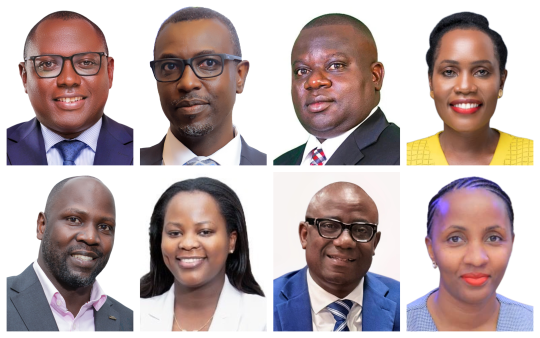
Qcil’s Board of Directors joins senior government leaders – Minister of Health Dr Jane Ruth Aceng (left) and Rt Hon. Thomas Tayebwa, the Deputy Speaker of Parliament (3rd left), in a cake-cutting ceremony to mark the company’s 20th anniversary — a milestone celebrating two decades of building local pharmaceutical capacity and expanding access to lifesaving medicines.

Ownership has since evolved. Cipla, which previously held a controlling stake, exited majority ownership, and Africa Capitalworks became the principal shareholder. Today, Africa Capitalworks SSA 3 holds 51.18% of QCIL, followed by Amistad Limited (11.51%), Africa Capitalworks SSA 1 (11.15%), the Government Employees Pension Fund (8.54%), and the National Social Security Fund of Uganda (7.38%). The founders — Emmanuel Katongole (2.79%), Fredrick Mutebi Kitaka (2.79%), and George Baguma (2.79%) — retain minority stakes, with smaller institutional and individual investors holding the balance. Following these changes, the business re-registered under its original name, Quality Chemical Industries Limited (Qcil).

Separately, three founders reacquired a majority stake in the original Quality Chemicals Limited (QCL).

Qcil today operates as a regulated, audited pharmaceutical manufacturer supplying multiple African markets and participating in competitive tender systems. 

Qcil today manufactures approximately 1.4 billion tablets annually. Its portfolio spans about 25 therapeutic categories, and its products are registered in more than 30 African markets. The company employs over 580 staff and has trained more than 900 interns and graduate trainees to date.

Scaling the promise — second phase financing, regional expansion, and a CEO thinking beyond Uganda

Scale has a way of changing the questions a company asks itself. 

For Qcil, the early years were about legitimacy: Can Uganda manufacture to global standards? Will regulators trust African quality? Will donors buy?

Today, those questions feel answered.

The new anxiety is different — and sharper: What happens if the next crisis arrives, and Africa is still not making enough?

COVID-19 made that question brutally real. In 2020, as countries hoarded medicine and halted exports, Luzira’s production lines became something close to strategic infrastructure. Uganda did not panic — but neither did Qcil forget how close the continent came to being cut off.

Phase Two grew out of that lesson. Not expansion for prestige, but expansion as risk-management.

In 2025, Qcil secured a USD 36 million facility from Stanbic Bank Uganda to build a second WHO-compliant factory on the same Luzira campus. The new plant is designed to lift annual production from 1.4 billion to roughly 2.4 billion tablets, while adding capabilities Africa has traditionally imported — tuberculosis medicines, sterile injectables, hydroxyurea for sickle-cell disease, and newer long-acting HIV formulations.

Chairman Emmanuel Katongole described it as capacity matched to need:

“This investment enables Qcil to scale its annual manufacturing capacity from 1.4 billion to 2.4 billion tablets, while introducing specialised production lines for TB treatments, injectables and other innovative products. We are positioning ourselves to meet increasing regional demand and reduce dependency on imported medicine.”

For CEO Ajay Kumar Pal, the project is as much about capability as capacity. He explains the shift as building two engines at once: making more medicine locally while deepening the science behind it.

“The idea is how we build more capacity so that import substitution can grow to 50–60%. And the second aspect is to prove the world wrong — that Africa can produce best-in-class products. The second phase has a capability element: new therapies, new technology, injectables, and research done here.”

Tuberculosis sits at the centre of that decision. East Africa records hundreds of thousands of TB cases each year, yet has had no domestic source of TB medicines. The second plant changes that.

“The new factory will enable specialised production for TB treatment, making Qcil the only TB medicine manufacturer in the region,” Ajay noted.

The same thinking drove the inclusion of hydroxyurea for sickle-cell disease — a therapy that too often arrives late or expensively. And with HIV, Qcil is pivoting toward long-acting regimens designed to reduce pill burden and improve adherence.

“We are solving for tuberculosis, adding long-acting treatments, and building a pipeline that will increasingly be researched here,” Ajay told Crystal Newman. “It isn’t aspirational — it’s a timeline.”

Injectables represent the most technically demanding leap. They require sterile environments, precision validation and deep regulatory scrutiny — precisely why Africa imports so many of them. Bringing that capability on-site, Ajay argues, is part resilience, part confidence.

QCIL facilities, leadership, and scientists working to produce affordable, high-quality medicines in Uganda — showcasing locally manufactured lifesaving treatments, modern laboratories, reliable supply chains, and the growth of Africa’s pharmaceutical capacity.
Qcil scientists at work inside the company’s quality-control and research laboratories — part of a growing cadre of Ugandan and African professionals who are developing, testing, and safeguarding locally manufactured medicines to global standards.

Alongside manufacturing capacity, Phase Two deliberately invests in research and development — including the long-term ambition to take promising African plant compounds from laboratory extraction all the way to finished, standardised medicines. Ajay sees this as the next frontier: building the capability to isolate active ingredients, test them rigorously, and develop dosage forms that meet global regulatory standards.

“As part of the second phase, we are bringing R&D capability into Uganda. Over time, we should be able to work from the molecule — whether synthetic or from plants — and convert it into a product developed here,” he told Crystal Newman. “That is how Africa participates in innovation, not just in consumption.”

The programme is expected to rely on partnerships with universities and public research institutions, creating a pipeline where local scientists can move from discovery to formulation, rather than exporting raw materials and importing finished drugs back at a premium.

Meanwhile, the economics strengthened the case. Regional manufacturers still supply only a small fraction of East Africa’s ARV and malaria needs. The founders recognised a familiar pattern: high burden, external dependence, and exposure to global shocks.

Former CFO Fredrick Kitaka sees Phase Two as the logical continuation of the TRIPS opportunity that launched QCIL in the first place:

“Once technology exists on the continent, it should not sit behind one gate. Scale is how you protect access.”

Stanbic called the financing “catalytic.” Within QCIL, it is seen as continuity and insurance — redundancy built into lines that matter most when a crisis arrives. With African capital now in the shareholder structure, discussions have begun about eventually replicating capacity in high-burden markets such as Ethiopia and Nigeria, where governments are increasingly open to local manufacturing partnerships. 

Phase Two, then, is not simply a growth story. It is a safeguard, designed so that what began with luck, preparedness and political backing now rests on durable, domestic capacity. If the plan holds — with research labs active, injectable lines validated and TB medicines rolling off the belts — Qcil will have moved from proving Uganda can manufacture, to ensuring Africa has options when the world tightens again. 

Luck, preparation, and the politics of care — what Qcil changed, and what it still hasn’t

History is rarely shaped by a single decision. 

A chemist in Mumbai refused to accept that lifesaving drugs must be unaffordable. Activists read the fine print of a trade treaty and found room for access. A Ugandan president chose openness over denial. Six friends in Katwe refused to believe Africa could only import. A banker assessed risk differently. And, years earlier in Buleera, a mother sold her last goats so her son could stay in school.

None of those acts alone would have built a factory. Qcil exists because those choices converged. Together, they extended and are extending lives.

The founders — Emmanuel Katongole, Fredrick Mutebi Kitaka, George Baguma and Ajay Kumar Pal, the CEO— are clear that none of this was guaranteed. TRIPS might have offered no flexibility. Cipla might have declined technology transfer. The government could have refused off-take guarantees. Banks might have walked away. Regulators might have said no. At several points, the project rested more on probability than certainty.

That is where preparedness mattered.

QCIL facilities, leadership, and scientists working to produce affordable, high-quality medicines in Uganda — showcasing locally manufactured lifesaving treatments, modern laboratories, reliable supply chains, and the growth of Africa’s pharmaceutical capacity.
Board and Directors of Qcil join Ugandan Parliament Deputy Speaker, Rt. Hon. Thomas Tayebwa (3rd left) and Health Minister Dr Ruth Achieng (2nd left) to groundbreak the company’s expansion project — a milestone signalling Phase Two of investment, increased manufacturing capacity, and a stronger push for medicine self-reliance across the region.

The team understood distribution before manufacturing. They had data, credibility and relationships. They could model demand and walk into State House and boardrooms in India with a business case — not a wish. So when opportunity appeared, narrow and contested, they were ready to move.

The final ingredient was political — not partisan politics, but the decision to treat health as infrastructure: providing land, underwriting demand, empowering technocrats and standing firm when sceptics doubted world-class chemistry could happen in Luzira.

In that sense, Qcil became an essay on the politics of care — what happens when a state decides survival should not depend on geography. It also proved that industrial stories are never purely technical. They are moral arguments expressed in concrete and steel.

And yet, the work remains unfinished.

Africa still imports most of its medicines. Local manufacturing covers only fragments of the need. Financing remains inconsistent. Procurement systems often reward the cheapest pill rather than the most resilient supply chain. Too much science still happens elsewhere — arriving in Africa only after others have taken their share.

Qcil has changed the narrative. It has not yet changed the system. 

The next decade will test whether Phase Two can move Uganda and the continent from proof-of-concept to norm and increased self-reliability and whether regulators can keep pace with innovation that originates at home.

For Emmanuel, the stakes are personal. Success is measured in whether someone’s sister now survives a diagnosis that once meant death — whether a child in a village clinic can take locally made medicine and grow up to design better ones.

The boy who sold boiled cassava now discusses molecules and equity structures — not because fortune smiled, but because preparation met opportunity, and because a government chose to care.

In the end, Qcil is neither a miracle nor an accident. It shows that when science, investment and policy face the same direction, countries can build rather than import their future. Sometimes the most powerful infrastructure is not a road or a dam, but the quiet capacity to keep citizens alive — even when the world looks away.

The question ahead is not whether Qcil will continue. It is whether Africa will treat what began in a potato field as precedent — not exception.

The next crisis will not ask if the continent learned the lesson. It will simply test whether it prepared enough.

About the Author

Muhereza Kyamutetera is the Executive Editor of CEO East Africa Magazine. I am a travel enthusiast and the Experiences & Destinations Marketing Manager at EDXTravel. Extremely Ugandaholic. Ask me about #1000Reasons2ExploreUganda and how to Take Your Place In The African Sun.

beylikdüzü escort