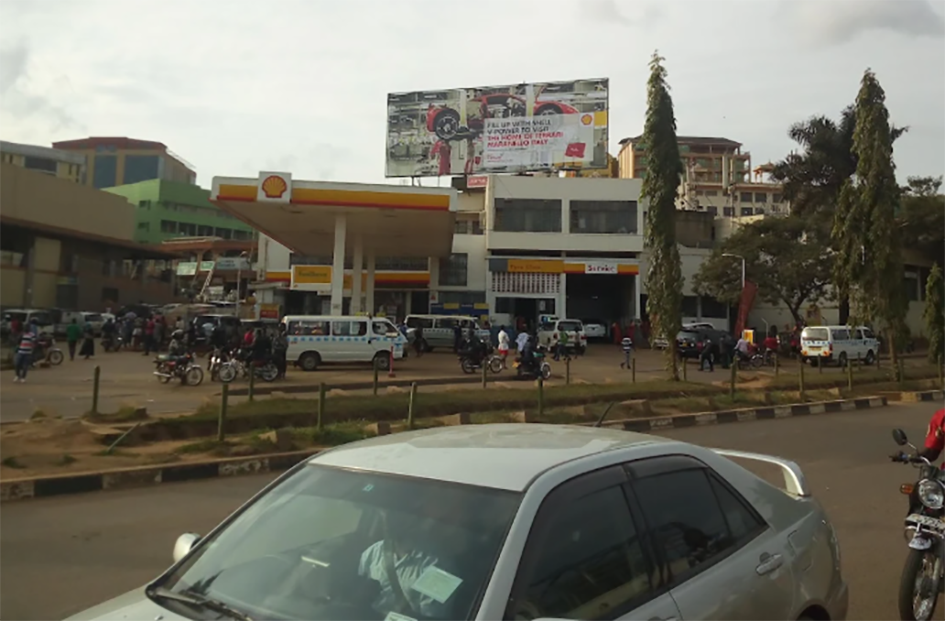
Vivo Energy has put two of its prime downtown Kampala Shell service stations up for sale.
The stations will be sold on a “where is, as is” basis, which signals a shift in operations at some of Shell’s most visible and long-standing fuel refilling sites in the city centre.
The “where-is, as-is,” arrangement gives the new owners the option of continuing to operate the stations as automotive fuel retail stations or redeveloping them for broader commercial use.
In a notice published Monday, Vivo indicated that Shell Clock Tower on Entebbe Road and Shell South Street, two stations located in the heart of Kampala’s central business district, would be sold through an open bidding process.
The decision comes despite earlier efforts by the company to revitalise operations at one of the sites.
In 2023, Vivo Energy invited experienced business managers to apply to operate and turn around Shell Clock Tower under a dealer-operator arrangement.
A notice issued at the time required applicants to demonstrate strong business management experience and commitment to invest at least UGX800 million into the station’s operations.
Inquiries about the plan sale had remained unanswered by press time. We could also not readily get the value of the stations being considered for sale and the reasons behind the decision.
However, sources familiar with the matter say the decision to dispose of the stations reflects deeper operational challenges linked to the changing dynamics of downtown Kampala.
Sources cite severe congestion in the city centre which has made it increasingly difficult for the two stations to operate efficiently or profitably.
Within the same location, there are two other filling stations, both operated by TotalEnergies.
 How dfcu Bank Helped Agnes Mbabazi Turn Agrifarm Into a Ugandan Agribusiness Force
However, heavy traffic, limited access for vehicles, and the shrinking space for fuel retail activities in the central business district have significantly reduced the commercial viability of fuel stations in the area and the larger part of the Kampala Central Business District.
“Downtown Kampala has become too congested for petrol station operations to make business sense anymore,” one source familiar with the discussions said, noting that fuel stations require easy vehicle entry and exit as well as adequate forecourt space to sustain volumes.
Beyond congestion concerns, insiders say the disposal is also part of a broader portfolio strategy by Vivo Energy, in which the company is repositioning its retail network through an asset-light model by reducing direct ownership of prime properties while continuing to operate through dealer or partnership arrangements.
Shell operates more than 120 filling stations across the country, the majority of which are operated through the dealer-owner model.
The move is also understood to be part of a portfolio optimisation strategy, allowing the company to unlock value from high-value land in central Kampala whose real estate value now exceeds its fuel retail potential.
People familiar with the matter, also point to capital mobilisation, in which funds from such sales could support the development and expansion of newer service stations in Kampala’s suburbs and fast-growing urban corridors, where traffic flows and space allow for larger modern fuel and convenience retail outlets.
Vivo also sees redevelopment potential in the prime city properties, which it highlights in the notice as suitable for retail or mixed-use commercial development.
The divestment aligns with the company’s broader shift toward dealer-owned or partner-operated stations, a model increasingly common in the fuel retail industry as companies focus on supply, branding and fuel distribution rather than property ownership.
The two properties are strategically located in Kampala’s central business district and are surrounded by established commercial developments with strong road connectivity and infrastructure.
The sale marks a significant shift for two of Kampala’s long-standing Shell service stations, whose locations in the centre of the city once benefited from high traffic volumes but now face the realities of an increasingly congested urban core.