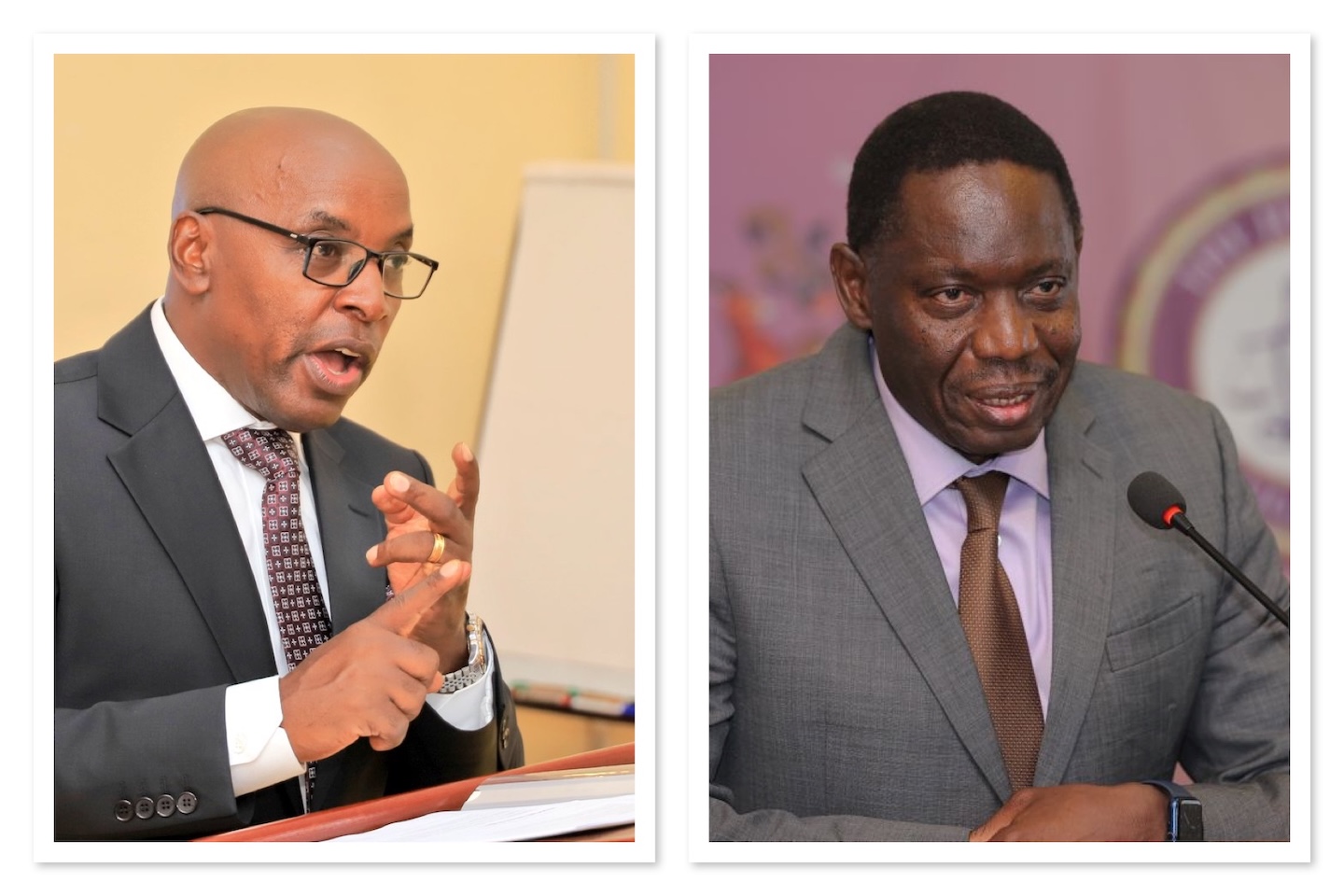
At least UGX 3.5 trillion is currently locked in unresolved commercial disputes within Uganda’s court system—capital that cannot be reinvested, circulated, or deployed productively in the economy. That stark reality framed a powerful and unusually aligned message from Chief Justice Dr Flavian Zeija and Bank of Uganda Governor Dr Michael Atingi-Ego, as both leaders called for an urgent shift toward Alternative Dispute Resolution (ADR) as a tool to unlock economic activity and restore efficiency in the financial system.
Speaking at the opening of the Judicial Officers’ Colloquium on ADR in Commercial Dispute Resolution at Serena Hotel, Kigo, Chief Justice Zeija did not mince words about the scale of the problem or its implications. “Across the Commercial, Land, Civil, and Family Divisions of our courts, substantial sums of money remain locked in disputes,” he said, adding that within the Commercial Division alone, “the monetary value of the total pending caseload is estimated at approximately UGX 3.5 trillion as of February 2026.”
For the Chief Justice, this is not merely a judicial backlog—it is an economic bottleneck. “These represent frozen capital that cannot be reinvested, circulated, or utilised productively within the economy,” he said, linking delayed dispute resolution directly to constrained business operations, delayed investments, reduced economic activity, and broader financial instability.
The scale of the problem now appears even more severe than previously understood. In a recent opinion, leading corporate and commercial lawyers Phillip Karugaba and Patrick Turinawe had estimated that approximately UGX 2 trillion was tied up in 623 banking-related cases before the Commercial Court—warning that this represented capital frozen in litigation, constraining both banks and borrowers.
However, the latest figures presented by Chief Justice Zeija—placing the value of pending commercial disputes at UGX 3.5 trillion—suggest that the extent of capital locked in Uganda’s justice system is significantly higher, pointing to a deepening structural challenge with far-reaching implications for the financial sector and the broader economy.
Governor Atingi-Ego reinforced this perspective from a financial system standpoint, describing unresolved disputes as a drag on credit flow and investment. “According to the Uganda Bankers Association, an estimated UGX 7 trillion in disputed value is locked up with the courts. For the economy, this is ‘dead capital,’” he said.
Together, the two figures painted a compelling picture: a justice system under pressure, a financial sector constrained by unresolved disputes, and a growing economy whose momentum risks being slowed by inefficiencies in commercial dispute resolution.
From Legal Backlog to Economic Constraint
At the heart of the issue is a structural reality that both leaders acknowledged—traditional litigation, while foundational to the rule of law, is often slow, adversarial, and costly.
Chief Justice Zeija captured this tension succinctly: “Judges do not resolve cases; they decide them. And many times when we decide cases, the decisions do not necessarily bring the disputes to an end.”
Appeals, he noted, can stretch disputes over years, particularly in high-stakes commercial matters. “When a dispute is commercial in nature, the stakes are much higher. And appeals can be multiple, sometimes dragging on for years,” he said, warning that prolonged litigation has “far-reaching consequences for the financial system and the broader commercial environment.”
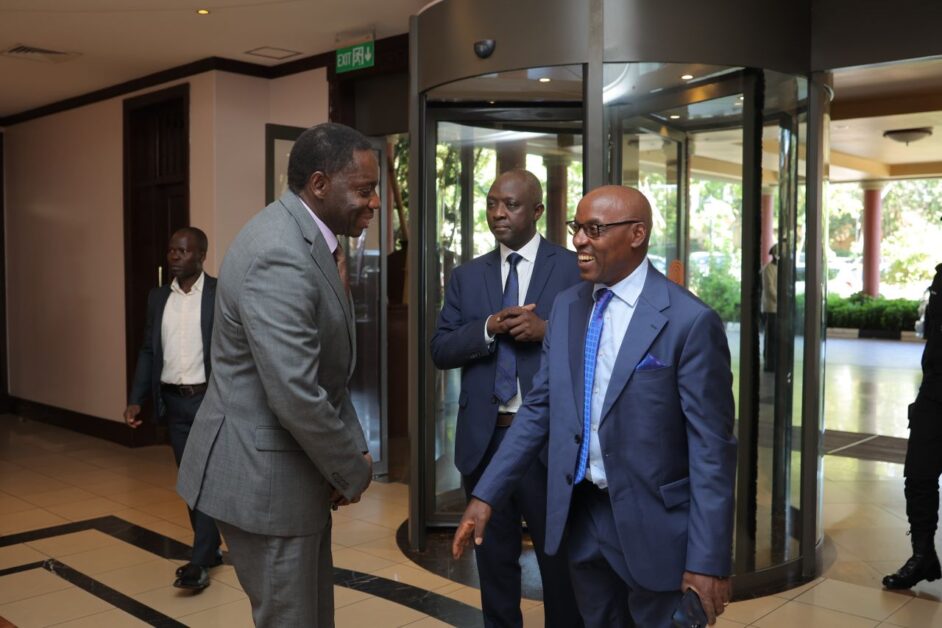
This reality is already playing out in the banking sector. Governor Atingi-Ego revealed that “there are 623 unresolved banking cases with the judiciary,” underscoring the volume and complexity of disputes currently before the courts.
For banks, the consequences are immediate and tangible. “Under our prudential framework, a non-performing loan triggers mandatory provisioning the moment a borrower defaults. This is a supervisory obligation, not a choice,” he explained.
The implication is clear: capital tied up in disputed loans cannot be redeployed. “Every shilling locked in a disputed loan is a shilling that cannot be re-invested into the productive sectors of our economy,” Atingi-Ego said, adding that “every delayed judgment is effectively a tax on investment and a brake on the transmission of monetary policy itself.”
ADR Moves from Alternative to Imperative
Against this backdrop, both the Judiciary and the central bank are now positioning ADR not as an optional add-on, but as a core pillar of economic efficiency.
Chief Justice Zeija was unequivocal: “ADR is, therefore, no longer optional; it is a national policy imperative.”
The National ADR Policy, approved in February 2025, mandates Ministries, Departments, and Agencies to actively promote and utilise ADR mechanisms, reflecting a deliberate shift in how justice is delivered. For the Judiciary, this means moving “beyond passive adjudication to actively champion ADR as a primary avenue for resolving appropriate disputes.”
Governor Atingi-Ego echoed this shift from a macroeconomic perspective. “ADR is not a lesser substitute for justice. It is a sophisticated complement that recognises that speed, technical expertise, and confidentiality are necessities in the commercial world,” he said.
In highly technical sectors like banking, where disputes are both complex and time-sensitive, ADR mechanisms such as mediation, negotiation, and arbitration offer a more efficient pathway. “ADR mechanisms… offer a way to resolve these complexities without the adversarial depletion of funds,” he noted.
Financial Stability and the Rule of Law
Beyond unlocking capital, the Governor framed efficient dispute resolution as a cornerstone of financial stability itself.
“Financial stability… cannot be achieved without the rule of law,” Atingi-Ego said. “Without enforceable contracts, collateral is worthless. Without fair judicial outcomes, credit risk becomes unquantifiable.”
 Strong Vote of Confidence: Mbire Reappointed MTN Uganda Chairman
Delayed justice, therefore, does not just affect individual cases—it distorts the entire financial system. It increases the cost of intermediation, raises borrowing costs, and ultimately affects the broader economy.
Chief Justice Zeija reinforced this systemic view, noting that ADR offers more than speed—it preserves relationships and supports long-term economic value. “ADR… offers flexibility, efficiency, and the preservation of relationships—qualities that are indispensable in the commercial environment,” he said.
A Shift in Mindset: From Winning Cases to Resolving Disputes
While institutional reforms are critical, both leaders emphasised that the success of ADR will ultimately depend on a shift in mindset across the legal and business ecosystem.
Chief Justice Zeija called for an “ADR-oriented mindset” that prioritises “resolution over confrontation, collaboration over conflict, and long-term value over short-term victory.”
This shift must be collective. Judicial officers must “actively encourage mediation,” lawyers must guide clients toward “practical, commercially viable outcomes,” and both government and private sector players must embrace negotiation and restructuring as viable solutions.

The alternative, he warned, is costly. “A litigation-first approach often entrenches positions, escalates costs, and damages relationships,” he said, urging stakeholders to instead ask: “What is the most effective and sustainable way to resolve this dispute?”
Governor Atingi-Ego extended this argument by highlighting the evolving role of the Judiciary in economic development. “The judicial officers in this room are among the most consequential economic actors in Uganda,” he said. “Every ruling you make… ripples through the credit markets and into the lives of our citizens.”
Growth Ambitions Meet Justice System Realities
The urgency of reform is heightened by Uganda’s broader economic ambitions. With growth projected to reach between 6.5% and 7.0%, supported by oil developments and public investment, the country is positioning itself for accelerated expansion.
But sustaining this trajectory requires addressing what the Governor described as “a persistent friction: the protracted resolution of commercial disputes.”
Looking further ahead, the stakes are even higher. The Uganda Bankers Association estimates that private sector credit will need to reach UGX 490 trillion by 2040 to support the country’s tenfold growth agenda. Achieving this will depend not only on capital availability, but also on the efficiency of the legal and financial systems that underpin it.
Toward a Collaborative Future
Encouragingly, the colloquium itself reflects a growing collaboration between key institutions. The partnership between the Judiciary and the Bank of Uganda signals a recognition that economic challenges require coordinated solutions.
“The Judiciary and the central bank are independent institutions. Independence is a guarantee of integrity, but it is not isolation,” Atingi-Ego said, emphasising the importance of shared understanding.

For Chief Justice Zeija, this collaboration is essential to building a more responsive justice system—one that not only adjudicates disputes but actively contributes to national development.
“By facilitating the expeditious resolution of disputes, we can release capital back into the economy, enhance investor confidence, reduce case backlog, and improve overall judicial efficiency,” he said.
Unlocking Capital, Unlocking Growth
Ultimately, both leaders converged on a single, powerful idea: that improving how disputes are resolved is central to unlocking Uganda’s economic potential.
“Uganda is a country of extraordinary potential,” Atingi-Ego said. “But the single most powerful key to unlocking it is the quality of commercial justice.”
And as UGX 3.5 trillion remains tied up in court disputes, that message carries increasing urgency.
The shift to ADR is no longer a matter of legal reform alone—it is a strategic economic imperative—one that could determine how quickly capital flows, businesses grow, and Uganda realises its long-term ambitions.