
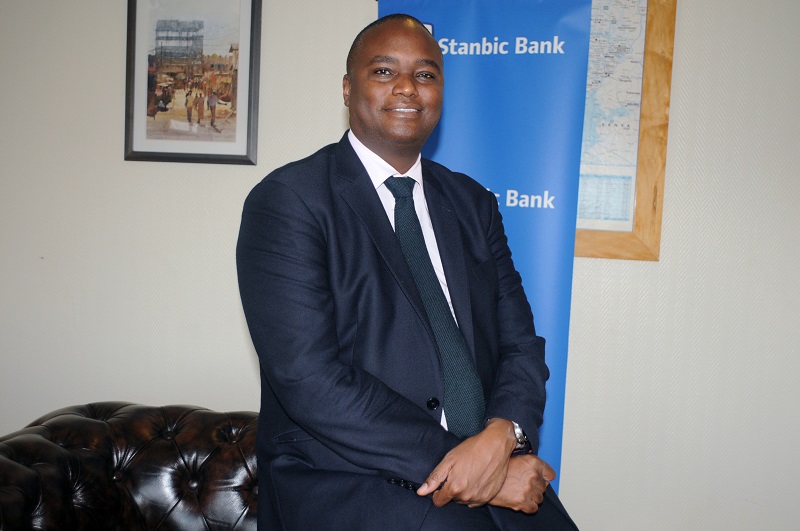
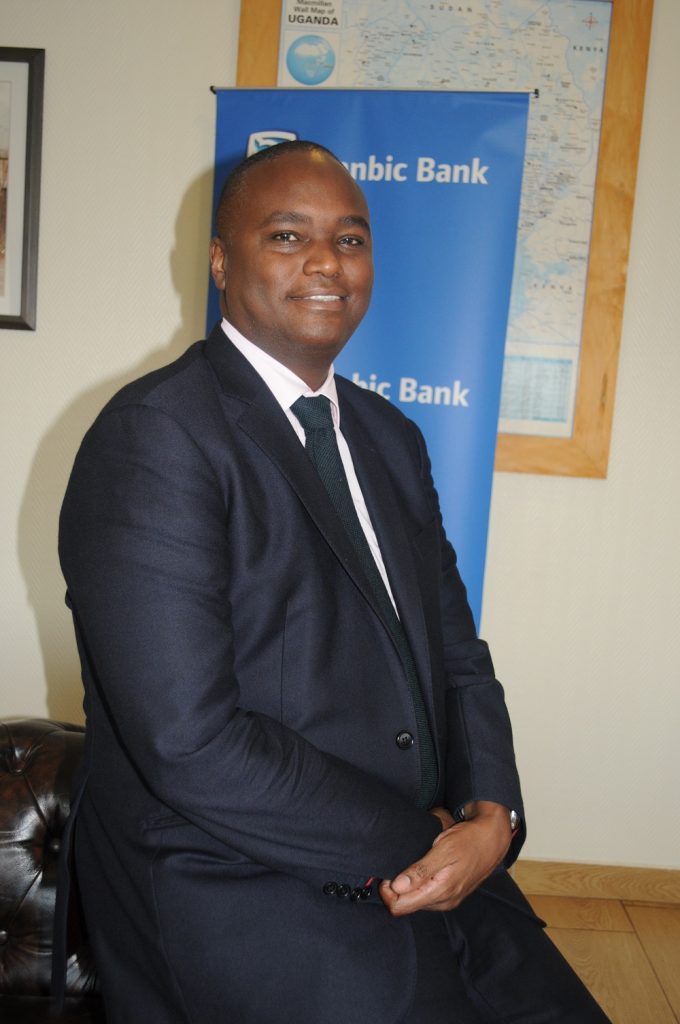
Born and raised in Nakasero, Patrick Mweheire, went to Buganda Road Primary School for seven years and then to King’s College Budo for six years (O & A Levels). At the age of 18, he left for the United States of America where he would spend the rest of his education and formative work life.
He completed his first degree in History and Economics from a liberal arts college in New York (Daemen College) and graduated with honors and the graduating class’ Presidents medal in 1994. At the age of 23, he started off work at Prudential Securities as a Financial Analyst in investment banking which he would do for the next three years.
In 1997, he embarked on an MBA at the prestigious Ivy League Harvard Business School and upon graduation in 1999 immediately joined Merrill Lynch & Co, – a Top Tier Global Investment Bank, as an Associate in the Mergers & Acquisition Group. He would spend the next 9 years working at Merrill Lynch rising through the ranks to Director and in the process advised on several large transactions with a combined transaction value in excess of $20 billion.
Mr. Mweheire left New York in 2008 and moved to London and took up the position of Managing Director – Head of Investment Banking Africa – for Renaissance Capital, a leading emerging markets focused Investment Bank head quartered in Moscow but operating out of several emerging market countries across the globe.
In 2012, after 18 years away from Kampala, he returned home and joined Standard Bank Group as Executive Director & Head of Corporate & Investment Banking at Stanbic Bank Uganda. In January 2015, he was appointed First Ugandan – Managing Director of Stanbic Bank, Uganda’s largest bank.
He sat down with Muhereza Kyamutetera, to share his experiences.
From your CV, it looks like you had it all and destined for an even more flourishing career in the so-called land of opportunities. Most Ugandans would never have returned home. What made you come back to this, our Uganda?
It was always my plan to come back home. My initial plan was to come back after undergraduate school or at a minimum after acquiring three years’ work experience. I then decided to go back to graduate school for an MBA and thought I would return after that, but that too didn’t work out. But coming back home was always something I tested every five years but in 2008, I felt I had reached a point where I was at the apex of my career in the U.S., and I had achieved most of the professional goals that I had set for myself. So the timing was right and if you think of the financial crisis that ensued in the U.S, it was a good time to leave. I also wanted to be here with my family; and my parents were aging. It seemed like the right time to come back home.
That said, I am glad I stayed for the time I did in the US and I couldn’t have returned at a better time. The 14 years that I spent in the Wall Street high octane investment banking environment moulded a resilient foundation for me. My trade primarily focused on mergers and acquisitions; advising companies either to acquire others or sell themselves.
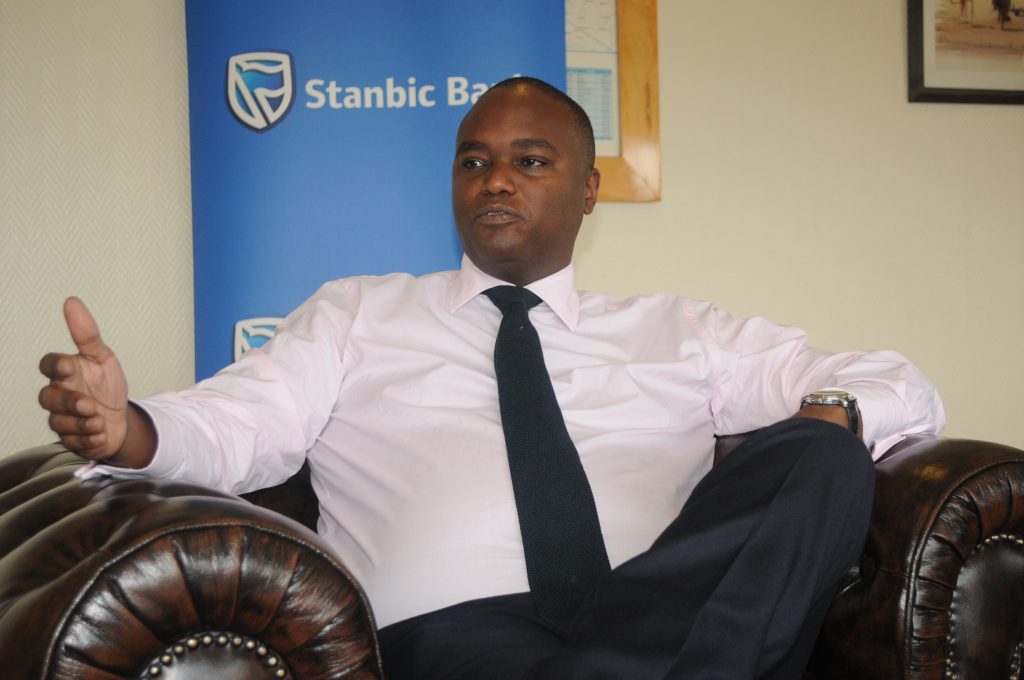
The life of an investment banker is basically about being a close and a trusted advisor to business and then learning to position and market stories about those businesses. That means I spent a considerable amount of my time understanding businesses – value propositions, challenges and opportunities and being able to explain those stories to potential buyers- I must have sold about 50 or so companies during my career. That allowed me to get a grasp on what’s important in a business and what’s not.
I spent most my time with senior management who were real subject matter experts in their respective industries which allowed me to be at the frontline of understanding business strategy and going deep in a number of different and unique industries. Today, I am still able to borrow heavily from that experience.
After about 18 years in the US and having spent your entire working career in the US, did you experience any shocks on returning to and working in Uganda?
Yes. The sharp differences in work ethic between Uganda and the U.S. is that one distinct thing that I had to adjust to. Working in large global investment bank; there was no shortage of highly motivated professionals – both peers and those that worked for me, with very strong work ethic. You gave someone a task and they wanted to deliver 200%. In the US, and in the investment banking sector in particular, there is a very huge premium paid to working hard and diligently. There is a huge compensation tagged to how much effort you put into your work.
On returning home, I had to adjust, to the work ethic, which was quite different. Many viewed work as a task you did and switched off at 5 pm. In addition, the depth of the markets was different and the markets hadn’t matured anyway near the U.S. economy. Although that has changed a lot in the last five years – we are comfortably doing some products today that I thought were decades away. It doesn’t mean it is not complex, it is just that they are very different; so readjusting to what the market was, and readjusting to the work ethic, the motivation and so on, I think was the hardest thing to do; and reminding people that I was Ugandan after all.
As the first Ugandan MD for Stanbic Bank which is also Uganda’s largest bank, did you feel some pressure on you to prove a point that Ugandans can deliver? Looking back at the last three years, do you feel you have done the shareholders and your country, Uganda, proud?
Obviously being the first Ugandan MD at Stanbic there was a bit of pressure. At the time there was still a lot of debate whether Ugandans were ready to manage a large complex organisation of this nature. I think there are people who still believe that is the case which I completely reject. It was one of the things I used to struggle with when I had just returned, even before I was the MD.
I remember at some point, we were trying to fill certain roles within the bank and people would say things like: we have failed to find “Ugandans” with the necessary skillsets for this role and I always found it offensive. You simply cannot write-off a very well educated nation of almost 40 million people. I just don’t think that is fair. You might argue that there are some gaps in exposure and or experience, but you can’t say that a Ugandan cannot do a certain job. But having said that the proof is in the pudding; you have to deliver. Looking back, I think we have been able to massively deliver.
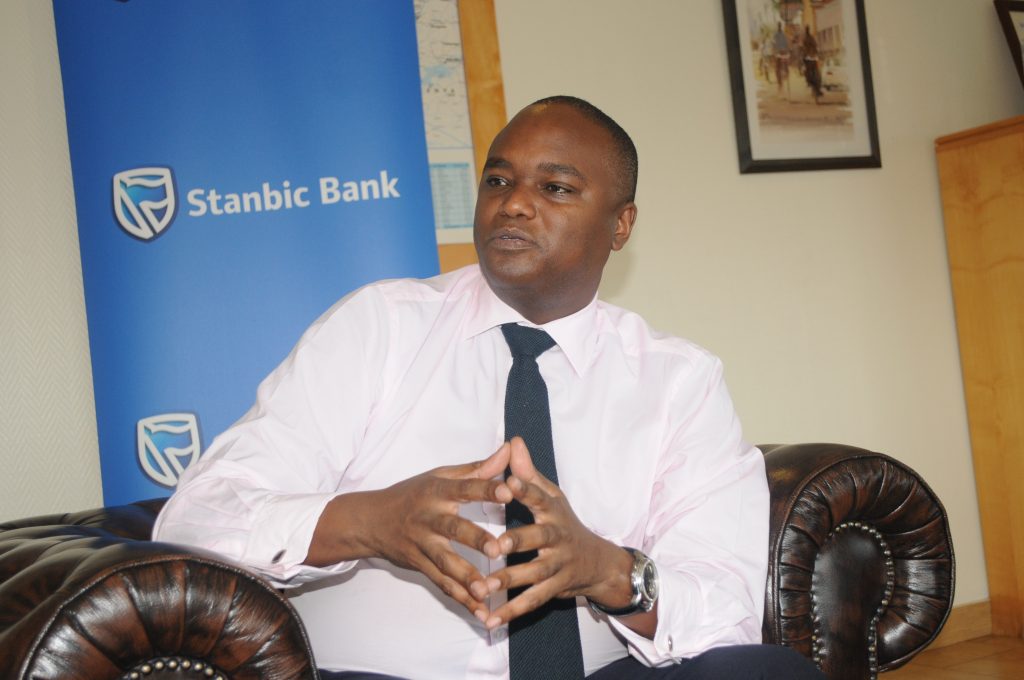
Stanbic over the last three years has grown at a compounded annual growth rate of 18%. Last year we exceeded UGX 200 billion in net profit up by 50% from UGX 135.1 billion in 2014. That kind of growth is hard to do when you are the largest bank – it means you have to ‘gain’ market share and be ruthlessly efficient.
Our market share of deposits and lending has grown and today we control approximately 20% share of each from a low of 16% in 2013. Our assets are now worth over UGX 5.4 trillion ($1.5 billion) and we have a very solid return on equity, north of 25% which is substantially above industry average of approximately 16%.
Most importantly, we have been able to grow our market share with probably one of the lowest cost-income ratios of a large bank. We run an extremely efficient bank and that is why despite our share of industry assets being approximately 20%, our share of industry profitability is closer to 30%. Our shareholders are pleased and happy with us; in the last AGM we approved a dividend of UGX 90 billion, the largest ever and twice what we paid a year before.
And more critically, we manage our credit, operational and market risk prudently. Our credit loss ratio of less than 2% is one of the lowest in the sector. We have managed the control environment while growing every meaningful operating financial metric in the right direction over the last three years.
The last 10 years have seen a lot of Ugandans rise to several top positions at large local and international organisations. Do you think we, as a country, have arrived in terms of leadership or there is something we are still lacking?
The fact that 9 out of the 24 banks are run by locals is a significant improvement from many years ago. If you look at other large companies like Umeme, Uganda Breweries, Century Bottling, National Social Security Fund – the largest pension and best performing fund in the region; they are all run by Ugandans. Generally, Ugandans have demonstrated that they can run large businesses in a very sustainable way.
Does that mean we don’t have things to learn? No. I think as the market becomes more complex there is a requirement for all of us existing CEOs to continue developing ourselves and helping one another.
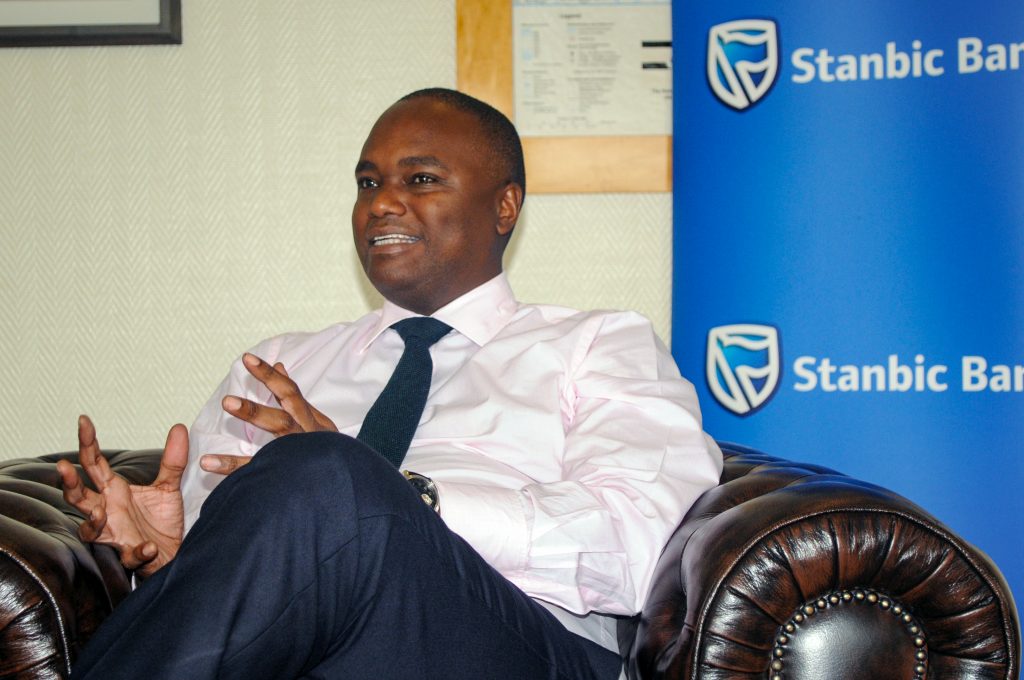
I just returned from Massachusetts Institute of Technology (had not been in a class in years ) where I completed a course on digital innovation and disruption – trying to understand how the digital revolution has disrupted not only the banking sector, but also many other businesses. I am trying to understand whether we are prepared for the digital era that is sweeping over everything; so there is a constant need for us to continue developing ourselves.
While in general, Ugandans have risen to leadership positions, women do not seem to be progressing as fast. Across government, the private sector and civil society, there is only about 30% at CEO and board levels. Where is the missing link? What needs to be done to close these gaps?
First of all I would like to say that at Stanbic the situation is very different. I have a majority number of women at my Executive Committee (“ExCom”) and the board. We have five amazing women in top leadership at the bank (greater than 50%), and on the Board we have three women.
We have deliberately tried to balance out the gender at the top, middle and lower levels; it is an important thing to do. The bank’s leadership should reflect the population out there. At the moment, one of the challenges I am struggling with is how to have millennials have a voice at the bank and on the board because the country’s population is young. Even at 47, I am a relic of the past.
We all need to make a conscious effort to promote women and this has to start at the junior levels, because people don’t just show up at ExCom – they need to go through the entire journey.
Our gender balancing act is not just at the ExCom level. We make deliberate efforts to ensure that we have a pipeline of leaders at lower and middle levels and in there have as many women as possible.
One of the things I have recently introduced at the bank is a junior ExCom. These are very young talent in leadership that we assign specific tasks and they report back to the ExCom; just to give them a flavour of what it is to be an ExCom member, to run critical bank wide projects etc. This equips them for future senior positions but also lets them have a “real life” feel of what it means to be a top executive.
Running such a huge bank must be a life-consuming experience. What is it that you do not to lose yourself? How do you manage the loneliness at the top? How do you stay safe in the fast lane?
One thing I have done, is remain much grounded to who I really I am. I don’t think I have ever allowed the title of CEO to get to my head because I know I am here for a short while. I don’t isolate myself from other people. I have quite a bit of interaction with members of staff; both junior and senior. I also make sure I do a one-on-one with one or two members of my top management every week to get a feel of what is happening; who is having challenges and we brainstorm and come up with solutions.
I also spend a lot of time with my clients and that is something that you will find unique about me. I try to spend half my time meeting clients and trying to understand their needs and how we can serve them better and future proofing the organization.
I strongly believe that the only way banks are going to continue winning is having a deeper understanding of the client needs. Banking is going away from a situation where we sit in ivory towers, create products and then we take them to the market. The future of banking relies very heavily on understanding what client needs are and taking the journey with them; whether individual or corporate. And the user experience needs to be closer to Apple or Amazon and not the community bank in Nansana. Clients want the world class best.
That human interaction is very important, not just with the ExCom but also key business people. Then of course the other part of my time, I use it to manage key stakeholders such as Bank of Uganda and doing some part-time assignments like being the chairman of Uganda Bankers Association (“UBA”), and vice chairman of the Uganda Chamber of Mines & Petroleum, vice chairman of Forum of South African Businesses in Uganda (“FOSABU”) among others.
What is your Management Philosophy?
Simplify it and do not micro manage. That is my philosophy. One of the things I like to do is simplify the messaging of the direction of the bank in a way that everyone, from ExCom to the teller will understand. We have very simple ‘WIGs’ – wildly important goals that we share with all our 1,700 staff members every year. When I came to the bank as MD we had to identify the three important things which we think the bank must really focus on and we cascade them religiously.
Back in 2015 for example, service empathy was a big issue for us. I quickly realised that Stanbic had lost its way on service delivery and had to do something about it. We had over the years become too big and complacent, so we had to prioritise service improvement. I created a service ExCom that was dedicated to handling service issues only. I recall the initial service ExCom meetings used to take 5-6 hours; that’s how difficult things used to be. Now they take only 40 minutes because we have dealt with most of the issues and we have fully embedded a service culture. You cannot succeed in any service business unless you treat the customer right and fairly.
Secondly, I try not to micromanage. If you work for me I give you as much rope as you need. But I always reserve the right to pull it back if you do not deliver. That is well understood by the people who work with me. I am reasonably patient but I do not have unlimited patience. There is a certain breaking point where I will take back that leeway and do what I need to do for the bank to move. It’s not always pleasant but then being an effective CEO is not about being loved, it’s about doing the right thing.
I also like to be a sounding board, I have been in banking for a long time and have seen it all, so I like my team to depend on me and leverage that experience and consult me to reach the right decisions.
Lastly
I have to recognise that the world is not static. I have to continue investing
in myself. I do a voracious amount of reading. I have a many friends globally
who are senior bankers or in positions of influence. I lean on them and brainstorm
with them and understand what is going on. I try to take a more global picture,
distil it down to Africa, to the region and then to Uganda.
What do you consider as the greatest piece of advice you have received? In line with that, what would you advise someone who has dreams of being a CEO?
I was still a junior banker in my early years on Wall Street. Like any other 25-year old you are anxious about the future; but one senior banker told me: “You know Patrick, take care of the small things, and the big things will take care of themselves.”
At first I didn’t quite understand but he explained that: “If you show up, have the right work ethic, you are diligent in what you do; people will notice. You don’t have to worry about where you will be 10 years from now; just do the small things and the big things will take care of themselves.”
Since
then I have never been obsessed with where I wanted to be; even when I returned
here, I was never obsessed about being a CEO. It did not cross my mind at all. But
I just figured out that if I did a good job, which I did- I turned around the
business I was asked to run, doubled it in less than three years and the rest
is history. I just did what I had to do and the big things took care of
themselves. I think that our young professionals are in a hurry these days, it
shouldn’t be that way.
 Uganda Fuel Stocks to Last Until End of April, Government Assures Amid Global Oil Crisis
Banks are good indicators of the economy. As a CEO of the largest bank, you are in position to accurately tell the trajectory of the economy. What is your assessment of the economy? Are we on the right path to recovery?
We have turned the economic growth conundrum corner; that I can confidently say. I was also a little worried on where the Ugandan GDP growth had disappeared too. To place this into context, if you look at Uganda, between 1990 and 2011, we had two decades of between 7 % and 7.5% growth, but in 2012/13 we couldn’t even make 4.5%. Ordinarily, 4% is not bad, but for Uganda it is not good enough because our population is growing at about 3.5%. We, therefore, need to be in the region of 7% to be able to get people out of poverty to have that inclusive growth.
But now we are beginning to see 6% and 6.1% in the last couple of quarters, a sign that we are turning the corner. Private sector credit growth is also beginning to bounce back- at about 12 % after some anaemic growth the last couple of years. We are finally seeing growth in personal borrowing, agriculture, manufacturing and services; they have all turned the corner. I am very optimistic.
Notwithstanding that we have taken a hit on the currency in the last couple of months or so but it has been partly for the right reasons. Something can weaken for the right reason. The currency is weakening partly because import demand is up showing renewed economic activity. There is huge demand for dollars which simply did not exist before, trade is back. That being said, its partly because oil prices are back up to USD 70 per barrel and subsequently our oil import bill has gone up by almost USD 300 million.
But the
challenge now is how we make that growth consistent and more inclusive so that
we are uplifting everybody. How do we improve the quality of growth? That is
the 64 million dollar question.
Talking about inclusive growth, results from the last Uganda National Household Survey, indicate that despite having increased Uganda’s budgetary resources by 136.3% from UGX11.6 trillion in 2012/13 to UGX26.4 trillion in 2016/17, the number of poor people in Uganda instead increased by 51% from 6.7 million in 2012/13 to 10.1 million people in 2016/17. If you were the Finance minister or hired to advise government on this inclusive growth, what would you tell government?
Other factors constant, in Uganda, the key question is how do you fix agriculture because that is where 70 percent of the population has their livelihoods and therefore will present the quickest trickle-down effect.
How does government intervene, end-to-end, in a smart way- not just giving seedlings when you have major issues in dealing with post-harvest storage and access to markets? How do we go back and collectively think through the entire value chain and come up with solutions to minimize bottlenecks in agriculture?
Then we have this future opportunity in Oil and Gas that is about to kick-off. About $15b is going to be spent over the next three years investing in Oil and Gas. How do you ensure that a minimum of that 30 percent of this $15b is spent in the local ecosystem- the local corporates?
If
you look at Karuma and Isimba dams, less than 10 percent of the money spent on
those projects was spent locally. That is unacceptable. I think we need to figure out a smart way to
have more local corporates involved because that is where the multiplier effect
happens otherwise if foreign companies spend money and it goes from one foreign
bank to another foreign bank in Europe or Asia, what have we done? You could continue to thump your chest that
the project is Ugandan but is it really?
That does not help us achieve inclusive growth.
Speaking about SMEs, Stanbic recently launched the Stanbic SME Incubator. What is this about?
In a nutshell, consider the fact that SMEs employ about 2.5 million people in Uganda. They are responsible for 90 percent of new job creation. There are about 160,000 SMEs in the country. But here is the shocker. 75% of them do not live past their 3rd birth day. There is a misconception that they do not survive because of lack of capital or high interest rates- that is simply not true.
We have done the analysis and there are two major problems. Capital is also a major challenge, but that capital can be fixed by fixing the other two. If you take an analogy of building a house, think of capital as a roof, but there is the foundation and the walls first. The foundation being access to markets and the wall being access to resources
According to our research the biggest challenge to SME’s is lack of access to markets. SMEs do not have the connectivity and ability to get into an ecosystem that can get them access to markets; they do not have the ability to tap into the markets to sell their products.
The other issue is lack of access to resources other than capital such as the ability to get legal help, keep financial records, or to understand corporate governance etc. For example during our recently ended session that had about 60 SMEs graduating, we asked them – how many of them had a Health & Safety Policy? The large majority of them did not have; they did not even see the point, but guess what, Health & Safety policy is one of the top three requirements, if you want to work in the Oil & Gas sector.
We been trying to show them that while you think, you are cutting corners- the lack of that Corporate Governance DNA, that can help an organisation survive, such lack of financial records, written-down strategic goals, learning how to put together a proposal with no spelling errors etc. are the things that will probably sink you faster than lack of capital. So at the incubator, we take them through four months of training and after we assign them a mentor to make sure they do not go back to their old ways.
We strongly believe that if you solve access to markets and other resources, capital comes naturally. If you notice, I use the word “capital” not “loans” because we tend to think capital and bank financing or loans are synonymous. They are not. In fact bank financing should not be the only source of how you finance your business. To give you a sense of what I am talking about, in larger emerging markets like Mexico, Thailand, Turkey etc., banks only represent less than 30% of the required funding. Other funding (70%) originates from pension funds, asset management funds, angel investors, capital markets, private equity and many others.
By comparison, Uganda is 90% reliant on bank financing regardless of the fact that bank financing is not designed start-ups or SME’s in their infancy particularly in a high interest rate environment. Additionally, banks can only comfortably lend money for about seven years only, yet some of these projects need 15 or 20-year money.
Looking at the banking industry in general, the resolution of Crane Bank issues, seems not to have successfully resolve the issue of non-performing loans. We still see rates above 5%.
The NPLs have come down. You can’t expect the NPLs to be zero. The number which I would like to work with, which I call the pre-cycle, is 3%-3.5%. For me this is a comfortable number because we are taking a risk after all. But at the height of the Crane crisis, NPL’s in the industry almost touched 10% but they have recently come to 5% and I think we are slowly getting back to that 3.5%. We have about another 1 percentage point to get to what I would say is a nice pre cycle number.
It is, however, important to remember that NPLs and interest rate increments mirror each other. Just like night follows day, once you start hitting prime rates of 25%-35%, prepare for NPLs to go up, because; imagine if your monthly repayments treble – how many borrowers have that sort of flexibility?
At
Stanbic we anticipate these cycles and tighten credit or risk appetite when we
anticipate difficulties; but we are now wide open for business with a risk on
appetite because rates are low and the economy is on an upward trajectory. Our
prime lending rate is the lowest in the market – 17 percent. But the irony is
that few are coming to borrow. Okay with personal lending we have seen some
growth but with the corporates the sentiment has not changed as much as we
would like. There is still some bit of hesitation about expanding too quickly
and I hope that is going to go away soon, because we have had two straight
quarters of 6%+ GDP growth. If I was a
CEO of a milk business, juice etc., I would be expanding because we are
beginning to see that consumer demand is bouncing back.
The Central Bank has tried to bring down the CBR but the commercial banks have not yet responded in a similar way. What do you think is really happening?
First of all, let me first say that at Stanbic, we have always matched every single movement of the CBR for the last 18 months within a month of the announcement. Over the last 18 months, we have reduced our prime lending rate from 25% to 17% and we do it within the month of the CBR announcement. It’s a commitment we made and very proud that we keep even though it has a negative impact on our revenues.
Interest rates are a function of many things, including the CBR. First of all, you need to first factor in the fact that we have about six or seven loss-making banks; so imagine if you are the CEO of a loss-making bank, would you go and cut rates so you can lose more money?
Secondly, we have relatively high operating costs (this is the elephant in the room). Uganda simply has a high cost of doing business which is why, while Uganda’s net interest margins are higher than Kenya’s, the Kenyan banking industry has a higher return on equity or more profitable banks. We need to manage our costs. Most of our banks have a cost-income ratio of 75%-90%. Completely unacceptable; even Saloons or barbershops do not run these type of ratios. These include Non-Performing Loans that account for about 5%, then the normal operating costs, structural costs like the cash reserve ratios at the Central Bank, then staff costs, and so on. All these things layer in and once you combine them, you find that there is a certain minimum threshold which you can accommodate as a lending rate. Remember that also cost of funding has been up, a few banks still have some costly sticky deposits that they are paying 10-14% rates. There is a lag effect as these deposits work themselves out of the system.
One of the things I want to push at Uganda Bankers Association is the concept of sharing and leveraging. For example, we (Stanbic) have started sharing cash in-transit with Centenary Bank. We both don’t have to carry half-full cash trucks to Soroti yet we can share and split costs of guards, fuel etc. It doesn’t make sense.
Recently the Central Bank asked all banks to have both their primary and secondary data centres in-country; this is a US$2 million investment. Imagine if you are a loss-making bank and now you need to fork out another US$2 million.
How about we created an understanding where the smaller banks come onto our Stanbic or UBA shared data platform, because we have a capacity and then we charge them a small monthly fee? As an industry we have to start looking at how we remove costs out of the system and passing it on a as a savings to the customer. You cannot discuss interest rates in isolation of operating costs – our costs go up higher than our revenue every year. Costs are growing by about 10% every year, yet revenue is only growing by 3%. Is that sustainable?
Looking at industry performance last year, you realise that industry profitability grew much faster than private sector credit. This may be interpreted to mean that the industry is intentionally lending less, so as to keep the rates high and thus maintain higher levels of profitability.
Not really. To the contrary, industry interest margins are under pressure. This is because average lending rates have reduced from 24% to about 20%- although Stanbic is currently at 17%. The Central Bank rates dropped 12% to 9.5% and the yield curve on Treasury Bills and Bonds dropped from about 16% to between 8% and 10%. All of this takes away revenue and the banks are under significant pressure on how to replace revenue lost.
Profitability is actually a real problem. Last year was a very difficult year for the banks. With the exception of Dfcu Bank that grew their profit by UGX81 billion because of the Crane Bank acquisition, Barclays grew by UGX17 billion, Equity bank by UGX11 and Stanbic by only UGX9 billion, all the others, either dropped in profit or remained loss-making.
However you need to understand that most banks have two lines of business. One is what we call net interest income which comes from lending, and two, non-interest revenue which is non-lending based, such as transactions fees, trading, ATM fees and other fees. At Stanbic our business is about 55 percent lending and 45 percent non-lending income.
There are some banks that are not as diversified and their incomes are 90% from lending and 10% non-lending. But the larger banks are generally well balanced and were able to grow profitability even a midst falling interest rates or stagnant lending.
In light of the last Budget and other existing policy measures, would you say the banking industry is getting enough support from government? Again if you are the Finance minister what would you change?
I think one thing that government is trying to address is the arrears. Arrears have been a big problem. We have many names in the banking sector that are unable to service their loans. When you ask them – they say the ministry of Finance owes me UGX10 billion for the last three years. True, last year government said they would start paying off UGX300 billion every year, for four years and I think they have also budgeted for UGX300b this coming year – but may be four years is too long.

We also need to avoid what I call “own goals” on policy, for example Stamp Duty on performance bonds and guarantees (a key tenet of executing Government infrastructure projects) went up from an average flat fee of $10 per guarantee to 1% of the value, so a large road project of $100 mm would attract a stamp duty of $1 mm upfront before the project is even executed. How does that make sense? Not only will the contractors pass this cost back onto the same Government levying the charge, it just breeds confusion and dampens investor confidence.
The other issues I have talked about is ensuring local business maximise the gains from the capital that is going into the huge government spending on oil & gas and other infrastructure projects. Government also needs to significantly address the issue of attracting long-term capital into financing serious investments in agriculture such as silos, combined harvesters, irrigation equipment etc., as well as risk mitigation, for example, crop insurance
The
Agriculture Credit Facility has been quite successful, but can government widen
that mandate? If I was the minister of Finance,
I would look into these issues, but thankfully I am not.
What do you have to say about the OTT tax, especially the tax on Mobile Money transactions? How does it affect the broader goals of financial inclusion?
If you look at it from the angle of Uganda whosetax to GDP ratio, is still the lowest in the region at about 14%; Kenya is 20%, and Rwanda is 20%, it makes sense. Uganda seems to have hit their revenue collection ceiling at UGX 12-13 trillion. This seems to be the number they can’t break through over the last few years and I am sympathetic. But two wrongs do not make a right.
The problem with this tax is that URA/Government always goes to the same cows and tries to milk them dry – us and several other multi-nationals. They need to widen the tax net, for instance the informal Kikuubo traders can be tapped into. Cracking the informal sector will in the long term build a culture of compliance- people need to know that they need to pay taxes. Some of these tax measures like the OTT tax and taxing Mobile Money is an attempt to widen the tax net but I would have done it differently.
That said, make no mistake. Mobile Money has never been cheap; it’s been convenient and has driven financial inclusion. True, compared to an earlier alternative of sending money via the bus, spending UGX15,000 on mobile money instead of UGX50,000 on a bus is cheaper and more convenient, but in reality, UGX15,000 is not cheap for an average mobile money user either.
I do believe it is time to have a comprehensive discussion around the cost of money transfers and the most effective channels to complete certain transactions. At Stanbic, we have created the Account Wallet that allows you to move money in just 10 seconds from your account to your mobile money. But we have also made it possible for you to pay for all your utility bills, such as power, water, pay TV etc. online from your account, so you don’t have to pay these charges on mobile money anymore. We are also promoting instant money where you can withdraw cash from our ATM’s for free regardless of whether you are a Stanbic customer or not.
