Africa’s agricultural potential remains hindered by fragmented value chains and inefficient trade corridors, not by a lack of arable land or labour, which it has in abundance. Key to solving this is integrated financing that links farmers to processing hubs and regional markets, transforming raw exports into value-added products that are worth much more than the original commodity.
The continent faces an acute agricultural paradox. It has 1.1 billion hectares of farmland, accounting for 60% of the world’s uncultivated arable land, and is home to 1.4 billion people, representing 18% of the global population, double its share a century ago. Despite this, it remains a net food importer, losing over a third of its agricultural output – worth more than $4 billion each year – to post-harvest waste and inefficiencies. The real challenge isn’t just increasing food production, but rethinking how the entire agricultural sector creates and captures value.
Standard Bank Corporate and Investment Banking (CIB) views this gap between potential and performance as a multi-trillion-dollar opportunity that can be realised only if all stakeholders rethink agriculture as an interconnected system encompassing production, processing, trade, and infrastructure.
Adding value is imperative
The mathematics of value addition is compelling. Uganda, for example, loses around UGX15,000 in potential value per kilogram of coffee exported. Since coffee is exported mostly in an unprocessed state, that value is lost. Similar gaps exist for cocoa in Côte d’Ivoire and Ghana, tea in Kenya and Malawi, and cassava in Nigeria. These are not minor differences; they represent significant orders of magnitude in economic impact.
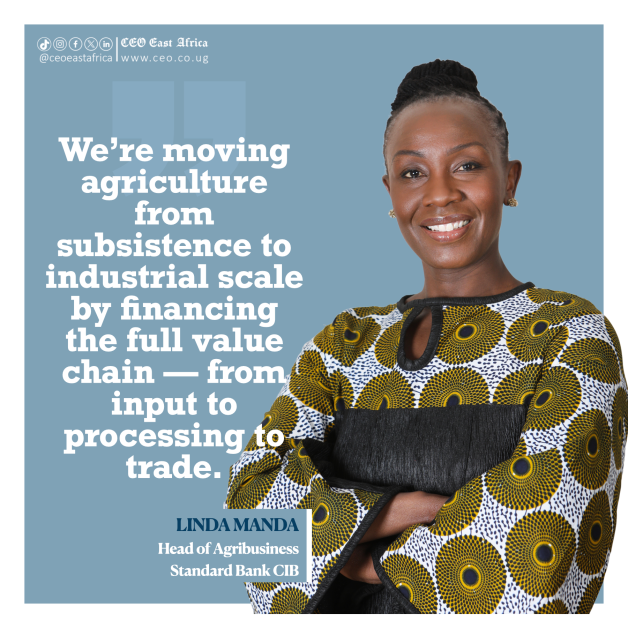
Linda Manda, Head of Agribusiness at Standard Bank CIB, clearly outlines the opportunity: Africa exports mainly unprocessed or minimally processed goods, capturing only the initial stage of value addition. The continent benefits from favourable demographics, including a youthful and expanding workforce that fuels urbanisation and domestic demand. Additionally, it boasts diverse climate zones that support the production of everything from tropical fruit to temperate grains. However, without sufficient processing infrastructure, these natural advantages result in limited economic gains.
The industrialisation gap is particularly wide given Africa’s trade composition. The continent’s main agricultural exports – coffee, tea, cocoa, tobacco, oilseed, and cotton – leave as raw products bound for Europe and Asia. Meanwhile, key imports include cereals, sugar confectionery, and processed oils sourced from Europe, Russia, Brazil, Indonesia, and the UAE. This trade imbalance highlights both the challenge and the solution, which is developing domestic processing capacity to serve both local and export markets.
The realities of infrastructure and trade corridors
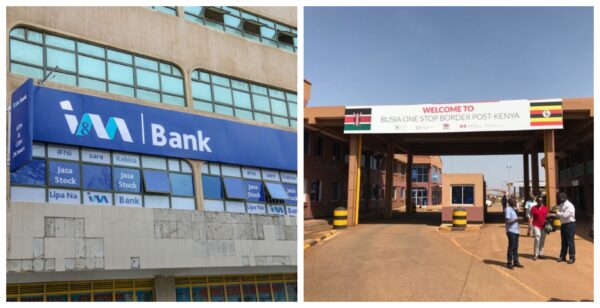
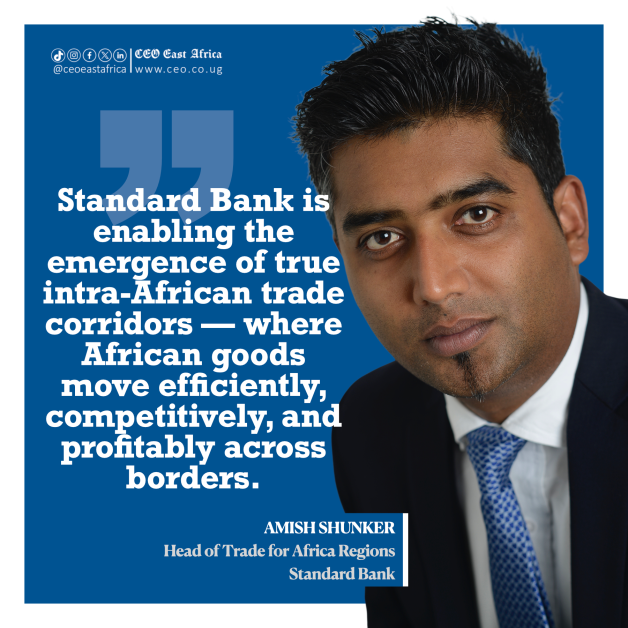
Amish Shunker, Head of Trade for Africa Regions at Standard Bank, identifies infrastructure bottlenecks as critical constraints. International traders frequently observe that moving goods from Brazil to Nigeria is faster and cheaper than shipping them from South Africa to Nigeria. This is a function of fragmented customs systems, inadequate road and rail networks, and limited cold storage capacity – inefficiencies that compound post-harvest losses and undermine competitiveness.
The infrastructure challenge exists on several levels. Rural transport networks struggle to move produce from farms to aggregation points. Warehousing and cold storage facilities remain scarce, especially for perishables. Port infrastructure, although improving in countries like Tanzania, Mozambique, and Nigeria, still causes delays that reduce product quality and increase costs. Most importantly, regulatory harmonisation across borders remains incomplete, despite the African Continental Free Trade Area’s (AfCFTA’s) promise.
However, these challenges are beginning to shift market behaviour. COVID-19 supply chain disruptions have sped up import substitution strategies in Nigeria, Ghana, and Angola, with governments offering incentives for local processing. Vertical integration in value chains has increased as companies seek to stabilise their supply. Technology adoption is increasing, from precision agriculture to digital payment platforms that lower transaction costs.
 Stanbic’s Five-Year Scorecard: How Profit Growth, Deposits, Lending and Dividends Reshaped Performance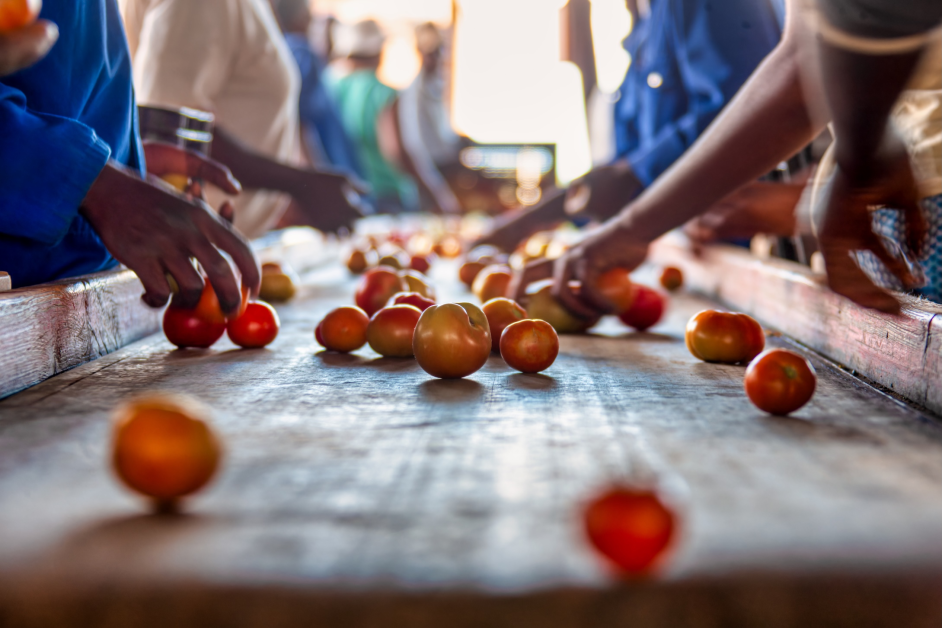
The result is an emerging network of intra-African trade corridors that are starting to show results. South Africa now exports 44% of its processed consumer and agricultural goods to other African markets. Special Agro-Industrial Processing Zones (SAPZs) are being established across 27 sites in 11 countries, from Nigeria’s Cross River State – focusing on cassava and cocoa processing – to facilities in Ethiopia, Mozambique, and Mali. These zones bring together production, add value, and create jobs – exactly the model needed to shift agriculture from a subsistence activity into an industrial economic driver.
Standard Bank’s ecosystem facilitation and financing model
Standard Bank recognises that supporting the continent’s agricultural transformation requires financing entire ecosystems, not just individual transactions. The bank’s presence in 20 countries, with dedicated agribusiness teams in 15, allows it to understand local value chains while linking them to regional and international markets.
This is evident in multiple ways. For farmers and cooperatives, Standard Bank offers input financing for seeds, fertilisers, and equipment, fostering relationships that grow as operations expand. For processors, the bank finances imported capital equipment, often collaborating with export credit agencies to minimise risk and secure better terms, enabling the development of milling, vegetable oil production, and packaging facilities. The bank also offers short-term and seasonal support to value addition through commodity trade solutions. For exporters, the bank reduces payment risk through its network of correspondent banks while providing working capital that covers the gap between operational costs and sales income.
The model goes beyond simply offering credit. Standard Bank facilitates investor introductions, bringing global expertise and technical capacity to African projects. It structures blended finance arrangements with development finance institutions, increasing available capital at lower rates. Through trade finance instruments – from pre-shipment financing to export letter of credit confirmations – it enables cross-border transactions that would otherwise be too risky for individual participants to carry out.
Recent examples illustrate this integrated approach. In Kenya’s tea sector, Standard Bank collaborates with farmers and agencies to manage export risk while providing liquidity during growing cycles. In Tanzania, the bank is financing mill capacity expansion through equipment imports, working with development finance institutions to structure the transaction. These are not isolated deals, but parts of broader value chain strategies aimed at building sustainable competitive advantages.
Mapping out the policy enablers and the path forward
Unlocking agriculture’s full potential requires coordinated action between the public and private sectors. Government priorities should include customs and regulatory harmonisation to facilitate cross-border trade, infrastructure investment in roads and cold chains to reduce losses, and land tenure reforms that enable farmers to access formal finance. Water management infrastructure is especially vital for processing zones, as is the integration of renewable energy to cut operating costs while addressing climate concerns.
For the private sector, the key is developing bankable models that attract capital on a large scale. This involves aggregating smallholders into cooperatives with secured volumes, adopting climate-smart practices that boost resilience, and utilising technology to enhance efficiency from farm management to supply chain tracking. Standard Bank’s role as a facilitator becomes essential here. It not only provides capital, but also develops structured partnerships that transfer skills, open new markets, and mitigate risks for all parties involved.
The AfCFTA establishes a policy framework for this transformation, but its implementation remains inconsistent. Standard Bank considers its role as a practical facilitator: enabling actual trade flows that demonstrate corridor viability, financing infrastructure to alleviate bottlenecks, and proving that processed African agricultural products can compete in regional and global markets.
Find out more about Standard Bank Corporate and Investment Banking’s commitment to driving Africa’s growth and their Stories of Impact.