In Uganda’s long journey toward industrial self-reliance, Kiira Motors Corporation (KMC) stands as a symbol of ambition: a state-owned automaker daring to challenge a global industry from the heart of Africa.
It was created not just to assemble vehicles, but to localize the mobility value chain, drive contract manufacturing, and ultimately, create a modern, African-led automotive industry.
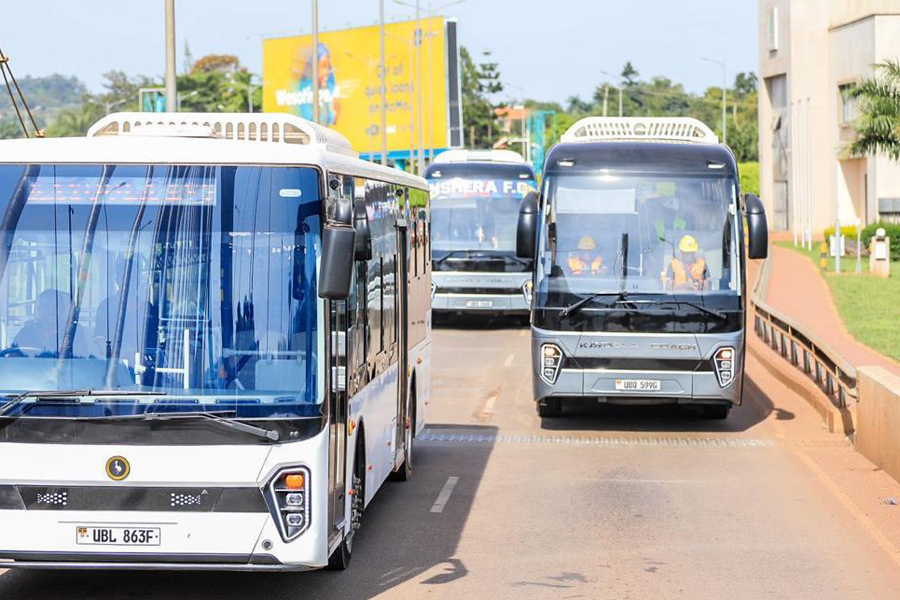
But behind the shiny Kayoola electric buses and the bold rhetoric of sustainable mobility lies a sobering truth – Kiira is a corporation suspended in mid-air, lavishly funded but grounded by execution gaps, staffing vacuums, and the glacial pace of bureaucratic processes.
On paper, Kiira’s finances are impeccable, but the Corporation, according to Auditor General Edward Akol, grapples with a troubling paradox: a company with colossal ambition but fractional delivery.
The UGX200 billion dream, the 1% reality
Perhaps the most stunning revelation in the Auditor General’s report is Kiira’s revenue performance – or more precisely, its collapse.
Against an ambitious revenue target of UGX197.49 billion for the 2023/24 financial year, the Corporation managed to collect only UGX2.345 billion, a paltry 1.2 percent of the target, which wasn’t a marginal miss but a near-total market failure.
Of the projected UGX153.59 billion expected from motor vehicle sales alone, only UGX1.63 billion was realized.
Contract manufacturing services and sales of spares and components—anticipated to bring in UGX32.9 billion combined—generated just zero shillings.
Even auxiliary services like charging, SMR, and vehicle hire barely moved the needle. The numbers aren’t just underwhelming—they’re alarming.
“This failure to collect revenue as planned,” the Auditor General warns, “affects the profitability of Kiira Motors and implementation of the planned key activities.”
In other words, the very engine meant to drive industrial self-reliance has stalled before it could even pull out of the garage.
Kiira attributes the massive shortfalls to chronic undercapitalization.
For instance, it had projected a capitalization requirement of UGX80 billion annually, but received only UGX45.36 billion, just 56.7% of the needed equity injection.
And this isn’t a one-off constraint – it’s a deep structural issue.
Kiira Motors’ internal five-year roadmap notes that the company needs at least UGX524 billion in capitalization to achieve full operational capacity for its mass production of electric buses and development of regional export markets.
Yet year after year, budget allocations continue to fall short, pushing the company to operate in startup mode long after it should be scaling.
Ironically, while its factory floor remains underutilized, the Auditor General noted that Kiira has generated interest in regional export markets.
Letters of Intent have been signed with Nigeria for over 3,000 buses, and Tanzania for 100 units.
But without production, these deals are nothing more than theoretical lifelines.
The bus plant that can’t start its engine
Despite the chronic delays, government support itself proved not the constraint.
For the 12 months to June 2024, Kiira Motors received UGX97.84 billion, 100% of what had been allocated.
Yet, by the end of the period, only UGX67.8 billion had been utilized, leaving a staggering Shs30.04 billion sitting idle in Kiira’s Bank of Uganda account.
The reason? Execution paralysis. The funds had been earmarked for mission-critical projects – construction, tooling, and equipping of the Kiira Vehicle Plant in Jinja.
But many of these were caught in various stages of delay or incomplete delivery.
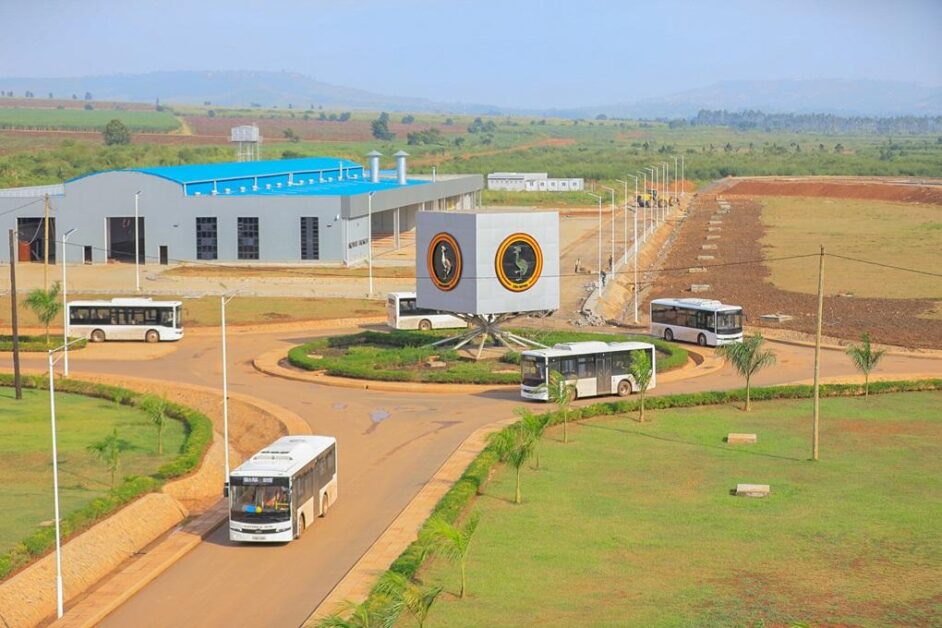
The Auditor General noted that construction of the assembly plant was only 95% complete at the time of the audit, while machinery and equipment installation was stuck at 87%, with the procurement process cited as a key bottleneck.
Meanwhile, bus parts and materials worth UGX14.43 billion were only 70% delivered, slowing the company’s ability to ramp up production.
Even furniture and fittings for the plant, a relatively minor component, had not been delivered until after the audit inspection.
In all, an estimated UGX51.35 billion worth of capital expenditure remained in limbo — which exposes not just delays but systemic weakness in project management, procurement planning, and operational urgency.
“Delays in the completion of the assembly plant, installation of the plant equipment, and supply of materials will affect the timely commencement of full vehicle production,” the Auditor General notes.
This is not a small problem. Kiira is not just building a car factory – it is laying the foundation of what was supposed to be Uganda’s most iconic industrial venture in the 21st century.
Yet, while the blueprints are in place and the money is in the account, execution is trailing dangerously behind ambition.
Boardless and understaffed
Structural problems at Kiira Motors go far beyond funding shortfalls.
At the heart of its dysfunction is a breakdown in governance and capacity, two pillars critical to any high-tech manufacturing entity, let alone one trying to birth an electric vehicle industry in Africa.
The most glaring red flag is at the very top: Kiira has been operating without a functioning board since May 31, 2024.
 East Africa’s Marketing Leaders Shine in Africa CMO 100 Debut, with Sylvia Mulinge Inducted into Hall of Fame
Of the original 11 members appointed in 2021, only two remain – the executive chairperson and chief executive officer, while the rest have had their tenure expire, and no new appointments made.
“Lack of an approved board affects implementation of the company’s strategies and is a major weakness within the corporate governance systems,” the Auditor General notes.
This vacuum at the strategic apex leaves Kiira Montors adrift. Without a full board, decisions around procurement, investment priorities, risk oversight, and strategic pivots are stalled or weakened.
And the timing could not be worse – this is a critical inflection point for Kiira, where delays compound and execution windows narrow.
The failure to fill key positions is further reflected in staff recruitment.
Of the 247 staff positions approved for Kiira Motors, only 155 were filled as of June 2024. That’s a 37.8%.
In specialized departments—marketing and sales, compliance, finance, and production—vacancies are severe.
For example, only 13 of the 40 positions in the marketing and sales unit are filled, meaning that more than 67% of the frontline team responsible for revenue generation is missing.
This isn’t merely a human resources lapse—it’s a strategic bottleneck that threatens the company’s very ability to deliver its mandate.
“Staffing gaps in highly specialized and technical skills-based organizations like [Kiira] greatly impair the ability to achieve core objectives.”
Kiira acknowledges the issue, noting that only 47 new hires were made in 2024 and that more recruitment hinges on budget availability.
But the pace is glacial. In an industry that demands agility, systems integration, and rapid response to evolving technology trends, Kiira remains understaffed, under-led, and overburdened by its own ambition.
Together, the governance and staffing crises make one thing brutally clear: ‘you cannot run a cutting-edge automotive enterprise without a boardroom or a workforce.
And without those, all the capital in the world may not be enough.
Cash flow? More like molasses flow
Adding yet another layer to Kiira Motors’ operational paralysis is the chronic delay in the release of funds.
On paper, government played its part—the full UGX97.84 billion approved for 2023/24 financial year was warranted and available.
But in practice, Kiira’s lifeline was kinked by a bureaucratic bottleneck.
The problem lies with the Science, Technology and Innovation (STI) Secretariat, the intermediary through which Kiira’s subvention is channeled.
While the Treasury released the funds on schedule, the STI Secretariat delayed disbursing each quarterly tranche by an average of 56 days.
That’s nearly two months of silence and stasis—every quarter.
The impact was far from trivial. Each UGX5 billion quarterly release arrived too late to execute core functions – paying salaries, procuring parts, and rolling out scheduled work plan activities.
“Kiira Motors delayed in receiving quarterly subvention funds by an average of 56 days… This has affected the implementation of planned activities,” the Auditor General notes.
Kiira reported that the cash flow disruptions left it struggling to meet even recurrent obligations, including staff wages and contract payments.
And although, Kiira claims to have raised the issue repeatedly with the STI Secretariat, but “the challenge persists”.
In industries built on timelines, supply chains, and just-in-time production, such delays are more than administrative hiccups—they are strategic risks.
Each missed window erodes Kiira’s credibility with suppliers, disrupts assembly schedules, and undermines investor confidence.
Even the best-laid engineering plans can crumble under erratic cash flow.
In short, it becomes hard to build the future on funds that arrive late and leadership that arrives last.
Promise in suspension
To Kiira Motors, some forward movement is evident. A few activities—valued at UGX10.17 billion – were fully executed, largely covering staff wages, board allowances, and related recurrent costs.
Construction of the Kiira Vehicle Plant, the cornerstone of Uganda’s automotive dreams, was reportedly 98% complete by December 2024, with a handover planned for year-end.
Strategically, Kiira is not idle. It is actively courting regional markets, having secured Letters of Intent from Nigeria buses and Tanzania.
Meanwhile, its e-Bus Xpress mobility platform has been launched to demonstrate the viability of electric mass transit systems in African cities.
And internally, Kiira Motors continues to engage government on capitalization, seeking access to the full UGX524 billion required to scale operations, including exploring credit facilities.
As things stand, Kiira Motors is teetering between promise and paralysis—a national flagship industrial project with the right vision, competent financial reporting, and budding market interest, but weighed down by executional drag, staffing deficits, a crippled governance structure, and a donor mechanism that delivers funds too late to matter.