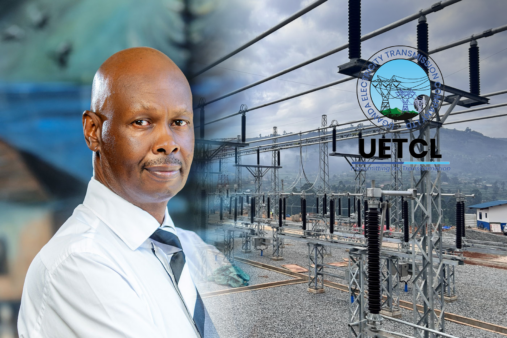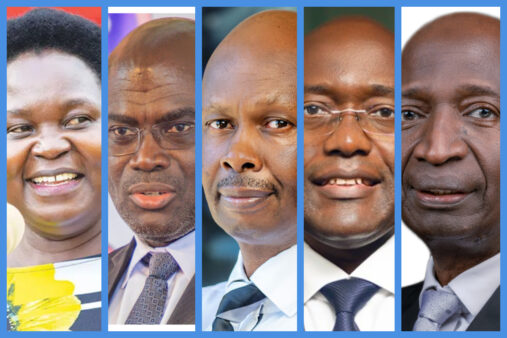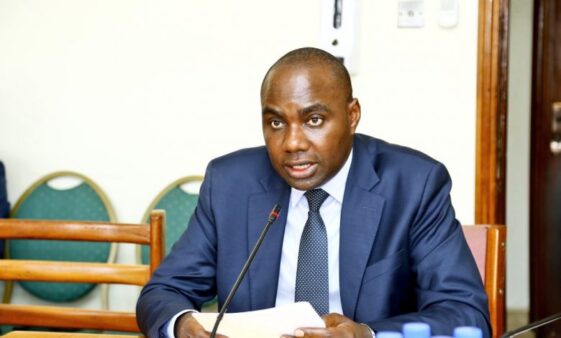
The long-running standoff between Umeme and the Uganda Electricity Transmission Company Limited (UETCL) over a UGX 594 billion debt has once again thrown Uganda’s power sector into turmoil, exposing deep financial fissures in the country’s electricity value chain.
In an exclusive response to the CEO East Africa Magazine, UETCL maintains that the UGX 593.5 billion in question represents verified receivables accumulated from energy sales to Umeme under the Power Sales Agreement (PSA), which governed the purchase and distribution of electricity throughout the company’s 20-year concession.
According to the transmission utility, the figure audited and confirmed by the Office of the Auditor General, is purely principal, excluding any penalties or interest.
The PSA includes a binding clause that allows UETCL to charge interest on delayed payments at LIBOR/SOFR plus 3% compounded monthly, a provision that remains enforceable even after the concession’s expiry.
Officials inside UETCL insist this clause has effectively turned the arrears into a lingering liability that continues to weigh heavily on its books.
Government’s balancing act
The Ministry of Energy Permanent Secretary, Irene Batebe argues that the buyout payment and the receivables owed to UETCL are governed by two distinct legal agreements and cannot be reconciled under a single transaction.
This follows a decision by the government to proceed with the Umeme buyout despite the outstanding UETCL debt.
The buyout valued at $118 million (approximately UGX 428.9 billion) was paid to Umeme in March 2025 at the end of its 20-year concession, as stipulated in the Lease and Assignment Agreement (LAA).
Energy officials maintain that the buyout was a prerequisite for the formal transfer of distribution assets to the government through the Uganda Electricity Distribution Company Limited (UEDCL).
Liquidity under pressure
For UETCL, the implications of the Umeme debt are far-reaching. The company admits the unpaid invoices have strained its liquidity, constraining its ability to pay independent power producers (IPPs) and meet operational costs.
The pressure has limited investment in grid maintenance and system reinforcement projects, heightening the risk of technical failures.
Internally, officials acknowledge that the liquidity crunch risks diminishing UETCL’s creditworthiness with financial institutions and has also exposed the utility to the risk of default on key obligations.
The mounting debt has heightened the risk of independent power producers cashing in their bank guarantees, a move that could further strain UETCL’s already fragile finances and disrupt the stability of the power supply chain.
The company’s financial stress coincided with leadership changes, following the quiet exit of Joshua Karamagi, the former Chief Executive Officer.
 6 Ugandans Arrested in Connection to USD 3.4 Mn Equity Bank Rwanda Digital Heist
A debt that reaches parliament
The controversy escalated when Parliament’s Committee on Environment and Natural Resources launched a probe into the debt, questioning the government’s decision to prioritize the Umeme buyout over recovering UETCL’s receivables.
According to Parliament Watch, the committee’s inquiry revealed that while Umeme had already been compensated for its residual investments, it still owed UETCL hundreds of billions in unpaid invoices for bulk power purchases.
The Committee Chairperson, Herbert Edmund Ariko, described the situation as emblematic of deeper inefficiencies in the power sector’s governance structure.
Legislators argued that the government should have withheld the buyout until Umeme cleared its obligations, noting that such fiscal missteps undermine the financial health of state-owned utilities.
The parliamentary hearings also exposed institutional confusion over the ongoing arbitration for UETCL–Umeme debt dispute is now being handled.
Lawmakers questioned why UETCL, as a limited liability company capable of suing and being sued, had not opted for direct local litigation instead of a foreign tribunal.
Some viewed the decision as unnecessary outsourcing of justice, while others warned it could delay resolution for years.
The parliamentary probe has also exposed a structural flaw with the complex web of inter-company debts across Uganda’s electricity sub-sector.
Legislators warned that the mounting obligations between the transmission, generation, and distribution entities risked creating a financial domino effect that could destabilize the entire energy system.
UEDCL’s uncertain transition
At the distribution end, UEDCL, which has resumed control of operations following Umeme’s concession exit, faces an uphill task.
The company inherits an aging distribution network left behind by Umeme. As UEDCL seeks for more funding for extensive grid repairs, its challenge is to rebuild a distribution model that can sustain operations without the private capital injection that Umeme once provided.
The UGX 600 billion dispute between UETCL and Umeme has become a litmus test for Uganda’s power governance framework.
It underscores the chronic challenges of contract enforcement, weak coordination among public utilities, and the complexities of managing overlapping agreements signed during the early liberalization of the sector.