With only a few days left to the June 30th 2023 compliance deadline for banks that failed to raise UGX120 billion in both share capital and core capital by December 31st 2022, a number of the affected banks are in last-minute mad dashes to raise the capital needed or else face a raft of regulatory sanctions that could include closure.
According to a tabulation by CEO East Africa Magazine, as of December 2022, out of the 25 banks, as per published financial results, at least 10 banks didn’t meet the thresholds on share capital while 11 did not meet the thresholds on core capital. Eight (8) banks did not meet both.
However, all Domestically Systemic Important Banks (DSIBS)⏤ Stanbic Bank, Centenary Bank, Absa Bank, Standard Chartered Bank, dfcu Bank and Equity Bank, which according to the Central Bank, jointly accounted for 64.6 per cent of total banking sector assets as at end December 2022, were compliant on both their share capital and core capital requirements.
Eight other non-DSIB banks also met all of the capital thresholds for the first phase.
Some of the 8 banks that CEO East Africa Magazine spoke to, which by the end of December 2022 did not meet both their share capital and core capital regulatory minimums, all said they were working towards being compliant by 30th June 2023, which is only 10 days away.
In an online conversation, Mr. Ahmed Maher, the Chief Executive Officer of Cairo Bank Uganda told CEO East Africa Magazine that his bank would be compliant by the June deadline.
“Our capital restoration plan (to the Central Bank) was in 3 tranches. We have already received 2 tranches and the 3rd will be received before the end of June,” he said, on the phone.
Annet Mulindwa Nakawunde, the Managing Director of Finance Trust Bank, also told this reporter that her bank was on course to comply.
“We are on course and we will comply,” she said without divulging further details.
Owen Amanya, the Managing Director of Opportunity Bank, also said his bank would be compliant by the June Deadline.
“We are in the process of complying with the requirements. Plans are in the final stages,” he said in an online conversation.
Oluwole Shodiyan of Guaranty Trust Bank, Abdulaziz Mansur of Tropical Bank, and Henry Lugemwa Kyanjo of Exim Bank had not responded to our inquiries by press time.
Jesse Timbwa of ABC Capital Bank, said he would call back, but had not done so by press time.

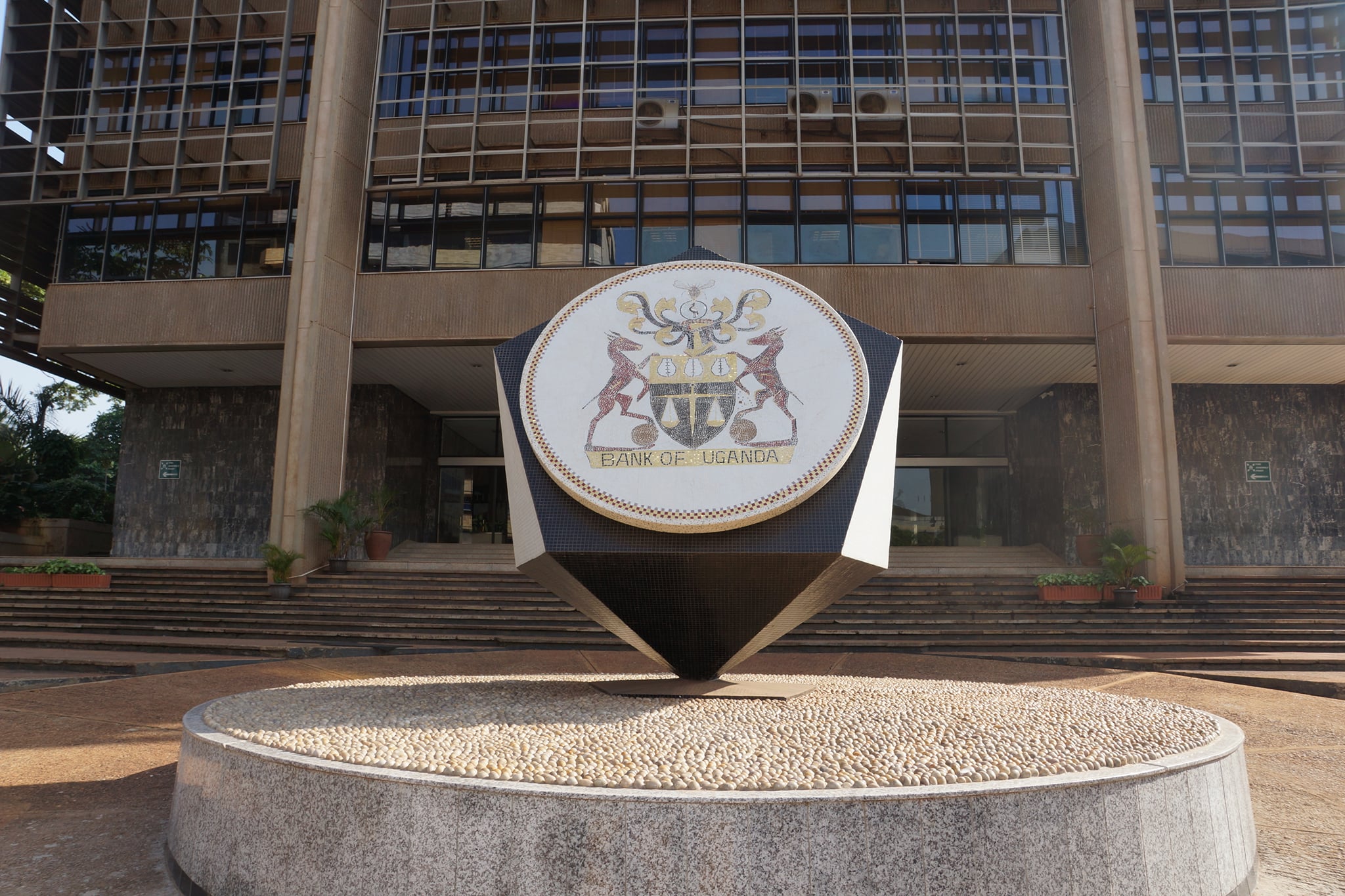
Bank of Uganda’s Executive Director in Charge of Bank Supervision, Dr. Tumubweinee Twinemanzi, in an emailed response to CEO East Africa Magazine said that “for Supervised Financial Institutions (SFIs) that fail to meet or comply with the revised capital requirements indicated in Statutory Instrument 130 of 2022, as of 30th June 2023; the FIA 2004 has provisions on what next and how to proceed. These provisions, together with those in BOU Act 2000, shall then inform the next course of action by the Bank of Uganda vide the undercapitalised SFIs.”
What does the law say?
 After 29 Years in Court, Government Ordered to Pay UGX 512.9 Million in Kamuli Land Dispute
Section 86 of the FIA 2002 mandates that non-compliant financial institutions have to submit to the Central Bank, within 45 days, a capital restoration plan to restore the financial institution to capital adequacy within the next 180 days.
During these 180 days, the Central Bank may prohibit the financial institution from awarding any bonuses, or increments in the salary, emoluments and other benefits of all directors and officers of the financial institution. It may also appoint a person, suitably qualified and competent in the opinion of the Central Bank, to advise and assist the financial institution in designing and implementing the capital restoration plan, and the person appointed shall regularly report to the Central Bank on the progress of the capital restoration plan.
Where a financial institution has been ordered by the Central Bank to submit a capital restoration plan or to add more capital, and the financial institution fails, refuses or neglects to comply with the order or to implement the capital restoration plan, the Central Bank can among other regulator measures, prohibit the financial institution from opening new branches and or impose restrictions on the growth of assets or liabilities of the financial institution as it shall deem fit. The Central Bank may also restrict the rate of interest on savings and time deposits payable by the financial institution to such rates as the Central Bank shall determine. The Central Bank also has the discretion to remove officers of the financial institution responsible for the financial institution’s noncompliance. It may also order the financial institution to do any or such other things that the Central Bank may deem necessary to rectify the capital deficiency of the financial institution.
On the 16th of November 2022, the Financial Institutions (Revision of Minimum Capital Requirements) Instrument 2022 was signed into law by Uganda’s Minister of Finance, Planning and Economic Development (MFPED), Hon. Matia Kasaija. The instrument increased the minimum capital requirements for banks by 6 times or 500% from UGX25 billion (USD 6.7 million) to UGX150 billion (approx USD 40.2 million).
The increment would however be tiered, starting with a minimum capital buffer of UGX120 billion (USD32.2 million) by the 31st of December 2022 and then UGX150 billion by the 30th of June 2024.
Commercial banks are also required to have minimum capital funds unimpaired by losses (core capital) of UGX 120 billion by 31 December 2022, and UGX150 billion by 30 June 2024.
Under the same statutory instrument, minimum capital requirements for credit institutions were also increased by 25 times or 1900% from UGX1 billion (USD268,000) to UGX25 billion (USD6.7 million) by 30th June 2024. Similarly, the increments are tiered, starting with a minimum capital buffer of at least UGX20 billion (USD5.4 million) by the end of December 2022.
Micro-Deposit-taking Institutions were also required to increase their minimum capital to at least UGX8 billion by 31st December 2022 and UGX10 billion by June 2024.
Minimum capital buffers were last revised in 2010 under Financial Institutions (Revision of Minimum Capital Requirements Instrument), 2010.
The Central Bank says the revised buffers are long overdue and “intended to match the dynamism of the economy, incentivise shareholder commitment, enable institutions to withstand shocks and to converge with regional peers among whom Uganda effectively has the lowest paid-up capital”.
Banks that did not meet the December 2022 deadline, were required to submit capital restoration plans within forty-five (45) days and to meet the required capital by June 30, 2023, in line with the regulatory framework.
“Capital restoration plans when submitted are reviewed and if there are deficiencies therein, fixed; and then implemented as agreed,” Dr. Twinemanzi told CEO East Africa Magaine, in an earlier interview.
Industry observers have suggested that some acquisitions⏤ by either domestic banks or foreign ones looking to enter the Ugandan market could be in the works since most of the affected banks are at the bottom of the market and may find it hard to raise capital in the short time allocated. The last 10 banks only control 7.6% of industry assets compared to the top 10 which control 82.2%.