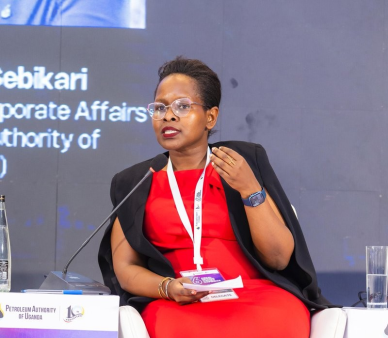
As Uganda gets closer to a Final Investment Decision (FID) setting off a flurry of activities that will eventually see finally cement its place as an oil producing nation, the Petroleum Authority of Uganda (PAU), Uganda’s upstream and midstream petroleum regulator has intensified its preparedness.
This month, between 4th and 6th February, 2020, Ernest Rubondo, the PAU Executive Director led a delegation of PAU executives on a study visit to UK’s Oil and Gas Authority (OGA), in Aberdeen, Scotland- as well as several other regulatory bodies and industry associations in UK’s oil and gas sector.
“The UK oil and gas industry provides important lessons for Uganda to learn in the management of its emerging oil and gas industry,” Mr. Rubondo, said, adding: “The objective of the study visit was to build strategic partnerships and share experience with institutions which have reputable experience and expertise in the regulation of the oil and gas sector.”
The OGA was established in 2016 as an independent regulator for the UK oil and gas industry to regulate, influence and promote the UK oil and gas industry. PAU on the other hand was operationalised in 2015/2016 to regulate the upstream and midstream petroleum sub-sectors in Uganda.
The discussions between the PAU and OGA during the two day visit focused on governance, reservoir management, management of production facilities, management and audit of petroleum resources, decommissioning of facilities, environment, health and safety, and management of costs.
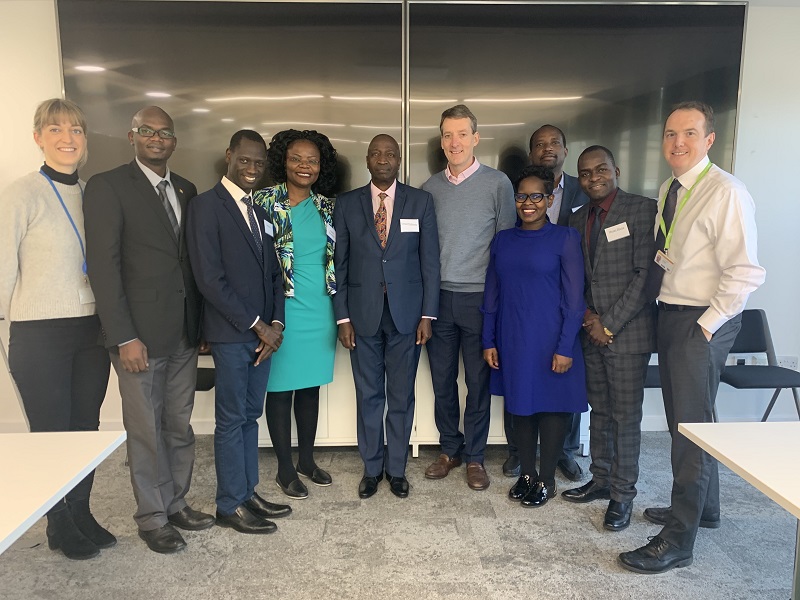
“We work alongside the UK oil and gas industry and the Government to Maximise Economic Recovery (MER) of the UK’s oil and gas resource and to fully support the energy transition”, said Dr Andy Samuel, Chief Executive, OGA.
OGA estimates that 39 billion barrels of oil equivalent have been produced from the UK Continental Shelf (UKCS) and an estimated 10 to 20 billion barrels of oil equivalent are remaining. The approach to regulation in the UK oil and gas industry is premised on the need to improve performance by building a relationship between Government, the Regulator and Industry.
“This has seen production efficiency grow from 60% in 2012 to 75% in 2019 with an additional 300,000 barrels of oil produced, an improved recovery factor and more cost-efficient operations,” Mr. Gunther Newcombe, OGA’s Director of Special Projects told the PAU team.
 World Bank bans PwC Africa, Rwanda and Kenya affiliates from Bank Group-financed projects over fraudulent practices
He also emphasized the need to plan for decommissioning during the early stages of resource Development.
“With over 400 oil and gas fields, 320 platforms, 20,000km of pipelines and millions of tonnes of structures ready for decommissioning on the UKCS, OGA is working with the industry to ensure this decommissioning is achieved in a cost efficient and environmentally friendly manner. It is important for countries like Uganda to agree on the principles of decommissioning early in the life cycle of the fields,” said Mr. Newcombe.
The PAU delegation also met with other regulatory bodies including the Health and Safety Executive (HSE) that regulates health and safety in the UK; the Offshore Petroleum Regulator for
Environment and Decommissioning (OPRED); the Scottish Development Enterprise, and undertook site visits to Tendeka, a company that develops technology to improve well productivity; Whittaker Engineering, a manufacturer of oil and gas facilities; ASET International Oil and Gas Training Academy, owned by the Scottish Government and the main training centre for the Oil & Gas Technicians; and Oil Spill Response Limited, a membership organisation (OSRL) for operators that guarantees access to oil spill response services.

The Strategic Plan for the PAU emphasizes the need for the PAU to build strategic partnerships with countries and institutions who have reputable experience and expertise in regulating of the oil and gas sector with a view to contribute towards effective management of Uganda’s oil and gas sector.
The other regulatory institutions which the PAU is sharing experiences with include the Norwegian Petroleum Directorate, the Alberta Energy Regulator (AER) in Canada, the Department of Mines and Petroleum of Western Australia, the Energy Regulators of East Africa (EREA) and the Energy Water and Utilities Regulatory Authority (EWURA) of Tanzania.