Uganda’s Parliament expenditure is projected to rise steeply each year, crossing the trillion-shilling mark by 2027 and reaching UGX 1.53 trillion by 2029/30, according to a Strategic Plan for 2025–2030 published by the legislative arm of government.
This steady escalation highlights not only the financial burden of maintaining Uganda’s large legislature but also the wider political and economic pressures shaping the budget, cementing its place as one of the country’s most expensive state institutions.
The Medium-Term Expenditure Framework (MTEF) paints a year-by-year picture of this growth.
In FY 2025/26, Parliament is expected to spend UGX 917.6 billion, of which UGX 117 billion is allocated to wages, UGX 779.8 billion to non-wage recurrent costs, and UGX 20.8 billion to development projects.
This figure rises in FY 2026/27 to UGX 960.4 billion, driven by a wage bill of UGX 122.9 billion, non-wage recurrent allocations of UGX 813.6 billion, and development spending of UGX 23.9 billion.
The upward climb accelerates in FY 2027/28, when Parliament’s budget officially crosses the trillion mark for the first time.
That year, total expenditure is projected at UGX 1.09 trillion, with wages at UGX 129 billion, non-wage recurrent allocations at UGX 935.6 billion, and development spending at UGX 26.3 billion.
By 2028/29, expenditure rises further to UGX 1.29 trillion, with non-wage recurrent allocations surging past the trillion line at UGX 1.12 trillion, while wages grow to UGX 135.5 billion and development funding climbs to UGX 31.6 billion.
By the final year of the Strategic Plan, FY 2029/30, Parliament’s budget is projected to reach UGX 1.53 trillion.
The bulk of this will be recurrent costs, with UGX 142.3 billion for wages and UGX 1.35 trillion for non-wage recurrent expenses.
Development allocations will also hit their highest point at UGX 37.9 billion, largely financing infrastructure projects such as the long-delayed new Chamber of Parliament and additional office blocks.
The numbers show a relentless increase: Parliament’s total budget grows by more than UGX 600 billion in just five years, with non-wage recurrent spending alone rising by nearly UGX 570 billion over the same period.
Yet even these rising allocations are not enough to cover Parliament’s needs.
The plan highlights persistent funding gaps that remain unresolved. In FY 2025/26, the shortfall is estimated at UGX 200.6 billion, widening to UGX 215.1 billion in 2026/27 and UGX 247.7 billion in 2027/28.
The gap narrows to UGX 122.2 billion in 2028/29 and drops to UGX 3.3 billion by 2029/30, but the consistent presence of deficits underscores how Parliament’s ambitions continue to outstrip available resources.
These gaps are largely linked to underfunded development projects and the ballooning cost of non-wage recurrent commitments.
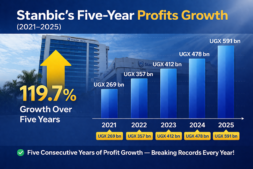 Stanbic’s Five-Year Scorecard: How Profit Growth, Deposits, Lending and Dividends Reshaped Performance
The drivers of this relentless growth are both structural and political. Uganda’s Parliament is one of the largest in Africa, with 556 MPs whose salaries, pensions, allowances, and facilitation costs dominate the wage bill.
Constituency outreach has become an especially heavy burden, as MPs are expected to respond to citizens’ needs with direct financial support, turning representation into a costly exercise.
At the same time, Parliament is pursuing an ambitious modernization agenda, rolling out an e-Parliament system with digitized debates, electronic record management, and public engagement platforms.
These ICT investments, though important for transparency and efficiency, come with high upfront and maintenance costs.
Infrastructure is another long-standing drain on resources. The new Chamber of Parliament, first mooted more than a decade ago, continues to absorb large sums amid delays and cost escalations.
Additional office blocks are also required to house MPs and their staff. Beyond domestic operations, Uganda’s participation in international and regional legislative forums, including contributions to the East African Legislative Assembly, adds to the recurrent obligations that swell Parliament’s budget each year.
But the paradox is stark: while Parliament’s budget rises each year, inefficiencies remain entrenched.
The Strategic Plan admits to unequal distribution of resources across committees, weak procurement oversight, duplication of roles, and low completion of oversight field visits.
The imbalance is striking: in FY 2025/26, more than UGX 71 billion is allocated to plenary sittings and committee meetings, while less than UGX 15 billion is dedicated to oversight visits in the field, undermining Parliament’s watchdog role over the executive.
All this unfolds in a wider context of economic strain. Uganda is struggling with limited revenue growth, mounting debt repayments, and urgent citizen demands for improved public services.
Health facilities lack essential drugs, schools are overcrowded and underfunded, and unemployment remains high, yet Parliament continues to secure the largest share of increases in the governance sector budget.
The Strategic Plan itself concedes that public perception of wasteful expenditure has deepened, eroding trust in Parliament’s role as a fiscal watchdog.
While the argument on spending growth reflects the cost of democracy and modernization, many Ugandans see only extravagance with billions spent on allowances, vehicles, and office blocks while ordinary citizens struggle for basic services.
As its budget approaches UGX 1.53 trillion by 2030, Parliament’s most urgent task may not be balancing the books, but convincing the public that its rising costs truly serve the people and not just the politicians.