Imagine Amina, a young mother in Kampala, waiting every month for money sent by her brother working abroad.
That money pays for her children’s school fees, medicine, and food.
But sometimes, the transfer takes days, costs too much in fees, or gets stuck somewhere along the way.
Much of the money still moves through costly, slow, or informal channels, meaning less reaches families like Amina’s.
The challenge facing Uganda is: how do we build better, faster, and cheaper ways to send money home?
Every shilling counts, and no family must be left waiting.
The disruption no one saw coming
For much of the last century, a bank was a place — a building with tellers, vaults, and paper records.
But today, that picture is changing fast. The bank is no longer a physical location; it’s a digital platform.
Now, millions of people bank entirely through apps on their phones, without ever visiting a branch or speaking to a person.
Around the world, traditional banks are being outpaced by nimble, digital-first companies.
They offer faster account opening, lower fees, personalized services, and 24/7 access.
Klarna from Sweden has grown to 150 million users, Nubank in Brazil to 105 million, and Revolut from UK serves over 45 million customers.
These companies have achieved in less than 15 years what legacy banks took centuries to build.
Their efficiency comes from automated compliance, data-driven credit decisions, and branchless operations.
They offer lower costs and faster services, reflecting a global shift.
Uganda has witnessed rapid adoption of mobile money platforms such as MTN MoMo and Airtel Money.
They now serve over 14 million users, fundamentally changing domestic payment habits.
Agent banking, too, has expanded financial services to rural areas previously underserved by traditional banks.
Cross-border payments, once controlled by traditional banks and agents, are increasingly handled by Fintech.
They use Application Programming Interfaces (APIs) and digital rails, with users connecting directly, cutting out correspondent banking routes.
For example, partnerships like Mastercard’s Diaspora Send, working with the likes of Equity Bank and Unimoney, are enabling Ugandans abroad to send money directly into mobile wallets or bank accounts.
But challenges remain. Uganda’s payment systems still face interoperability issues.
Customers often cannot easily transfer money between different mobile wallets or between mobile money and bank accounts without extra fees.
Efforts by Bank of Uganda to promote interoperability are underway but require ongoing support and technical investment.
Furthermore, while digital payments are growing, many Ugandans still rely on cash.
While informal agents remain a big part of remittance flows, they can be costly and opaque.
The big challenge now is for Uganda’s financial institutions to become active players in the global digital finance ecosystem.
They must invest in interoperable platforms, open banking frameworks and strong consumer protections.
Important, however, they must also invest in real-time settlement systems that meet international standards.
Without these, Uganda risks becoming a passive consumer of foreign Fintechs rather than a creator of its digital financial infrastructure.
Diaspora dollars: Uganda’s hidden growth engine
Uganda’s diaspora is much more than a scattered community abroad – it is a vital engine driving the country’s economy.
Remittances from Ugandans working overseas had by 2024, according Bank of Uganda, reached $1.5b, up from $1.1b in 2016.
This is a steady growth that reflects both an increase in Ugandans seeking work abroad and improvements in digital money transfers.
These remittances now represent about 3% of Uganda’s GDP.
They are actually at par with foreign investment and development aid in terms of economic impact.
But beyond these big numbers lies the real story: remittances are lifelines for households.
They pay for daily needs, school fees, healthcare, business startup costs, and even loan repayments.
Unlike loans or aid, remittances do not create debt and often rise during tough times.
At the heart of these flows is Uganda’s two million-strong diaspora, including roughly 110,000 new migrant workers every year.
Uganda’s diaspora represents a significant source of capital.
It has the potential to drive investment, financial innovation, and knowledge transfer when effectively used.
However, a large portion of it still moves through informal channels: cash hand-carrying, unlicensed agents, or unofficial currency exchanges.
These channels come with high costs, risks, and a lack of transparency, which undermines trust and complicates economic planning.
They also prevent families and government from fully benefiting from the funds sent.
Analysts argue that formalising diaspora remittances is essential to increase savings, expand financial inclusion, and develop capital markets.
Formal channels not only enhance forex inflows but also promote household financial stability and sustainable economic growth.
Users are abandoning banks
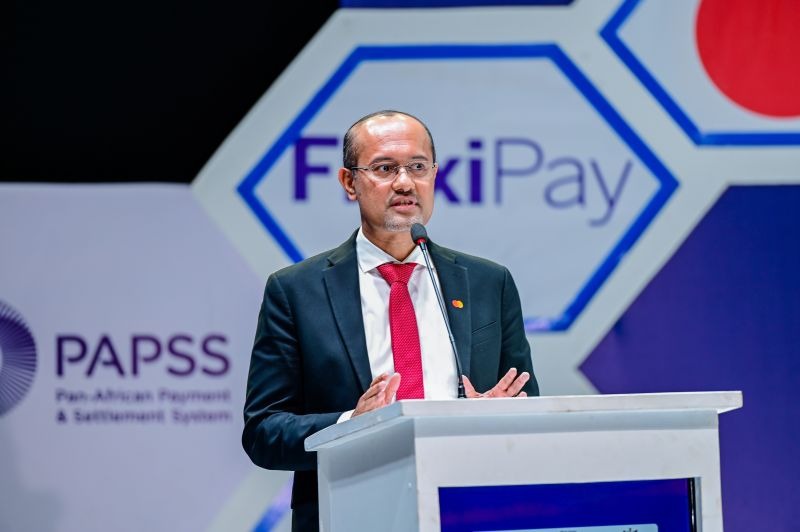
Shehryar Ali, Mastercard’s Regional Vice President for Eastern Africa, summed up the future of global remittances with four key factors.
These, he said, must be convenient, transparent, affordable, and speedy.
Speed: In an era where information moves in milliseconds, money transfers must keep pace.
The new standard isn’t banking hours; it’s the instant delivery of an email.
Convenience: Users expect seamless access anytime, anywhere, on any device.
Can you send money from your phone at midnight across continents, without delays or hassles?
Transparency: Hidden fees are no longer acceptable.
Consumers demand clear, upfront disclosure of exchange rates, fees, and the exact amount the recipient will receive.
Affordability: With average global remittance fees still around 6%, well above the UN’s recommended 3%, cost remains a major barrier.
Market trends show a clear shift toward platforms offering reduced fees and enhanced value to users.
Platforms such as Wise, Remitly, and Revolut have achieved rapid growth by aligning services with these user demands.
Designed around user needs, not legacy systems, they have optimized cross-border transfers.
They are built on lean infrastructure, real-time pricing, and agile regulatory compliance.
Their rise shows a bigger trend: remittance platforms today are not just money movers – they’re full financial ecosystems.
 Stanbic’s Five-Year Scorecard: How Profit Growth, Deposits, Lending and Dividends Reshaped Performance
They are often bundled with budgeting tools, savings options, debit cards, and investment products.
This broad offering helps retain users and drives growth.
The data speaks volumes: In 2023, Remitly’s digital remittance revenues grew by 38.6%.
Wise grew by 25.6%, Western Union, the longtime market leader, by only 8.5%, showing how traditional players struggle to keep up.
For Uganda’s financial sector, the message is clear: as remittance corridors digitize, competitive advantage won’t come from brand names.
It will come from speed, simplicity, and trustworthy systems.
Institutions that cling to old methods, paper processes, and hidden fees risk not just losing market share, but becoming irrelevant.
Digital winners
The 2023 data reveals a clear shift in the global remittance landscape.
For instance, Remitly’s digital remittance revenues surged by 38.6%, while Wise followed with a strong 25.6% growth.
Meanwhile, Western Union — the longtime traditional leader — recorded a modest 8.5 percent increase
These disparities reflect fundamental structural differences in business models.
Platforms like Wise and Remitly have built digital-first systems that avoid the heavy fixed costs, sprawling agent networks, and regulatory delays.
This allows them to offer faster transfers, transparent pricing, and user-friendly experiences.
More importantly, their cost advantage is substantial and measurable.
While the global average remittance fee sits near 6%, Wise and Remitly charge just 3.5–4%, nearly half the cost.
In markets like Uganda, where cash-based channels remain prevalent, lower transaction costs translate into significant financial relief.
Every percentage point cut in fees means millions of more dollars reaching families, boosting consumption, savings, and poverty reduction.
The takeaway here is that relying on costly, cash-heavy remittance methods means losing both economic value and strategic opportunity.
But by accelerating the shift to digital remittance rails, Uganda can unlock greater formalisation, transparency, and economic resilience.
Mastercard’s strategic play for Uganda
While Mastercard is best known globally as a card network, it has evolved into a major infrastructure player in cross-border payments.
Today, Mastercard is not just facilitating everyday card transactions — it has become one of the world’s leading remittance enablers.
It has recently taken the top spot in Saudi Arabia, a major corridor for migrant remittances.
In Uganda, Mastercard is quietly powering a growing share of remittance flows through partnerships with Equity Bank, MTN, Airtel, and Unimoney.
At the heart of this network is Mastercard’s Diaspora Send platform — a robust, API-driven solution.
It allows Ugandans abroad to send money directly into mobile wallets, bank accounts, or even contactless devices like smart rings.
The platform boasts a failure rate of less than 1%, reflecting strong technical reliability and seamless interoperability.
What makes this infrastructure especially transformative is its plug-and-play design.
The platform is API-enabled, enabling local banks, microfinance institutions, and Fintech to integrate quickly.
They can typically go live within two to three months.
This drastically reduces time to the market and allows institutions to tap into global remittance corridors without the costly burden of building their infrastructure.
Pricing is also competitive. Mastercard’s all-inclusive transaction cost sits around 3.5%, well below the global average of 6%.
It is also cheaper than many cash-heavy and agent-dependent channels still common in Uganda.
This fee model shares revenue fairly among sending entities.
Mastercard and receiving partners ensure both sustainability and scalability.
The platform represents a critical advancement in Uganda’s remittance infrastructure.
But also facilitates faster, more reliable, and cost-effective digital transfers.
However, unlocking its full potential requires more than technical integration.
It calls for aligned policies, customer education, and institutional commitment to reposition remittances as core elements of financial inclusion, payment innovation, and economic resilience.
Use-case-based remittances
Use-case-based remittances mark a transition from generic cash transfers to targeted, purpose-driven payments.
Instead of sending money for a relative to handle payments, why not enable diaspora remitters to pay school fees, loan installments, utility bills, rent, or health insurance premiums directly through secure, traceable digital channels?
This model of use-case-based, or “programmable,” remittances offers several systemic benefits:
Reduces leakages and fraud: Fewer intermediaries mean a lower risk of funds being diverted or misused.
Improves value retention: More of every shilling reaches its intended purpose, building trust and satisfaction on both ends.
Enhances financial accountability: Payments become documented, verifiable, and compliant with Know Your Customer and Anti-Money Laundering regulations.
Accelerates digitization of local services: Linking diaspora flows to formal institutions – schools, lenders, utilities – drives integration across sectors.
More importantly, this evolution transforms remittances from passive cash inflows into active financial infrastructure.
They become not just liquidity injections, but embedded financial tools that support household consumption, service continuity, and disciplined financial management.
Remittances stop being just cash.
They become economic utilities – predictable, targeted, and structurally aligned with goals of financial inclusion.
For policymakers, banks, and Fintechs, the message is clear: the next frontier isn’t simply facilitating transfers.
It’s designing remittance-linked products that solve real household problems – with speed, transparency, and purpose.
A solution?
Unlocking the full value of diaspora remittances demands more than technology.
It requires strategic alignment across policy, regulation, and industry practices.
To harness diaspora remittances as a catalyst for inclusive growth and financial innovation, Shehryar advises Uganda to act decisively.
Uganda, he says, should formalize and incentivize remittance inflows, digitize core remittance use cases, and facilitate API integration with global payment rails.
Government, he says, must also invest in targeted diaspora education, reform KYC, and partner with fintech innovators to design localised remittance products.
A comprehensive strategy encompassing regulatory reform, technology adoption, and stakeholder engagement is essential for Uganda to transform diaspora remittances into engines of sustainable development.