
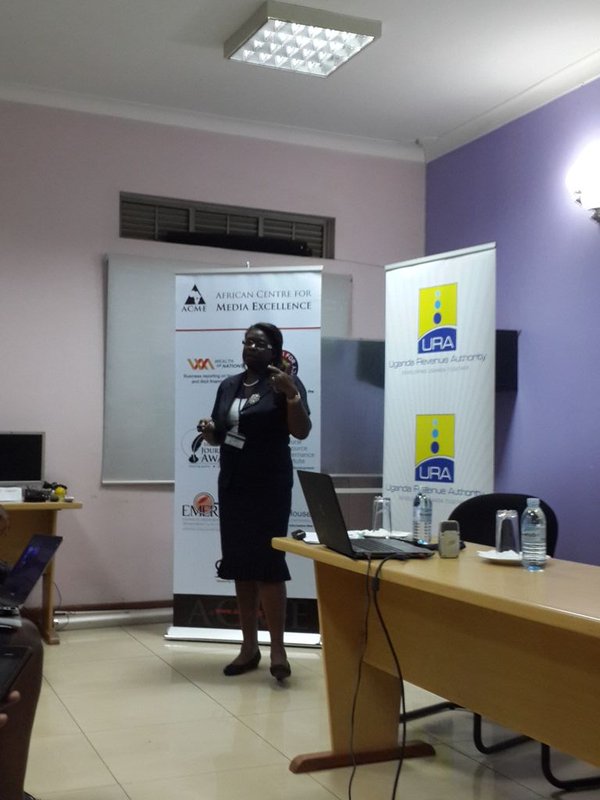
By Silvia Nyambura
For Uganda to transform into a middle income economy, it must be fully financed through tax revenue. However there are very few people complying which means taxes remain high, the Uganda Revenue Authority (URA) Commissioner General Doris Akol has said. If everyone were to pay a little then no one would have to pay too much.
She explained the biggest reason why Ugandans do not warm up to taxes is because they do not factor them in when starting businesses.
“Ugandan startups need to be professional from the beginning. The problem is most people want to start businesses, make profits and leave it at that. If they factored taxes in their projections, compliance levels would go up,” she said.
Akol who was addressing journalists at the African Center for Media Excellence in Kampala yesterday noted the informal sector is URA’s key focus in driving the compliance agenda.
“The informal sector contributes 62% to Uganda’s Gross Domestic Product (GDP). Surprisingly, unlike the general perception that it is a sector made up of illiterate people, most of the players are professional high net-worth individuals running small businesses and who unfortunately have their myths about taxation. Because of the informal nature of these businesses, they cannot be easily regulated. We need to pass laws to enable them pay taxes conveniently without feeling like they are losing money,” she said.
URA targets to attain 16% tax to GDP ratio by 2018 compared to the current 12.8%. This according to Akol will be achieved through influencing mindsets, putting in place systems that collect, track and account for collections, electronic interfaces with government departments and use of data analytics in revenue collection.
 Nicholas Mukasa Appointed Bank of Namibia Deputy Governor
