Uganda’s boda boda industry is essential to daily life, moving people and goods, creating jobs, and connecting city and village economies.
Any technological shift, therefore, must be assessed not just on environmental grounds but also on its impact on riders’ take-home pay, time on the road, and the reliability of support systems.
Electrification is no longer a distant idea. It is already being implemented through battery-swap networks, lease-to-own schemes, and a national e-mobility strategy that aligns transport with Uganda’s largely renewable energy mix.
The debate has shifted from whether riders should go electric to how the transition can enhance livelihoods while improving air quality.
Why boda bodas Matter
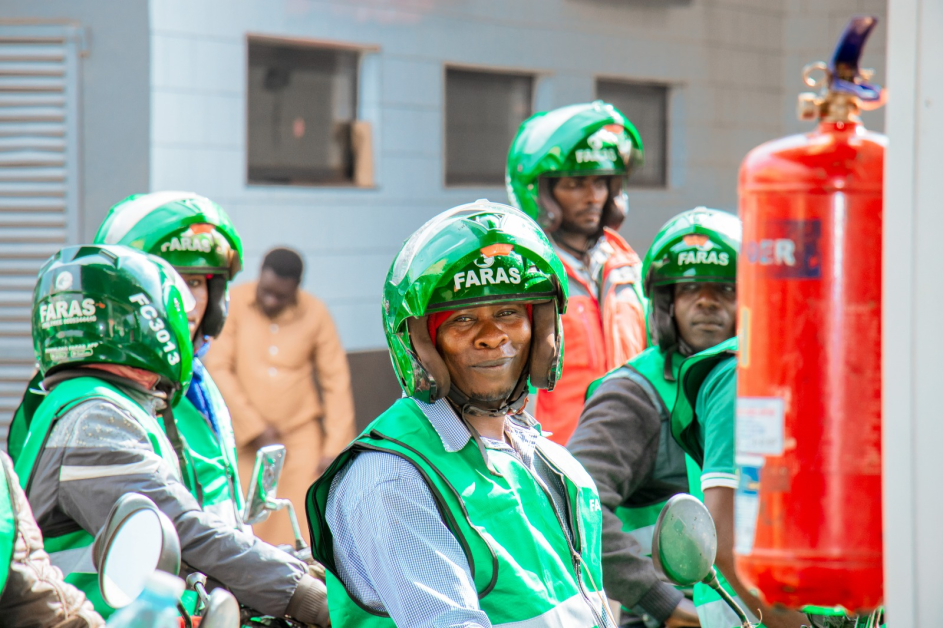
Boda bodas fill the gaps left by limited formal transport, navigating through congestion and linking neighborhoods that taxis and buses can’t reach.
Research on Kampala’s informal transport highlights how riders meet critical last-mile needs even as the sector wrestles with safety, regulation, and policy uncertainty.
These challenges make reform urgent but also underscore the industry’s social and economic value.
Counting the fleet is tricky. Estimates for Kampala range from about 150,000 registered to as many as 350,000 active riders, while national totals range from one to 1.2 million motorcycles, most operating as taxis.
Whatever the exact figure, the boda sector is undeniably one of Uganda’s largest sources of employment and mobility.
What riders actually earn and spend
For riders, the true cost of going electric lies in daily cash flow, fuel or swap costs, maintenance, downtime, and finance. Battery swapping is the game-changer.
It converts charging time into a one- to two-minute exchange and transforms energy costs into predictable, per-swap fees.
On-the-ground reporting from Uganda’s swap networks shows 30–50% lower daily operating costs compared with petrol.
A fully charged battery costs around UGX 5,000 per swap, compared to about UGX 30,000 per day in fuel for a petrol bike.
Electric motorcycles also avoid routine maintenance costs for oil, plugs, and valves, items that steadily eat into profits.
That combination means higher net daily income, especially when swap stations are conveniently located along a rider’s route.
Uganda’s grid further strengthens the economics. With about 95% of installed capacity from renewables, mostly hydropower, each electric kilometer is both cleaner and less exposed to global fuel price shocks.
The commissioning of the 600 MW Karuma plant pushed total capacity beyond 2,000 MW, reinforcing the long-run cost advantage of e-mobility.
 Stanbic Accelerates Uganda’s Digital Future with “Kikole Ku Speedii” Campaign
Who’s building the ecosystem
Zembo pioneered automated swap cabinets and PayGo or lease-to-own models tailored to riders’ cash flows.
Its Kampala network delivers on the promise to “swap in under a minute.”
Spiro has expanded rapidly through government partnerships, citing at least 30% rider savings.
It is adding dozens of swap sites across Kampala and into secondary cities, backed by new financing for battery production and deployment.
GOGO, formerly Bodawerk, reports 800,000 battery swaps and 50 million kilometers ridden on its network in 2024, alongside 40–50% daily operating-cost savings and up to nine times lower annual maintenance costs than petrol bikes.
Policy direction and city signals
Uganda’s National E-Mobility Strategy sets an ambitious goal to transition all public transport and motorcycles to electric power by 2030, with passenger vehicles following thereafter.
The 2024 E-Mobility Outlook Report tracks progress in areas such as local manufacturing, charging and swap infrastructure, standardization, and workforce skills.

Global shifts in greening transport
Worldwide, electric mobility continues to gain momentum. According to the IEA’s Global EV Outlook, electric cars made up 18% of global sales in 2023, with growth projected to accelerate through 2024 and 2025.
Two- and three-wheelers remain the most electrified segment globally, a promising signal for emerging markets like Uganda.
This matters because rising global production volumes are steadily lowering the cost of batteries and key components, the very factors that determine whether an e-boda is affordable and profitable.
The road ahead
When done right, electrification is not just an environmental strategy, it’s a livelihoods strategy.
On routes with accessible swap stations and flexible financing, electric bodas already outperform petrol bikes on the metric that matters most: net daily income, with cleaner air for passengers and communities as an added benefit.
With Zembo, Spiro, and GOGO scaling up alongside a national e-mobility strategy and a predominantly renewable power grid, the economics of going electric will only keep improving.
The next step is clear: expand the swap network, train technicians, standardize safety, and ensure that every rider’s next upgrade is a step toward a cleaner, more profitable future.