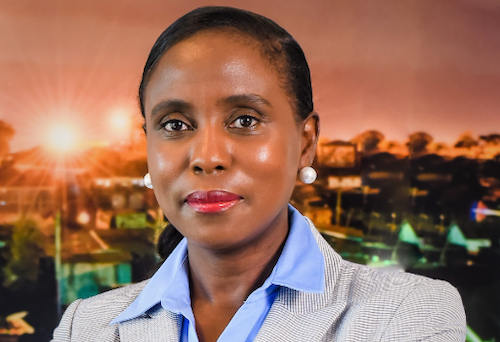
Prof. Catherine Kyobutungi, the Executive Director, The African Population and Health Research Centre, has been appointed to the United Nations University (UNU) Council.
Prof. Kyobutungi, together with five others were appointed jointly by United Nations Secretary-General António Guterres and UNESCO Director-General Audrey Azoulay, in accordance with the UNU Charter
Appointed Council members serve in individual capacity ― not as representatives of their country’s government ― and are selected with an eye to achieving a geographic and gender balance, with due regard to major academic, scientific, educational, and cultural trends and expertise.
The new appointees, who will serve six-year terms (2022‒2028), will formally take office on 4 May and will participate in the upcoming 77th Session of the UNU Council on 30–31 May.
Prof. Kyobutungi, 50, is a Ugandan epidemiologist who was also elected to the African Academy of Sciences in 2018.
In October 2017, she was made the Director of Research at the African Population and Health Research Center (APHRC). In this capacity she evaluated maternal health and wellbeing challenges in African cities. She also looked to strengthen governance in local health services, as well as providing training, infrastructure and equipment.
Kyobutungi was the inaugural Chair of the Kenya Epidemiological Association. She has made efforts to improve girls’ access to education, including the development of community resources and trained mentors.
In 2019 she was announced as the Joep Lange Chair, a position in which she investigates non-communicable diseases in African countries. Kyobutungi supported health workers to visit local communities with blood pressure cuffs to monitor for Hypertension. She found that to encourage patient and doctor participation, she had to include an economic incentive, offering 100 schillings for every screened patient who visits the clinic. Alongside establishing a research program investigating the management of chronic diseases and ways to strengthen healthcare systems, Kyobutungi is exploring the role of digital technology in connecting patients with their healthcare systems.
She serves on the council of the United States International University Africa and also as director of the Consortium for Advanced Research Training in Africa (CARTA), an organisation which looks to rebuild and strengthen the capacity of African universities.
Since 2019, Kyobutungi has been a member of the Lancet–SIGHT Commission on Peaceful Societies Through Health and Gender Equality.
Education
She started her medical course at Makerere University in 1990. After graduating in 1996 she worked as a medical officer at Rushere Community Hospital.
Kyobutungi moved from clinical medicine to public health because she felt she could save more lives by correcting the African healthcare system. She earned a Master’s degree in community health and a doctoral degree in epidemiology from the Ruprecht Karl University of Heidelberg in 2002. Her doctoral research was based in the Department of Tropical Hygiene and Public Health supervised by Prof. Dr. rer. nat. Heiko Becher.
In 2006, Kyobutungi joined the African Population and Health Research Center as a postdoctoral fellow, and was eventually selected as the Head of the Challenges and Systems research program. After graduating, she began to teach at the Mbarara University of Science and Technology.
Other new UNU Council members are:
Related
 Beyond the Low-Hanging Fruit: The Grit, Capital, and Vision Required to Industrialise Rural Uganda
Ms Yamini Aiyar (India), President & Chief Executive, Centre for Policy Research
Prof. Sir Hilary Beckles (Barbados), Vice-Chancellor, The University of the West Indies
Dr Enrique Forero (Colombia), President, Colombian Academy of Exact, Physical and Natural Sciences
Amb. Kuni Sato (Japan), Advisor, East Japan Railway Trading Co., Ltd
Dr Vanessa Scherrer (France), Vice President for International Affairs of Sciences Po
They join six Council members whose terms will end in 2025, including:
Dr Denisa Čiderová (Slovakia), Associate Professor in the Department of International Trade and Liaison for Idea Puzzle at the University of Economics in Bratislava
Dr Comfort Ero (United Kingdom), President and CEO, International Crisis Group
Dr Xin Fang (China), Professor, University of Chinese Academy of Sciences
Prof. Adam Habib (South Africa), Director, School of Oriental and African Studies, University of London
Prof. ‘Funmi Olonisakin (United Kingdom & Nigeria), Vice-President & Vice-Principal International and Professor of Security, Leadership & Development, King’s College London
Prof. Brenda Yeoh (Singapore), Raffles Professor of Social Sciences, National University of Singapore
In addition to these 12 appointed members, the 16-member UNU Council includes the UNU Rector and three ex officio members; the United Nations Secretary–General, the Director–General of the United Nations Educational, Scientific and Cultural Organization (UNESCO), and the Executive Director of the United Nations Institute for Training and Research (UNITAR). The main functions of the Council are to formulate the principles and policies of UNU, govern the University’s operations, and consider and approve the UNU biennial work programme and budget.