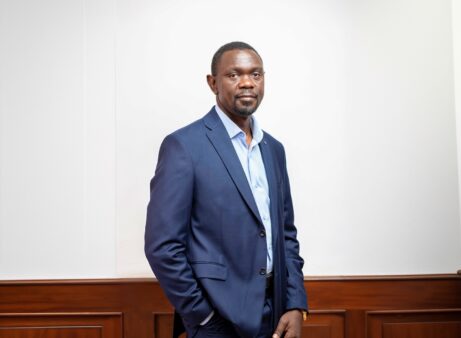
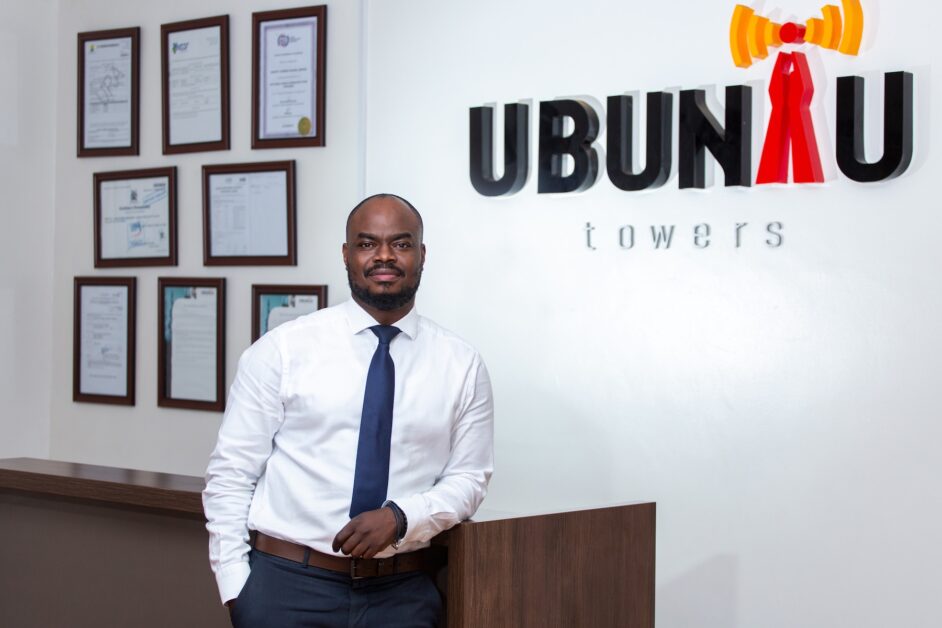
In 2019, three Ugandan entrepreneurs — Geoffrey Donnels Oketayot, Ronald Onzia, and George Arthur Ssamula — set out to disrupt the telecom tower industry by founding Ubuntu Towers Uganda Ltd. Within months, they had landed two coveted master service agreements with MTN Uganda and Airtel, constructed five towers, and lined up a pipeline of 129 sites with 15-year locked-in revenue streams.
But six years later, their company — now renamed TowerCo of Africa (Uganda) Ltd — is at the centre of a multi-billion shilling courtroom battle over what the founders call a fraudulent and unlawful takeover by their former partners, TowerCo of Africa Ltd (Mauritius) and its influential chairman, Hassanein Hiridjee, a French-Malagasy billionaire investor.
The Allegations: Fraud, Oppression, and Ouster
The plaintiffs — Geoffrey Donnels Oketayot, Ronald Onzia, and George Arthur Ssamula — allege that the Mauritius company orchestrated a systematic scheme to wrest control of their business through a combination of undervalued share acquisitions, the abuse of majority shareholder power, and the imposition of coercive contracts.
They point first to what they describe as a fraudulent share acquisition. In May 2021, TowerCo of Africa Ltd (Mauritius) purchased 1,314 shares in the Ugandan company for a total consideration of just UGX 13.14 million, valuing each share at UGX 10,000. This valuation, the plaintiffs argue, bore no resemblance to the company’s actual worth, since by that time Ubuntu Towers had secured long-term master service agreements with MTN and Airtel and had assets and revenue streams worth tens of millions of dollars. Then, in September 2024, the Mauritius entity invoked a Call Option embedded in the agreements to acquire the founders’ remaining 6.78 per cent stake at a similarly depressed valuation, effectively wiping out the Ugandan entrepreneurs’ final foothold in their own business.
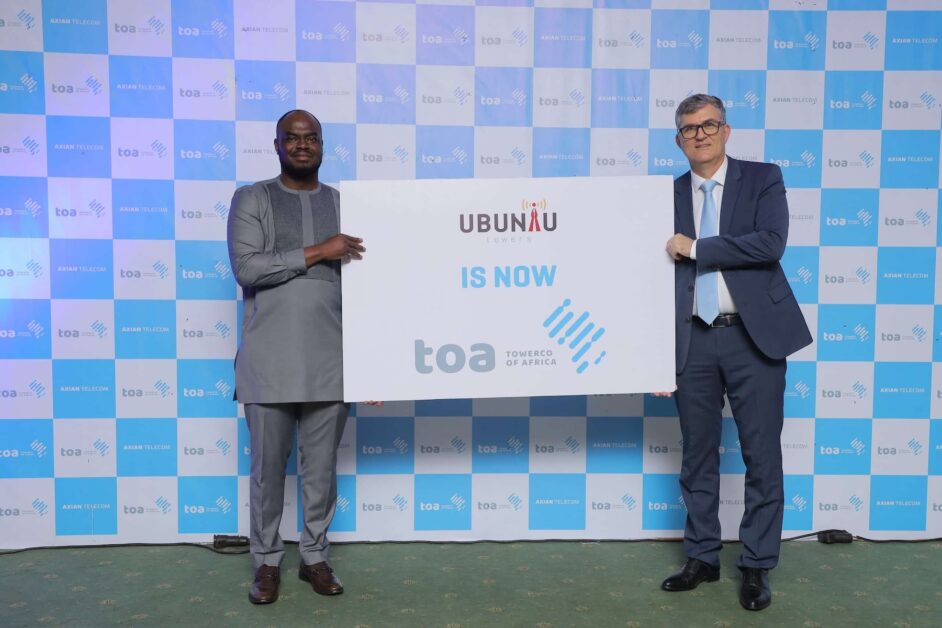
Once in control, the plaintiffs claim, the majority shareholder turned to the abuse of its dominant power. It allegedly blocked efforts to secure financing that could have scaled operations, thereby frustrating the company’s growth trajectory. It is further accused of bullying MTN Uganda into altering contract terms in ways that reduced tower orders, undermining revenues. On the operational side, the defendants are said to have sidelined more than 40 local vendors, replacing them with a single foreign supplier whose services were not only more expensive but also stripped Ugandan suppliers of participation in a homegrown enterprise. The majority shareholder also oversaw the erasure of the original Ubuntu Towers brand, rebranding the business as TowerCo Uganda, and orchestrated the removal of key executives, including the founding Chief Financial Officer, to consolidate control.
At the heart of these grievances, the plaintiffs argue, is a pattern of bad faith and oppression. They contend that the key contracts — the Investment Agreement, the Shareholders Agreement, and the Call Option Agreement, all signed on 6 May 2021 — were procured through misrepresentation, pressure tactics, and one-sided drafting that overwhelmingly favoured the foreign investor. According to their account, they were coerced into signing under circumstances that amounted to economic duress, stripped of bargaining power, and ultimately made vulnerable to elimination from the company they had built.
In the plaintiffs’ telling, what began as a partnership with the promise of scaling Uganda’s tower infrastructure was transformed into a takeover that left them sidelined, disempowered, and deprived of the fruits of their own entrepreneurial efforts.
The Defence: Contract, Consent, and Jurisdiction
In their Written Statement of Defence, the 1st, 2nd, and 3rd Defendants — TowerCo of Africa (Uganda) Ltd, TowerCo of Africa Ltd (Mauritius), and Hassanein Hiridjee — categorically deny the allegations of fraud. Their case rests on three central arguments.
First, TowerCo of Africa (Uganda) Ltd, TowerCo of Africa Ltd (Mauritius), and Hassanein Hiridjee insist that the Ugandan founders — Geoffrey Donnels Oketayot, Ronald Onzia, and George Arthur Ssamula — voluntarily signed the agreements in May 2021, and did so with full knowledge of their implications. From their perspective, there was no coercion or misrepresentation; the contracts were entered into freely and with the plaintiffs’ consent.
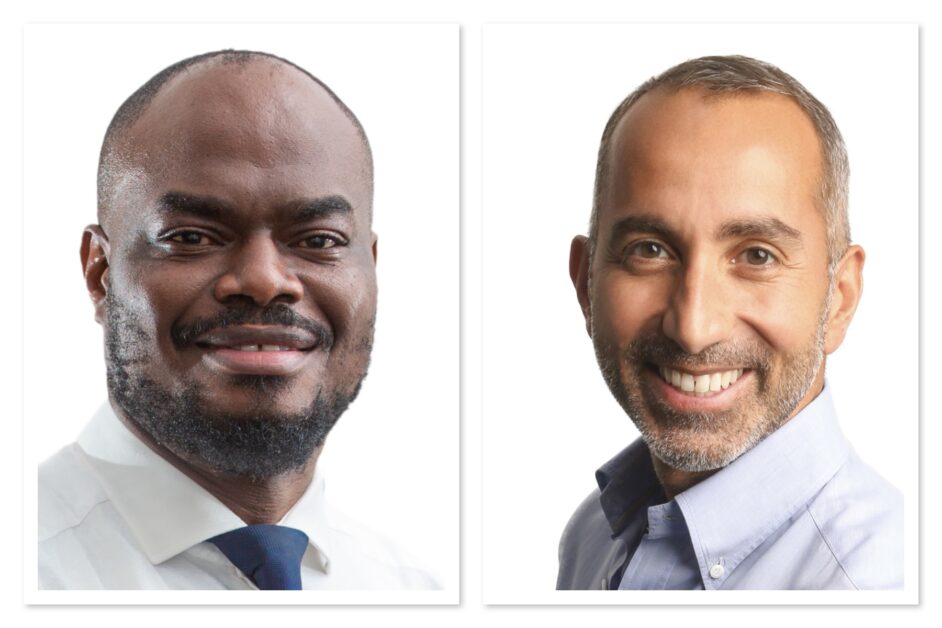
Second, TowerCo of Africa (Uganda) Ltd, TowerCo of Africa Ltd (Mauritius), and Hassanein Hiridjee argue that the share transactions, including the controversial Call Option exercised in September 2024, were lawfully executed in accordance with the agreements. They maintain that these were legitimate corporate arrangements, duly registered and binding, and cannot be undone simply because the plaintiffs later came to regret the terms.
Third, TowerCo of Africa (Uganda) Ltd, TowerCo of Africa Ltd (Mauritius), and Hassanein Hiridjee raise a strong jurisdictional challenge. They point to the clauses in the Investment Agreement, the Shareholders Agreement, and the Call Option Agreement which expressly provide that the contracts are governed by English law and that disputes fall under the authority of the English courts. On this basis, they contend that the High Court of Uganda lacks jurisdiction to hear or determine the case.
For its part, the 4th Defendant — the Uganda Registration Services Bureau (URSB) — has distanced itself from the substantive dispute. URSB emphasised that its role is purely statutory and administrative. It merely registers company documents that are lodged in compliance with the law. URSB made clear that it did not participate in the contested transactions and should not be drawn into allegations of fraud or bad faith.
The Courtroom Clash: Injunction Victory
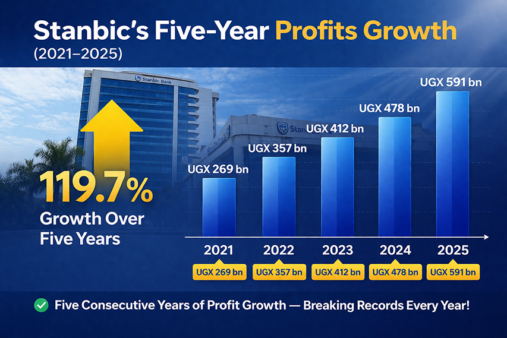
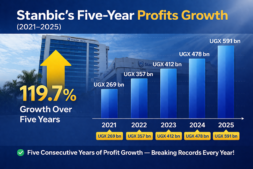 Stanbic’s Five-Year Scorecard: How Profit Growth, Deposits, Lending and Dividends Reshaped Performance
On 7th July 2025, Her Worship Christa Namutebi, Assistant Registrar of the Commercial Division of the High Court, delivered a pivotal ruling in Miscellaneous Application No. 602 of 2025. The decision marked the first significant turning point in the battle between the Ugandan founders of Ubuntu Towers and their former partners.
In her ruling, the Registrar dismissed the preliminary objections raised by the 1st, 2nd, and 3rd Defendants — TowerCo of Africa (Uganda) Ltd, TowerCo of Africa Ltd (Mauritius), and Hassanein Hiridjee. These objections had questioned the court’s jurisdiction, given the contracts’ reference to English law. They argued that the injunction would interfere with the rights of Stanbic Bank, which held security interests in some of the company’s shares. The Registrar held that such issues were best left for the trial judge in the main suit, not matters to derail an interim application.
More significantly, the Registrar found that the plaintiffs — Geoffrey Donnels Oketayot, Ronald Onzia, and George Arthur Ssamula — had established a prima facie case of fraud and oppression. In other words, on the face of the evidence, the founders had raised serious triable issues that warranted protection until the whole case could be heard and decided.
On that basis, she granted a temporary injunction with far-reaching consequences. The order froze the 99 ordinary shares (representing 6.78 per cent of the company) that remained in the names of the plaintiffs. It also froze the 1,314 shares already transferred to TowerCo of Africa Ltd (Mauritius), which had become the subject of bitter dispute. The injunction made it clear that none of these shares could be transferred, pledged, or otherwise dealt with until the substantive suit was concluded.
For the plaintiffs, this ruling represented a significant procedural victory. It meant that their stake — both the shares still in their hands and those they contested were wrongfully taken — would remain intact pending trial. In practical terms, it ensured that the founders were not wholly stripped of their position in TowerCo of Africa (Uganda) Ltd before the High Court had the chance to examine the allegations of fraud, oppression, and unlawful deprivation in full. The injunction gave them breathing room and preserved the battlefield on which the larger corporate showdown will now play out.
What’s Next: The Jurisdiction Showdown
The injunction has given the plaintiffs breathing space, but the real battle is yet to come. The defendants’ jurisdiction objection — whether the case belongs in Uganda or England — remains undecided. If the court declines jurisdiction, the suit could collapse locally.
For now, the plaintiffs are emboldened. They frame the matter not as a contractual dispute, but as a case of fraud, corporate oppression, and deprivation of property, which must be tried where the harm occurred — Uganda.
Implications: A High-Stakes Corporate Drama Ahead
For Uganda’s broader business climate, the case raises urgent questions about the nature of foreign direct investment and the protection of local founders in high-growth sectors. It has stirred debate over whether Ugandan entrepreneurs can enter partnerships with powerful multinational investors without the risk of being pushed out of the very businesses they create. It also underscores the need for stronger corporate governance safeguards that ensure fairness and transparency when local innovators engage with foreign capital.
The timing is especially sensitive because the tower market itself is on the verge of disruption. Bharti Airtel’s tower arm, Indus Towers, is entering Africa — starting with Uganda, Nigeria, and Zambia — in a move that could significantly reshape the competitive landscape. With American Tower Corporation (ATC Uganda) already commanding close to 90 per cent of the market, TowerCo of Africa has been holding just about 10 per cent if Airtel channels most of its tenancy business to its sister company, Indus Towers, TowerCo’s modest foothold could be further eroded, especially at a time when it is embroiled in courtroom battles with its founders.
Although the Ugandan founders have secured a vital early win by freezing the shares transfer, their battle against a multinational investor is far from over. The courtroom is now set for a major showdown: injunction-backed founders fighting to reclaim their company versus majority shareholders insisting the fight belongs in London.
All of this turmoil around Ubuntu Towers comes at a delicate moment for Hassanein Hiridjee. Even as the dispute with the Ugandan founders unfolds in court, he is actively pursuing another major acquisition in the country. Through his Axian Group, Hiridjee has already lodged a proposal to acquire Wananchi Group (Holdings) Limited. This deal would give him 99.39 per cent control of Simbanet Uganda Limited, Wananchi Cable Uganda Limited, and the broadcasting brand Zuku TV. If approved by the Uganda Communications Commission, this transaction would expand his footprint beyond telecom towers into broadband and pay-TV, cementing his ambition to build a vertically integrated presence in Uganda’s communications industry.