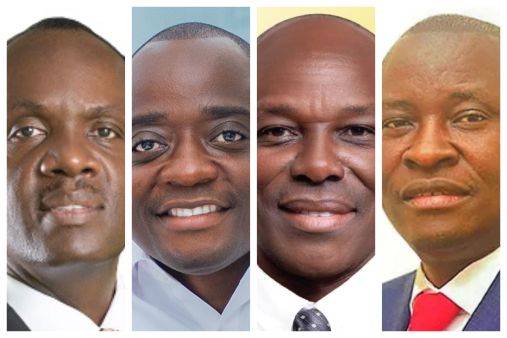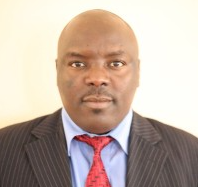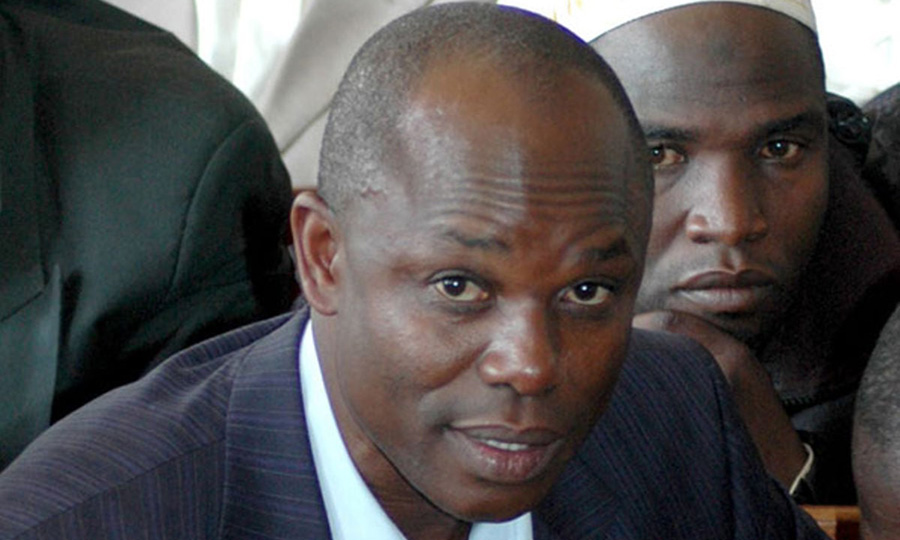
When Uganda’s Supreme Court hears the final appeal in Kampala International University Limited vs Housing Finance Company Limited (Kenya), it will not only be deciding the fate of a legal contest. It will also be ruling on the financial lifeline of one of Uganda’s most enduring business empires: the Basajjabalaba family fortune.
For Hassan Basajjabalaba, the flamboyant tycoon and political heavyweight, this is no longer a matter of law. It is an existential test.
At stake is a UGX 80 billion liability, roughly $23 million, whose enforcement could trigger a chain reaction across the billionaire’s education, healthcare, tea export, and real estate holdings.
A case seven years in the making
The dispute traces back to 2014, when Basajjabalaba’s flagship institution, Kampala International University (KIU), obtained a $15 million facility from Housing Finance Company of Kenya (HFCK) to finance the construction of a modern campus in Kitengela, Nairobi.
HFCK disbursed $10 million in January 2014 and another $1.3 million in November of the same year, secured against the Kitengela property.
By 2017, relations had soured. The bank accused KIU of defaulting, while KIU accused the bank of failing to release the full loan amount and altering terms midstream.
The dispute went to arbitration in Nairobi, where, in September 2019, arbitrator Collins Namachanja found in HFCK’s favour.
He ordered KIU to pay $12.77 million plus compound interest at 9.5% per annum from January 2018, within 30 days.
KIU’s attempts to set aside the award in Kenya failed. The High Court of Kenya only varied the repayment timeline but upheld the debt. Subsequent appeals to the Court of Appeal and the Supreme Court of Kenya were dismissed.
By 2024, HFCK had begun advertising KIU’s Kitengela campus property for sale to recover the debt.
Why the case crossed borders
Instead of waiting for the slow grind of Kenyan foreclosure, HFCK sought to enforce the arbitral award in Uganda, where KIU’s operations and its money are based.
In 2024, HFCK filed Arbitration Cause No. 38 of 2024 in the Commercial Division of the High Court of Uganda, asking that the Nairobi arbitral award be recognised and enforced under Uganda’s Arbitration and Conciliation Act, which domesticates the 1958 New York Convention on the recognition of foreign arbitral awards.
On 10 March 2025, Justice Stephen Mubiru ruled in HFCK’s favour, recognising the Kenyan award as enforceable “in the same manner as a judgment of the High Court of Uganda.”
A few weeks later, on 4 April 2025, he dismissed KIU’s application for a stay of execution, paving the way for HFCK to pursue enforcement in Uganda.
KIU appealed to the Court of Appeal, which on 5 May 2025 upheld the High Court’s decision.
The matter is now before the Supreme Court, where KIU is seeking to stay enforcement, arguing that HFCK’s parallel actions in Kenya and Uganda risk double recovery and could cripple the institution.
The stakes: A UGX 80 billion time bomb
At the heart of the case is a ballooning debt. The arbitral award of $12.77 million in 2019 has, with compounded interest at 9.5% per annum, grown to approximately $22.8 million (UGX 80 billion) by late 2025.
That sum continues to accrue by roughly UGX 650 million every month in interest alone.
For perspective, UGX 80 billion is equivalent to the entire annual gross revenue of a major private university, meaning enforcement could instantly drain KIU’s liquidity.
If the Supreme Court upholds the rulings, HFCK would be free to move on to KIU’s Ugandan assets: tuition accounts, hospital revenues, or even property.
That prospect strikes at the heart of Basajjabalaba’s wealth, because KIU is not just another investment; it is his crown jewel and cash cow.
The Basajjabalaba empire: Built on education and land
Over the last two decades, Basajjabalaba has quietly transformed from a politically connected trader into one of Uganda’s most diversified business magnates.
His core holdings revolve around education, healthcare, agribusiness, and real estate.
Education and health
Basajjabalaba owns and chairs Kampala International University, with campuses in Kansanga (Main Campus), Ishaka (Western Campus), and Dar es Salaam (Tanzania).
The KIU Teaching Hospital in Ishaka, with over 1,100 beds, is touted as the largest private teaching hospital in Uganda and trains hundreds of medical students annually.
These institutions, highly cash-generative and operationally complex, sit at the centre of the current financial storm.
 Inside the Balance Sheet: CFO Doreen Kyomugisha on Building Capital Strength and Financial Discipline at SanlamAllianz General Uganda
If HFCK enforces the Ugandan judgment, the impact could ripple through every department, from payroll to patient care.
Agriculture and exports
Beyond education, Basajjabalaba runs Tea Maria (U) Limited and Global Village Tea Co. Limited, two export-oriented tea processors in western Uganda.
He has invested in large tracts of land and factory infrastructure in Buhweju and Bushenyi, providing foreign exchange income and employment to hundreds.
While these businesses appear financially sound, they could come under strain if group liquidity is diverted to satisfy the UGX 80 billion debt.
Real estate and legacy firms
Earlier companies, Haba Group (Uganda) Limited, Yudaya International, Victoria International Trading, Sheila Investments, and First Merchant International Trading, were once central to Basajjabalaba’s real estate and market concession ventures in Kampala.
However, little has been publicly reported about their activity over the last five years.
If the Supreme Court upholds enforcement, their residual assets, if any, could become collateral targets.
Why HFCK came to Uganda
While the legal narrative focuses on the New York Convention and jurisdictional interpretation, the commercial reality is straightforward: HFCK believes the Kenyan property alone may not cover the debt.
The Kitengela campus was initially valued at about $12–15 million, below the current UGX 80 billion exposure.
Kenyan foreclosure sales often fetch 60–70% of value, leaving a significant shortfall.
In Uganda, however, KIU’s cash flows are steady and sizable, making it a more effective recovery base.
In practical terms, Kenya holds the collateral; Uganda holds the cash.
The potential domino effect
If the Supreme Court upholds the enforcement:
- HFCK could attach KIU’s Ugandan accounts and revenues, threatening the university’s ability to meet operational costs.
- The KIU Teaching Hospital, part of the same business structure, could face cash shortages, delaying salaries and procurement.
- The tea export arm might need to divert earnings or collateralise new debt to sustain liquidity.
- The ripple effect could extend to Basajjabalaba’s political and social capital, as KIU employs thousands and serves as a hub for regional students.
In short, a ruling in HFCK’s favour could shake the foundations of one of Uganda’s most visible private-sector dynasties.
A Supreme Court ruling that goes beyond one man
Yet the case has implications beyond Basajjabalaba.
It could set a precedent for how Uganda treats enforcement of foreign arbitral awards, particularly where assets exist in multiple jurisdictions.
If the court affirms that HFCK can enforce both in Kenya and Uganda simultaneously, it will strengthen Uganda’s profile as a pro-arbitration jurisdiction, but it will also raise questions about creditor overreach and double recovery.
The verdict ahead
For now, Basajjabalaba’s empire hangs in the balance.
The appeal in the Supreme Court argues that enforcement before full adjudication would cause “irreparable harm” to KIU and Uganda’s higher-education sector.
HFCK, on the other hand, maintains that justice delayed is justice denied and that KIU has had seven years to settle.
Whether the Supreme Court agrees or not, one truth remains: The ruling will not just decide who wins a case, it will determine the future shape of a billionaire’s empire, and perhaps the confidence of foreign lenders in Ugandan borrowers.
The numbers: The KIU–HFCK case
| Item | Amount ($) | UGX (Nov 7, 2025 @ 3,498–3,508) |
| Principal Award (2019) | 12,767,508 | 44.7 billion |
| Accrued Interest @9.5% (2018–2025) | 10,000,000 | 35 billion |
| Legal & Execution Costs | 1–2 million | 3.5–7 billion |
| Total Exposure (2025) | 23–25 million | 79–88 billion |
At its heart, the case pits a bank’s determination to recover against a billionaire’s will to preserve his legacy, and the outcome will reverberate far beyond the courtroom.