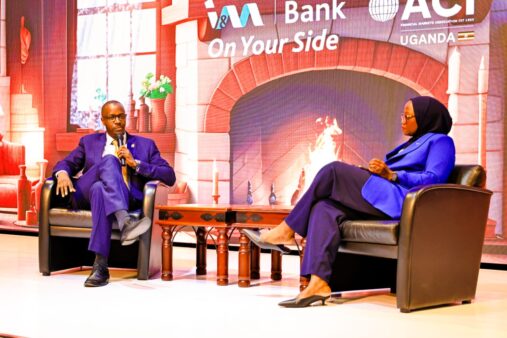
Uganda’s banking sector has cemented its recovery and resilience, posting a record UGX 1.9 trillion net profit for the year ended June 2025.
This was a nearly an increase of UGX400 billion from UGX 1.4 trillion the sector recorded in the same period in 2024.
The performance, representing a 36% jump from the previous financial year, underscores the industry’s strong fundamentals and renewed public confidence.
At the same time, customer deposits surged to UGX 41.6 trillion, signaling growing trust in the formal banking system and a robust appetite for savings.
A year of resilient growth
According to the Bank of Uganda’s 2024/25 Integrated Annual Report, the industry’s total assets expanded by 13.7% to reach UGX 61.3 trillion, up from UGX 53.9 trillion in 2024.
This asset growth, buoyed by an increase in customer deposits, reflects continued expansion in both retail and corporate banking.
It also mirrors the central bank’s accommodative policy stance, which supported liquidity and eased credit conditions during the year.
Commercial bank lending to the private sector grew by 9.2%, up from 6.8% the previous year.
While this remains below the long-term target of 13.5%, it marks a notable rebound in credit appetite after years of cautious lending.
Businesses particularly in trade, construction, and manufacturing showed renewed borrowing interest as inflation eased and demand picked up.
The sector’s liquidity remained healthy, with liquid assets rising by a third to UGX 23.1 trillion, raising the liquid-assets-to-deposits ratio to 56.4%.
The liquidity coverage ratio, which is a regulatory measure to ensure banks have enough high-quality liquid assets stood at nearly 500%
This was five times the regulatory minimum, which suggests banks are not only profitable but also highly liquid and well-capitalized.
Government securities and interest income drive profits
A key driver of profitability was the growth in interest income, which rose by 10.7%. Much of this came from increased holdings in government securities, which grew by 16% to UGX 17.4 trillion.
With elevated yields on treasury instruments and stable monetary policy, banks capitalised on the opportunity to lock in safe returns while balancing their loan portfolios.
This strategic positioning reflects a cautious optimism across the industry.
Many banks chose to balance risk by maintaining significant exposure to government paper while selectively expanding credit to private enterprises.
The move also provided a buffer against potential defaults, supporting an improvement in overall asset quality.
As a result, Return on Assets (ROA) rose to 3.3%, which was the highest in three years while core capital ratios improved to 25%, far above regulatory requirements.
Stanbic leads the pack
At the individual bank level, Stanbic Bank once again set the pace. The lender reported a net profit of UGX 478 billion, up by 16% from the previous year, driven by growth in both interest and non-interest income.
Stanbic’s total assets crossed the UGX 10 trillion mark, consolidating its position as Uganda’s largest bank.
Customer deposits also grew by 12% to about UGX 7.1 trillion, accounting for roughly one-fifth of total industry deposits.
The bank’s success lies in its ability to combine scale with digital efficiency. Its mobile and internet banking channels have significantly deepened customer engagement, while its corporate and investment banking arms benefited from stronger trade flows and infrastructure financing.
Stanbic’s cost-to-income ratio of around 47% remains among the best in the market, a sign of operational discipline and effective cost control.
The bank reaffirmed its top-tier status with a strong showing in the first half of 2025, posting a profit after tax of UGX 278 billion, an 18.2% increase over the same period in 2024.
Deposits at mid-2025 stood at UGX 8.4 trillion, up about 28.9% year-on-year. The bank’s net loans and advances grew to UGX 4.9 trillion, a 12.9% uplift.
Related
 Katikkiro Mayiga hails JCRC, Pearl Bank, Rotary over USD 4 million bone marrow facility drive
Centenary Bank’s inclusive growth
Close behind is Centenary Bank, whose focus on mass-market and rural banking continues to pay off.
The bank reported a net profit of UGX 342 billion, up 15% from 2023, while its assets climbed to UGX 7.1 trillion.
Customer deposits rose modestly to UGX 4.2 trillion, but its lending book grew by over 13%, reflecting increased financing to small and medium-sized enterprises (SMEs) and agriculture.
The bank’s agent banking network and digital channels have expanded financial inclusion, enabling it to maintain growth even as competition intensifies.
The lender’s non-performing loan ratio dropped to 2.6%t, showing effective credit risk management and recovery practices.
Absa, Dfcu, and Equity: Solid returns and strategic focus
Absa also delivered an impressive performance, posting a profit of UGX 177.8 billion, a 22% increase year-on-year.
The bank’s steady rise reflects strong consumer lending, a growing SME book, and disciplined cost management.
Absa’s focus on digital transformation and customer experience continues to strengthen its brand in the mid-tier retail market.
dfcu Bank, after a challenging period in recent years, staged a strong rebound, with profits doubling to UGX 75 billion.
The turnaround was largely driven by a decline in loan impairment charges and a strategic tilt toward government securities.
The bank’s corporate banking unit showed renewed vigor, with improved asset quality and a healthier balance sheet.
Meanwhile, Equity Bank Uganda maintained steady growth, leveraging its regional network and cross-border business model.
Its investments in digital lending and trade finance positioned it to capture growing regional trade opportunities. Its deposits and loans continued to expand in line with its inclusive banking strategy.
Beyond profitability
The year also saw significant regulatory and technological advancements.
Bank of Uganda rolled out a new cyber and operational risk monitoring tool for payment service providers, enhancing surveillance of digital financial systems.
The central bank’s Bottom-Up Stress Test for Domestic Systemically Important Banks confirmed that Uganda’s largest lenders remain largely resilient to credit and liquidity shocks.
For a few smaller banks showing vulnerability under severe scenarios, the regulator has strengthened monitoring and urged remedial action.
Outlook
Looking ahead, the sector’s outlook remains positive. The combination of strong capitalisation, ample liquidity, and stable earnings provides a solid foundation for growth.
Rising deposits and improving credit conditions suggest a maturing industry that is ready to support Uganda’s economic transformation agenda.
However, risks remain. Global financial uncertainty, foreign exchange volatility, and elevated public debt could still test the system’s resilience.
Yet, the overall picture is one of optimism: banks are profitable, liquid, and adaptive.
However, the road ahead is not without bumps especially with the 2026 general elections on the horizon.
The political environment could introduce volatility into interest rates, regulatory shifts, and fiscal policy direction.
Campaign spending, public debt pressures, and potential policy pivoting may test banks’ asset quality, funding stability, and investable discipline.