Uganda and Tanzania together with Total E&P and China National Offshore Oil Corporation (CNOOC) Uganda have signed the East African Crude Oil Pipeline Tripartite Project Agreement, signaling the beginning of the development phase for commercial production of oil starting with building of the pipeline.
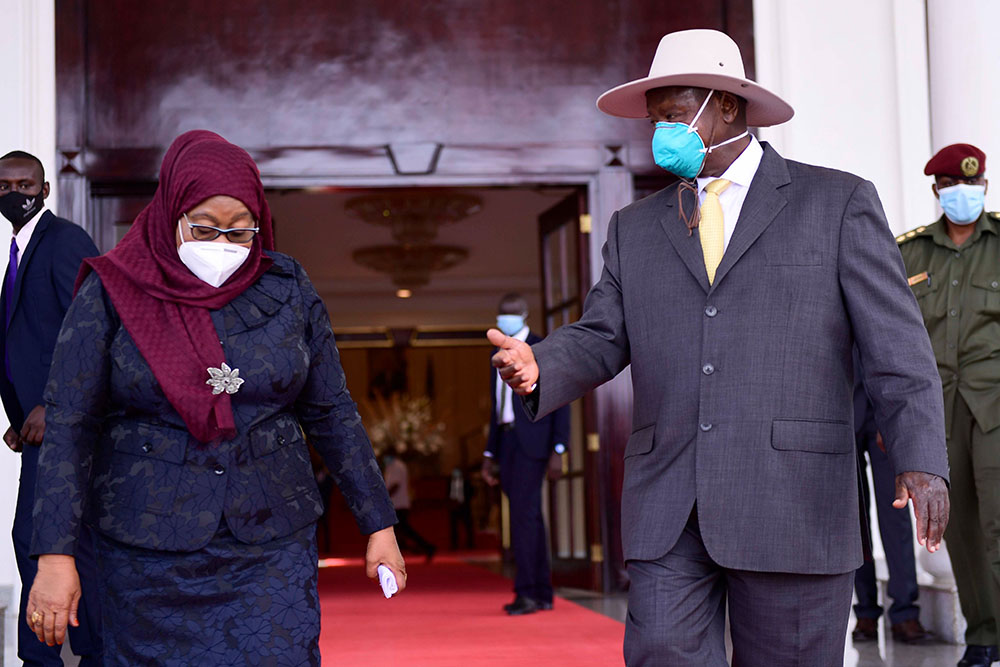
The two governments were represented by presidents Yoweri Museveni and Samia Suluhu Hassan who flew into the country early this morning while Total E&P was represented by Patrick Pouyanne Chief executive officer and Chairman and Yuan Guangyu, President for China National Offshore Oil Corporation (CNOOC) Uganda
The governments of Uganda and Tanzania are shareholders in the pipeline project together with France’s Total, and China’s CNOOC.
What’s in for Ugandans?
Robert Kasande, the Permanent Secretary Ministry of Energy and mineral development revealed: “Of the US$15 billion to be invested in the development phase of the project, about 30%, an equivalent of US$5 billion will go to Ugandans through employment and supply of goods and services.”
EACOP Bill
Mary Goretti Kitutu, Energy Minister said after the signing of the EACOP deal, she will table the East African crude Oil Pipeline Bill before the Cabinet and called upon Tanzania to do the same in order to expedite the production process
Patrick Pouyanne said the EACOP is among the largest projects Total has undertaken on the African continent and called on the various stakeholders to rally together and work on the project which he said has taken longer than it had been anticipated.
 Ruparelia Group Wins Key Entebbe Land Case, Clearing Path for the New Mega Speke Resort and Convention Centre, Entebbe
He emphasized the need for environmental protection and said Total will be taking the issue seriously, on top of local content and protection of the rights of people affected by the project.
“The project will boost socio-economic well-being of our people by yielding revenue and creating employment of about 10,000 employment during execution and after completion of the project,” Tanzania President said, adding that the project will also boost trade between Uganda and Tanzania in the long run.
President Museveni said once complete, the project will save about US$1.7billion in oil imports into Uganda, adding that the pipeline can be utilized by DR Congo and South Sudan that have oil deposits.
The president also revealed that the pipeline will bring back gas from Tanzania to Uganda, a development that will tremendously cut gas prices in Uganda at the same time encouraging clean energy use.
Economists also anticipate that 40% of the revenues will stay in Uganda while the country is expected to earn about US$25 billion from oil in a period of 25 years.
Uganda has proven crude oil reserves of 6.5 billion barrels, about 2.2 billion of which is recoverable. The International Monetary Fund was quoted in 2013 as saying that these reserves are the fourth-largest in sub-Saharan Africa, behind Nigeria, Angola, and South Sudan