The European Union (EU) Ambassadors to Uganda have appealed to government to consider having in place a comprehensive master plan that will ensure the resuscitation of the country’s tourism sector.
Tourism together with others sectors in the country have been hit by the Coronavirus (COVID-19) pandemic.
The sector came to a standstill in March after President Yoweri Kaguta Museveni announced the closure of all borders, together with Entebbe International Airport, followed by the suspension of both private and public transport, business premises and any form of public gatherings.
The measures meant that all tourist sites had to be shut to the public and this led to the cancellation of several bookings by foreign tourists as well as the cancellation of international events which Uganda was scheduled to host starting as early as February 2020.
Tourism is one of Uganda’s top foreign exchange-earners with annual receipts of US Dollars 1.6 billion brought in by 1.8 million tourists according to the Uganda Tourism Board (UTB). Out of the 1.8 million tourists, 1.3 million are foreigners while 500,000 are local tourists.
However according to Jean Byamugisha, the Executive Director Uganda Hotel Owners Association, this trend is about to change and Uganda expects to lose US$ 1.6 billion tourism revenue of which 45 percent comes from the hotel industry.
She also noted that a recent study by the United Nations Development Programme (UNDP) indicated that in five years’ time, Uganda will not have achieved the 1.6 million tourists who have been coming in annually due to the impact of COVID-19 pandemic and therefore limited revenue from the sector.
Uganda was targeting to hit 4 million tourists by 2020.
“In regard to tourism numbers, we hit one of the record numbers, 1.6 million guests came into the country. This has been growing from about 1 million which is why tourism was doing so well that the president had given us a target of 4 million guests by 2020. This was something, of course it was abit too much but, we knew we could be able to achieve in the next 10 years. Right now we are back to zero…”
She said that something crucial like provision of tax holidays or a stimulus package has to be done for the sector to be resuscitated and bring in money for the country.
Byamugisha was speaking at a press briefing by the European Union delegation led by the EU Ambassador Attilio Pacifici on Saturday.
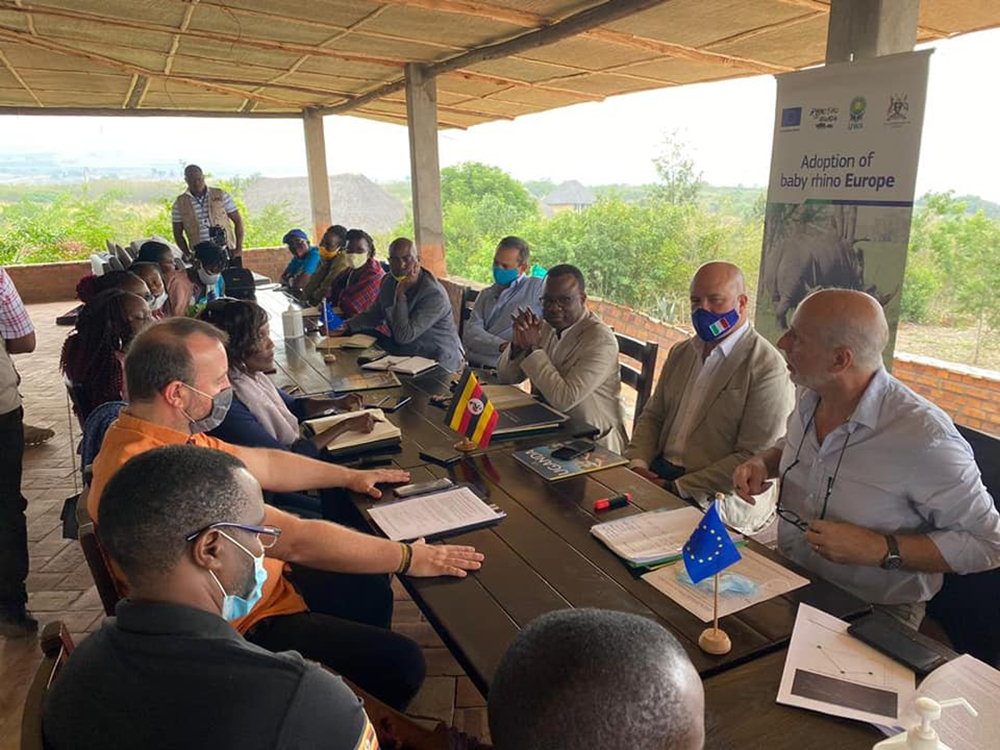
The delegation comprising of the Ambassador of France to Uganda Jules-Armand ANIAMBOSSOU, Italian Ambassador Massimiliano Mazzanti, the Ambassador of Belgium Rudi Veestraeten and the Austria Head of Office Dr. Roswitha Kremser have since Thursday camped in Western Uganda to assess the impact of COVID-19 on the Tourism Sector.
Ambassador Attilio Pacifici said that the EU is not seeking to solve the entire problem in the tourism sector but rather leading the way to ensure that the sector is revived.
The Belgian Ambassador Rudi Veestraeten said that Uganda needs an active response towards the tourism sector even before the pandemic is over.
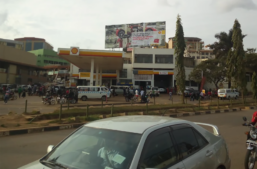 Vivo Puts Two Downtown Kampala Shell Stations up for Sale Amid Congestion Concerns
“There is need to do something else in this country than to sit back and wait for the crisis to be over. If Uganda does that, it might take a long time before this sector recovers. The country needs to have a new master plan,” said Veestraeten.
He said that the new master plan should take into consideration of conserving what is in place, active support to private sector development and others.
Re-boosting the sector
Dr. Roswitha Kremser, the Austria Head of Office noted that the impact on the tourism sector does not only end with the operators but also communities that provide different goods and services to the tourism sites and accommodation facilities like food stuffs.
She said that there is need for Uganda to creatively re-boost the sector and that this is something they are going to discuss with different government agencies to forge a way forward.
The Ambassador of France to Uganda Jules-Armand ANIAMBOSSOU also noted that Uganda’s new approach in the tourism sector can concentrate on developing and protecting its eco-tourism, marketing differently and professionally and others.
Re-opening airports
For the Italian Ambassador Massimiliano Mazzanti, re-opening the country’s International Airport will be key in reviving the sector and ensuring that the economy fights the effects of the COVID-19 pandemic.
“It’s debatable it, we need to find a balance. But one is re-opening the airport. We have been doing in Europe. Believe me we are talking about a country like Italy, we lost 35,000 people. We had 240,000 cases but we re-opened the airports. Uganda has to find its way in this… it is a land locked country if you do not open the airport, there will be no economy coming back. When we talk about tourists, they travel by plane, there is no other way. They come to the country, they will revive the tourism…”
During their four day assessment of the COVID-19 impact on the tourism sector, the EU ambassadors interfaced with lodge and tourism operators in Kanungu, Kasese and Fort portal.
The delegation also commissioned a Ranger’s Outpost at Ishasha, Queen Elizabeth National Park that will accommodate rangers who protect the wildlife at the Park from poachers near the tourist site and those from the Democratic Republic of Congo (DRC). The Ambassadors also interacted with different businessmen in the tourism industry at Mweya Safari Lodge among others.
Funding
The European Union has given Є6 million (UGX25.8 billion) in grants to private sector players to help revive the tourism sector that was shut majorly hit by the shutdown of airports due to the Coronavirus.
The money will be channeled through Uganda Development Bank where it will be accessed at a discounted 8% rate.
On its part, the government of Uganda is yet to pronounce itself on any incentive towards the revival of the tourism sector.