By Sydney Asubo
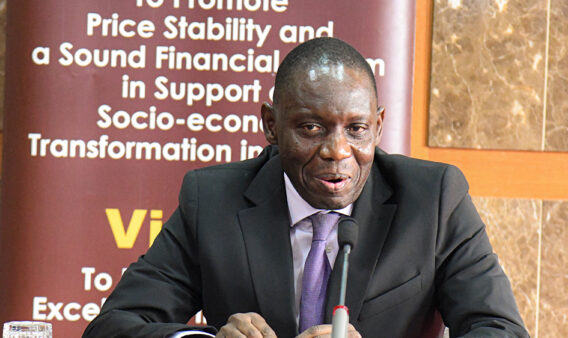
On the 7th of December 2020, Uganda assumed the Presidency of the Eastern and Southern Africa Anti-Money Laundering Group (ESAAMLG). Uganda took over the Presidency from the Kingdom of Eswatini at the 20th Council of Ministers’ Meeting which was held virtually due to the prevailing challenges occasioned by the COVID-19 pandemic. Hon. Matia Kasaija, the Minister of Finance, Planning and Economic Development is the new President of the Council of Ministers, and will hold the Presidency for one year.
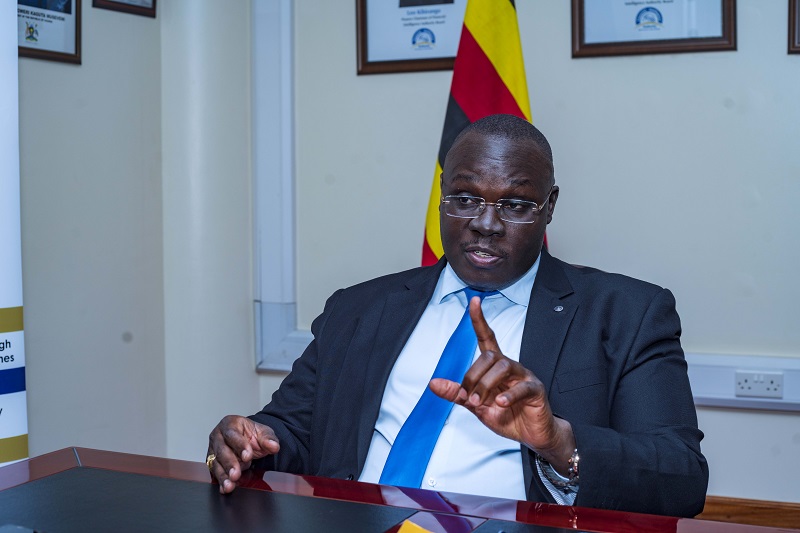
The Council of Ministers’ meeting was preceded by the combined 39th and 40th ESAAMLG Task Force of Senior Officials meeting which was also held virtually, from 24th November, 2020 to 4th December, 2020. As the Executive Director of the Financial Intelligence Authority, I took over as the Chairman of the ESAAMLG Taskforce of Senior Officials.
The next Council of Ministers Meeting is scheduled to be held in Kampala, Uganda in August/September, 2021.
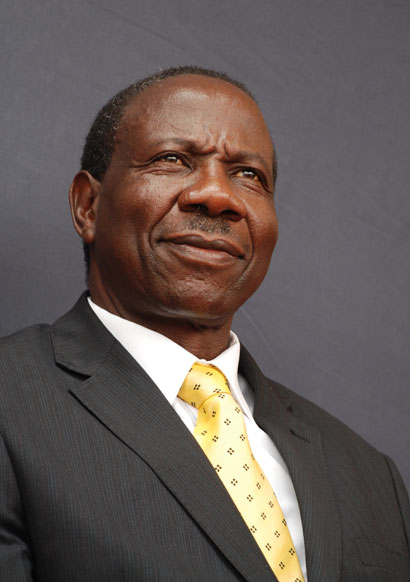
In his acceptance speech, Hon. Kasaija emphasised that Uganda’s Presidency shall focus on actions aimed at ensuring sustainability of the security and prosperity of our people. He noted that corruption is the biggest challenge across the region in achieving this goal. As such, Uganda’s Policy of zero tolerance to corruption shall inform his Presidency during the next twelve months.
Background on ESAAMLG:
ESAAMLG was launched at a meeting of Ministers and high-level representatives in Arusha, Tanzania, on 26-27 August 1999. A memorandum of understanding (MoU) based on the experience of the FATF and other FATF-Style Regional Bodies (FSRBs) was agreed-to at that meeting. Following the signature of the MoU by seven of the potential members, ESAAMLG came into formal existence. All the founding members which, include Uganda are Commonwealth countries which have committed to implementing the FATF Forty Recommendations. The group held its first meeting on 17-19 April 2000 in Dar es Salaam, Tanzania. Following the events of 11 September 2001, ESAAMLG expanded its scope to include the countering of terrorist financing.
The purpose of ESAAMLG is to combat money laundering by implementing the FATF Recommendations. This effort includes; co-ordinating with other international organisations concerned with combating money laundering; studying emerging regional typologies; developing institutional and human resource capacities to deal with these issues; and co-ordinating technical assistance where necessary. ESAAMLG enables regional factors to be taken into account in the implementation of anti-money laundering measures.
The specific objectives of ESAAMLG are to:
- Adopt and implement the 40 Recommendations of the FATF;
- Apply anti-money laundering measures to all serious crime;
- Implement measures to combat the financing of terrorism and
- Implement any other measures contained in the multilateral agreements and initiatives relevant to prevention and control of laundering of proceeds of all serious crimes and the financing of terrorism and proliferation of weapons of mass destruction.
The Council of Ministers is the key decision-making body of the ESAAMLG and consists of at least one ministerial representative from each member country. The Council is ultimately responsible for setting the strategic direction of the Group, including approving work programmes. It is headed by a President who holds office for a period of one year. The Presidency of the Council rotates among the member countries, currently on the basis of alphabetical order.
 She Walks: Purposeful Strides, Scaling Hills in Heels—and Why Women’s Progress Matters for Africa’s Future
The Task Force consists of senior government officials from legal, financial and law enforcement agencies in the ESAAMLG region responsible for AML/CFT matters. It is headed by a Chairman, who is drawn from the country holding the presidency. The Task Force of Senior Officials meets twice a year (March/April and August/September). The meetings provide an opportunity for delegates to discuss a number of issues relevant to the FATF Standards, mutual evaluation reports, typology studies’ reports, technical assistance and training, progress reports as well as attending special technical workshops/seminars on emerging money laundering and terrorist and proliferation financing trends.
The Task Force is responsible for all technical matters and makes recommendations to the Council for approval. Currently, the Task Force has established Working Groups including the Evaluation and Compliance Group, the Risk, Trends and Methods Group, Working Group on Risk, Compliance and Financial Inclusion, Technical Assistance and Training Coordination Forum, the FIU Forum and the Budget, Finance and Audit Committee which handle various assignments on behalf of the Task Force.
ESAAMLG has a Steering Committee which is an advisory committee of the Task Force on a variety of policy matters. It is chaired by the chairperson of the Task Force.
ESAAMLG members participate in a self-assessment process (Mutual Evaluation) to assess their progress in implementing the FATF Forty Recommendations. The ESAAMLG Secretariat is located in Dar es Salaam, Tanzania.
ESAAMLG became an Associate Member of the FATF in June 2010.
For more information, please see the ESAAMLG website at www.esaamlg.org.
ESAAMLG Members are; Uganda, Angola, Botswana, Ethiopia, Eswatini, Kenya, Lesotho, Madagascar, Malawi, Mauritius, Mozambique, Namibia, Rwanda, South Africa, Seychelles, Tanzania, Zambia and Zimbabwe.
ESAAMLG Observer Jurisdictions are; DRC, Portugal, UK and USA.
ESAAMLG Observer Organizations are; APG (FSRB), AUSTRAC, CFATF (FSRB) COMESA, Charity Commission (UK), DFID, EAC, EGMONT, FATF, GIABA (FSRB), GIZ, IMF, Interpol-Harare, World Bank, SADC, UNODC, UNCTED, UNSC-1267 Sanctions Monitoring Team,