When veteran journalist Andrew Mwenda posted a video of weary passengers stranded at Entebbe International Airport, his words cut deeper than the images themselves.
“The tragedy happening at Uganda Airlines is far beyond even my 2019 doomsday predictions,” he wrote on X. “One plane is stuck in Lagos, another in London, passengers stranded.”
In Mwenda’s telling, the situation had become so dire that “even God cannot save this airline.”
It was a brutal assessment, amplified by his stature and timing, landing at a moment when Uganda Airlines could least afford another blow to public confidence.
Days earlier, journalist Sudhir Byaruhanga had berated Uganda Airlines for “operating an airline like a taxi, where flights are cancelled for days on without prior warning.”
“Last week’s Wednesday flight to Zanzibar was cancelled and pushed to Thursday. Yesterday’s (Wednesday) flight from Zanzibar to Entebbe was delayed until midnight, only for passengers to reach the airport and again told the same flight was pushed to today, Thursday. Imagine someone travelling on a budget and having to foot extra bills because of these bogus delays,” he wrote on X.
In responding to Mwenda’s complaint, Uganda Airlines remained restrained. The airline acknowledged the disruption, apologised for the inconvenience, and confirmed that flight UR 111 was already en route from London’s Gatwick Airport to Entebbe International Airport.
Normal operations, the airline said, were being restored. The statement was calm, professional, almost clinical.
But the anger Mwenda tapped into had little to do with that single flight. It reflected deeper unease about an airline whose ambitions appeared to be racing ahead of its operational, financial, and institutional resilience.
To understand why a single video provoked such a reaction today, one has to trace Uganda Airlines’ story through the months leading up to that moment, and through the leadership of its chief executive, Jenifer Bamuturaki.
Bamuturaki is no outsider to aviation. She returned to Uganda Airlines in 2019 as Commercial Director after stints at the defunct Air Uganda and East African Airlines, later rising to CEO in 2022.
For many, her appointment raised expectations. Here was a seasoned sales and marketing professional taking charge of a young national carrier still finding its footing.
But she was also stepping into one of the most unforgiving sectors of the global economy, where margins are thin, capital needs immense, and mistakes mercilessly exposed.
The airline started reporting massive losses, expanding or reducing slightly each financial year.
Its financial position remained volatile, with no sign of breaking even in the near future, almost five years after establishment. That would be forgiven, given the complexity and capital-intensive nature of the industry.
By the start of 2025, however, Uganda Airlines looked more strained than before.
Revived in 2019, the carrier operates a fleet of seven aircraft serving 17 destinations across Africa and selected international routes, including London and Mumbai.
Headquartered at Entebbe International Airport, it plays a strategic role in boosting tourism, trade and regional connectivity.
At the heart of its long-haul ambition are two Airbus A330-800neo wide-body aircraft used for intercontinental routes, including London and Mumbai.
Yet 2025 opened with a cancellation of its Kinshasa flight due to unrest in DR Congo, a reminder that the airline operates in a volatile region.
Even this externally driven decision exposed an internal vulnerability: a tight fleet schedule with little slack. One cancellation could quickly ripple across the network.
Within weeks, those pressures became more visible. In February, Uganda Airlines issued a travel notice warning that some scheduled flights might experience delays due to “unforeseen operational challenges.” By April, a near-identical notice followed.
Over time, repetition recalibrated passenger expectations. Delays were no longer exceptional; they were becoming part of the brand experience.
This erosion of confidence unfolded even as the airline attempted to shore up operational resilience.
In late 2024, Uganda Airlines announced a short-term wet lease of an Airbus A320-200 from Lithuanian operator DAT to cushion operations during the winter schedule.
The aircraft, complete with its own cockpit and cabin crew, was intended to support the CRJ- 900 and A330 fleet and maintain schedule integrity on busy regional routes such as Johannesburg, Kinshasa, Nairobi, Lagos, and Abuja.
On paper, it was a sensible tactical move. In practice, it underscored a deeper truth: the airline was relying on stopgap solutions to manage structural fleet shortages.
All this was happening as Uganda Airlines prepared for its most symbolically charged expansion: the launch of direct flights to London’s Gatwick Airport.
For years, the route had been framed as the ultimate validation of the airline’s revival.
 Ruparelia Group Wins Key Entebbe Land Case, Clearing Path for the New Mega Speke Resort and Convention Centre, Entebbe
Speaking at the UK–Africa Summit in September 2024, Bamuturaki outlined a vision of daily flights, expanded cargo capacity, and deeper trade links between Uganda and the UK.
When the inaugural flight took off in May 2025, the optics were powerful. Works and Transport Minister Katumba Wamala hailed the route as a bridge for tourism and investment. Airbus executives praised the deployment of the fuel-efficient A330-800neo.
But the operational reality was unforgiving. With only a small number of long-haul aircraft, the airline had almost no margin for error. Any technical issue or maintenance delay could strand passengers thousands of kilometres from home.
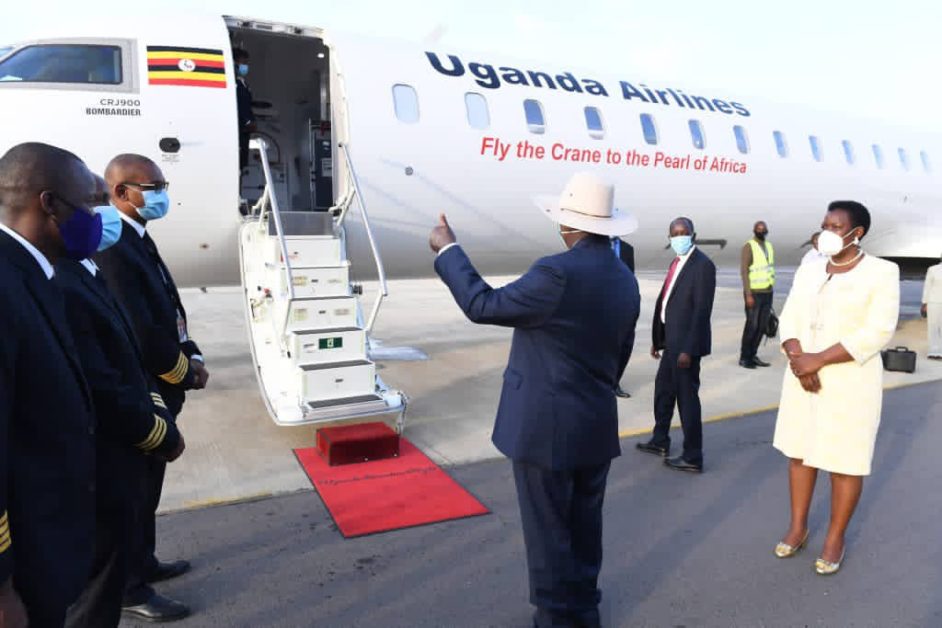
By September, Uganda Airlines was publicly acknowledging disruptions to its long-haul schedules operated by the A330-800neo while one CRJ-900 required critical spare parts and an engine change.
In parallel, it issued a statement clarifying that media reports about alleged irregularities in its fleet acquisition process were speculative and premature, stressing that decisions remained under shareholder oversight through an inter-ministerial fleet team.
The clarification was defensive but revealing. It showed an airline aware that questions about fleet strategy and governance had entered the public arena.
Around the same time, Uganda Airlines announced new partnerships that added both opportunity and pressure.
An interline agreement with Air India promised seamless connectivity from Entebbe to more than 25 destinations across India and onward to hubs such as London Heathrow and Singapore. Strategically, it extended the airline’s footprint without adding aircraft.
But it also raised passenger expectations. Any disruption on the Ugandan leg risked undermining confidence in the partnership itself.
As operational stress mounted, scrutiny from Parliament intensified.
The Public Accounts Committee on Commissions, Statutory Authorities and State Enterprises (COSASE) revealed that government had invested UGX 1.87 trillion in Uganda Airlines since its revival, while accumulated losses had reached UGX 1.02 trillion.
Despite the losses, revenues have grown steadily, rising from about UGX 28.5 billion in 2019/20 and UGX 46.9 billion in 2020/21 to UGX 141 billion in 2021/22, UGX 230.4 billion in 2022/23, and roughly UGX 369.7 billion in 2023/24.
Passenger numbers increased to 419,170 by 2024 from 77,355 in 2019, while cargo tonnage rose from 1,921 to 4,222.
The airline is clearly selling more seats and flying more routes, but income growth has not yet offset operating costs, including high administrative costs relating to executive salaries and fuel purchases in foreign currencies.
Yet Parliament stopped short of writing off the airline. COSASE argued that Uganda Airlines still had a strategic advantage as the national carrier, offering direct connections to key African destinations and the potential to position Entebbe as a regional hub.
The committee pointed to cargo as particularly promising, with revenues growing by more than half in 2024, driven by Uganda’s expanding exports of fresh produce, fish, and manufactured goods. COSASE argued that what was missing was tighter financial discipline and stronger execution.
However, MPs flagged weaknesses in contract management, including the awarding of General Sales Agent contracts without bank guarantees and the accumulation of contingent liabilities from court cases and baggage loss claims.
That exposure soon crystallised in court. In October 2025, the Industrial Court ordered Uganda Airlines to pay more than UGX 455 million to former chief executive Cornwell Muleya, ruling that his dismissal had been unlawful. The judgment found that the airline had violated both the Employment Act and its own Human Resource Manual.
While Uganda Airlines indicated it would appeal, the ruling reinforced concerns that weak internal processes were translating into financial and reputational costs.
Even beyond the courtroom, signs of institutional strain surfaced elsewhere.
A September investigative report by this publication revealed a dispute between Uganda Airlines and inflight supplier Wavah Water after a sealed bottle served on board was allegedly found with a dead cockroach trapped inside its cap. The incident was described as a serious food safety failure with potential regulatory and reputational consequences.
Although the supplier denied the allegations, the episode underscored how even minor lapses can quickly become public flashpoints.
When Bamuturaki appeared before Parliament in early December, she rejected claims that persistent delays were the result of mismanagement.
Instead, she described a “cocktail of factors,” including short-notice airport closures, regional NOTAMs, airspace restrictions, and cascading delays across Entebbe, Juba, Bujumbura, and Dar es Salaam.
Minister Katumba Wamala reinforced this explanation, telling MPs that Uganda Airlines was overstretched, managing close to 40% of Entebbe’s traffic with too few aircraft.
Parliament’s approval of more than UGX 422 billion for an additional 10 aircraft was framed as a corrective measure aimed at stabilising operations rather than unchecked expansion.
Bamuturaki has created the impression that the country should grant her more time, funding, and patience, arguing that fleet expansion, tighter controls, and route maturation will eventually align ambition with performance. Whether that patience holds may define the airline’s future.