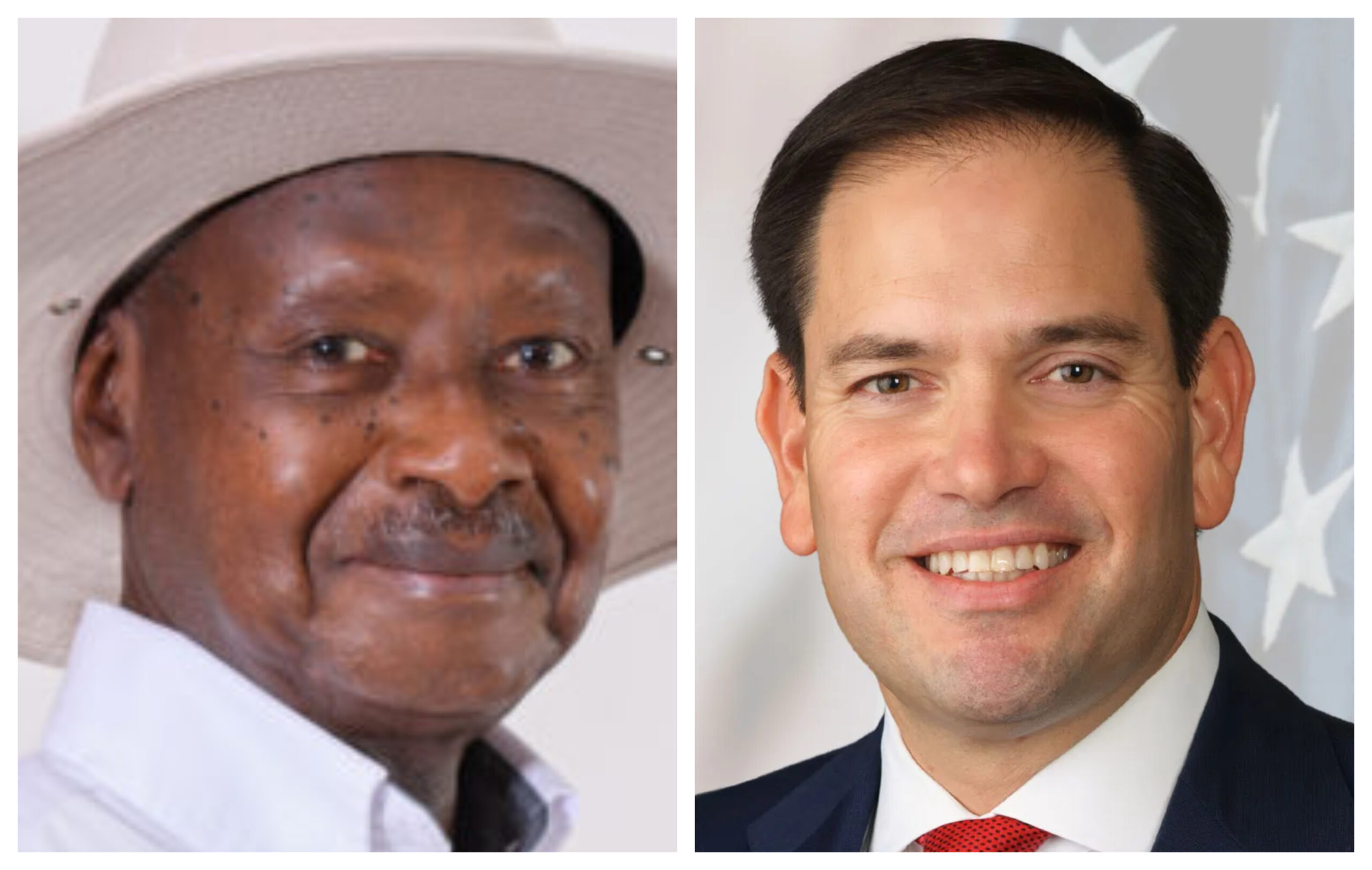
The United States of America has moved to reset relations with Uganda, with Secretary of State Marco Rubio speaking by phone with President Yoweri Museveni about “opportunities to deepen U.S.–Uganda cooperation on migration, reciprocal trade, and commercial ties.”
In a readout attributable to U.S Principal Deputy Spokesperson Tommy Pigott, the U.S Secretary who spoke to President Museveni yesterday also thanked Uganda for serving as a pillar of regional stability through its peacekeeping roles in East Africa.
The outreach comes as both sides test whether months of friction over rights and aid can give way to a more pragmatic and economics-first engagement.
Washington has linked the talks to broader cooperation on security and trade, a sign that migration could become a bridge back to a fuller partnership after a bruising year.
The shift is already showing up in migration diplomacy after Kampala agreed in principle to receive some deported migrants from the U.S., excluding those with criminal records and unaccompanied minors.
The migration deal is yet to be finalised with the foreign ministry saying it prefers to be limited to African nationals.
Trade is the prize both governments are eyeing. Despite political headwinds, U.S.–Uganda commerce is sizable and growing on services
In 2024, trade and services between the two countries reached an estimated USD 1.2 billion. This figure underscores how much room there is to expand investment in agribusiness, logistics, energy, and health supply chains if policy risk recedes.
However, the commercial courtship is complicated by recent rifts.
In late 2023, the Biden administration terminated Uganda’s eligibility for the African Growth and Opportunity Act (AGOA) effective January 1, 2024, citing human rights concerns tied to the Anti-Homosexuality Act.
 Ruparelia Group Wins Key Entebbe Land Case, Clearing Path for the New Mega Speke Resort and Convention Centre, Entebbe
Uganda remains ineligible for AGOA this year, and Kampala has been seeking pathways back to preferential access as manufacturers feel the pinch.
AGOA has long been a pressure point in the U.S.–Uganda ties, including Donald Trump’s first term.
In 2017–2018, Washington reviewed Uganda’s AGOA benefits after East African governments moved to ban imports of used clothing; Uganda ultimately rolled back elements of the plan to avoid penalties, while Rwanda’s apparel preferences were suspended.
A tougher backdrop on aid has added urgency to the trade pivot.
The U.S. response to Uganda’s 2023 anti-LGBTQ law included expanded visa restrictions and other measures, chilling parts of the relationship.
In early 2025, a broader foreign aid freeze ordered by the Trump administration sent shockwaves through USAID programs worldwide, with health implementers in Uganda reporting disruptions and officials scrambling to plug funding gaps.
Even with later carve outs for lifesaving assistance, uncertainty around timelines and coverage has left programs planning month-to-month.
Secretary Rubio’s call signals a deliberate turn toward practical cooperation. For Kampala, re-anchoring ties with Washington could help diversify markets and attract private capital at a time when concessional lending has been volatile.
While for Washington, shoring up relations with a security heavyweight that hosts nearly two million refugees and deploys troops to regional missions serves both strategic and humanitarian aims.