Tour operators have called upon the government of Uganda to toughen environment protection laws and enforcement with key focus on deforestation which continues to displace wildlife and harm their existence inevitably negatively affecting the tourism industry.
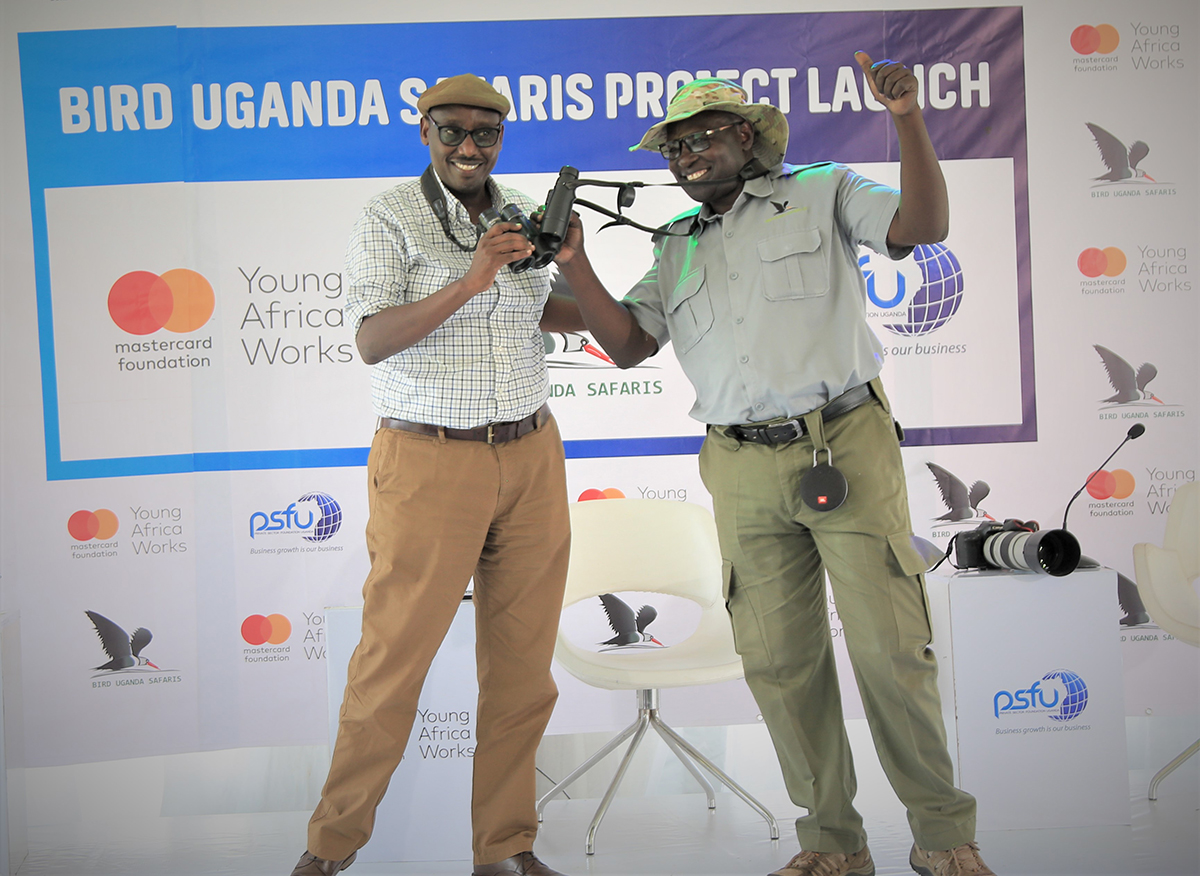
Speaking at the launch of the Private Sector Foundation Uganda (PSFU) and Bird Uganda Safaris Lead Firm Structure for Youth Employment in Uganda partnership held at Forest Resort Kasenge, Mbalala-Mukono, Herbert Byaruhanga- Managing Director Bird Uganda Safaris said:
“It’s very sad that we are not paying attention to the environment. The reason we proudly say Uganda is a one of the best birding destinations in the world and top birding destination in Africa is simply because we have forests. They can be in Kenya, Rwanda, Tanzania or any other country but the fact that we’ve got more forest coverage gives us a comparative advantage over these countries. Therefore, anyone touching the forests is an enemy to the economy.”
He added: “I therefore call upon the government and policy makers to look at the future of this country and stop the cutting of forests anywhere in Uganda. Even charcoal burning is dangerous. They should find alternative means of providing fuel but avoiding the environment. We have rare species like in Bugoma forest we have rare monkeys but people are cutting the forests and others claiming ownership. They need to stop it. We’re losing birds and no one knows the distribution of species because they’re cutting the trees and nobody is putting up a study of the behavior of these species. A lot of species are going to disappear because the breeding patterns are tampered with”
Addressing media at the same event, Stephen Asiimwe, the Director – Policy and Business Development at PSFU, and a birding enthusiast noted that, “Uganda is home to over 1,084 bird species. The U.S earns close to $46bn from birding and yet we have more birds than the U.S or probably the whole North America put together. How come a country with this number of birds, fantastic weather, we have 50% of Africa’s bird species and about 10-11% of the world’s bird species but our income in still small?” adding that
“I want to urge all Ugandans to take care of our environment. Prior to COVID 19, we were earning approximately $1.8bn from tourists who visited to Uganda to see our forests, wildlife and water bodies among other natural resources. Destroying the environment creates environmental change, reduces our natural resources and inevitably tourists will not be compelled to visit Uganda. I call upon the government and legislators to put new and strict laws to ensure that we protect the environment for the sake of our children and future of this country.”
 Stanbic Accelerates Uganda’s Digital Future with “Kikole Ku Speedii” Campaign
PSFU and Bird Uganda Safaris Limited partnership under the Lead Firm Structure for Youth Employment in Uganda project is expected to establish 3,980 work opportunities for young women and men over a 5-year period in avitourism. The partnership is in collaboration with the Mastercard Foundation as part of the Young Africa Works initiative.
Samuel Yalew Adela, Country Head, Uganda at the Mastercard Foundation said, “Birding and tourism in general is a growing and promising space and we are excited to partner with Bird Uganda Safaris Limited to provide the necessary support to equip youth with the right ideas and skills, not just to improve their own lives, but to improve the lives of their families, the well-being of communities, and the resilience of the country.”
An average birdwatcher spends between $2000-$7000 on bird watching. This has led to establishment of many birding and wildlife watching enterprises and events as a means of generating income. The professional bird tour guide in Uganda earns 150 US dollars per day and a fresh trainee earns 90 USD per day, considering a trip for birding goes 13-21 days, a guide earns between 1,800 USD to 3,150 USD. On average a driver will earn 50-70 USD a day. This goes to show that the jobs can be financially fulfilling if taken seriously.
Francis Kisirinya, Acting Executive Director PSFU, called upon corporate companies to embrace corporate social investment projects as these have proven to be more fruitful in the long run than corporate social responsibility projects.
The partnership will be implemented in the districts of Kiruhura Kazo, Isingiro, Mbarara, Rubirizi, Bushenyi, Mpigi, Buikwe, Mukono, Masindi, Hoima, Kasese, Bundibugyo, Ntoroko, Wakiso, Kisoro, Kanungu, Kotido, Moroto, Kabarole, Sembabule, Rubanda and Kabale.