A consortium of commercial banks has initiated proceedings to auction off several prime properties belonging to the late billionaire businessman, Apollo Nyegamehe, popularly known as Aponye, in a sweeping debt recovery effort targeting loan arrears exceeding UGX 15 billion.
According to sources close to the matter, dfcu Bank and the Uganda Development Bank (UDB) are among the financial institutions actively pursuing recovery of non-performing loans that were extended to Aponye’s business empire, primarily through his flagship company, Aponye (U) Limited.
The debt portfolio, which has grown due to interest accumulation and prolonged non-repayment, is reportedly higher than initially estimated, with Equity Bank also believed to be recovering a separate line of credit.
Almost two years after his sudden death in a car accident in July 2023, a vast property empire once controlled by the late Ugandan billionaire Apollo Nyegamehe is on sale to recover debts.
The sale could be one of the largest public auctions of private assets in recent years.
Two of the country’s top law firms — AF Mpanga Advocates and Cristal Advocates — on Thursday issued a joint notice announcing the sale of multiple high-value properties registered under Aponye (U) Limited.
The sale, to be conducted through public auction or private treaty, follows the company’s failure to settle outstanding loan obligations, including principal, interest, and legal costs.
“The sale will take place 30 days from the date of publication, unless the debtor clears the outstanding liabilities within that period,” the notice reads in part.
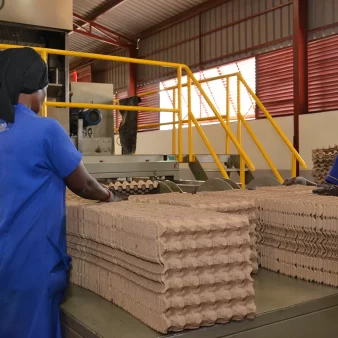
Among the properties listed is a major processing and logistics hub in Masaka District, situated on 2.4 hectares under Leasehold register volume 2629, Plot 52, Block 423, featuring administrative offices, workers’ houses, a storage warehouse, and a dryer and silos base.
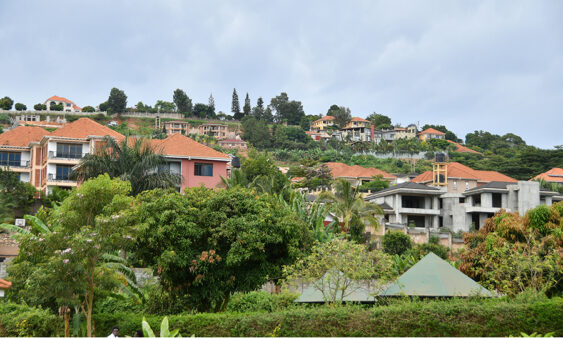
In Kampala, key holdings up for sale include a commercial plot in Makindye, measuring approximately 0.9806 hectares, and a developed leasehold plot in Nalukolongo, measuring 0.592 hectares, which is developed with a storied office block.
Another leasehold plot in Wankuluku includes storied office blocks, a power room, a maize processing area, a front shed, a processed maize store, a plant manager’s office, a control room, and a mash processing area, as well as multiple staff quarters.
The built-up area for the Wankulukuku site is approximately 2,191.6 square metres.
Another property on leasehold is situated on Plot 81 in Bakijulura Estate in Buwekula, Mubende District. It is developed with offices, a warehouse block, wet bins, an intake dryer, and silos, as well as a storage warehouse, spanning 0.24 hectares in Nalukolongo.
A smaller but strategic land parcel in Wakaliga, Wakiso District, measuring 0.106 hectares and registered under Quality Polybags (U) Limited — a related entity — has also been listed.
The auction will be held at Cristal Advocates’ offices on Lumumba Avenue in Kampala.
Aponye, who passed away in mid-2023, was widely regarded as one of Uganda’s most influential businessmen in the agro-processing and food supply sectors.
His company, Aponye (U) Limited, now led by one of his sons, Harold Byamugisha as Managing Director, held major contracts to supply food relief and grain to government agencies and humanitarian organisations.
He also owned Aponye Mall in Ntinda, which at the time of his death was under Knight Frank management. This, too, was a few months ago, put on sale by an unnamed bank. It is not yet clear whether the building was rescued.
The Aponye Mall, his signature real estate investment in the Kampala Central Business District, housed Mega Standard Supermarket and Aponye Hotel, located on Ben Kiwanuka Street.
His was a rags-to-riches story with humble beginnings in Rukiga District, where he eventually rose to prominence, spreading business tentacles into agrobusiness, manufacturing, real estate, and transportation.
Although the amount owed remains unclear, the scale and value of the assets being liquidated suggest significant liabilities.
The situation also highlights the challenges of succession and debt management in family-run businesses, particularly those operating in capital-intensive sectors such as agriculture and logistics.
Aponye Foreclosures and Uganda’s Credit Market Quality
The foreclosure of Aponye (U) Limited’s prime properties nearly two years after the passing of founder Apollo Nyegamehe is not just a story of one family business under distress.
It is a stark reflection of broader themes currently shaping Uganda’s credit market, particularly around credit quality, succession risk, and the increasing assertiveness of lenders in enforcing loan recovery.
According to the Bank of Uganda’s Financial Soundness Indicators and the March 2025 State of the Economy Report, Uganda’s credit conditions have generally improved. Non-performing loans (NPLs) to gross loans have declined steadily from 6.01% during the pandemic peak (June 2020) to 4.13% as of March 2025, indicating a more resilient financial sector.
However, this average masks pockets of acute credit stress, particularly within family-run, capital-intensive enterprises like Aponye’s, which often depend heavily on founder networks, soft contracts, and centralised decision-making.
The liquidation of Aponye’s real estate, agro-processing hubs, and commercial facilities — including high-value logistics infrastructure in Masaka, maize plants in Wankulukuku, and city properties in Kampala and Wakiso — highlights both the concentration of collateral in fixed assets (typical of agro-industrial borrowers) and the difficulty of managing leverage after founder mortality.
Moreover, the timeline is telling: the foreclosures are happening even as private sector credit (PSC) growth remains moderate (7.8% as of January 2025), and banks are becoming more selective, approving loans for well-rated borrowers and preferring sectors with low default risk.
According to the same State of the Economy report, banks are tightening risk assessment practices, yet they have also increased the loan approval rate to 68.5%, signalling a willingness to lend—but only under stronger credit controls.
That Aponye (U) Ltd reportedly failed to service “principal, interest, and legal costs” despite holding lucrative food supply contracts with the government and NGOs reflects not just succession challenges, but possibly aggressive expansion funded by credit during the founder’s tenure, without corresponding cash flow sustainability.
The firm’s troubles come at a time when banks, while enjoying improved asset quality overall, are actively recovering legacy NPLsthat may have been restructured or rolled over during the COVID-19 period.

Energy Ministry Orders UEDCL Board to Investigate Top Management Over Performance Gaps