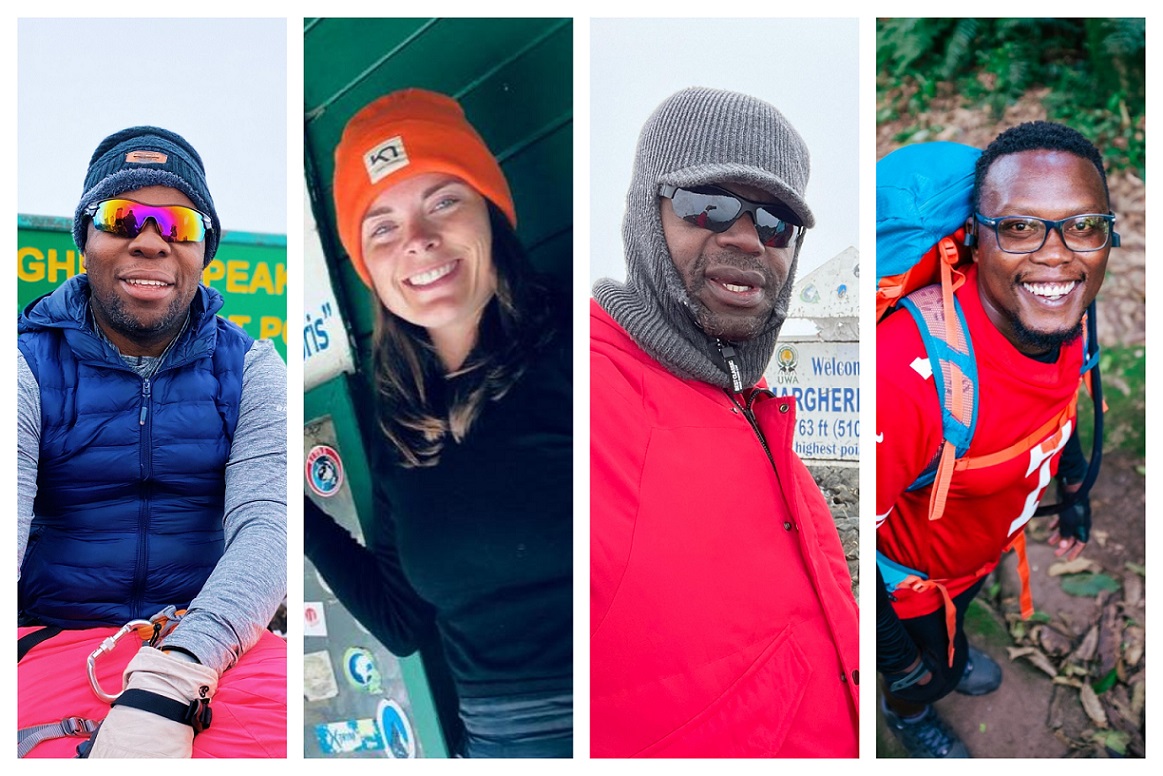
ANTHONY NATIF: Mountaineering is a team sport—just like in ordinary life, no man gets to the top of the mountain by themselves.

I’ve been to several mountains. I’ve never been in mountain ranges that are so incredibly, challenging and spellbinding in equal measure. There’s no mountain on the African continent that will give you a mountaineering challenge as tough and exciting as The Rwenzoris provide. Seasoned mountaineers in the region will tell you this.
Compared to Mt Kilimanjaro and Kenya, the Rwenzoris have far fewer visitors and are less known, which is bizarre considering just how much better and more challenging they are. The climbing experience they offer is a lot more varied. That being said, it’s encouraging to see that several people, both local and foreign are trekking this, Africa’s botanical garden. For this, I have to thank the folks at Uganda Tourism Board (UTB) and Uganda Wildlife Authority (UWA) who are doing a tireless job promoting Destination Uganda and most importantly, the outdoors. Also, initiatives like what UNDP did recently when they advanced a USD40,000 grant to Mountain Slayers Uganda to work on improving safety in The Rwenzoris do help in building a culture of safety. This can only board well for the Rwenzoris.
When viewed with the problems that come with the daily grind, mountaineering can seem like a rather frivolous pursuit. But going outside and having adventures connects us to the natural landscapes, helps foster conversations that lead to deeper self-discovery, and builds intense friendships and joy, to name but a few.
I initially viewed my journey with mountaineering as some sort of rage against the mundane and mediocre, a sort of escape from the ordinariness of daily existence. But with time, it has come to represent a lot more. Some of the happiest moments of my life have happened in the mountains. I’ve also had a fair share of brushes with death, but you know, I don’t think I’ve found a better sanctuary than the mountains. This trip was way up there with the very best I’ve taken. The depth of conversations was incredible. The people were kind and generous. Everyone looked out for the other. It was nice to see.
It was also a reminder of the power of teamwork. We tend to celebrate individual mountaineers like they are some sort of heroes, but the truth is mountaineering is a team sport. Just like in ordinary life, no man gets to the top of the mountain by themselves. It is a profoundly social pursuit.
When we went up there, 12 people had a support team of more than 50. Away from the teamwork, this creates a trickle-down effect on the economic front that could eventually lift all boats. The impact can be huge.
I’ll be remiss if I didn’t talk about the issue of climate change! The glaciers are melting, folks!! They are retreating and disappearing. When we lose a glacier, we lose history. Glaciers are some of the greatest archivists in the natural world. I’ve been to the Rwenzoris more than once and every time, I’ve taken glacier pictures and it’s easy to see that they’re receding at a super-fast pace. We need to do something about climate change.
I believe mountaineers have the kind of intimate relationship with the natural landscape that is unmatched. This begets stewardship and, in this day, and age when climate change is laying lives to ruin, we must build an army of humans right from children to the oldest humans who understand the fragility of our planet and will take care of it.
I also believe that we need to pay more attention to the human dimensions of climate change. How are the mountain communities affected by climate change? Narratives of climate change too often narrowly focus on the glaciers themselves but not on the broader social and economic impact of the same. When you go to the Rwenzoris and you see the damage caused to entire communities when River Mubuku bursts its banks, you don’t view climate change the same. You want to do something. I want us to do more.
PAUK IKANZA: Success is not an outcome, it’s a journey
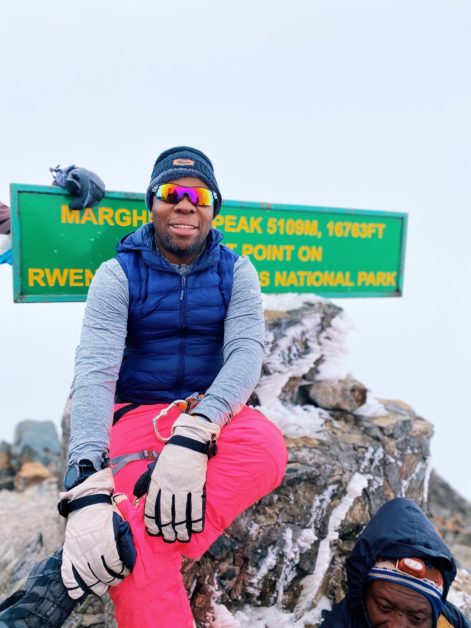
The Rwenzoris, have always challenged me to explore my limits. Each time I climb, there is something new to learn, I exert myself some more, I learn from the people I climb with, and it all builds me into a more complete person. These lessons are invaluable, and they apply to life beyond the mountain.
I also, honestly, like the idea of being in a place where I can walk away from life as we know it. Off work, off the internet, off my daily schedule and get to meet people when they can have undistracted conversations. You make so much progress, get to meet people for who they are and build strong friendships.
Related
 Amanda Ayebare, AutoXpress CFO: Balancing Survival and Growth in the Adventurous SME Landscape
- One win at a time: One of the most important lessons drawn from the mountain is that Success is not an outcome, it’s a journey. It doesn’t happen overnight but rather is a result of sustained effort. You take the small wins at every turn. I have climbed the Rwenzori mountains at least 3 times and each time it’s a different experience. The desired outcome is the same, but the lessons are on how to achieve it. The different variations require that you constantly revise your approach. For the case of Rwenzori, variations are occasioned by the terrain (climbs, rocks, bog), the weather (rain, snow, ice, winds), the company you keep, feeding habits medication and predispositions. After doing it as many times as I have, I understand my body better and can plan better each time I go and for similar climbs. It also helps me lead teams better.
- It’s important to finish strong: I have also learned that it’s important to have an ambition, and a target to look forward to. When descending, because you have already summitted, it’s easy to assume things to be easy going but that’s far from the reality. You need to put in an almost similar effort descending as you do for the climb.It’s important to finish strong!
- Rwenzori is an undiscovered giant: I have climbed Kilimanjaro, for example, and it’s no match in terms of the physical challenge and experience as well as the fulfilment you get at conquering the summit. It is, however, so much better organized and facilitated. It also has a significantly bigger number of hikers in comparison so it must generate a considerable amount in revenue. If only Rwenzori could be marketed better, it would turn around the lives of countless people in the region and beyond. The only concern with the growth of numbers is that there will definitely be an impact on the environment and so the growth plans need to be deliberate.
TMS RUGE: Conquering the mountains of life pushes your limits every time
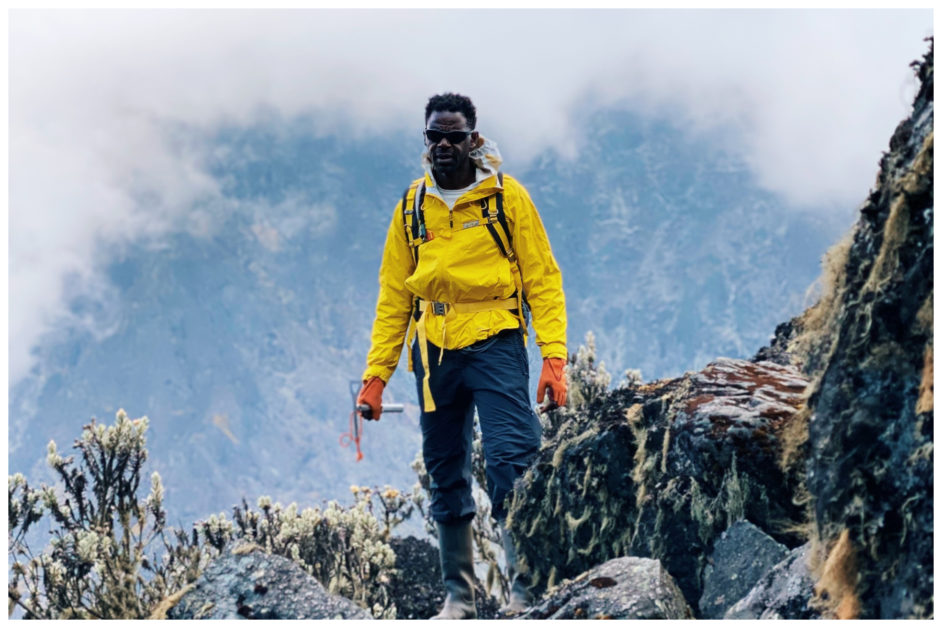
The Rwenzori mountains are absolutely about life lessons. The biggest of which is how to manage what seems like insurmountable obstacles: I climb mountains not to conquer them, but to continually conquer my perceptions about my limitations.
The Rwenzoris surprise you every time you go. Just like life, it’s a different experience each day and sometimes, every few hours. Your mind, your senses and your body never get too comfortable. It teaches you to be ready for the unexpected.
Those mountain ranges, properly harnessed could bring in nearly $1 billion for Uganda in annual revenue if we invested heavily in safety and accommodation infrastructure. That’s a lot of money for the community and the country. Imagine if even $100 million of that stayed in Kasese every year. What kind of development could we see in that region? We need more hotels and more outdoor activities around the mountain. That’s why I am really excited for Amos and Kabushenga’s joint efforts for the inaugural Rwenzori Marathon in September. I foresee mountain trekking competitions, off-road biking, and hot air balloon activities in the near future. All of those are going to need to attract heavy investments in hotels; lodges, and resorts, which will be a boom to the agriculture sector.
I’ve seen much better hotel infrastructure on boring mountains in North America and Europe. Now imagine executing that level of infrastructure development on the Rwenzoris. We would be the Swiss alps of Africa
MAREN BJORGUM: Mountains, just like life are humbling medicine. But they also bring out the harrrd in you!
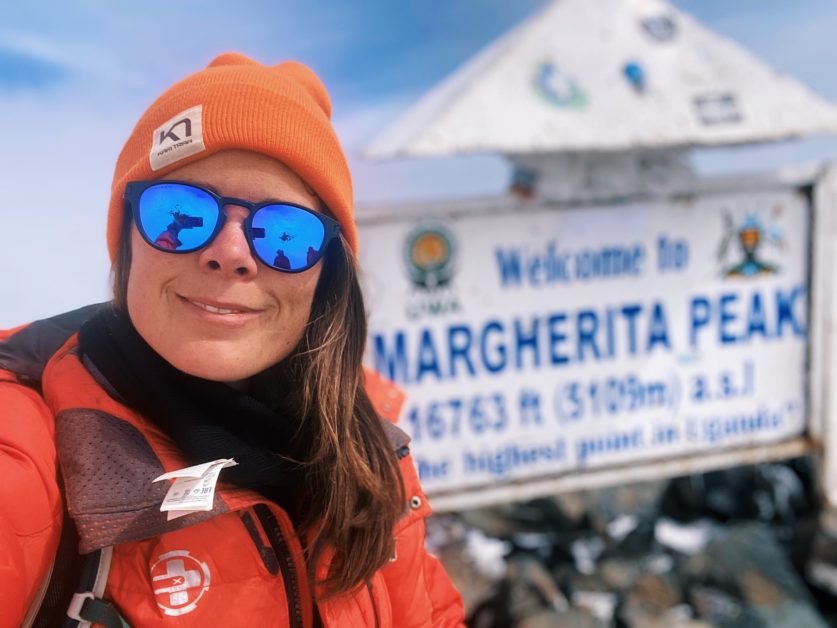
Mountaineering is a classical, almost cliche, sport for leaders and would-be leaders. For example, Mt Everest is packed with people who want to climb the highest mountain in the world primarily to add it to their resume as qualifications for leadership positions or as a foundation for motivational speaking.
That being said, I think there are clear reasons why mountains, especially high-altitude mountains can have a great, positive impact on your leadership skills, especially if you are already in a leadership position.
Leaders are used to being in control, to be in charge and listened to. However, the further up a mountain you climb, the more you realise that in that space, you are not in control. You have two bosses: the mountain and the guides that are leading you safely through it. It requires a lot from someone who is used to leading, to relinquish control to someone else, but you don’t have a choice. Staying stubborn and not listening to the guide or the mountain can literally kill you, whether from altitude sickness or accident. That’s why we keep talking about how the mountain humbles you.
Personally, mountains are a chance to prove to myself my mental grit and perseverance, while at the same time getting to switch off my phone and let my mind relax. I like to say that the mountains are my medicine, and I never feel better than when I’m in the mountains.
The Rwenzori mountains are extreme and wildly beautiful. They lack the hiking infrastructure of the mountains of my home areas in Norway and Switzerland, but that offers its own charm and challenges. For the mountaineer who loves grit, and there are many of us, Rwenzori is unparalleled. It is a shame, that so few people know about the mountains, as they offer a much more beautiful and challenging climb than the likes of Kilimanjaro. Uganda has a hidden gem in Rwenzori, and with the global rise in adventure tourism, it should be one of the main tourist attractions for the country.