#1: HOW MUCH OIL HAS BEEN FOUND IN THE ALBERTINE GRABEN?
To date, 6.5 billion barrels of oil have been confirmed in the 21 oil and gas discoveries made in the Albertine Graben, out of which 1.4 billion barrels is estimated as recoverable. This will be at a planned peak production rate of about 230,000 barrels of oil per day. As Uganda undertakes licensing rounds, there are hopes of discovering more oil, given that in the previous exploration, Uganda has had an 88% success rate of finding oil, compared to a 25% global average.

#2: HOW MUCH HAS BEEN INVESTED TO DATE?
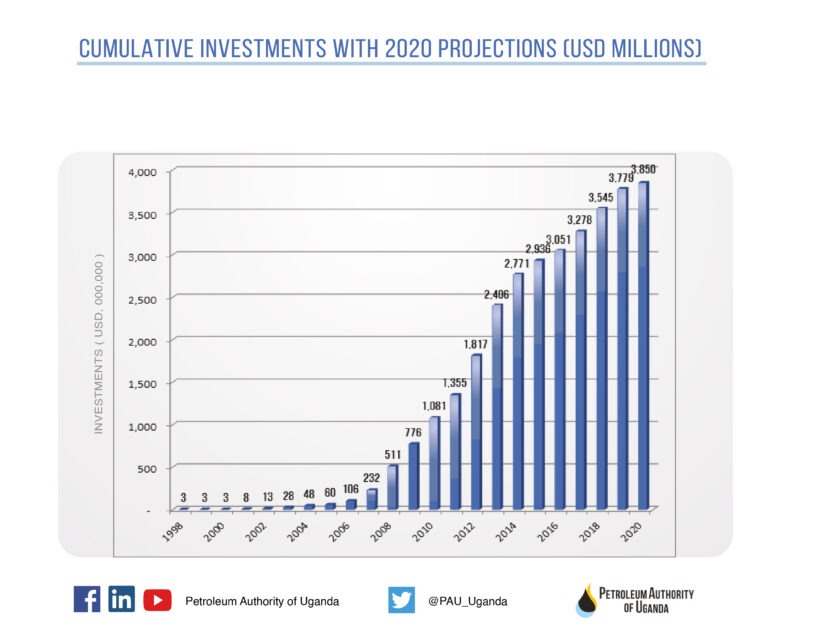
One of the core responsibilities of the PAU is to contribute towards making Uganda a sound investment destination. To date, the PAU has facilitated the investment of USD3.8 billion into exploration, appraisal, and development activities. An additional USD15-20 billion is to be invested in the development and production phases, leading up to first oil.
#3: WHAT IS PAU DOING TO ENSURE COST EFFICIENCY?
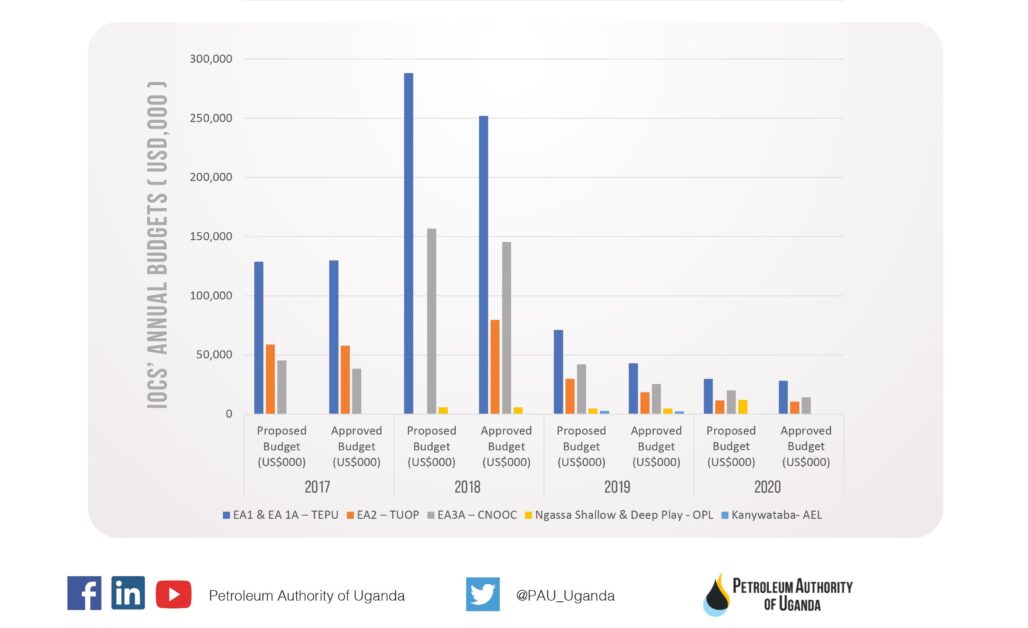
To maximise value for Uganda, the Petroleum Authority of Uganda (PAU), closely monitors all expenditures by the International Oil Companies (IOCs) to ensure they are efficient, on budget and on time. Since 2017, out of the budgeted USD1,006,085,000 only USD855,857,000 has been approved by PAU, thus a potential saving to the country of an estimated USD150,228,000 of what would have been recoverable costs.
#4: HOW MANY UGANDANS ARE EMPLOYED BY THE OIL & GAS COMPANIES?
One of the core 6 roles and functions of the Petroleum Authority of Uganda (PAU), is to ensure the increased participation of Ugandans in the sector. To date, the percentage of Ugandan nationals directly employed by the oil companies constitutes 81% of the workforce. Ugandans consist of 59% of all management positions, 75% of technical jobs, and 100% of all support staff jobs. The PAU has actively supported job creation by providing visibility of Ugandans who would like to get employment in the sector through the National Oil and Gas Talent Register (NOGTR) that was set up in 2019 and now has over 3,000 individuals and 108 companies registered.

#5: HOW MANY UGANDAN COMPANIES ARE REGISTERED ON THE NATIONAL SUPPLIER DATABASE
To support Ugandan companies that would like to participate in the sector, PAU in 2017
set up the National Supplier Database (NSD) – a register of all companies that would like to
supply goods and services to the oil and gas sector. Today, 1,775 companies are qualified
and registered on the NSD, up from 513 in 2017 when the NSD was established.

#6: WHAT’S THE EXTENT OF NATIONAL CONTENT IN ONGOING OIL & GAS ACTIVITIES?
Overall, out of the USD3.8 billion spent so far in the sector, even before commercialisation of the oil starts, Ugandans have been able to provide goods and services worth over USD1 billion. But since the creation of the NSD; between 2017 and 2019, out of a total of USD 198,795,426 that was spent by the international oil companies on procurements of various goods and services, USD 84,958,919 was value retained in the country. Over the period 2017-2019, indigenous companies have steadily increased their share in total procurement spend by the IOCs, from 28% in 2017 to 72%i in 2019.
 The Smartphone Tax Trap: Is Uganda Pricing Millions Out of the Digital Economy?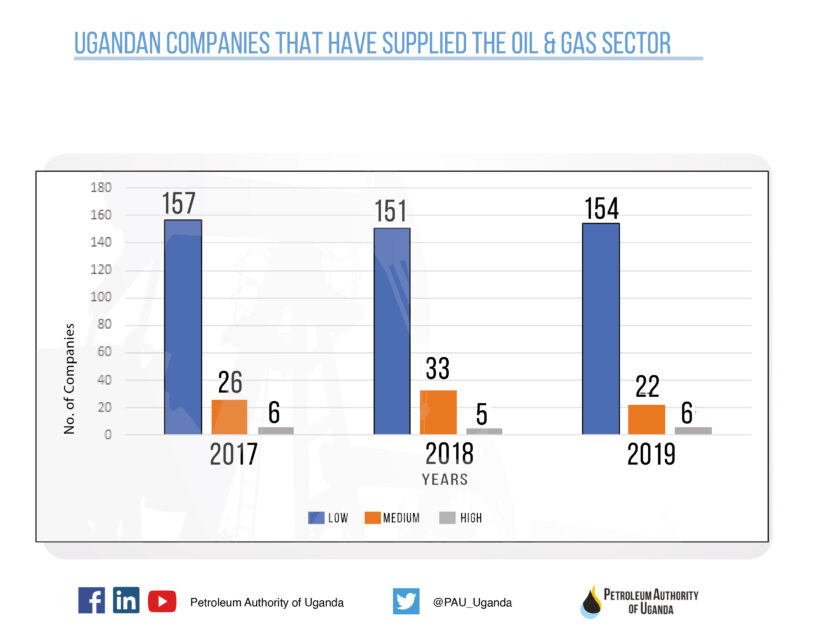
#7: HOW DOES PAU STRIKE A BALANCE BETWEEN OIL & GAS ACTIVITIES AND THE ENVIRONMENT?
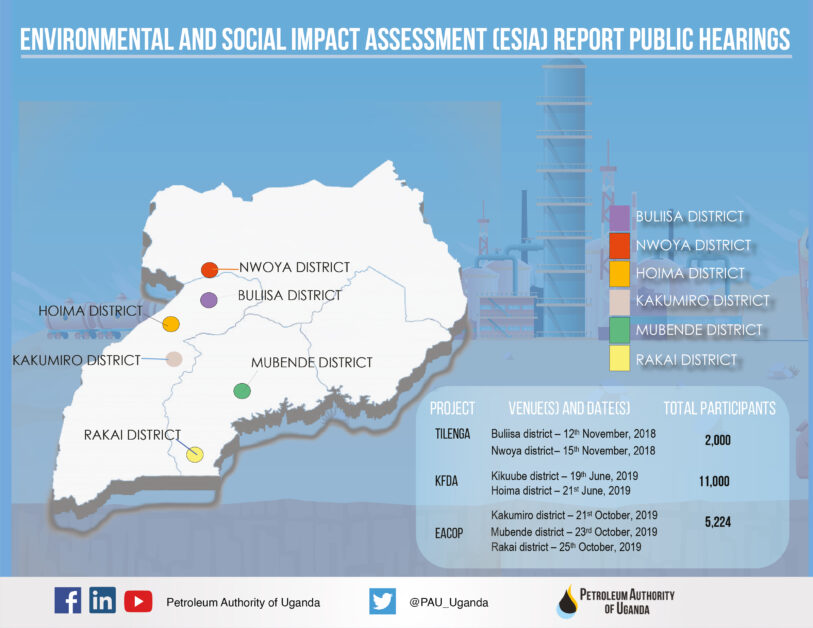
To ensure environmental protection, human health and safety during oil and gas activities the PAU works closely with licensed entities as well as Government and non-Government partners to among others, review Environmental and Social Impact Assessment (ESIA) reports. It also organises respective public hearings for the same. To date, the PAU has engaged 18,224 PAPs in seven (7) public hearings: two (2) for the Tilenga Project ESIA report in 2018; two (2) for the KFDA ESIA report in 2018; and, three (3) for the EACOP ESIA report in 2019.
#8: HOW IS UGANDA’S PETROLEUM AND RELATED DATA MANAGED?
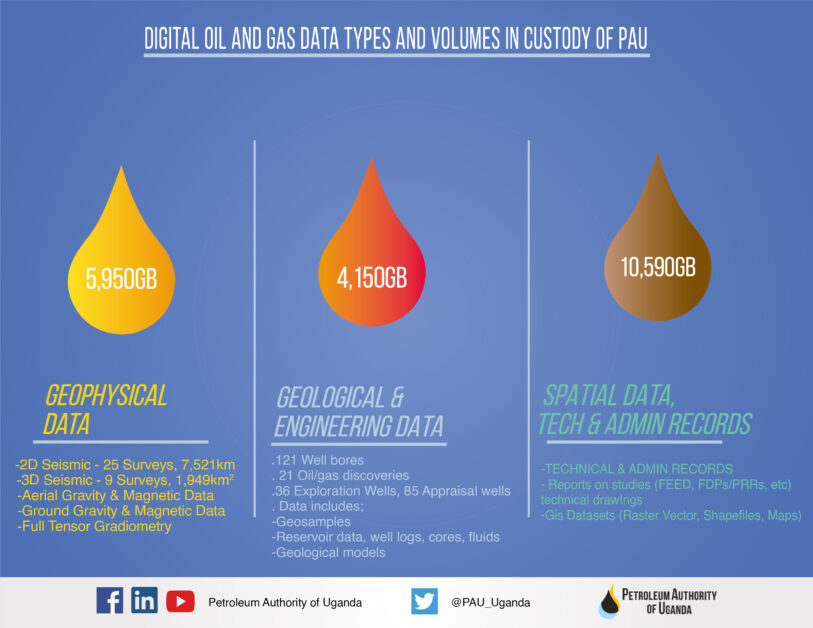
To create lasting value, it is important that all the data generated from oil and gas activities in Uganda is collected, documented, analysed, organised, stored and accessed in an organised manner. To date the PAU has nearly 6 terabytes of geophysical data; 4.2 terabytes of geological and engineering data and 10.6 terabytes of spatial data as well as technical and administration records.
#9: WHAT IS BEING DONE TO MINIMISE THE SOCIO-ECONOMIC IMPACT ON PERSONS AFFECTED BY THE KINGFISHER PROJECT?
The Kingfisher Project consists of the planned Central Processing Facility (CPF) with a capacity of 40,000 barrels of oil per day and 31 wells to be drilled on four well pads. The project will have 16 kilometres of flow lines and a 55-kilometre feeder pipeline from the CPF in Buhuka, Hoima district, to the export hub and refinery in Kabaale, Hoima District. This project is estimated to cost about USD 3-4 billion. Several Livelihood Restoration Programmes have been put in place to mitigate economic displacement impacts related to land acquisition by restoring, transitioning, or improving the livelihoods of the Project Affected Persons (PAPs).

#10: WHAT LIVELIHOOD RESTORATION PROGRAMMES ARE IN PLACE FOR PERSONS AFFECTED BY THE TILENGA PROJECT?
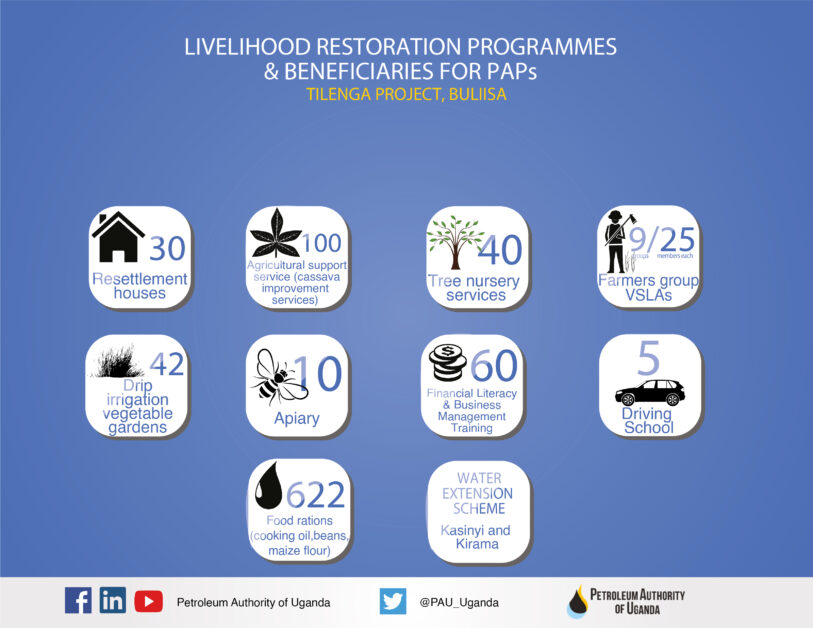
The Tilenga Project includes over 400 wells that are planned to be drilled on 35 well pads and a Central Processing Facility (CPF) with a capacity to process 190,000 barrels of oil per day. This project also includes 250 kilometres of flow lines transporting the crude oil within the oil fields as well as a 110 km feeder pipeline to transport the processed crude oil from the CPF in Buliisa to the export hub and refinery in Kabaale, Hoima District. This project is estimated to cost between USD 5- 6 billion. Livelihood Restoration Programmes for Project Affected Persons (PAPs) that include resettlement houses, agricultural support, savings associations, skills training and direct food rations have been rolled out, vocational skills and direct food rations, have been rolled out.