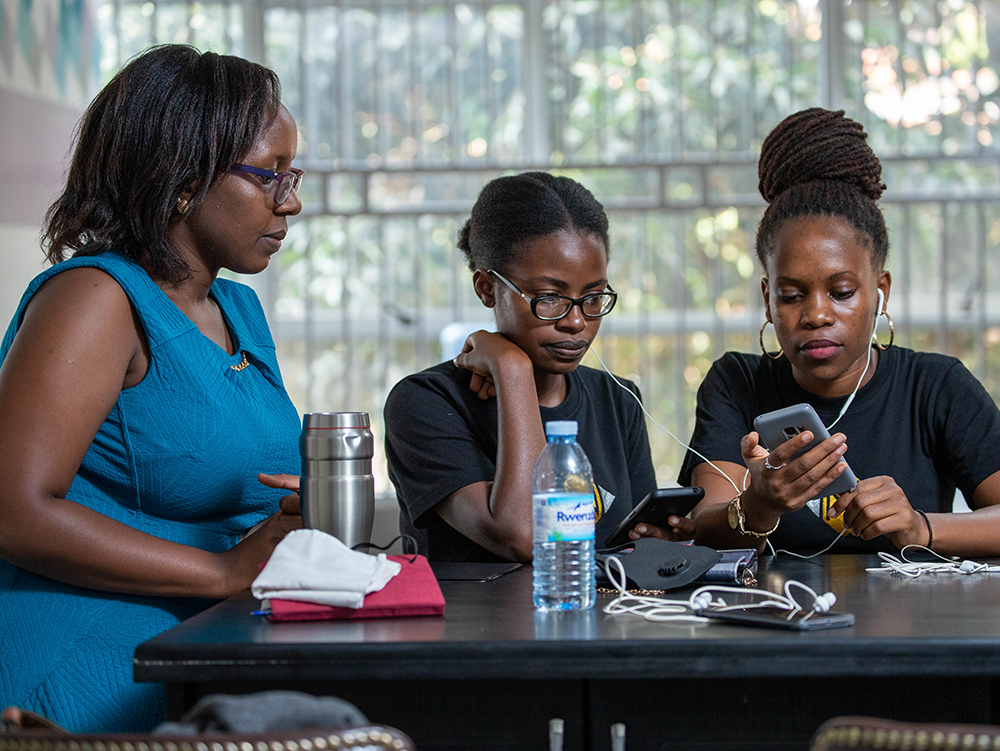
The Innovation Village, through its Edtech Lab in partnership with Mastercard Foundation Young Africa Works and the Arizona State University, have announced the final 3 teams whose solutions made it to the top three in the Future of Education accelerator program.
The Future of Education is a business development program implemented by The Innovation Village through its Education Technology Lab supported by Mastercard Foundation and the Arizona State University to provide holistic support to innovative businesses rethinking and shaping the Future of Education. The call attracted 87 applications that were narrowed down to 10 startups who pitched to a panel of judges among which the top 3 were selected.
The companies, KAINOafrica, ThinkPlayful, and Nimarungi, will receive exposure to investors and expert guidance on how to navigate the education landscape and scale their solutions via mentorship, peer learning, guidance from experts and implementing partners.
Speaking at the demo day of the accelerator program, The Innovation Team Lead, CK Japheth commented, “Our aim is to fill the gap created by COVID-19 effects with ideas and innovations to lead to transformative change in the education sector. For 8 intensive weeks Uganda’s most promising education entrepreneurs received expert guidance on how to navigate the education landscape and scale their solutions via mentorship, peer learning and expert feedback. After this accelerator program, we can gladly say we have potential and promising solutions if nurtured well.”
Uganda, among many countries, has been up in arms to mitigate the effects of the pandemic on the education sector due to distortion in the curriculum with kindergarten most recently still in lockdown until the pandemic passes.
 Rajiv Ruparelia Legacy Lives On in UGX 1.7 Billion Bukedea Eye Camp for 2,000 Patients by Ruparelia Foundation & Partners
Rita Laura Lulua, Lead Education and Skills at Mastercard Foundation noted that in the face of global closures of educational institutions and the halting of non-formal training, there has been remarkable innovation in response to support learning and teaching.
“The responses have also highlighted existing gaps and disparities, the digital one inclusive. Learning losses due to prolonged school closures means that many educational outcomes are at risk. For a number of reasons, we cannot return to the world as it was before, and stakeholders need to ensure that education systems are more flexible, equitable, and inclusive.” said Lulua.
“For the past four months we run a program which was highly selective and intensive for Uganda’s most promising education entrepreneurs. We were impressed by the innovations out there and the commitment to improve these ideas among the start-ups. This is what The Innovation Village is about. Re-imagining and reinventing solutions to challenges with the ability to transform ideas and turn them into assets. We believe the ideas selected stand a real chance to meet the sector’s needs.” concluded Samantha Namara, Senior Associate FutureLab.
The top 3 start-ups from the accelerator program include.
- KAINOafrica is an easy-to-use tool that offers premium STEM blended curriculum-aligned early childhood education content to parents for homeschooling their children and teachers in ECD centers in form of lesson guides, which they can use to deliver daily curriculum-aligned lessons to their children using our web and mobile apps. https://kaino.africa/
- ThinkPlay: ThinkPlay makes board games-for-rent to help children learn math and science through play sessions with peers and family. The boardgames are used as a cost-effective instructional material integrated into a set of game-based learning strategies to offer a conducive, safe, and fun learning environment that increases motivation and interest for learning.
- Nimarungi is solving the problem of education inequality caused by a lack of data leading to uninformed decisions and policies affecting the marginalized youths and children. This is solved through collecting data with the use of Open Data Kit (ODK) which is a free open source, accurate, quick, offline, and at scale data collection tool. More still we use paper surveys in case of phone blackouts, peer, interviews, and other sources to collect data. This data is analyzed and expressed as a response to stakeholders. Nimarungi advises stakeholders on the areas that need more focus, then it proposes for the redirection of funds to the right people which in the end influences informed decision making and policies. Nimarungi goes ahead to make a follow up on the impact caused by the research made, response, and feedback given.