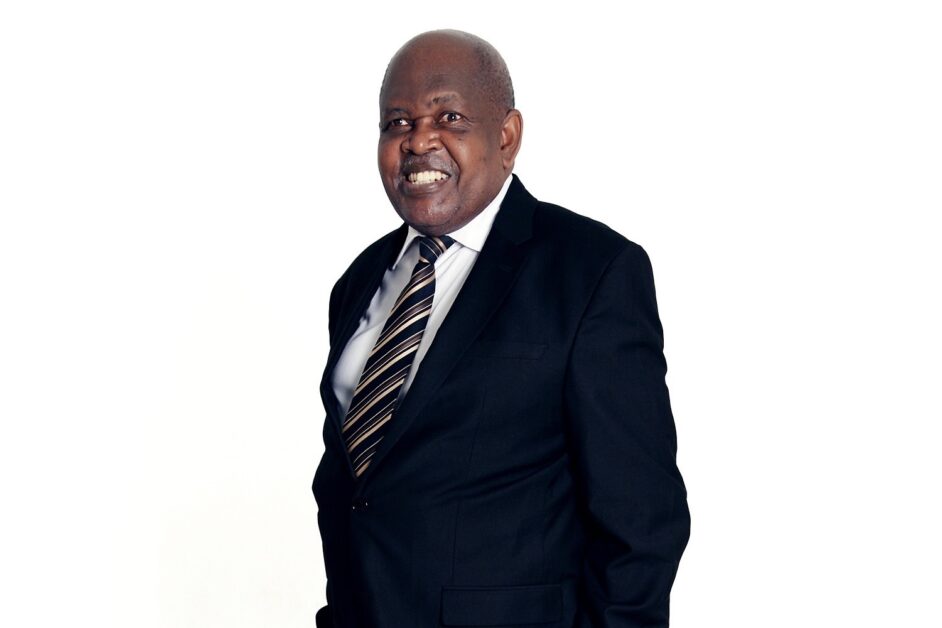
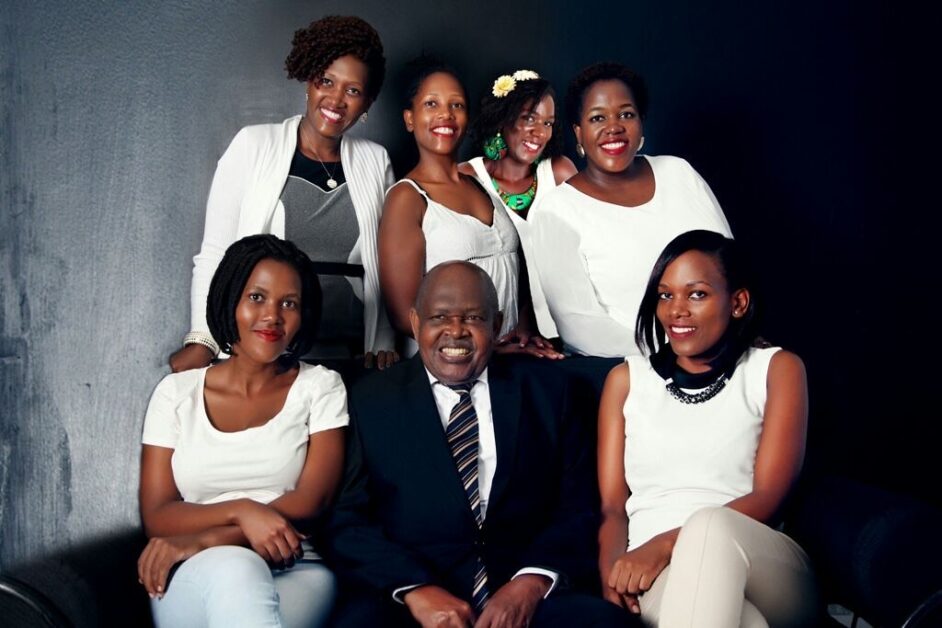
For anyone who grew up in Uganda in the 1980s and 1990s, it is impossible not to marvel at Caleb Rwakatungu Snr’s ability to extract so much from so little. This was a time when school fees were precarious, social safety nets were thin, and a single disruption could derail an entire household’s future. To raise eight children under those conditions — and to send them to some of the country’s best schools — bordered on the improbable.
In many ways, Mr. Rwakatungu Snr resembles the biblical servant in the Parable of the Talents — entrusted with little, yet multiplying it through diligence, courage, and faith. His working life was anchored in modest, often poorly paying roles, primarily in agriculture, made even more demanding by blindness for much of his adult life. He was not insulated by privilege, stable income, or institutional protection. He was a father navigating scarcity with resolve — refusing to let circumstance define the ceiling of his children’s lives.
It is from this context — of limited means, physical vulnerability, and unyielding responsibility — that his most enduring contribution emerges. Mr. Rwakatungu Snr did not simply parent under difficult circumstances. He designed a way of living under constraint — one that treated vulnerability not as a limitation, but as a condition to be managed with discipline, humility, and intent.
For much of their childhood, the Rwakatungu family was raised almost single-handedly by a blind father, in seasons marked by scarcity and dependence on the goodwill of others. Yet, as his children recount, the household was never defined by despair — it was defined by structure.
“For most of his life, he was blind, and there were seasons when we had very little. At times, we survived purely on the kindness of others. But that experience didn’t break us — it taught us to draw strength and inspiration from whatever situation we were in,” recalls Doreen Rwakatungu-Musiime. “If this man doesn’t give up, then I absolutely cannot.”
Blindness, in this home, was not treated as tragedy. It was simply part of the operating environment. What mattered was response — and Mr. Rwakatungu Snr responded by anchoring the family to three non-negotiables: education, responsibility, and forward motion.
Perhaps the most radical of these was his approach to education — not as aspiration or prestige, but as strategy. When resources were thin and pride could easily have intervened, he chose humility instead.
“For a man — and especially in our culture — it is one thing for others to care for your children when you are no longer alive. But it is something entirely different to watch other people raise your children while you are still living,” says Racheal Rwakatungu. “Yet my father was willing to swallow that pride for one reason: education. He always said, ‘I will give you an education — even if it means lowering myself and begging for help.’ And he did exactly that.”
Asking for help, in this family, was not framed as weakness. It was framed as leadership — a deliberate decision to secure a future, regardless of personal discomfort. Extended family members, friends, and benefactors became part of the scaffolding, but the blueprint remained firmly his.
Allan Rwakatungu, the firstborn son, still marvels at the intentionality behind the choices that shaped their schooling:
“When I look back now, especially as we struggle with school fees for our own children, I often find myself wondering how our father managed to do it. He was essentially a single dad, and yet he ensured we went to some of the best schools. He didn’t focus on much else — but when it came to education, he was absolutely committed.”
This commitment was not sentimental. It was tactical. Education was the one asset he believed could not be repossessed by circumstance — and it became the backbone of the family’s upward mobility.
But beyond education, Mr. Rwakatungu Snr also modelled psychological resilience. Optimism, adaptability, and an unshakeable belief that every problem was solvable became part of the household culture.
“You can never tell him that something is a problem,” Doreen notes. “If you start with ‘it can’t work’ or ‘it’s difficult,’ he will stop you right there. And by the time you leave that conversation, you know you’d better go and sort it out — because he believes everything is solvable.”
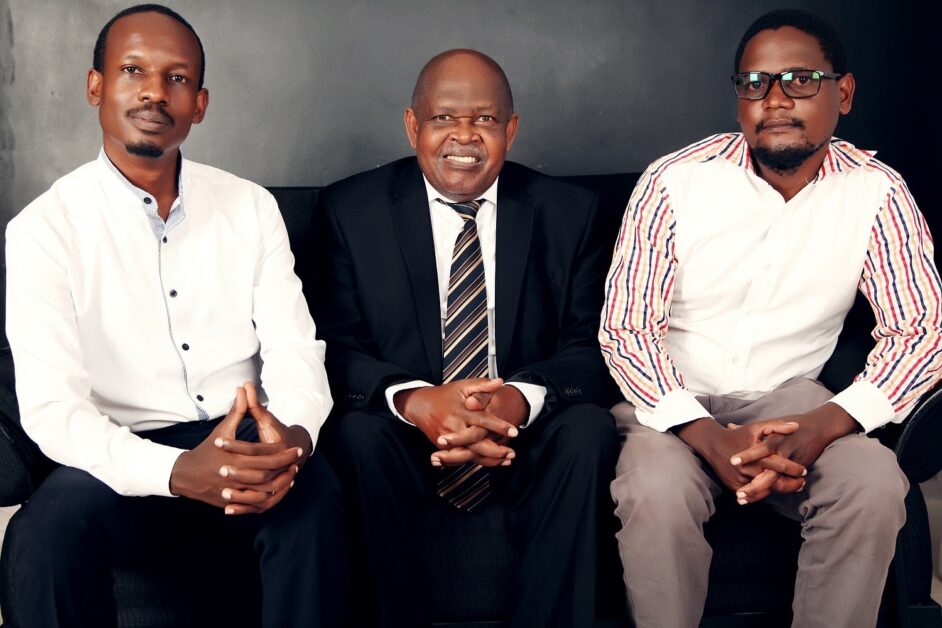
Even in adulthood, his role as chief interrogator and grounding force remains intact. Allan admits that when facing life-altering decisions, it is still his father — not his banker sisters — who asks the hardest questions.
“When it comes to big decisions, the chief consultant in our family has always been our father,” Allan says. “He wants to understand the idea — why it matters, whether it can work. And he always asks one fundamental question: ‘Are you the only one doing this? And if not, are you the best in the world at it?’”
These were not abstract philosophical exercises. They were the early lines of code in a system that trained children to think deeply, act responsibly, and keep moving forward — regardless of constraint.
Mr. Rwakatungu Snr did not raise his children by shielding them from hardship. He raised them by teaching them how to function inside it. And long before any of them entered boardrooms, built companies, or approved billion-shilling decisions, the system was already running — quietly, relentlessly, and by design.
Education as Liberation; The Non-Negotiable Currency
In the Rwakatungu household, education was never spoken about as status, polish, or social mobility. It was spoken about as survival strategy — the one lever powerful enough to lift an entire family beyond the limits of circumstance.
Comfort was negotiable. Pride was negotiable. Education was not.
This is why, looking back, the children’s schooling often surprises those who assume privilege must have preceded opportunity. It did not. What preceded opportunity was sacrifice — and humility.
“People often say to us, ‘You look like you were planned children,’” says Racheal Rwakatungu. “But our story is really one of our father’s vulnerability and courage. He was willing to swallow that pride for one reason: education.”
She remembers a truth that still defines the family’s trajectory:
“He always said, ‘I will give you an education — even if it means lowering myself and begging for help.’ And he did exactly that.”
That willingness to ask — to accept support without shame — reframed education as a collective investment, not an individual reward. It was never your degree. It was our ladder.
For Doreen Rwakatungu-Musiime, the eldest daughter, education arrived early as both opportunity and obligation. Her academic path became the prototype others would follow — sometimes before they had found their own voices.
“Everything seemed to follow the path she had taken,” Racheal recalls. “The schools Doreen attended became my schools. The subjects she chose became my subjects.”
Doreen’s own journey, however, reflects the family’s deeper truth: education was not about perfect alignment, but about building capability that could travel.
She trained as an electrical engineer — at her father’s insistence — even though her eventual destination lay elsewhere.

“My father was extremely passionate about my becoming an engineer,” Doreen says. “I genuinely believe his dream was to have a daughter he could proudly call ‘Engineer.’ Even today, after more than 20 years in audit, he still calls me that.”
Engineering, she admits, was never her natural home. But it gave her something more valuable than a title.
“It taught me analytical thinking, problem-solving, creativity, and the ability to approach issues from multiple angles. Those skills have served me incredibly well in audit.”
Her pivot into audit — first through PwC and later across Africa’s largest banking group — was not a rejection of her education, but its redeployment. The point was never the label. The point was leverage.
For Racheal, education unfolded less as a straight line and more as discovery. Denied entry into engineering, she was forced — for the first time — to answer a question her family had rarely asked her directly:
“Daddy finally asked, ‘What do you want to do?’ And without hesitation, I said, ‘Statistics.’”
That choice unlocked a path defined by analytical rigour and judgment — qualities that would later anchor her career in credit risk.
“I’ve always loved mathematics. I lived in math contests,” she says. “Credit turned out to be the perfect space to apply that analytical lens.”
Even rejection became part of the education. When she failed to secure a role at PwC — where Doreen was already thriving — it forced a recalibration rather than retreat.
“That rejection forced me to ask myself, ‘If I’m not becoming an auditor, then what next?’”
What followed was not drift, but deliberate repositioning — first into banking, then into credit, and ultimately into a role where decisions shape businesses, livelihoods, and capital flows.
For Allan Rwakatungu, education took its most unconventional form.
He benefited from the same schooling sacrifices — Kabale Preparatory School, King’s College Budo, Ntare — but his real curriculum unfolded elsewhere: through curiosity, tinkering, and relentless self-teaching.
“One of the most fascinating things my father owned was a computer,” Allan recalls. “By S4 and S5, I was already breaking things, fixing them, and teaching myself.”
That early exposure — combined with the confidence to experiment — became the foundation for his reinvention. When formal pathways fell short, he built his own.
“We started a business, and it didn’t go too well,” he admits. “But along the way, I built my first real tech project and taught myself how to code. That opened the next door.”
From data analyst to self-taught programmer, from corporate software architect to fintech founder and AI entrepreneur, Allan’s path reflects the same family logic: education is not a phase — it is a continuous weapon.
What unites all three journeys is not sameness, but intent.
Education in the Rwakatungu family was never about outperforming others. It was about ensuring no one was left behind — and ensuring the next person could climb higher because the previous one had held the ladder steady.
It was liberation, carefully planned. Not prestige — but escape velocity.
Responsibility Before Entitlement
In the Rwakatungu family, birth order did not confer privilege. It conferred weight.
Being first did not mean being indulged; it meant being accountable. Success was never framed as personal arrival — it was framed as collective insurance. You moved forward not so you could escape, but so you could pull others with you.
Doreen Rwakatungu-Musiime, recalls, that responsibility arrived early and stayed.
“From the moment I finished university, it was firmly in my mind that all of us had to finish — and finish well — because there were six people behind me,” she says.
In practice, this meant becoming what she now jokingly calls the family’s “deputy parent” — a role she never applied for, but never resisted.
“I felt a responsibility to make sure we all moved forward, and not in a way that left anyone behind.”
The duties were not abstract. They were logistical, emotional, and constant.
She remembers the sting of school visitation days — waiting, watching other parents arrive, knowing her father was far away in Kabale and might not make it.
“So when I grew older and was able to show up for my siblings, I made visitation a non-negotiable. If I couldn’t go, then an aunt would go — but someone had to show up. We had to make sure the chain didn’t break.”
Responsibility, in this sense, was not framed as sacrifice. It became identity — something she carried naturally into adulthood, leadership, and governance.
Even now, she remains the family’s internal auditor.
“I’m still the one interrogating the family WhatsApp group,” she says, laughing. “Where are you with this? How is your job? How is your life? What’s the plan?”
People, she admits, have learned to reroute sensitive conversations through Rachel instead.
For Allan Rwakatungu, responsibility took a different form — one shaped by contrast and gratitude.
As the firstborn son in a household dominated by strong sisters, he grew up acutely aware that much of the weight was being carried for him, long before he learned to carry it himself.
“Being the firstborn boy meant I was extremely spoiled,” he admits candidly. “I didn’t cook, I didn’t wash, I didn’t sew. It’s only when I grew older that I fully appreciated how much my sisters carried during our childhood.”
That awareness has never hardened into guilt — but it has matured into respect.
“When I reflect now, I realise how powerful that support system was. They created a strong foundation, and that unity is still one of our greatest strengths.”
It is also what gave him permission to take risk.
“Part of what allowed me to take entrepreneurial risks was knowing we had a strong family foundation. Whether consciously or not, there was a sense that, ‘We’re going to be okay.’ I wasn’t risking the entire generation.”
In other families, the first successful child often becomes the sole pillar. In this one, responsibility is distributed — and that distribution is intentional.
That balance is where Racheal Rwakatungu comes in.
As a middle child, she became the stabiliser — the one who absorbs pressure without amplifying it.
“What I appreciate about Doreen is that she takes away the burden of being the one who asks the hard questions,” Racheal explains. “She handles that part so thoroughly that I get to relate with everyone at a much softer level.”
Where Doreen interrogates systems, Racheal manages people. Where one pushes for structure, the other preserves flexibility.
“Most of our siblings actually come to me because they know Doreen will ask very probing questions,” she adds. “I can meet people where they are.”
This complementary dynamic has allowed responsibility to remain sustainable, rather than corrosive.
And it reflects a deeper truth about the family’s moral code: no one carries alone.
“When there’s a crisis, we come together and carry the load collectively,” Allan says. “Everyone steps in. No one struggles alone.”
Different Temperaments, One Ethical Spine
Spend time with the Rwakatungu family and one truth becomes immediately clear: this is not a household that produces replicas. The personalities are distinct, the instincts often contrasting, and the professional expressions worlds apart. And yet, there is no drift.
What binds them is not sameness of temperament, but alignment of values — an ethical spine strong enough to hold difference without fracture.
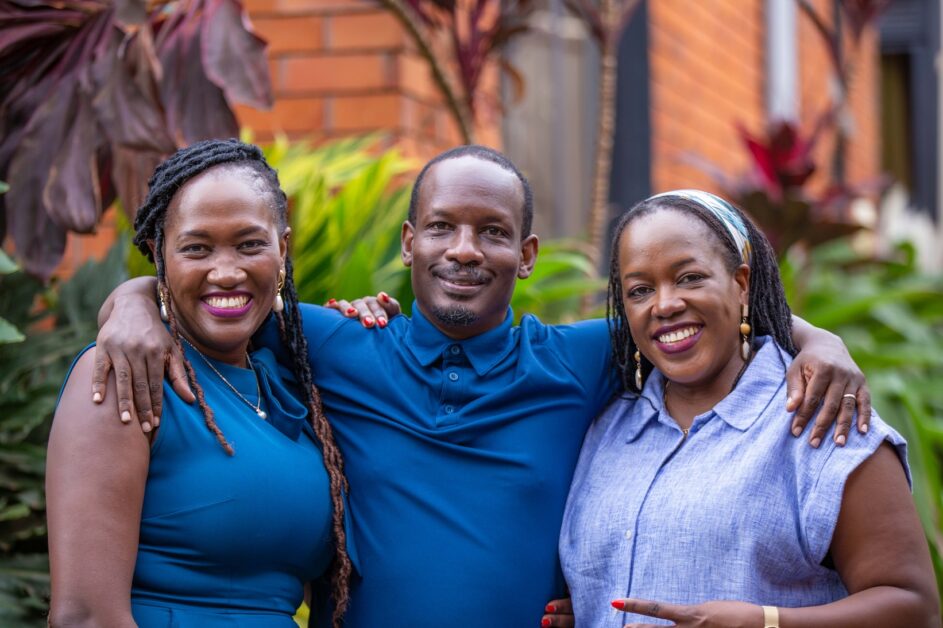
Allan Rwakatungu moves through the world as a visionary. He is drawn to what could be rather than what already exists. His instinct is to build, to imagine, to test the edges of possibility — often long before the rest of the system is ready.
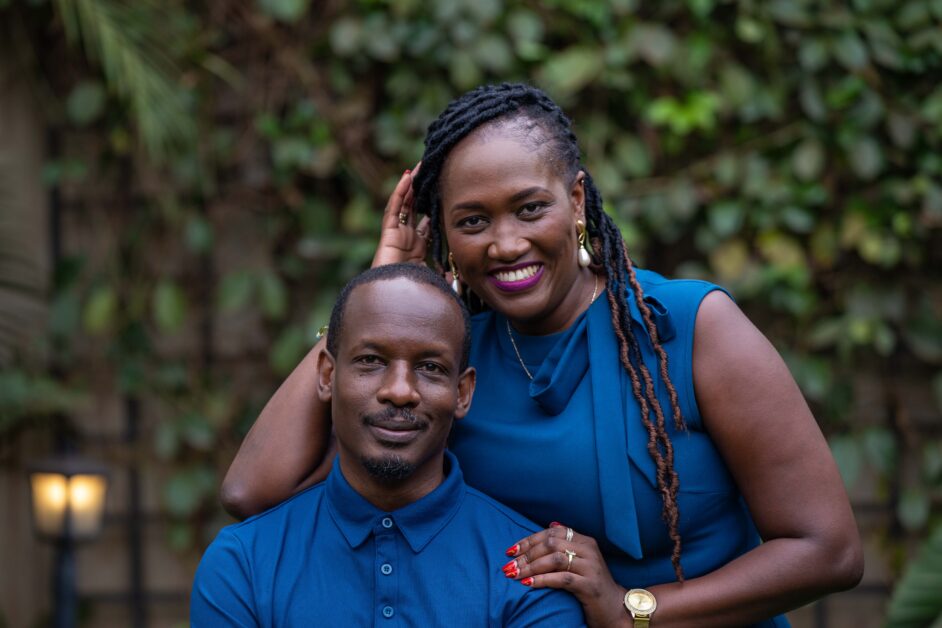
“Rachel sees business in terms of ‘Where is the money?’ I see it in terms of ‘What could the world become?’”he says, half-joking, fully aware of the contrast.
That difference shows up not only in theory, but in temperament. Allan admits that his ideas often live far ahead of immediate reality — sometimes colliding humorously with everyday life.
“As an entrepreneur, you can go home excited and say, ‘I met some guys today — we’re discussing a $2 million deal!’ And your wife replies, ‘Did you remember to bring bread?’”
It is a telling moment: vision pulling forward, reality tugging back.
Yet even in his most audacious thinking, there is an internal restraint. Allan does not romanticise chaos. When he left the corporate world, it was not in rebellion, but in clarity — having recognised that he was not built for endless meetings about meetings. And when he eventually stepped away from Xente, it was not because the company failed, but because governance had matured enough to survive without him.
That ability to build, step aside, and build again reflects a discipline inherited, not improvised. He chases possibility — but never at the cost of people, process, or legacy.
If Allan lives in the future, Doreen Rwakatungu-Musiime lives in structure.
She is a systems thinker to her core. Where Allan dreams forward, she interrogates inward. She asks what holds, what breaks, and what must be strengthened for an institution to endure — even if that interrogation makes people uncomfortable.
Her temperament was visible long before titles followed. As a student at Gayaza, she became the family’s reference point — the one whose schools others followed, whose path others were quietly aligned to. Later, in her career, the same instinct emerged: she raised her hand before the role existed, took on responsibility before authority was granted, and delivered long before recognition arrived.
“I wasn’t appointed yet — but I did the work,” she says of several pivotal moments in her rise.
Even at the peak of her career — stepping into the role of Group Chief Audit Officer at Standard Bank Group — her instinct was not to claim space, but to understand it. She immersed herself in the business, attended committees not to police but to learn, and focused on outcomes rather than optics.
That is her version of leadership: quiet authority, exercised through competence, not volume.
Then there is Racheal Rwakatungu, whose temperament sits between vision and structure — but carries its own distinct gravity.
She is a judge by instinct: analytical, deliberate, and commercially grounded. Where Allan imagines futures and Doreen fortifies systems, Racheal weighs consequences — often with a human lens others overlook.
She insists on visiting clients rather than approving deals from spreadsheets alone.
“When you meet someone face-to-face and listen to them talk about their business, you can learn far more from their passion than from their balance sheet,” she explains.
That instinct — to see the person behind the numbers — reflects a temperament shaped by proximity to consequence. She has watched hope rise and fall on single decisions. She has seen how one approval can grow an enterprise, and one misjudgment can freeze capital for an entire sector.
It is why she plans obsessively — in life as much as in work.
“My will is updated every year. Everything is documented,” she says plainly. “Because I’ve seen what happens when there is no plan.”
Mastery Over Optics: Why None of Them Are Accidental Successes
For the Rwakatungus, visibility is never the starting point. It is the by-product. Long before titles, boardrooms, or public recognition enter the picture, there is an insistence on knowing the work — deeply, uncomfortably, and completely.
Mastery comes first. Optics, if they come at all, arrive later.
For Doreen Rwakatungu-Musiime, this philosophy was forged early — and reinforced repeatedly — in a profession where shortcuts are exposed without mercy.
She often reminds young professionals that courage, on its own, is insufficient.
“You cannot move to the next level without depth,” she says. “You need courage, especially in audit — but courage must sit on top of competence.”
That belief shaped how she moved through her career. At Barclays and later at Standard Bank, regional roles did not come because she campaigned for visibility. They came because she did the work before the role existed.
“Many of the roles I’ve held came because I raised my hand long before there was a vacancy. I wasn’t appointed yet — but I did the work.”
Even her appointment as Group Chief Audit Officer at Standard Bank Group — the first woman, and a non–South African — followed the same pattern. She had never worked at head office. She had never built political capital in board corridors. In fact, on her first day, she got lost looking for the boardroom.
What carried her through was not familiarity, but mastery.
“They appointed me because they saw results,” she says. “Not visibility. Not politics. Results.”
For Racheal Rwakatungu, mastery has been shaped by consequence.
Credit is a profession where confidence is meaningless unless it survives loss. She has lived through both extremes — financing businesses that grew from ten employees to thousands, and managing defaults that wiped out tens of millions of dollars.
“I have personally handled cases where clients have defaulted on a significant loan facilities,” she says matter-of-factly. “Although we eventually recover most if not all the money, imagine having to explain that during every performance review.”
These realities have reshaped her understanding and respect of lived experiences.
“Depth comes from time, mistakes, and experience,” she explains. “There is classroom training, yes — but so much of what makes a good credit professional is developed the hard way.”
It is also why she rejects the old image of credit managers as feared gatekeepers.
“Today, credit must be facilitative, not authoritarian,” she says. “Judgment matters more than power.”
Her credibility comes not from the ability to say no, but from the discipline to walk journeys with clients, to interrogate risk early, and to manage expectations before hope turns into damage.
Visibility without judgment, in her world, is dangerous.
For Allan Rwakatungu, mastery expresses itself in an almost counter-cultural restraint.
His entrepreneurial journey is often described as bold, even reckless — but the transcript tells a different story. Again and again, Allan speaks less about hype and more about building quietly until something works.
When his first business failed, he did not retreat into branding or storytelling. He taught himself to code.
“Along the way, I built my first real tech project and taught myself how to code. That opened the next door,”he recalls.
At MTN, he spent eight years deep in software development and architecture — not visibility roles, but technical trenches. And when he eventually founded Xente, he resisted the temptation to scale ahead of governance.
“One of the reasons we were comfortable stepping back from Xente is that we had already established strong governance processes — proper audit, board reporting, and regulatory discipline,” he explains.
 Tax on Used Clothes to Increase to 30%
That discipline is also why he has avoided founder syndrome.
“I’m driven by the mission, not the ownership,” Allan says. “If you over-invest emotionally, that thing will pull you down.”
He builds, hands over, and builds again — not because he is detached, but because the work matters more than the spotlight.
Risk, But Never Recklessness
The Rwakatungu family does not fear risk. But it has never confused risk with bravado.
In this household, risk was learned early — not as adventure, but as judgment under constraint. When margins are thin and failure carries ripple effects, you learn quickly that not all risks are equal. Some can be taken. Others cannot be recovered from.
Their father understood this intuitively. He taught them — without lectures — never to risk what they could not replace. Education, dignity, and family continuity were never placed on the table. Everything else was negotiable.
That discipline still governs how they move.
For Allan Rwakatungu, risk has always been present — but never unexamined.
His first major leap came early. Working as a data analyst at Kawanda Research Station, he recognised that the future he wanted lay elsewhere.
“I looked around and saw professors and PhDs in animal husbandry,” he recalls. “I knew that wasn’t the future I saw for myself. One day, I simply woke up, quit, and said, ‘I’m going to the streets. I’m going to start a business.’”
The business failed. But what followed reveals the family’s risk ethic.
Allan did not gamble again out of pride. He paused, reassessed, and invested in what could not be taken away — skill.
“Along the way, I built my first real tech project and taught myself how to code,” he says. “That opened the next door.”
That decision reflects a lesson absorbed at home: when assets are unstable, invest in capability.
What followed was not serial risk-taking, but layered reinvention — years of technical depth at MTN, exposure to regulation and governance, and only then a return to entrepreneurship. Even later, when he stepped away from Xente — a stable, profitable company — the decision was made possible because systems were in place.
In this family, risk is acceptable only when succession is thought through.
For Racheal Rwakatungu, risk has never been abstract.
In credit, risk is lived — often long after deals are signed and optimism has faded. She learned early that some decisions carry long tails, surfacing years later in restructures, recoveries, and performance reviews.
During COVID, those lessons intensified.
“You wake up thinking you understand your job, and then COVID happens,” she says. “In one night, everything changes — restructures, renegotiations, crisis management.”
That period stripped risk of romance. It also reinforced a principle she had grown up with: manage exposure early. Pride delays intervention. Humility limits damage.
Today, she interrogates assumptions early, manages expectations deliberately, and refuses to outsource judgment to policy alone. She has seen what happens when risk is taken without preparation — and she plans accordingly, in business and in life.
Risk, to her, is not avoided. It is priced, documented, and carried consciously.
For Doreen Rwakatungu-Musiime, risk shows up as relevance.
When she began her audit career in 2003, the profession was manual and predictable.
“We had a red pen, a green pen, and a blue pen,” she recalls. “You printed everything and ticked through pages manually.”
Today, the institutions she oversees operate on AI, robotics, and advanced analytics. The greatest risk she sees is not change — but stagnation.
“If you don’t evolve beyond the traditional audit mindset, you will become extinct,” she says.
Her response has been disciplined evolution: retooling herself and her teams long before disruption forced it. She understands that standing still is the most dangerous position of all.
Across these three lives, a consistent logic holds — one learned long before boardrooms and balance sheets entered the picture.
- Never risk what you cannot replace.
- Use humility as a control, not a weakness.
- Invest in skills when assets are fragile.
- Diversify risk across people, paths, and time.
- Plan for absence, not permanence.
These were not corporate lessons. They were household rules.
Their father could not afford recklessness — and so he taught his children never to confuse courage with carelessness.
Beyond Integrity: Stewardship as an Operating System
What appears, at first glance, as integrity in the Rwakatungus’ story is in fact something more demanding. It is stewardship — the disciplined care of people, power, and institutions across time.
Integrity is about not doing harm. Stewardship is about actively designing systems that protect value, even when individuals step aside. This family did not simply internalise moral codes; they learned how to build environments where the right outcomes are the default, not the exception.
That distinction explains why their influence scales.
For Doreen Rwakatungu-Musiime, stewardship begins with how audit is positioned inside an organisation. Rather than treating audit as a distant, retrospective policing function, she insists on proximity to the business — understanding strategy, operations, and risk before problems crystallise.
“You can’t add value if you don’t understand the business,” she says.
Her leadership has consistently favoured substance over symbolism. In regional and group roles, she has chosen to build credibility quietly — learning institutions from the inside out, embedding herself in governance processes early, and allowing authority to accrue through delivery rather than declaration.
Stewardship, in her world, is not about control.
It is about reliability.
For Racheal Rwakatungu, stewardship shows up in how power is exercised.
Credit places enormous discretion in human hands. One decision can enable growth or constrain it indefinitely. Racheal is acutely aware of that asymmetry — and treats it as a trust, not a weapon.
“Credit is not about saying no,” she explains. “It’s about getting to a sustainable yes — or knowing when that isn’t possible.”
That mindset governs how she engages clients, structures facilities, and manages distress. Even when outcomes are unfavourable, she insists on clarity, fairness, and continuity — preserving relationships while protecting capital.
Here, stewardship is measured not by authority asserted, but by dignity preserved.
For Allan Rwakatungu, stewardship is most visible in restraint.
Entrepreneurship often rewards extraction — scaling before systems are ready, monetising attention ahead of value, clinging to control long after purpose has been served. Allan has repeatedly chosen a different path.
“If you over-identify with something you build, it will pull you down with it,” he says.
He builds governance early, distributes authority deliberately, and steps aside once the mission has matured. His success is not defined by how long he remains indispensable, but by how well the system functions without him.
Stewardship, in his case, is alignment — between intent, execution, and exit.
Legacy as Continuity, Not Inheritance
Legacy, in the Rwakatungu story, is not framed as what is handed down. It is framed as what keeps running.
Titles expire. Assets change hands. Even reputations fade. What matters is whether systems endure — whether decisions made today still hold when the original decision-maker is no longer present. Legacy, in this family, is not about memory. It is about function.
That instinct did not emerge by accident.
Mr. Rwakatungu Snr raised his children with the quiet assumption that he might not always be present — not emotionally, but practically. Blindness, distance, and constraint forced him to build routines others could execute, to raise children who did not rely on constant instruction, and to normalise responsibility early. Continuity, not control, became the unspoken objective.
As Doreen Rwakatungu-Musiime reflects, the lesson was subtle but enduring.
“He always prepared us to stand on our own,” she says. “There was never a sense that someone else would come and solve things for us.”
That philosophy now shows up clearly in how the next generation thinks about legacy.

For Racheal Rwakatungu, continuity begins with planning — not as anxiety, but as care.
Years in credit taught her that uncertainty punishes the unprepared, and that ambiguity often creates unnecessary suffering. As a result, she documents relentlessly. She plans for absence as deliberately as others plan for growth.
“I’ve seen what happens when things are not written down,” she says. “People suffer unnecessarily.”
Her approach is precise: annual updates to personal and professional documentation, explicit conversations about roles and contingencies, and a refusal to let critical responsibilities live only in people’s heads. In her worldview, clarity is kindness.
Legacy, for Racheal, is not what her children inherit.
It is what they will never have to untangle.
For Doreen, continuity plays out at the institutional scale.
Leading across borders and cultures has sharpened her belief that organisations must outlive individuals — and that strong personalities are not substitutes for strong systems. She is openly resistant to hero culture, insisting instead on governance, succession, and documentation that allow institutions to absorb change without collapse.
“If everything falls apart when you leave,” she says, “then you didn’t build a system — you built dependency.”
Her leadership has therefore focused on deputy structures, clear mandates, and processes that do not rely on memory or proximity. The highest compliment, in her worldview, is invisibility — systems that work so well they no longer require explanation.
Legacy, here, is measured by how little disruption your absence causes.
Across the family, this ethic extends naturally into parenting.
There is little interest in raising children for familiarity or comfort. The emphasis is on adaptability — critical thinking, digital fluency, and moral judgment that travels across borders, technologies, and eras. Names and networks matter far less than the ability to learn, unlearn, and decide well under pressure.
As Allan Rwakatungu puts it: “The world my children will live in is not the one I was trained for. So my job is not to prepare them for certainty — but for change.”
Reverberations Beyond the Family
Beyond the family, Doreen, Allan, and Racheal have each picked up important life and professional lessons across their career paths — lessons shaped not by theory, but by exposure to real consequences.
As their work moved them into banking, audit, and technology, the family’s internal operating system met the outside world. Markets tested it. Institutions stressed it. Crises refined it. What emerged was not certainty, but clarity — a set of hard-earned insights about how life and leadership actually work.
Lesson #1: Decisions Ripple Far Beyond the Decision-Maker: From inside credit committees and risk forums, Racheal Rwakatungu learned early that decisions rarely end where they begin.
Credit failures do not stay contained. A single breakdown can reshape how an entire sector is perceived, altering risk appetite for businesses that had nothing to do with the original misstep. Capital remembers — and reacts.
Reflecting on this, she notes:
“You begin to realise that you’re never just making a decision for one client. You’re shaping how people think about that entire space.”
“Sometimes one incident doesn’t just affect that client,” she observes. “It affects the next one in the same sector.”
The lesson is sobering: responsibility extends beyond immediate outcomes. Judgment must account for second- and third-order effects, especially in fragile ecosystems.
Lesson #2: Power Is Most Dangerous When It Goes Unquestioned: Audit, credit, and technology all place power quietly in human hands — often without ceremony.
From a continental vantage point, Doreen Rwakatungu-Musiime has seen how governance failures rarely erupt overnight. More often, they develop slowly, in the absence of early challenge.
As she puts it:
“Most crises are not surprises. They are things people noticed — and chose not to deal with early enough.”
“Problems rarely come from one big failure,” she reflects. “They come from many small things no one questioned early enough.”
The lesson is subtle but firm: power that is not interrogated eventually destabilises systems. Stewardship begins with the courage to question before damage becomes visible.

Lesson #3: Systems Outlast Good Intentions: Across institutions and startups alike, one pattern repeats: good intentions collapse without structure.
Talent, commitment, and goodwill are not enough. Where systems are thin, even the best people produce fragile outcomes. Where governance is embedded early, organisations absorb shock.
Doreen’s experience reinforced a hard truth: durability is designed, not hoped for.
The lesson: build systems that can withstand absence, transition, and pressure — not just peak performance.
Lesson #4: Relevance Is a Responsibility, Not a Preference: In technology, Allan Rwakatungu encountered a world that punishes stagnation quickly.
Tools evolve. Skills expire. Models that once worked become obsolete without warning. Sentimentality toward the familiar becomes a liability — not just personally, but institutionally.
Looking back, he reflects:
“The most dangerous thing is assuming what worked for you will keep working just because it once did.”
The lesson is clear: relevance is a responsibility. Failing to evolve does not merely slow progress — it burdens the systems and people who depend on outdated thinking.
Lesson #5: Restraint Is a Form of Leadership: Across entrepreneurship and finance, all three learned that not every opportunity deserves pursuit.
Short-term advantage often weakens long-term systems. Holding power too tightly erodes trust. Extracting value without regard for continuity leaves damage behind.
Allan captures this simply:
“Sometimes the most important decision is knowing when to stop.”
Leadership, in this sense, is revealed not by accumulation — but by restraint.
Lesson #6: Values Are Only Real When Pressure Arrives: Every value sounds convincing in calm conditions.
The real test comes during crisis — economic shocks, institutional failure, technological disruption. What survives those moments becomes real.
Reflecting on turbulent periods across sectors, Racheal notes quietly:
“Pressure has a way of stripping things down to what you actually believe.”
Across Uganda, across African institutions, and across emerging industries, the lesson has been consistent: values only matter if they function under stress.
Everything else is decoration.
The Father’s Work, Still Running
Time has moved on. Children have grown — and now have children of their own. Careers have expanded into boardrooms, balance sheets, and technologies their father could never have imagined. The environment has transformed — economically, socially, and technologically.
But the operating system Mr. Rwakatungu Snr installed early — under constraint, with discipline, and without spectacle — continues to run.
Much as he did not have wealth in the conventional sense, what he built — and continues to inspire quietly, almost subconsciously — was far more durable: a way of thinking under pressure, a code for exercising responsibility, and a belief that dignity is preserved through preparation, not entitlement.
Blindness did not weaken that system.
Scarcity did not break it.
Absence did not erase it.
Instead, those conditions refined it.
What his children remember most is not instruction, but example.
As Doreen Rwakatungu-Musiime reflects, her father’s authority never came from words.
“He never told us what to do,” she says. “He showed us how to behave when things were not ideal.”
Even when circumstances were genuinely hard, there was no permission to drift into disorder or self-pity. Responsibility was non-negotiable — not because life was fair, but because dignity depended on it.
“There was always an expectation that we still had to be accountable,” she adds. “Even when excuses would have been understandable.”
For Racheal Rwakatungu, her father’s legacy shows up in preparedness — the instinct to think ahead, to document, to plan for uncertainty rather than assume stability.
“Nothing about our upbringing assumed certainty,” she says. “You learned to think ahead because tomorrow was never guaranteed.”
That lesson has stayed with her — shaping how she approaches credit, family, and life itself. Planning, to her, is not anxiety. It is care. It is the refusal to leave others exposed to avoidable chaos.
For Allan Rwakatungu, the most enduring imprint is humility.
Growing up, success was never framed as personal arrival. It was framed as stewardship — something held temporarily, something meant to serve others and continue beyond you.
“We grew up knowing that you are a custodian, not the centre,” he reflects. “Things pass through you. They’re not meant to end with you.”
That belief now governs how he builds, how he lets go, and how he resists the temptation to confuse ownership with purpose.
Together, these reflections form the clearest proof of Mr. Rwakatungu Snr’s work.
And that is his greatest legacy: a father whose most important work was not what he achieved, but what he designed to endure — and to give to the world.