
Ugandan business community should utilize the modern port facilities at the Port of Dar-es-Salaam because they are safe and secure.
The plea was made by Juma Kivajara, the Deputy Director General of the Tanzania Port Authority (TPA), during a workshop with private and public sector players at Serena hotel in Kampala where the participants agreed to frequently engage on how best to make the Central Corridor (Tanzania route) more efficient.
“TPA strongly believes that the success of the Central Corridor and the ultimate increase in cargo throughput that is destined to Uganda as a transit market can only be realized when all the relevant stakeholders both in Tanzania and Uganda work together in unison,” said Kijavara.
The Port of Dar es Salam currently handles only 2% (two per cent) of Ugandan cargo traffic. Over the years, this has been attributed to several inefficiencies along the corridor, like the road user fee, inadequate capacity on rail and inland waterways; most of which have since been addressed.
Kijavara noted that because the TPA is mandated to provide a seamless gateway to global economies as well as offer efficient cargo handling services, it was dedicated to regularly tackling these challenges in order to provide a reliable service to Uganda clientele.
“Since, ports are as efficient as their transport corridors, their development has to go hand in hand with developments along the transport corridors. To that end, TPA is committed to working hand in hand with stakeholders along the corridors to ensure that our ports deliver to the entire local and regional economies,” he added.
Apart from opening a liaison office in Uganda, TPA has also offered the country’s shippers a 30–day free storage period for all imports and a dedicated goods shed at the Port which can be used as a consolidation and deconsolidation center at any time.
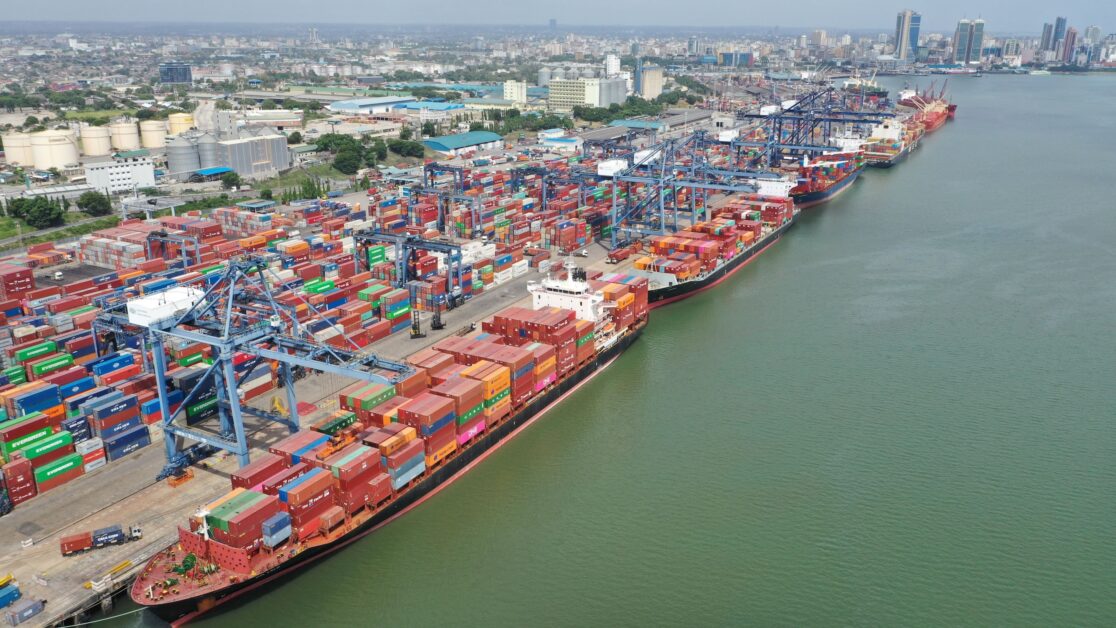
Under the Dar es Salaam Maritime Gateway Project (DMGP), the berths and entrance channels have been widened and deepened to enable post-panamax vessels to call at the port; in addition to a new roll-on, roll-off vessel terminal, amongst many other accompaniments – all meant to enhance the Port’s overall performance.
He said Tanzania would also consider entering Public-Private Partnership (PPPs) to develop inland container depots (ICD) or a dry ports closer to the Uganda border with the Uganda business community. Uganda is a strategic transit market for the TPA, and is serviced through a multimodal system, that is: either rail–to–lake– or road–to–lake networks from the Port of Dar es Salaam to Port Bell and Jinja through Mwanza on Lake Victoria.
A number of developments are also underway aimed at transforming Mwanza into a modern port, including the establishment of a One Stop Center there to streamline communication amongst the different stakeholders.
Waiswa Bageya, the Permanent Secretary at Uganda’s Ministry of Works and Transport said the country had taken significant steps towards having an efficient logistics system.
 Deal Makers: Meet Deloitte Advisors Behind Absa’s Acquisition of StanChart’s Wealth and Retail Business in Uganda
In November 2021, he said, the Cabinet of Uganda passed the National Transport and Logistics Policy, which is aimed at promoting the development of an efficient multi-modal transport system to enhance Uganda’s competitiveness both locally and internationally.
The National Integrated Transport Master Plan 2021-2040, which among others focuses on interventions to improve cost-efficiency along all the logistics chains and concentrates on improving capacity and efficiency of the transport corridors, was another important scheme developed by his Ministry.
“I am personally impressed by the theme of this workshop because under NDP III the Government has put in place an enabling environment to promote the development of transport and logistics in Uganda so as to facilitate trade and contribute to economic growth here and in the East African region as a whole,” Bageya said.
The tri-modal Port in Bukasa and the MV Umoja and MV Kaawa ferries will enhance capacity on Lake Victoria while the Gulu Logistics Hub will boost trade with emerging markets in South Sudan and Eastern DRC. And with the Uganda National Roads Authority (UNRA) soon announcing a contractor to rehabilitate the damaged 83km road between Mutukula border post and Masaka, transporting Uganda cargo to and from Tanzania by road will be improved.
Despite these good trade partnerships between the two countries, there remained a number of issues which need to be addressed, according to Dr Julius Byaruhanga, Director Policy & Business Development, at the Private Sector Foundation Uganda (PSFU).
These challenges impeding trade along the central corridor included delays in issuance of port and truck passes and slow cargo clearance at the Port of Dar es Salaam. He also decried the high freight costs and long transit times with one spending over US$ 3,500 to transport a 40ft container from Dar es Salaam to Kampala over 4 to 5-day period.
Byaruhanga was appreciative of the TPA, the Central Corridor Transit & Transport Facilitation Agency (CCTTFA) and the Uganda Railways Corporation (URC) for their deliberate efforts towards enhancing the capacity and value of the Tanzania route.
TPA plays the role of a landlord ports authority and operates a system of ports that provide service to the Tanzania hinterland and land-linked countries of Uganda, DRC, Zambia, Rwanda, Burundi, Malawi and Zimbabwe.
The Port of Dar es Salaam alone, which is the main port serving the above land linked countries has an intrinsic capacity to handle over 30 million tons of cargo per annum (General cargo – 9.0 million tons; Container yard – 11 million tons or 1,500,000 TEUs; Liquid bulk – 10 million tons).