A leaked memo from the Office of the Prime Minister reveals that the government of Uganda plans to review and possibly approve borrowing proposals amounting to over USD 1.6 billion (UGX 5.8 trillion) during a cabinet-level meeting scheduled for Wednesday, March 26, 2025. The meeting, convened by the Prime Minister, is expected to consider 12 separate loan requests from various ministries and government agencies, targeting key sectors such as roads, energy, water, health, agriculture, and financial services. Loan proposals listed in the memo: €186.97 million and an additional €19.46 million from the African Development Bank for the Busega–Mpigi Expressway. €198.6…
This Is Premium Content. Subscribe And Save On Unlimited Access With Our Best Offers!
Stanbic Uganda Holdings Limited (SUHL) has once again proven its financial strength, posting a record net profit of UGX 478 billion in 2024, up from UGX 411.5 billion in 2023,…
New findings from Uganda’s Ministry of Trade, Industries and Cooperatives show that there exists a high digital divide, low technology adoption and business registration among micro,…
Unlimited access to all news we offer, subscribe now and enjoy one day of reading for free.
or, are you an existing Member?
Unlimited access to all news we offer, subscribe now and enjoy one day of reading for free.
or, are you an existing Member?
Unlimited access to all news we offer, subscribe now and enjoy one day of reading for free.
or, are you an existing Member?
Unlimited access to all news we offer, subscribe now and enjoy one day of reading for free.
or, are you an existing Member?
Unlimited access to all news we offer, subscribe now and enjoy one day of reading for free.
or, are you an existing Member?
Unlimited access to all news we offer, subscribe now and enjoy one day of reading for free.
or, are you an existing Member?
Unlimited access to all news we offer, subscribe now and enjoy one day of reading for free.
or, are you an existing Member?
This Is Premium Content. Subscribe And Save On Unlimited Access With Our Best Offers!
Northern Uganda’s economic landscape, driven largely by agriculture, has presented unique challenges and opportunities for financial inclusion. dfcu Bank has taken strategic steps to adapt its services and empower communities, with a special focus on women, youth, and rural populations. In this interview, Nancy Ocitti Acayo, dfcu’s Northern Regional Manager, discusses the bank’s efforts, challenges, and achievements in its quest to drive economic empowerment in the region. How has dfcu Bank adapted its services to meet the needs of residents in Northern Uganda? Agriculture is at the heart of Northern Uganda’s economy, so we’ve tailored products like agricultural loans with…
This Is Premium Content. Subscribe And Save On Unlimited Access With Our Best Offers!
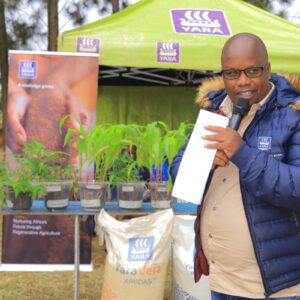
In Uganda, agriculture is the leading employer of the country’s largest labour force. In FY 2022/23, agriculture accounted for about 24% of GDP and 35% of export earnings. The Uganda Bureau of Statistics (UBOS) estimates that about 68% of Uganda’s working population is employed in agriculture. Uganda produces a wide range of agricultural products, including coffee, tea, sugar, livestock, fish, edible oils, cotton, tobacco, plantains, corn, beans, cassava, sweet potatoes, millet, sorghum, and groundnuts. As agriculture continues to anchor the economy and sustain millions of livelihoods, Yara East Africa has emerged as a transformative force in the region’s farming landscape….
This Is Premium Content. Subscribe And Save On Unlimited Access With Our Best Offers!
dfcu Bank in partnership with Vision Group, The Embassy of the Netherlands, KLM Airlines, and Koudjis Nutrition BV flagged off the winners of the 2023 Best Farmers Competition at the dfcu Bank Head Office on Thursday last week to a learning excursion in the Kingdom of the Netherlands. The cohort of winners will be embarking on a transformative study tour to the Netherlands for an extensive week-long training. Over the past 10 years, over 100 farmers have been celebrated for their innovation and contributions to the country’s agricultural landscape. The tour is a significant milestone in Uganda’s agricultural sector as…
This Is Premium Content. Subscribe And Save On Unlimited Access With Our Best Offers!
Agriculture is a cornerstone of Uganda’s economy, significantly influencing both employment and GDP. The sector employs approximately 70% of the population, with estimates suggesting that up to 72% of the workforce is engaged in agricultural activities, including farming, forestry, and fishing. This high level of employment is particularly crucial in rural areas, where about 76% of the population resides. Agriculture serves as the primary source of livelihood for many, especially for younger individuals entering the workforce, with three-quarters of those aged 15 to 24 finding their first job in this sector. In terms of economic contribution, agriculture accounts for about…
This Is Premium Content. Subscribe And Save On Unlimited Access With Our Best Offers!
With more than two-thirds of Uganda’s population dependent on agriculture for a livelihood and a rapidly expanding population, investing in agriculture does not only boost food security but can also be a pathway to job creation. Equity Bank’s support towards improving the productivity of small-scale food producers through secure and equal access to land and inputs, knowledge, financial services and markets, holds immense promise for socio-economic transformation. Equity Bank has not only managed to support farmers but also other value chain players such as suppliers of inputs, processors, and aggregators. “For our agricultural lending, we started by focusing on smallholder…
This Is Premium Content. Subscribe And Save On Unlimited Access With Our Best Offers!
The latest Stanbic Bank Purchasing Managers’ Index (PMI) covering business activity for the month of June has shed light on Uganda’s private sector showing an expansion midway through the year, as business conditions improve further on the back of increased client numbers and favourable demand trends. This has also reportedly led to the latest rise in new orders and greater business activity in three major sectors including wholesale and retail, manufacturing, and construction. However, agriculture and services companies registered a drop in business activity. The Stanbic PMI findings show that the uptick in new orders in June encouraged firms to…
This Is Premium Content. Subscribe And Save On Unlimited Access With Our Best Offers!