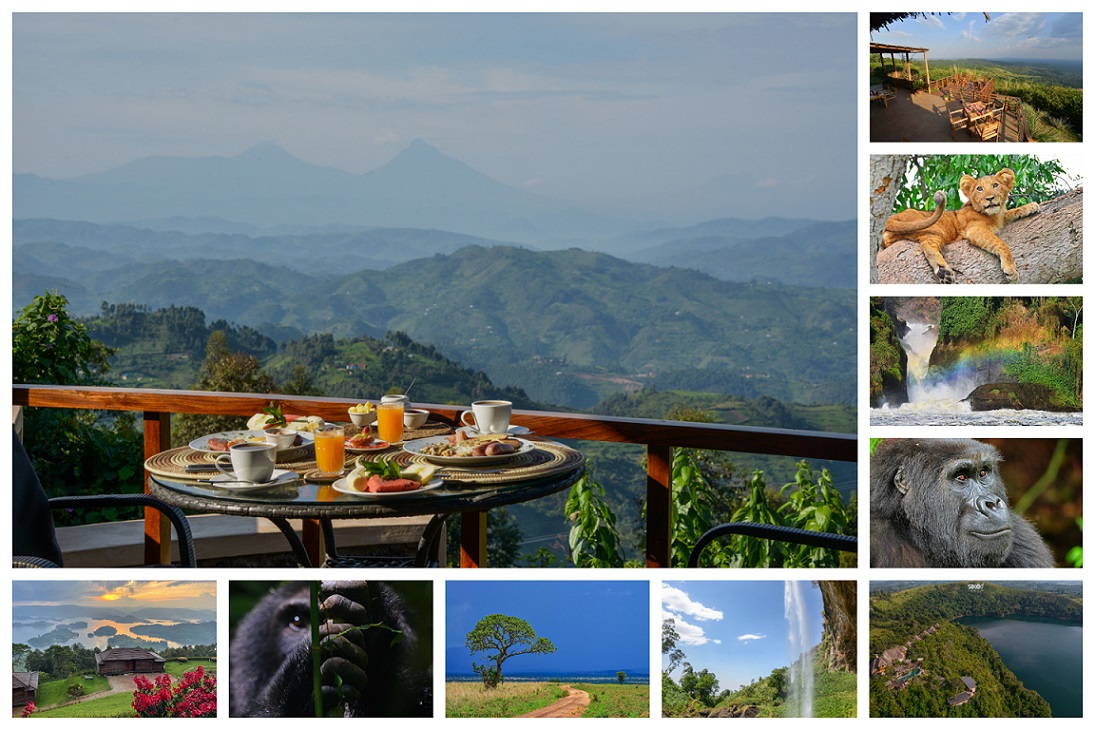
No 10: Isunga Lodge, Kibale District
Why I love it
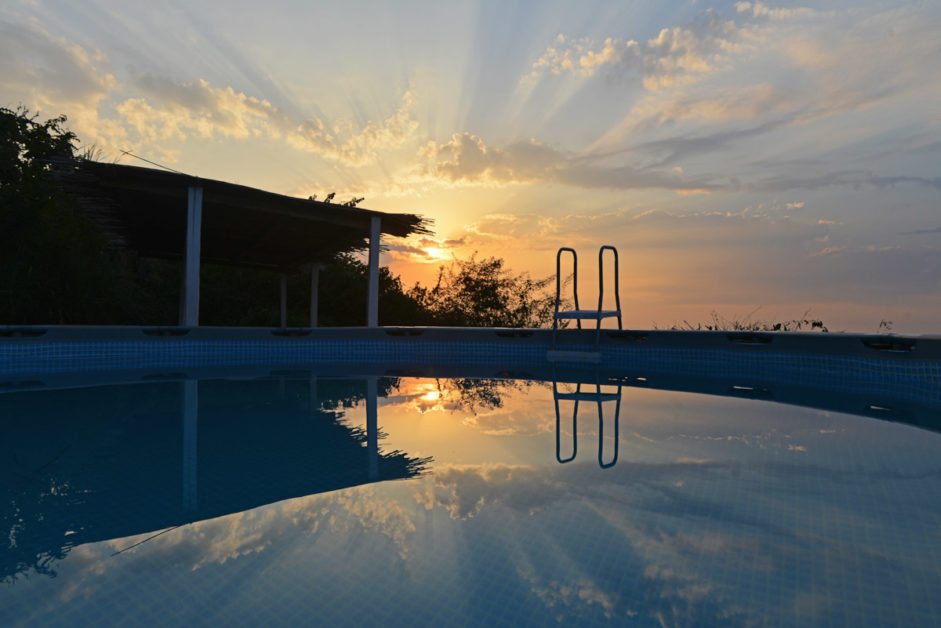
It is a small lodge on the rim of Kibale forest where the view over the forest will take your breath away. The warm welcome of the lovely couple who owns and run the lodge, the nice food and homemade desserts makes it truly a “home away from home”.
Editor’s Note
Isunga Lodge is made up of eight tranquil cottages with stunning views of the Kibale Forest expanse. All cottages are solar-powered, fitted with mosquito nets, and an ensuite bathroom with hot and cold water. The family cottage sleeps 4, with two bedrooms, an ensuite bathroom, and a sitting room. Panoramic views from the restaurant and lounge make Isunga Lodge a perfect place to relax, read, enjoy a drink or catch up with friends.
For meals, Isunga Lodge’s kitchen has access to a wonderful range of ingredients sourced from the local markets, together with fresh organic herbs and vegetables from their own garden.
No 9: Kibale Forest and the Chimpanzees, Kibaale District
Why I love it
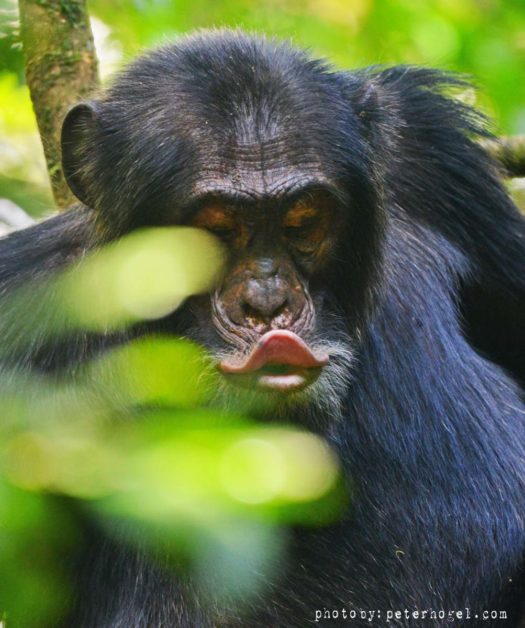
The mere mention of travel in Uganda will bring up chimpanzee tracking, but to me it’s more than that. It’s the forest itself, the smell of the soil and the sun finding its way through the canopy.
Editor’s Note
Kibale Forest National Park is in the western part of Uganda about 348km (5 hrs drive) from Kampala and is one of the best safari destinations in Africa for chimpanzee trekking. It has the highest number and diversity of primates in East Africa with 13 species of primates including chimpanzees living within its 795km2 land cover.
Kibale’s most popular activity is the Kanyanchu Primate Walk where these 13 species can be sighted, and a good variety of diurnal monkeys encountered, but the stars of this trail are the chimpanzees. Kanyanchu’s chimpanzees have been tracked since 1993 and the chances of locating them are excellent. Guided walks start at 8am and 2pm and last an average of three hours, depending on various factors.
This perennially popular primate walk provides the chance to observe chimpanzees in their natural habitat. Kanyanchu’s groups are accustomed to human presence – some have been observed for over 25 years – and the chance of locating them is over 90%. Walks leave Kanyanchu Visitor Centre at 08.00 am, 11.00am and 2:00pm and last between 2-5 hours. Early arrival to allow for registration and briefing is recommended. Contact time with chimpanzees is limited to one hour; group size is limited to six visitors; participants must be aged 16 or over. Advance booking is essential.
Kibale Forest is a biologically diverse region and also provides shelter to a further 120 mammals, including several primate species such as baboons and chimpanzees, as well as elephants and antelopes.
There are around 370 species of birds hosted in this forest, including 23 Albertine Rift endemics.The Nahan’s francolin,cassin’s spinetail,blue headed bee-eater and low-land masked apalis.
No 8: Nkuringo Lodge, Kabale District
Why I love it
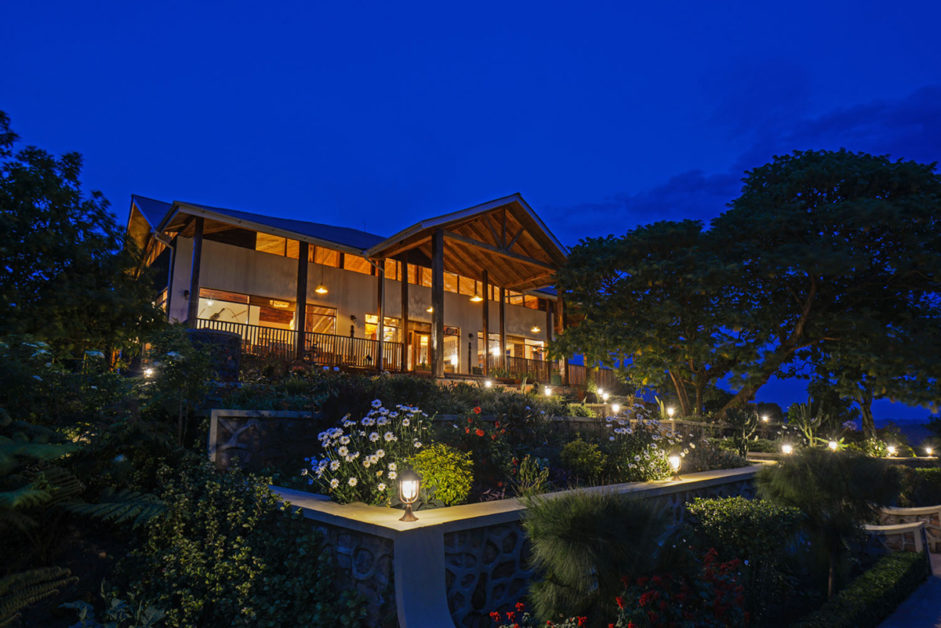
I love the road that gets you there, the view over the volcanoes on one side and Bwindi on the other.It’s always a pleasure to come home to Nkuringo, walking in to the lounge area is simply amazing and watching the sun rise in the cool Bwindi air sipping a really good cup of coffee makes my day.
Nkuringo Bwindi Gorilla Lodge a tranquil lodge located on the Nteko Ridge overlooking Bwindi Impenetrable Forest National Park, a mountain gorilla habitat. The place also overlooks the Kashasha River Valley, Virunga Volcanoes, and the Great Albertine Rift Valley. The Lodge, which is the ideal place to stay as you await trek the gorillas was named Uganda’s leading Safari Lodge at the World Travel Awards in 2016, 2017, 2018 and 2019. Guests at Nkuringo Bwindi Gorilla Lodge stay in individually hand-crafted cottages, each offering the tranquility of the rainforest, the atmosphere of a mountain chalet and the warm hospitality Ugandans are known for.
No 7: Sipi Falls and Abseiling, Kapchorwa District
Why I love it
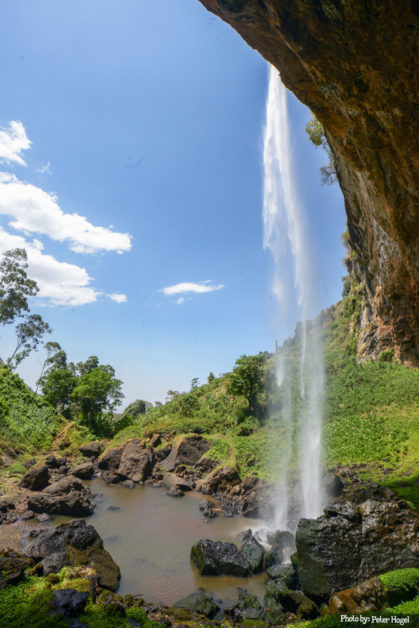
Well what can I say, I am an adrenaline junky and can’t be without the rush, and doing that, with a backdrop of a waterfall…what could ever go wrong?
Editor’s Note
Curious about abseiling? Abseiling refers to the skill of climbing down steep rocks or slopes with a firm device fastened to your harness. The Sipi Falls are arguably the best place for abseiling and rock climbing. Well trained guides arrange for abseiling on a certain section of the main Sipi Falls. You need to have the right equipment for rock climbing and abseiling before embarking on this adventure.
No 6: My secret spot, Kabale District

Why I love it
Every list should have a magic place, that is just your own
and for your special someone. All I can say is it is in the picturesque Kabale also nicknamed ‘Switzerland of Africa’ because of the hilly nature and coldness.
Editor’s Note
Kabale district is home to the highly endangered mountain gorillas in Bwindi National Park, and of the world’s most endangered birds such as the African hill babbler, cinnamon bracken warbler, chubb’s cisticola, doherty’s Bush shrike, malachite sunbird, Yellow bellied waxbill, olive thrush, streaky seedeater, common stone chart, and grauers rush warbler.
The piece de resistance in this captivating district is Lake Bunyonyi, the second deepest lake in Africa. It is the most stunning lake in Uganda and it encircles 29 islands, surrounded by steep terraced hillsides.
It is a magical spot that has supplanted the Ssese Islands as the best place for travelers to chill out on their way through Uganda. It also has a selection of gorgeously remote places to stay on distant islands, where you have only the birds for company.
Best of all – unlike many lakes in East Africa – Bunyoni is bilharzia, crocodile and hippo free, and so its crystal-clear waters are all yours to swim in
No 5: Gorilla tracking and Bwindi forest / Buhoma, Kanungu District
Why I love it
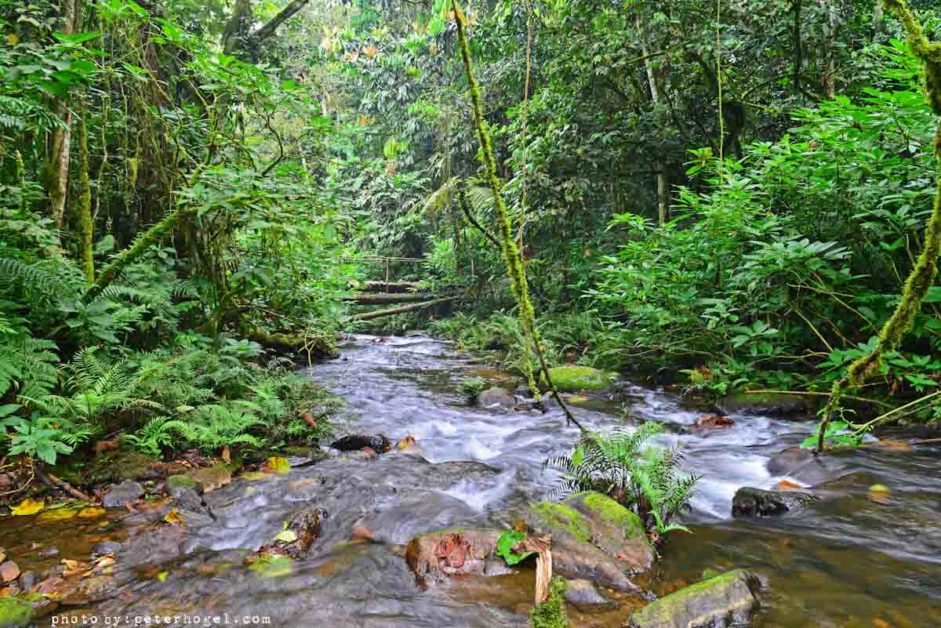
Of course, trekking gorillas had to be on my list, but aside from that, there are other accompanying perks. Walking in the rainforest, taking in the clear streams of water, bathing in rays of sun, reaching the waterfalls is both physically and mentally reinvigorating.
Editor’s Note
Related
 Dutch Development Bank FMO Extends USD 20 Million Facility to I&M Bank Uganda to Boost SME Financing
This ancient rainforest extends over a series of steep ridges in the Virunga Volcanoes mountain range. Declared a UNESCO world heritage site due to its ecological uniqueness and natural beauty, roughly half of the world’s total gorilla population live in this park.
The biologically diverse forest also provides shelter to a further 120 mammals, including several primate species such as baboons and chimpanzees, as well as elephants and antelopes. There are around 350 species of birds hosted in this forest, including 23 Albertine Rift endemics.
Bwindi is a home to at least 200 butterfly species including the eight albertine rift endemics.
The neighboring towns of Buhoma and Nkuringo both have an impressive array of luxury lodges, rustic bandas, and budget campsites, as well as restaurants, craft stalls, and guiding services. Opportunities abound to discover the local Bakiga and Batwa Pygmy cultures through performances, workshops, and village walks.
No 4: Kyaninga Lodge, Fort Portal District

Why I love it
I keep coming back here for more. I simply love the rooms, food, the cheese, the view, kayaking the lake, but it’s more than that. It’s that coming home feeling and the efficient staff that remember you year after year. It truly embodies the Ugandan spirit of warmth whether I’m there for holiday or work.
Editor’s Note
Set against the stunning backdrop of Lake Kyaninga and the Rwenzori Mountains beyond, Kyaninga Lodge is made up of 8 exclusive cottages made from hand carved logs. There are large beds with soft duvets and cushions in the spacious bungalows, as well as freestanding baths and large showers in the en suite bathrooms.
In the main area, a cozy fireplace, two intimate galleries and outdoor platform with comfortable loungers are available. If the numerous outdoor decks are not enough, the view from the pool overlooking the valley is quite spectacular.
No 3: Kidepo Valley National Park, Kotido District
Why I love it
Remote is the best word for it. The different landscape, the animals and plains are simply stunning. I think that is simply the short sweet explanation I can give.
Editor’s Note
Kidepo Valley National Park can be accessed by public means of transport in that there are buses which travel day and night therefore you can board a bus from Kampala via Jinja, Mbale, Soroti, Moroto and Kotido town which take about 14 hours’ drive and from Kotido you will hire a private vehicle to the park.
Kidepo Valley National Park lies in the rugged, semi-arid valleys between Uganda’s borders with South Sudan in the north west and only 5km from the eastern border of Kenya, some 700km from Kampala. Gazetted as a national park in 1962, it has a profusion of big game and hosts over 77 mammal species.
It is Uganda’s most isolated national park, but the few who make the long journey north through the wild frontier region of Karamoja would agree that it is also the most magnificent, for Kidepo ranks among Africa’s finest wildernesses. From Apoka, in the heart of the park, a savannah landscape extends far beyond the gazetted area, towards horizons outlined by distant mountain ranges.
During the dry season, the only permanent water in the park is found in wetlands and remnant pools in the broad Narus Valley near Apoka. These seasonal oases, combined with the open, savannah terrain, make the Narus Valley the park’s prime game viewing location especially with its dense populations of lion,buffalos,elephants and many similar angulates.
The bird checklist includes over 476 species with the common ostrich, secretary bird,northern carmine bee eater, little green bee eater, Abyssinian scimitarbill and many more colorful and visible species.
No 2: Murchison National Park, Masindi District
Why I love it
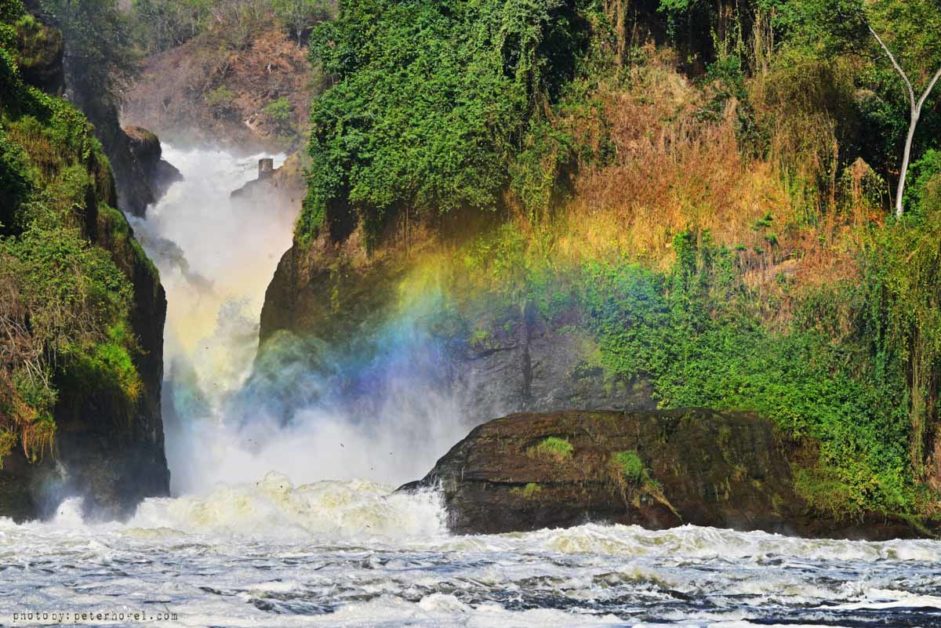
As a wildlife photographer this is it. You have to see the abundance of animals, the landscape, the roar of the falls, the light in the morning and the gently floating Nile to understand the magnificence of this place. Why should you visit Murchison Falls Park? The answer is simply because you will be blown away by the waterfall’s mighty force and the park’s stunning beauty.
Editor’s Note
Murchison Falls is the star attraction of Uganda’s largest national park, which is also named after the falls. It lies at the northern end of the Albertine Rift Valley, where the sweeping Bunyoro escarpment tumbles into vast, palm-dotted savanna. First gazetted as a game reserve in 1926, it is Uganda’s largest and oldest conservation area.
The park is bisected by the Victoria Nile, which plunges 45m over the remnant rift valley wall, creating the dramatic Murchison Falls, the centerpiece of the park and the final event in an 80km stretch of rapids. The mighty cascade drains the last of the river’s energy, transforming it into a broad, placid stream that flows quietly across the rift valley floor into Lake Albert. This stretch of river provides one of Uganda’s most remarkable wildlife spectacles. Regular visitors to the riverbanks include elephants, giraffes, and buffaloes; while hippos, Nile crocodiles, and aquatic birds are permanent residents.
The bird checklist includes the shoebill, the white crested turaco and the red winged gray warbler.
No 1: Ishasha Section, Kanungu District

Why I love it
This is a small corner of Queen Elizabeth National park, if you are lucky you can find the tree climbing lions. Maybe the park itself isn’t the most amazing and a bit different from others on my list. But in my personal experiences it is far more superior. I had the privilege of making, well, almost daily trips into the park for almost a year. I spent quality time with the hyena family and the lions, seeing the cubs grow up and had some awesome very close meetings with the elephants. I enjoyed the sun setting from the ridge, with a glass of wine and I felt like I was a part of something, I was seeing and feeling “the bigger picture”.
Editor’s Note
Queen Elizabeth National Park is Uganda’s most popular tourist destination. The park’s diverse ecosystems, which include sprawling savanna, shady, humid forests, sparkling lakes and fertile wetlands make it the ideal habitat for classic big game, ten primate species including chimpanzees and over 600 species of birds.
Set against the backdrop of the jagged Rwenzori Mountains, the park’s magnificent vistas include dozens of enormous craters carved dramatically into rolling green hills, panoramic views of the Kazinga Channel with its banks lined with hippos, buffalo, and elephants, and the endless Ishasha plains, whose fig trees hide lions ready to pounce on herds of unsuspecting Uganda kob.
As well as its outstanding wildlife attractions, Queen Elizabeth National Park has a fascinating cultural history. There are many opportunities for visitors to meet the local communities and enjoy storytelling, dance, music, and more. The gazetting of the park has ensured the conservation of its ecosystems, which in turn benefits the surrounding communities.
Most of Queen Elizabeth National Park comprises open grassland and savannah which tends to be moist and woody in the west than the eastern part and is home to at least 95 species of mammals,it boasts of 20 carnivores like the lion, leopards, side striped jackal and spotted hyena among others.