Five Justices of the Supreme Court have today unanimously delivered the last stroke that has broken the back of Bank of Uganda’s 5-year failed attempt to sue billionaire businessman, Dr Sudhir Ruparelia and his Meera Investments Limited (MIL) over the closed Crane Bank.

Well, the Bank of Uganda had already consented that it had a bad case ― they on 15th September 2021 notified the Supreme Court of their intention to withdraw the multi-billion dispute, so today’s ruling was really about who should pay the costs, a bid the central bank again lost, adding to a pile-load of other losses on the same matter.

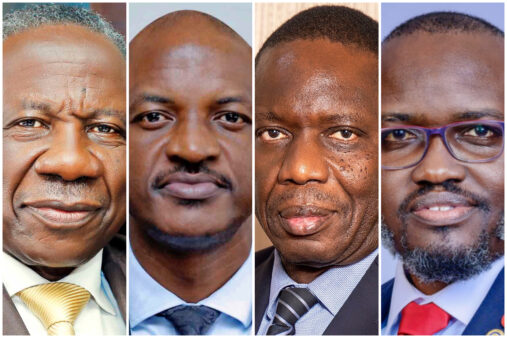
In today’s landmark ruling, Justices of the Supreme Court, Rubby Opio-Aweri, Faith Mwondha, Prof. Tibatemwa-Ekirikubinza, Ezekiel Muhanguzi And Percy Night Tuhaise, in unison, ruled that Bank of Uganda could not just walk away from Civil Appeal No. 7 of 2020 and pass on the costs to Crane Bank (In Receivership).

They ordered that the Central Bank should directly pay the costs of its recklessness to the billionaire businessman at all court levels as earlier decided by both the Court of Appeal and Commercial Court. 

“The law that guides the withdraw of appeals in this court; Rule 90(4) provides that where either party to the appeal objects to the withdrawal, then the appeal shall stand dismissed with costs. In line with this provision, we accordingly dismiss this appeal with costs in the terms found by the Court of Appeal,” the 5 justices ruled in unison.   

The Supreme Court also ordered that since the receivership of the bank ended on 20th January 2018, Crane Bank Limited should be returned to its shareholders.

The ruling marks and end to the 5-year multibillion suit but perhaps marks the beginning of multi-billion-shilling problems for the Central Bank.

Background to the UGX397 billion case

Bank of Uganda took over Crane Bank Limited, in October 2016 over what it said was insolvency and and subsequently, in a rushed and controversial sale, sold the bank’s assets to dfcu Bank in January 2017. A Parliament of Uganda investigation would later declare the deal fraught with several irregularities.

As the businessman protested the reasons, manner of take over and sale, Bank of Uganda, through Crane Bank Limited (In Receivership) in June 2017, vide Civil Suit No.493 of 2017 sued the businessman and his MIL seeking to recover, money, allegedly misappropriated by the businessman who was one of the directors and shareholders in the bank.

Left-Right: Supreme Court Justices: Faith-Mwondha, Prof. Lillian Tibatemwa-Ekirikubinza, Ezekiel Muhanguzi, Rubby Opio Aweri and Percy Tuhaise, in unison dismissed Bank of Uganda’s appeal.

Amongst other claims and reparations BoU also sought delivery of Freehold Certificates of title to 48 properties with duly executed transfer deeds from MIL- a company majority-owned by the businessman.

However, Dr. Sudhir via Miscellaneous Application No. 320 of 2019 asked the court to dismiss the main case (Civil Suit No.493 of 2017) on grounds that the Crane Bank (In Receivership) under the Financial Institutions Act (FIA) couldn’t sue or be sued and therefore had no locus standi (basis to sue). The Commercial Court went ahead to dismiss the case and ordered that the Bank of Uganda should pay costs to the businessman.

Aggrieved with the decision of the High Court, BoU, through Crane Bank (In Receivership) appealed to the Court of Appeal challenging the dismissal. The Court of Appeal on 23rd June 2020 again dismissed the appeal with costs as per the terms held by the High Court.

Dissatisfied with the findings of the Court of Appeal, Bank of Uganda, again via Crane Bank (In Receivership), via Civil Appeal No. 7 of 2020, appealed to the Supreme Court.    

Beset by several court losses, the Bank of Uganda attempts to withdraw the case

Before the appeal could be fixed for hearing, and after losing several miscellaneous applications along the way, the Bank of Uganda, through Crane Bank (In Receivership) on 15th September 2020 filed a Notice to withdraw the appeal under.

“Take notice that the appellant Crane Bank (In Receivership) does not intend further to prosecute the appeal,” Bank of Uganda wrote, adding: “Take further notice that the Appellant will pay the costs of the appeal and in the courts below to the Respondents (Dr. Sudhir Ruparelia and MIL).”

However, the businessman, through his lawyers, Kampala Association Advocates (KAA), objected to the withdrawal notice through a letter addressed to the Hon. The Chief Justice dated 20th September 2021.  

Consequently, the Supreme Court heard the appeal on 9th November 2021 to determine whether the case should be withdrawn with costs or dismissed with costs. The court was also to decide, who, between Crane Bank (In Receivership) and Bank of Uganda, should bear the costs.

The 5-man KAA team that was made up of Joseph Matsiko, Elison Karuhanga, Bruce Musinguzi and John Jet Mwebaze was led by seasoned lawyer, Peter C.R Kabatsi.

Albert Byamugisha of J.B Byamugisha Advocates represented Bank of Uganda.

Dr. Sudhir’s lawyers argued that as per Rule 90(4) of the Supreme Court Rules, the appeal should not be merely withdrawn but instead should be dismissed with costs, since it was the appellant who had chosen to withdraw. They further submitted that while on the face of it, Bank of Uganda had submitted that the costs would be borne by Crane Bank (In Receivership), the impugned notice of withdrawal departed from the decisions of the High Court and the Court of Appeal which had ordered that that Bank of Uganda (BOU) is to pay the costs and not Crane Bank (In Receivership).

The lawyers also argued that both the lower courts and the Supreme Court- in a separate but related application, had already held that the existence of Crane Bank (In Receivership) had ceased on 20th January 2018, and therefore the same non-existent party cannot purport to file a notice of withdrawal as well as determine that it shall pay costs. 

The lawyers, therefore, argued that no execution can be commenced against the non-existent Crane Bank (In Receivership) and therefore an order against Crane Bank (In Receivership) to pay costs would be in vain.

“In accordance with Rule 90(4), we pray that the appeal is dismissed with costs to be paid by Bank of Uganda,” the billionaire businessman’s lawyers argued.

Pay the costs and return Crane Bank Limited to its shareholders

Delivering their ruling today, the five justices all concurred with Dr. Sudhir’s lawyers’ arguments and further ruled that the decision by Bank of Uganda to withdraw Civil Appeal No.7 of 2020, reinstated the earlier orders by the Court of Appeal and the High Court on who should pay the costs.

The Kampala Associated Advocates (KAA) 5-man team that defended the USD106 million suit against Bank of Uganda. Left-right; Peter C.R Kabatsi, Joseph Matsiko, John Jet Mwebaze, Elison Karuhanga, and Bruce Musinguzi. In between them, they possess over 107 years of combined legal practice.

“When the appellant (Bank of Uganda, through Crane Bank (In Receivership), chose to withdraw her appeal, the decision of the Court of Appeal remained standing since there was no pending appeal against it,” the justices said.

They also ruled that since the receivership of Crane Bank ended on 20th January 2018 and therefore the company reverted to its shareholders, allowing Bank of Uganda’s Notice of Withdrawal would imply that the Crane Bank and its shareholders are to pay the costs of the suit to themselves.

“Logically, that does not make legal sense,” they ruled, adding: “Neither can a shareholder of the appellant (Crane Bank) who is entitled to costs of an action pay costs to himself.”

“If an appellant chose to withdraw their appeal, the effect is that the decision of the lower court remains standing. Consequently, the Court of Appeal decision and the orders it made from which the instant appeal emanates stand. That includes the order as to who should meet the costs of the instant appeal and in the courts below,” the justices further said, in their 21-page ruling.

“For the avoidance of doubt, the Court of Appeal upheld the finding of the trial court which ordered that the costs of the suit were to be borne by the Bank of Uganda since it was the Bank of Uganda behind the filing of the suit and other subsequent actions. That order shall stand,” the clarified.

The Supreme Court also ruled that Crane Bank Limited should be returned to its shareholders since its receivership ended.

“Before we take leave of this matter, we note that the Court of Appeal in its judgment found at page 155 of the record of appeal in this court made orders to the effect that the receivership of the appellant had ended on 20th January 2018. We equally considered this aspect in our ruling in Civil application No.32 of 2020 and found that indeed, the Receivership of the applicant had ended on 20th January 2018. That finding, in our view implies that the management of the appellant reverted to the shareholders after the 20th of January 2018,” the justices further decreed.

“In the result, this appeal is dismissed with costs to the respondents in the terms found by the lower courts. The dismissal of the instant appeal takes effect as of the date of endorsement of this ruling. We so order,” the justices hit the nail home, marking an end to Bank of Uganda’s failed bid to sue the businessman.

The main case may be over, but certainly not Bank of Uganda’s troubles, as victors are expected to start the process of recovering costs from the central bank.

Tagged:
About the Author

Muhereza Kyamutetera is the Executive Editor of CEO East Africa Magazine. I am a travel enthusiast and the Experiences & Destinations Marketing Manager at EDXTravel. Extremely Ugandaholic. Ask me about #1000Reasons2ExploreUganda and how to Take Your Place In The African Sun.

beylikdüzü escort