
Yesterday, 12th August 2021, five Supreme Court Justices unanimously dealt a death blow to Bank of Uganda’s legal strategy, that if successful, would have reversed the several losses the Central Bank has suffered at the hands of businessman Dr Sudhir Ruparelia and his Meera Investments Ltd.
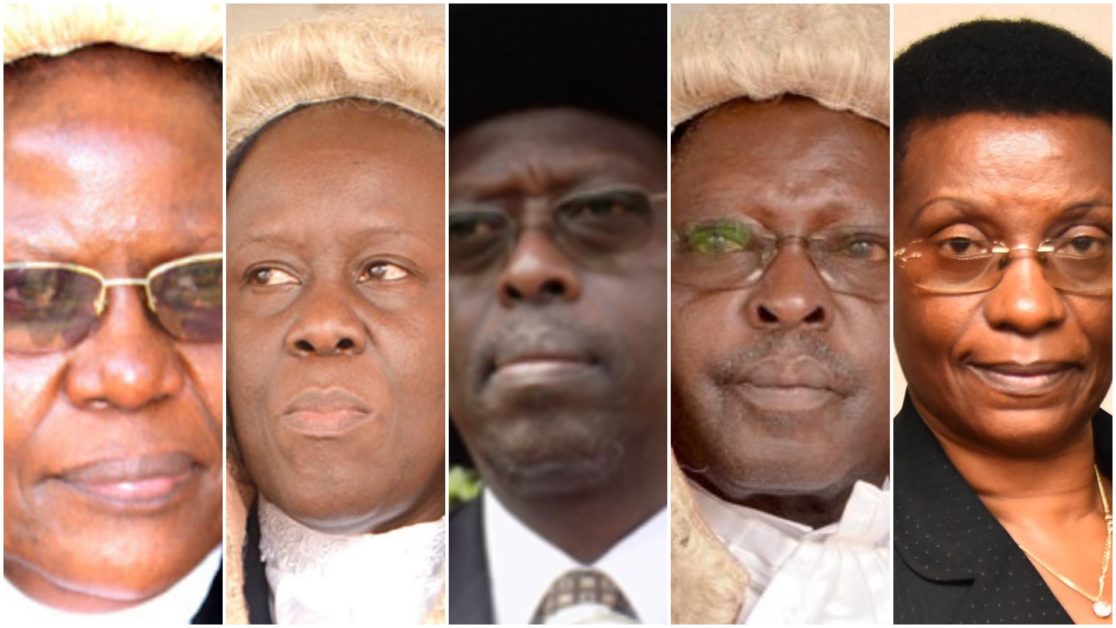
The 5 justices, Rubby Opio-Aweri, Faith Mwondha, Dr Lillian Tibatemwa, Ezekiel Muhanguzi and Percy Night Tuhaise in unison dismissed BoU’s bid to substitute Crane Bank (In Receivership) with Crane Bank (In Liquidation), a move the justices said would fundamentally alter the facts the case and deny both Dr. Sudhir and Meera a chance at justice.
Background
This latest application to switch parties emanates from the 20th of October 2016 statutory takeover of Crane Bank Limited (CBL) under Sections 87 (3) and 88 (1) (a) of the Financial Institutions Act (FIA) and subsequently placed it under receivership on 20th January 2017, before summarily selling its assets and liabilities to dfcu Bank on the 25th of January 2017.
Thereafter Bank of Uganda, through Crane Bank (In Receivership) sued Dr Sudhir, one of the Shareholders of the bank, together with Meera Investments Ltd vide High Court Civil Suit No. 493 of 2017. Before the main case could be heard, Dr Sudhir and Meera, raised preliminary objections through High Court Miscellaneous Application No. 320 of 2017, that among others contended that Crane Bank (In Receivership) had no basis for suing since the FIA did not allow a company in receivership any powers to sue or be sued. The High Court sustained the preliminary objections and dismissed HCCS 493 of 2017 and ordered that the costs of the suit be paid by BOU.
Dissatisfied with the High Court ruling, Crane Bank Limited (In Receivership) filed Civil Appeal No. 252 of 2019 in the Court of Appeal, but the appellate court maintained that a company under receivership can’t sue or be sued. Crane Bank Limited (In Receivership) then appealed against the decision of the Court of Appeal by filing Civil Appeal No. 7 of 2020 in the Supreme Court, which is pending resolution.
To stop Dr Sudhir and Meera Investments from enforcing the ruling of the Court of Appeal to regain their company, Crane Bank Limited (In Receivership) also filed Supreme Court Miscellaneous Application Nos. 32 and 33 of 2020 against Sudhir Ruparelia and Uganda Registration Services Bureau (URSB), for temporary and interim injunctions respectively against the businessman, to prevent him from claiming, taking control, repossessing or in any way interfering with the management of Crane Bank Limited (In Receivership). The application also sought to restrain URSB from registering any resolutions with URSB concerning Crane Bank (In Receivership) until Civil Appeal No. 7 of 2020 had been determined. The Supreme Court however dismissed this interim injunction with costs on 9th November 2020.
Following this court defeat of the Bank of Uganda on 15th November 2020, BOU issued a public notice in the Sunday Vision newspaper to the effect that it had placed Crane Bank Limited under liquidation and ordered the winding up of its affairs. Dr Sudhir Ruparelia then filed Supreme Court Miscellaneous Application Nos. 39 and 40 of 2020 against Crane Bank Limited (In Receivership) and BOU seeking interim and temporary injunctions respectively to stop BOU from continuing with the liquidation process. However, the court also dismissed this application on 22nd December 2020.
Following this ruling, Bank of Uganda, this time, through Crane Bank (In Liquidation) went to the Supreme Court asking to switch itself with Crane Bank Limited (In Receivership) as the substantive party in Supreme Court Appeal No. 7 of 2020, an appeal the five justices have now dismissed as a bad faith attempt to circumvent the main issue in the appeal- whether a company in receivership can sue or be sued.
Mr Joseph Byamugisha and Mr Albert Byamugisha from M/S J. B. Byamugisha Advocates represented Bank of Uganda while Mr Peter Kabatsi, Mr Joseph Matsiko, Mr Elison Karuhanga, Mr Jet Tumwebaze and Mr Bruce Musinguzi from M/S Kampala Associated Advocates represented the Dr Sudhir and Meera Investments.
BoU’s application is an attempt to circumvent justice
In their arguments for the switch-up, BoU argued that Crane Bank (In Liquidation) is still a licenced financial institution under resolution under the Financial Institutions Act No. 2 of 2004 (FIA), and BOU has never revoked its licence; that it remains a financial institution under a resolution that has been taken through statutory management, receivership, and liquidation provisions respectively of the FIA. BoU lawyers also submitted that it was necessary for the disposal of the appeal that the capacity in which Bank of Uganda is managing and controlling CBL and its assets and liabilities be stated.
“The question of the capacity of Crane Bank Limited (In Receivership) is an issue of controversy in the pending appeal. To introduce Crane Bank Limited (In Liquidation) as a substitute to Crane Bank Limited (IN RECEIVERSHIP) WOULD therefore be introducing a new cause of action, which we cannot allow. It is our considered opinion that, in the given circumstances, by allowing the amendment, we would introduce the issue of liquidation, which is alien to the subject of the appeal, since the said appeal only challenges the lower courts’ decision that Crane Bank (in Receivership) has no powers to sue or be sued under the FIA”
~ SUPREME COURT JUSTICES; RUBBY OPIO-AWERI, FAITH MWONDHA, DR LILLIAN TIBATEMWA, EZEKIEL MUHANGUZI AND PERCY NIGHT TUHAISE
 After 29 Years in Court, Government Ordered to Pay UGX 512.9 Million in Kamuli Land Dispute
However, Dr Sudhir’s and Meera’s lawyers argued that in the first place, the liquidation of Crane Bank Limited was illegal since Crane Bank (In Receivership) was no longer a financial institution and therefore Bank of Uganda had no powers to place it under liquidation and therefore Crane Bank (In Liquidation) was an illegal entity. Therefore, to grant BoU the switch up in their application would be perpetuating illegality; would render the main appeal irrelevant as well as negate their wins against BoU at the High Court and Court of Appeal.
The lawyers, further said that allowing BoU to amend and substitute the Receiver for the Liquidator, yet the lower courts had held that a Receiver has no power to sue or be sued under the FIA, would render all the issues under the pending main appeal moot and academic. Doing so would also be tantamount to an abuse of the court process and an attempt to render the decision of the Supreme Court in the pending appeal irrelevant.
Dr Sudhirs Lawyers, KAA Advocates, also further argued that allowing the substitution of the parties would clothe Crane Bank (In receivership) with the capacity to sue, thereby depriving their client, the statutory defence that a bank under receivership cannot sue. They concluded that BoU’s application should be dismissed with costs.
Ruling: BoU’s application is in bad faith
In their ruling, the five Supreme Court Justices agreed with Dr Sudhir’s lawyers that BoU’s application to substitute Crane Bank (In Receivership) with Crane Bank (In Liquidation) “would, no doubt, circumvent the gist of the main appeal” and allowing it to pass would “definitely prejudice” Dr Sudhir and Meera Investments, causing them “injustice since they will be deprived of the fruits of success in the event of the appeal being resolved in their favour.”
The justices also ruled that the very nature of the amendment sought by BoU would fundamentally change and alter the facts of the main appeal.
“The main appeal pending before this Court evolves around the powers of the Receiver to sue under High Court Civil Suit 493 of 2017. The findings of the lower courts, against which an appeal is pending before this Court, is that the Receiver, unlike the Liquidator, has no such powers to sue and be sued under the FIA. The appeal is thus based on the capacity of the Receiver to sue or be sued. The very nature of the amendment sought, of substituting Crane Bank (In Receivership) with Crane Bank (In Liquidation), would no doubt pre-empt or pre-determine the main appeal in favour of the Appellant and to the prejudice of the Respondents without hearing the latter’s defence. It would also erode the gist of the appeal and alter the nature of the pleadings or cause of action,” the coram of 5 justices unanimously ruled.
They also ruled that the Bank of Uganda’s latest application was in bad faith since it was made with the full knowledge that it would impact the main appeal.

“In our considered opinion, the applicant’s seeking to substitute Crane Bank Ltd (In Receivership) with Crane Bank Limited (in Liquidation) in the pending appeal, well knowing that the issues in the same appeal evolve around the power of an entity under receivership to sue or be sued, cannot be seen to have been done in good faith. The application, in our considered opinion, is made mala fide (carried out in bad faith or with intent to deceive), to deny the respondents their defence at appeal that a bank under receivership cannot sue,” reads part of the ruling.
The justices also reiterated that in law, Crane Bank Limited (in Receivership), Crane Bank Limited (in Liquidation), and Crane Bank Limited are three distinct entities with different rights, powers and obligations.
“While Crane Bank Limited was a functional financial institution operating under the Companies Act and the FIA, Crane Bank Limited (in Receivership) and Crane Bank Limited (in Liquidation) are entities that emerged out of processes of receivership and liquidation respectively under the management of BOU, which processes could lead to eventual winding up of Crane Bank Limited. Their having evolved from Crane Bank Limited through the said processes does not necessarily mean that they are the same, in a legal perspective,” reads the ruling.
“In any case, since the appeal was filed by Crane Bank Limited (In Receivership) at the time when Crane Bank (In Liquidation) was non-existent, it is only prudent that the appeal proceeds under the same parties and no prejudice will be occasioned. Thus, for reasons given above, and based on the applicable law and the adduced evidence on record, this application is dismissed with costs to the Respondents,” the Supreme Court Justices concluded.