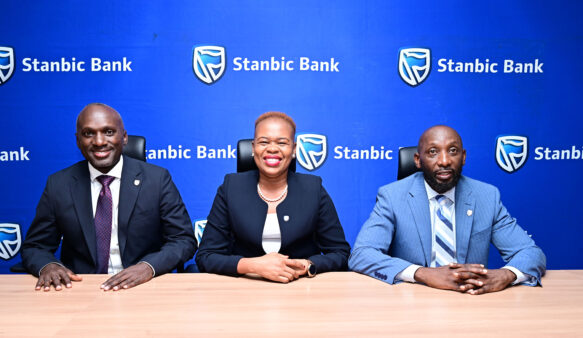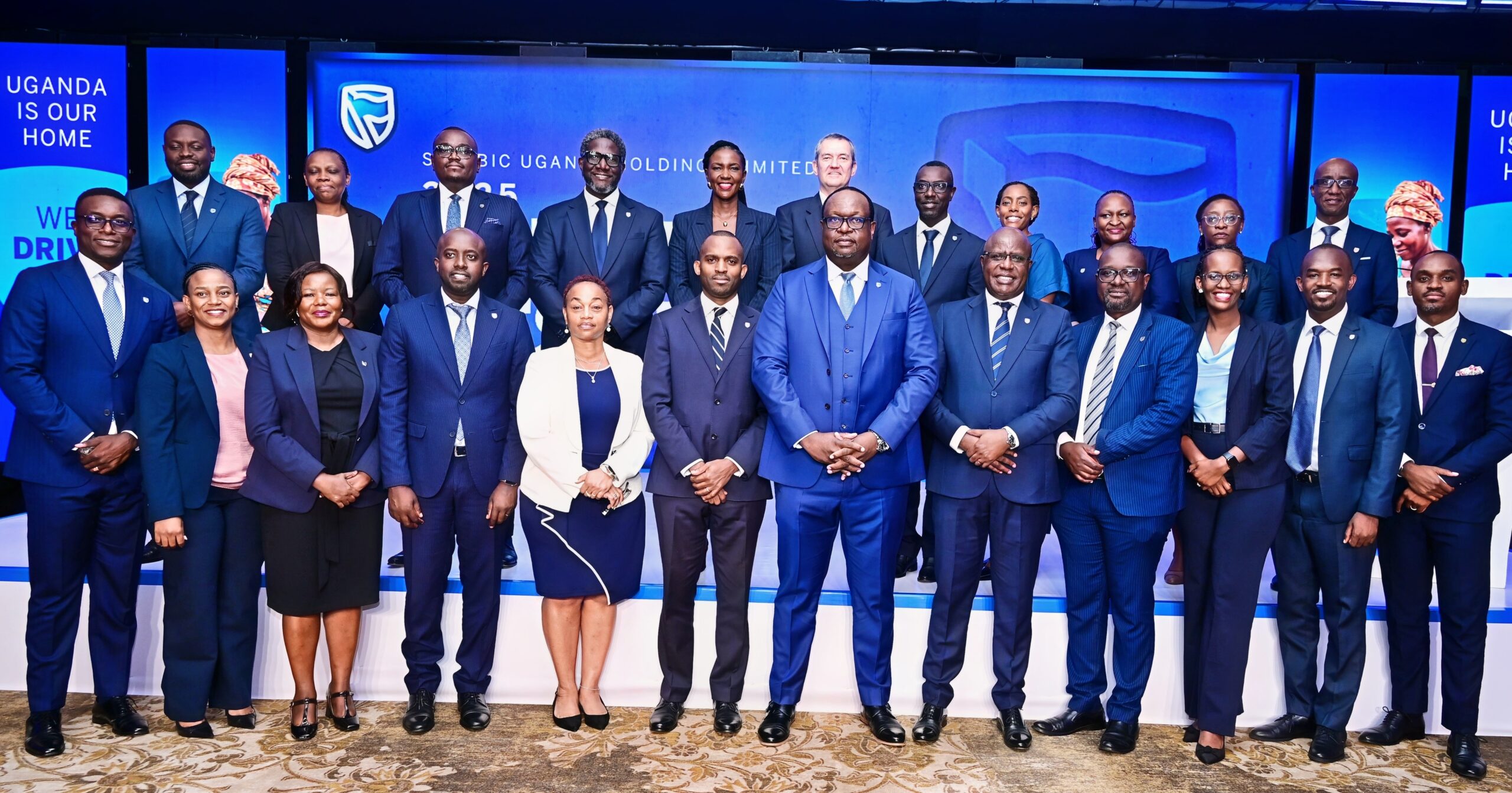
Stanbic Uganda Holdings Limited has reported a strong set of financial results for the year ended 31 December 2025, with shareholders set to receive UGX 360 billion in dividends.
Stanbic Bank Uganda’s dividend trajectory over the past decade tells a story of a lender that has steadily transitioned from cautious capital management into a confident, high-yield institution that is increasingly rewarding shareholders at scale.
In 2015, the bank paid out UGX 40 billion in dividends, entirely as a final payout. By 2019, that figure had climbed to UGX 110 billion, reflecting steady earnings growth and a conservative approach that prioritized stability over aggressive distribution.
During this period, Stanbic maintained a single annual payout structure, signaling a bank still in a disciplined expansion phase.
That trajectory was abruptly interrupted in 2020 when the bank suspended dividends altogether, mirroring a wider industry response to the uncertainty brought on by the pandemic.
The following year saw a cautious return, with a payout of UGX 50 billion, still well below pre-COVID levels. For investors, this marked a reset, but it also laid the foundation for a more significant shift in how the bank would approach shareholder returns.
From 2022 onwards, the pace and structure of dividend payouts changed markedly. Total dividends jumped to UGX 235 billion in 2022, more than double the 2021 level.
This growth continued to UGX 280 billion in 2023, UGX 300 billion in 2024, and ultimately UGX 360 billion in 2025. Over just three years, the bank increased its total payout by more than 50 percent, underscoring both improved profitability and growing confidence in its earnings outlook.
A key feature of this new phase has been the introduction and expansion of interim dividends. In 2022, Stanbic paid an interim dividend of UGX 50 billion alongside a final dividend of UGX 185 billion.
By 2023, the interim portion had risen sharply to UGX 125 billion, before stabilizing at UGX 140 billion in both 2024 and 2025. The final dividend has remained the larger component, reaching UGX 220 billion in 2025, the highest in the bank’s history.
This shift from a single annual payout to a combination of interim and final dividends is significant.
It reflects a bank that is not only generating strong earnings but is also confident enough in its cash flows to distribute capital more frequently. For shareholders, this translates into improved liquidity and a more predictable return profile.
The numbers also point to a broader structural evolution. From UGX 40 billion in 2015 to UGX 360 billion in 2025, Stanbic has increased its dividend payout nearly ninefold over ten years. The growth has been particularly pronounced in the post-pandemic period, driven by rising profitability, expanding loan and deposit books, and disciplined risk management that has kept asset quality strong.
However, the current dividend levels also raise important questions about sustainability. The rapid increase in payouts coincides with a period of strong earnings growth and favorable operating conditions. Maintaining this trajectory will depend on the bank’s ability to sustain high returns on equity, manage credit risk effectively, and navigate shifts in the macroeconomic environment, including interest rate cycles and the pace of large-scale investments such as oil and infrastructure projects.
A stellar performance
The results mark a significant leadership transition moment, with outgoing Franchise Chief Executive Francis Karuhanga closing his final year at the helm on a high, and Mumba Kalifungwa delivering a confident first year leading the banking subsidiary—the Group’s anchor business.
Stanbic’s performance was delivered against a steadily improving macroeconomic environment. Uganda’s economy expanded by 6.3% in 2025, up from 6.0% the previous year, supported by easing monetary conditions and renewed investor confidence.
Inflation remained well contained at an average of 3.6%, while the Central Bank Rate moderated to 9.75%. The Ugandan shilling strengthened to an average of Ushs 3,600 against the US dollar, compared to Ushs 3,755 in 2024, reflecting improved foreign exchange inflows and reserve buffers.
Despite ongoing fiscal pressures, market sentiment was buoyed by progress toward first oil production, reinforcing confidence in Uganda’s medium-term growth trajectory.
Delivering consistent, high-quality growth
Stanbic Uganda delivered a well-balanced financial performance, reflecting both growth and operational discipline. Revenue increased by 11%, within the Group’s medium-term target range, while cost efficiency remained tightly managed, with the cost-to-income ratio improving to 47.1%, comfortably below the 50% threshold.
 Stanbic Bank reveals UGX 270 billion EACOP debt financing as pipeline project advances
Return on equity strengthened to 26.8%, significantly exceeding the Group’s 20% benchmark and reinforcing the business’s ability to generate superior shareholder returns. This performance translated into net profit of Ushs 591 billion, a 23.6% increase from Ushs 478 billion in 2024.
Shareholder value creation remained evident in the Group’s market performance, with the share price recording a steady 89% rise over a 3-year period, closing at Ushs 60 as of December 31, 2025, reflecting sustained investor confidence and strong earnings momentum.
“Our robust earnings of Ushs 591 billion and a return on equity of 26.8% reflect the strength of our strategy, the resilience of our franchise, and our unwavering focus on delivering long-term shareholder value,” said Francis Karuhanga, Chief Executive of Stanbic Uganda Holdings Limited.
Banking subsidiary anchors performance
The Group’s strong results were underpinned by the performance of Stanbic Bank Uganda, which continues to be the primary driver of the franchise.
In his first year as Chief Executive, Mumba Kalifungwa oversaw strong balance sheet growth, supported by deepening customer trust and enhanced operational efficiency.
Customer deposits grew by 13% to Ushs 8.0 trillion, up from Ushs 7.1 trillion, reflecting sustained confidence in the bank’s stability and service offering.
Net loans and advances increased by 16.4% to Ushs 5.1 trillion, driven by improved credit turnaround times and disciplined risk assessment. This growth underscores the bank’s continued role in supporting economic activity across key sectors.
Revenue growth also strengthened, rising 11% to Ushs 1.4 trillion, supported by solid interest income and diversified non-interest revenue streams.
“This performance reflects the collective effort of our people, the trust of our clients, and the strength of our partnerships. I am encouraged by the momentum we have built and confident in our ability to sustain it,” said Mumba Kalifungwa, Chief Executive of Stanbic Bank Uganda.
Strong fundamentals signal a healthy, resilient business
Chief Financial Officer Ronald Makata highlighted the Group’s robust financial position, with all key prudential metrics remaining well above regulatory requirements.
Capital adequacy remained strong, with a total capital ratio of 23%, nearly double the regulatory minimum of 12%, providing a substantial buffer to absorb shocks while supporting future growth.
Asset quality remained best-in-class, with the non-performing loans ratio at 1.7%, significantly below the Group’s risk appetite of 7.5%. The credit loss ratio improved further to 0.4%, reflecting prudent risk management and a high-quality loan book.
Liquidity levels remained exceptionally strong, with the liquidity coverage ratio at 354%, more than three times the regulatory requirement, ensuring the bank is well-positioned to meet short-term obligations even under stressed conditions. The net stable funding ratio of 176% further underscores a stable and well-diversified long-term funding base.
“Our balance sheet strength and disciplined risk management continue to position us for sustainable growth, while providing resilience in an evolving operating environment,” said Ronald Makata, Chief Financial Officer.
Committed to Uganda’s long-term growth
Looking ahead, Stanbic Uganda reaffirmed its commitment to driving inclusive and sustainable growth through its Positive Impact agenda, approved by the Board in 2025, as the Group approaches 35 years of operations in Uganda in 2026.
The agenda reflects a deliberate focus on advancing financial inclusion and access, supporting enterprise development and job creation, financing integrated infrastructure, enabling climate resilience, and deepening corporate social investment across youth entrepreneurship, maternal health, and environmental conservation.
“Our Positive Impact agenda is a clear expression of our purpose—Uganda is our home, and we are committed to driving her growth in a way that is inclusive, sustainable, and far-reaching,” said Mumba Kalifungwa.