South African capital, long dominant in Southern Africa and deeply embedded across the continent, is now moving decisively north-east.
Kenya, Uganda, Tanzania, and Rwanda are no longer peripheral growth outposts. They are becoming strategic platforms.
This is not a scattershot expansion. It is deliberate. Banks are scouting acquisitions. Insurers are consolidating brands. Telecom giants are increasing control of regional fintech engines. Private equity firms are acquiring manufacturing capacity.
A new phase is quietly taking shape, and East Africa is emerging as the most strategically compelling destination.
What is different about this wave is that it is not only led by traditional flagship multinationals, but increasingly driven by banks, insurers, telecom groups, and private capital firms seeking faster GDP growth, deeper demographic momentum, and scalable platforms for cross-border trade and digital services.
A Business Day analysis of South African banks’ “march eastward” frames the bet clearly: Kenya, Uganda, and Tanzania are being treated as a wager “on the next act of the continent’s economic drama”.
The bet is supported by regional integration, banking reforms, youthful demographics, and an infrastructure gap large enough to absorb and reward capital at scale.
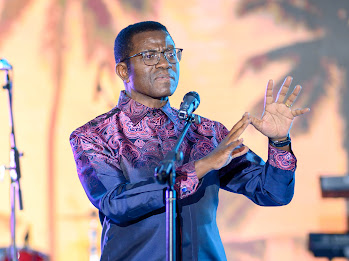
That thesis is echoed directly in the voices of South Africa’s corporate leaders. Standard Bank Group CEO Sim Tshabalala argues that East Africa is becoming a focal point because of its strategic geography, integration story, and potential to become a hub for advanced IT investment and innovation.
Absa Group CEO Kenny Fihla points to infrastructure build-out, regulatory predictability, and modern logistics as unlockers of production and trade.
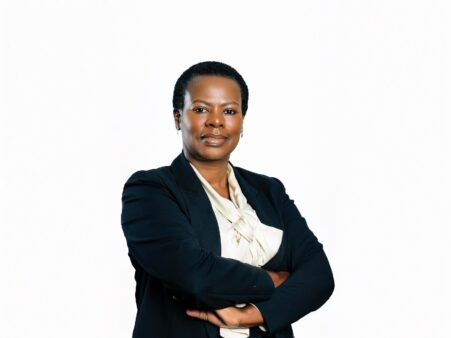
MTN Group President and CEO Ralph Mupita highlights that stable macroeconomic environments and constructive regulatory engagement are critical to sustaining long-term capital allocation in the region.
Below, we examine what is driving the trend, where capital is concentrating, and what sectors remain underserved.

The growth case: why East Africa, why now?
Demographics and scale
East Africa’s demographic and urbanization trends are powerful flywheels. The East African Community bloc alone has a population of roughly 300 million people, while the broader East Africa region exceeds 500 million, making it one of the fastest-growing population clusters globally.
The median age across much of the region is about 18 to 19 years, compared with roughly 28 in South Africa and more than 38 in Europe. This creates what analysts describe as a long demographic dividend window.
Urbanization is accelerating. Kenya’s urban population share has crossed 30%, up from about 19% in 2000, while Tanzania’s urban population has nearly doubled over the same period, and in Uganda, at least 27.39% of the population lives in urban areas.
Urban concentration increases formal employment, mortgage uptake, insurance penetration, and digital financial services usage.
For South African balance sheets facing sub-1% average GDP growth at home over the past decade, East Africa’s growth trajectory is compelling.
Kenya’s GDP growth averaged around 5% to 6% before the pandemic and returned to roughly 5% growth in 2023 and 2024.
Tanzania has recorded growth rates of about 5% annually, while Uganda has averaged around 5% to 6% in recent years. The attraction is volume growth in customers and transactions, not merely price increases.
The infrastructure super-cycle creates bankable pipelines
The African Development Bank estimates Africa’s infrastructure financing gap at between $68 billion and $108 billion annually, with East Africa accounting for a substantial portion of unmet demand in energy, transport, water, and digital connectivity.
Kenya alone has a multi-billion-dollar infrastructure pipeline spanning the Lamu Port–South Sudan–Ethiopia Transport corridor, standard gauge rail extensions, renewable energy expansion and digital cities and technology parks.
Uganda’s oil and gas developments, including the more than $10 billion East African Crude Oil Pipeline and associated upstream projects, are generating large financing, insurance, and logistics mandates.
For South African banks and insurers, this translates into syndicated loans, project finance, political risk cover, trade finance, treasury services, and long-dated insurance underwriting. These are recurring revenue streams tied to long-cycle capital formation.

Regulatory reforms are creating consolidation moments
Kenya’s banking regulator has progressively tightened capital and governance standards, while Uganda and Tanzania have similarly strengthened prudential frameworks.
In Kenya and Uganda, central banks have pushed for higher capital buffers and stricter oversight following earlier sector instability, resulting in a more resilient system but also pressure on smaller banks.
This creates acquisition windows for well-capitalized entrants. South Africa’s major banks, with Tier 1 capital bases running into tens of billions of dollars, are well-positioned to participate.
East Africa is a trade corridor, not just domestic markets
East Africa’s strategic geography matters. The region’s Indian Ocean coastline, led by the Port of Mombasa and expanding Tanzanian ports such as Dar es Salaam, serves landlocked economies including Uganda, Rwanda, South Sudan, and parts of DR Congo.
The East African Community has made measurable progress toward customs integration and common market protocols, facilitating intra-regional trade valued at over $10 billion annually.
Tshabalala has repeatedly emphasized that this positioning enhances East Africa’s relevance within emerging trade corridors linking Africa to the Gulf, India, South Asia, and increasingly China.
For banks and insurers, corridor trade creates cross-border transaction flows, foreign exchange volumes, and supply-chain financing opportunities.
Where the capital is going
Banking and capital markets: the platform acquisition era
Standard Bank has signalled that it remains subscale in Kenya and is open to inorganic growth if pricing aligns with risk discipline.
 Court Orders Equity Bank Uganda to Pay Over USD 54,000 in Landmark Negligence Ruling
Absa has similarly indicated interest in expanding its footprint in Kenya to deepen retail and SME lending.
In Uganda, Absa completed the acquisition of Standard Chartered’s Retail and Wealth Business, strengthening its position in the banking sector with added assets worth UGX 1.3 trillion, or roughly $367.7 million.
Elsewhere, Nedbank’s proposal to acquire a majority stake in NCBA Group, a Kenyan lender with assets of over KSh 600 billion, approximately $4 to $5 billion, would mark one of the largest recent South African banking plays in the region.
These moves secure payment infrastructure, regulatory licences, SME lending platforms, trade finance networks, and digital banking rails, positioning banks to participate across trade finance, infrastructure lending, and increasingly data-driven credit.
Insurance: consolidation, scale and penetration upside
Insurance penetration across East Africa remains structurally low. Kenya’s insurance penetration is about 2.3% of GDP, while Uganda’s is under 1%, compared to over 11% in South Africa, one of the highest globally. This gap represents significant long-term headroom.
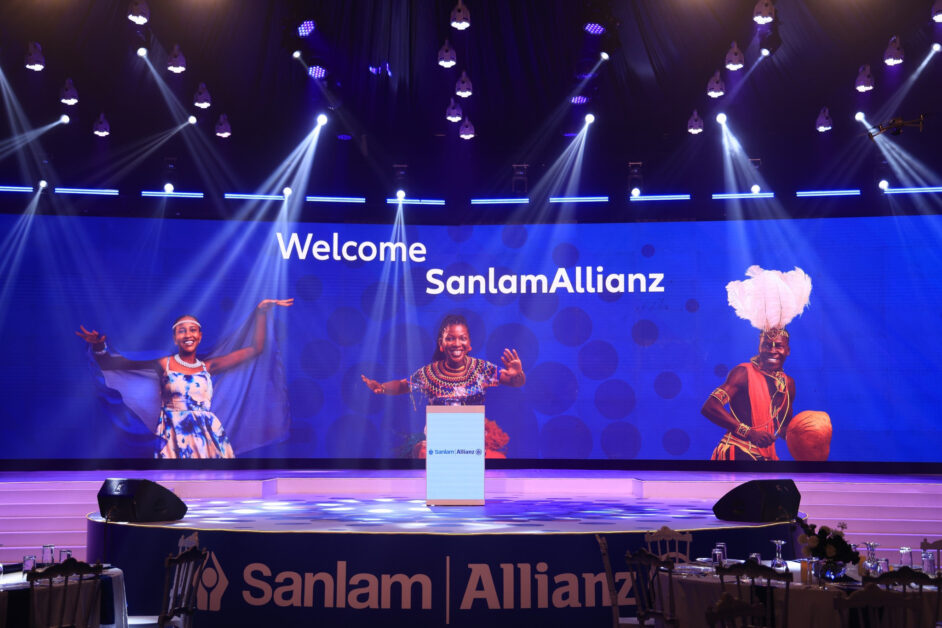
Sanlam’s integration of its business into Jubilee Allianz in Uganda and Kenya under the broader SanlamAllianz partnership reflects a drive toward scale and cost efficiency.
Old Mutual’s rebranding of UAP Old Mutual to Old Mutual across multiple markets similarly signals consolidation and operating alignment.
Insurance growth correlates strongly with rising consumer credit, motorization, mortgage lending, and infrastructure project insurance requirements. As formal employment expands, policy uptake typically follows.
Telecoms and fintech: East Africa as the transaction engine
East Africa is one of the world’s most advanced mobile money ecosystems. Safaricom’s M-Pesa platform processes transactions equivalent to more than 50% of Kenya’s GDP annually and serves over 30 million active users in Kenya alone.
Safaricom Group revenue has surpassed KSh300 billion, or more than $2 billion, annually.
Vodacom’s move to increase its stake in Safaricom to a controlling position underscores how central this platform is to regional digital finance strategy.
MTN Uganda has more than 17 million subscribers, and Uganda has been described by MTN’s CEO as its model operation. Uganda is now MTN’s second-largest fintech market in Africa, with mobile money transactions running into billions of dollars annually.
Across East Africa, mobile money penetration exceeds 50% of adults in several markets, far outpacing many emerging regions globally.
Mupita has argued that fintech is not a zero-sum game with banks, but a complement in which telecoms provide reach and data, while banks provide balance sheets and regulated deposit-taking capacity.
This synergy underpins the capital logic flowing into the region.
Pharmaceuticals and private capital: building manufacturing
Africa imports an estimated 70% to 80% of its pharmaceuticals, creating a structural case for local production. Africa Capitalworks’ acquisition of Cipla’s controlling stake in Quality Chemical Industries in Uganda aligns with regional health demand and policy pushes for pharmaceutical import substitution.
The East African pharmaceutical market is valued at several billion dollars annually and is growing at mid- to high-single-digit rates. This reflects a shift from distribution financing to ownership of industrial capacity.
Media, industrials and the undercapitalized sectors
South African media groups such as MultiChoice and Showmax treat Kenya and Uganda as core growth markets, reflecting rising smartphone penetration, which exceeds 50%, falling data costs and expanding middle-class consumption.
In manufacturing, South African capital often supports supply chains through trade finance rather than direct ownership, aligning with the broader infrastructure cycle.
Sports remains comparatively under-capitalized as a structured investment theme, despite clear opportunities in academies, stadium-linked real estate, broadcast rights, and digital betting ecosystems.
With some of the youngest populations globally, East Africa offers long-run potential, though institutional investment structures are still maturing.
So, why is South Africa investing in East Africa?
The motivations converge around structural drivers. South Africa’s domestic GDP growth has averaged below 1% over the past decade, constraining organic expansion, while East Africa offers multiple economies growing at around 5% annually alongside demographic expansion and rising consumption.
Insurance penetration gaps suggest multi-decade upside. Infrastructure deficits create long-cycle financing pipelines. Mobile money ecosystems process billions in annual transactions. Regulatory reform is catalyzing consolidation.
Telecom-fintech ecosystems exemplified by Safaricom and MTN Uganda offer scalable, high-frequency transaction platforms, while regional trade corridors convert domestic bets into multi-market strategies.
As Mupita’s comments suggest, sustained capital allocation requires macro stability, regulatory clarity, and digital adoption, conditions that parts of East Africa increasingly provide.
Combined with the strategic framing articulated by leaders like Tshabalala and Fihla, the directional shift of South African capital north-east appears less tactical and more structural.
What to watch next
Banking consolidation in Kenya and Uganda is likely to continue as capital requirements tighten.
Insurance groups may deepen integration and brand consolidation across markets. Telecom-fintech convergence is likely to accelerate, particularly as platforms expand into partnerships for credit, savings, and insurance.
Private equity participation in pharmaceuticals and industrial manufacturing is also likely to increase, especially where regional export markets and policy alignment converge.
The movement of capital is no longer tentative. It is strategic, data-backed, and increasingly coordinated. East Africa is becoming not just a destination, but a platform.