We all remember that high school economics question regarding reasons why a firm may continue operating on losses especially in the short run.
The answer that we all crammed without necessarily understanding the intricacies of it was that a firm may incur losses in the short run, on the conviction that they are on their way to attaining economies of scale where they can operate efficiently, outsize competition and therefore turn profitable in the medium to long term.

Well, we never got to actually define how long short run, medium and long term is; but nonetheless, this same question may apply for Shoprite Checkers Uganda Ltd (commonly known as Shoprite).
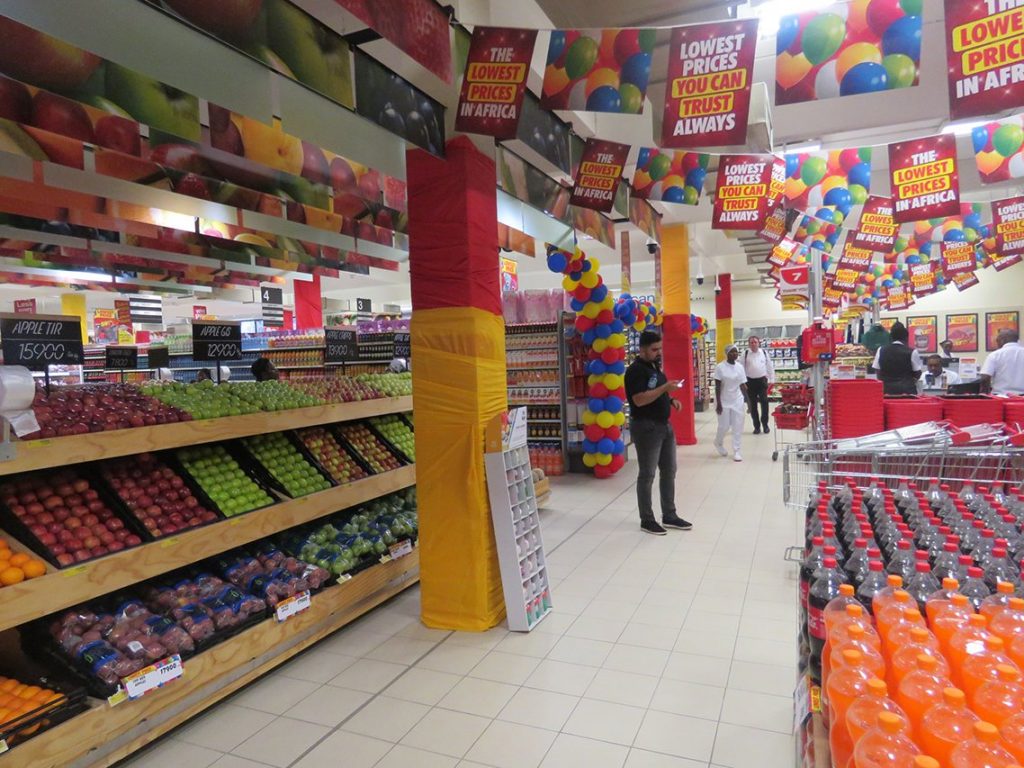
The retail store, wholly owned by South Africa’s Shoprite Group on April 4th 2019 opened its 5th store in Uganda at Village Mall. This follows the 3rd and 4th stores opened at Acacia Mall and Victoria Mall, Entebbe respectively.
Curiously all the 3 latest stores were opened in premises, previously occupied by Nakumatt the troubled Kenyan retailer that was forced out of the Ugandan market over poor sales and losses both in Uganda and at its parent company in Nairobi.
Losses amidst optimism
One would assume that Shoprite, which hogged Nakumatt’s space, itself is healthy and profitable, but that’s not the case.
According to results for years 2014-2017, the firm has posted virtually zero Compound Annual Growth Rate (CAGR) in sales. Between 2014 and 2015, there was a 7% decline in sales, from UGX56.9 billion to UGX53 billion perhaps caused by the shutdown of the firm’s Metroplex Mall- opened in 2011 but closed due to losses and poor sales.
At the end of 2015, the firm’s losses worsened from UGX3.5bn in 2014 to UGX11.4 billion.
In the subsequent year, Sales only picked up by 3.4% to UGX54.8 billion. Thanks to the savings made as a result of closing Metroplex, the firm posted a UGX4.6 billion profit. In 2017, sales improved slightly by 4.8% to UGX5.7 billion, but could not sustain the 2016 profit, only making an UGX19.6 million profit.
By end of 2017, the company had UGX24.5 billion in accumulated losses
Shoprite is not Nakumatt
The 2018 results are yet to be available so as to assess how the 2 new Acacia and Village Mall outlets are changing the fortunes of Shoprite in Uganda and Jayte Slabbert, the Shoprite General Manager in Uganda won’t make any comment about it yet.
 Stanbic Accelerates Uganda’s Digital Future with “Kikole Ku Speedii” Campaign
This reporter reached out to him regarding what exactly had inspired Shoprite to restart expansion when a similar move had failed in 2015 and what they were doing differently to avoid the Nakumatt fate, but he did not respond.
He also could not say what has been the performance of the three new outlets thus far.
Of course Shoprite is not Nakumatt.
The Shoprite Group of Companies is the largest supermarket retailer in Africa, operating 2,738 outlets in 15 countries across Africa and the Indian Ocean Islands. The Group’s sales in 2018 was R145.1 trillion (USD10.1 billion), returning a R3.3 billion (USD228.9 million) profit.
Other than the shoulder to literally lean on from group, they also own some buildings in Uganda, which other than give them a backstop also provide an extra rental income- UGX 4 billion in 2017.
Shoprite might also be this time hoping to leverage the increased traffic at especially Acacia and Victoria Malls.
According to the Knight Frank’s H2 2018 Kampala Property Market Report, Market Victoria Mall in Entebbe currently has the highest footfall per square meter of gross leasable area of any mall in East Africa, at 41 people/sqm/month, closely followed by Acacia Mall at 17 people/sqm/month.
Footfall is basically, the number of people entering a shop or shopping area in a given time.
“Victoria Mall has shown footfall growth in excess of 109% per month establishing itself as the “go to” venue for both consumers and retailers in the south eastern location of the Greater Kampala node,” said the report.
Can Shoprite succeed where Nakumatt failed?
Only time will tell.