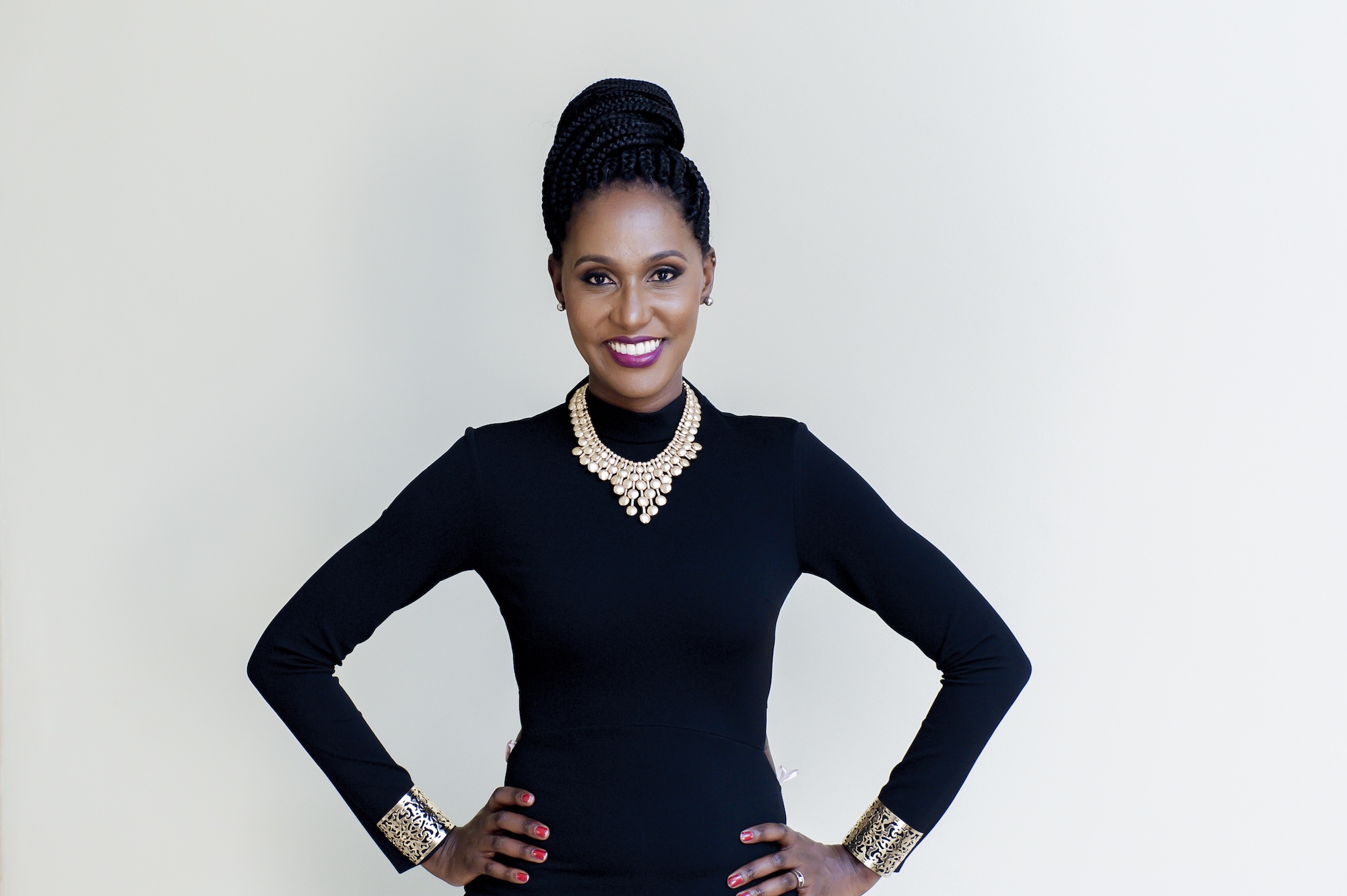
But beyond the boardroom success, Seanice’s journey is also one of bold pivots, personal reinvention, and trailblazing leadership. As a woman founder in an often male-dominated industry, she’s not just broken glass ceilings—she’s redesigned the roof.
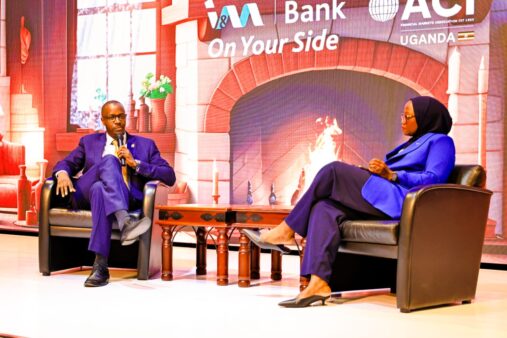
In this candid conversation with CEO East Africa Magazine’s Executive Editor, Muhereza Kyamutetera, Seanice Kacungira reflects on the bold and often uncharted journey of building Blu Flamingo Digital Africa from scratch. She speaks openly about the highs and lows of leading at scale, the pivotal lessons she’s learned as a founder navigating multiple markets, and how her entrepreneurial path has been shaped by her grounding in faith, the demands of family, and the resilience born from failure. Seanice also offers a compelling outlook on the future of digital marketing on the continent—one shaped by data, creativity, and African ingenuity. This feature is part of our Mad(Wo)Men of Uganda series—an editorial tribute to the visionaries, founders, creatives, and quiet builders who shaped Uganda’s advertising industry and are now leading it into its next digital age.
Back when agencies were still experimenting with what Facebook could even mean for brands, Blu Flamingo entered the scene—almost out of nowhere—and completely changed the playbook. But before we dive into that digital disruption, I’d love to rewind a bit. Your journey began in broadcast media. How did that foundation influence the way you understand storytelling and communication? And what elements from those early years still inform your approach to digital strategy and brand building today?
I think it shaped my view in the sense that I immediately understood that no two African countries are the same. Funny enough, I actually started my broadcast career in Tanzania. I was at East Africa FM for roughly a year, and the Tanzanian landscape is so different, just from a perspective on life, the culture, and what drives the economy. What makes money in Tanzania versus what makes money in Uganda and Kenya is very nuanced and very different.
Broadcast media gives you access to people’s stories, and I think, even at the time, I didn’t fully understand just how profound that is. Communication is all about storytelling. You had to sell me on a story to get me here. I know your story—I love the way you write. I read your articles. So already, even before coming to this interview, I was sold on the story, because I’ve seen what it’s like. I liked it.
I started to understand that communication was all about influence, and influence was all about being able to insert yourself into someone’s story. Whatever someone’s story is, how do you fit into that narrative? That became so important.
That lesson from my time in radio and TV deeply shaped how I approach digital strategy. It taught me that success isn’t about pushing a product—it’s about understanding the role that product plays in someone’s life and the problem it solves, all within the context of the story they’re already telling themselves. That perspective has allowed me to craft strategies that go far beyond the ordinary, grounded in empathy, relevance, and real human insight.
So if I wake up in the morning and the story I tell myself is, “For me to have a successful day today, I need access to my phone, access to this person, access to a car,” then the brands that facilitate that have to be in my story. I want a particular kind of car because of status—how people will see me, how they will associate with me. So, a Toyota might not be my story, but a Mercedes will definitely be part of my story. Even if I’m driving a Toyota now, I’m aiming for a Mercedes.
And just understanding that shaped my experience in terms of the power—first of all—of storytelling. Then, how do I take that and transfer it into a package that I could sell to a client to actually make money? The primary reason I left broadcasting was that it wasn’t making money. And I like money. Yes. I was like, if I stay here, I’m going to be poor.
And a lot of this stuff happened intuitively. I kind of felt my way through it. But now, looking back, I completely understand that when I walked into a room to pitch, I understood my audience—because I was intimate with my audience. On the radio, I would take phone calls from listeners. I would have conversations with them. I did an episode on Sanyu FM once called “Tell Me Your Deepest, Darkest Secrets,” and for the whole morning, people were calling in with their secrets. They would leave their secrets anonymously, and I would relay them on the air.
That experience taught me a lot about how Ugandans live and the things they find shameful. Now, understanding someone’s shame is a powerful psychological tool—it tells you how they derive meaning from life, how they spend their money. You spend money where it’s important. Some people would rather have airtime than food. It sounds ridiculous to you and me, but some people would rather forego lunch today and eat tomorrow, so long as they have data.
And those were some of the insights I started teaching my team: before you do any strategy, you must first have data. Right now, we’ve evolved into a tech company, but what drives Blu Flamingo is still three things: it’s data, it’s creative, and now it’s tech. It all starts with the data.
To be honest with you, stories are just data—just pieces of data put together in a poetic way that has emotion behind it. But the science of storytelling is data. So we merge the data with great creative, and then power that with tech. That sort of became our USP.
Apart from the fear of being poor—which, to be fair, motivates many of us—you could have chosen to go into many other things. But why digital? Why a digital agency, and why at that particular time? I mean, back then, most people were still figuring things out or pursuing more traditional paths. So what made you dream digital?
I think it was a combination of two things. First, just luck—sometimes we’re simply fortunate to be in the right place at the right time. And second, we actually started out as a design agency. My sister was a graphic designer back then—she was working at Watoto Church and also doing design work on Nasser Road for a travel magazine. So I said to her, “Let’s combine forces. You handle the graphics, and I’ll do the selling.”
That’s how we began—as a graphic design agency. But I quickly realised the space was completely saturated. Too many players, and very little room to differentiate ourselves. Then we stumbled across social media—Facebook, to be specific—and I realised no one was really doing anything in that space, at least not formally. I thought, if I could formalise this and package it well, we could become the agency that gives companies a professional presence on social media, because no one else was doing it.
Around that time, we got lucky. Diageo had received a mandate from its global head office to start exploring digital, but digital was still so new that there wasn’t anyone locally it could turn to. I had been pitching them for a while—Marion was probably tired of me by then. I’d show up at their offices every week, and they kept brushing me off: “We’re not interested in social media.” But then one day, they called me back and said, “Okay, we’ve finally got this mandate from head office. There’s this social media thing. It’s big in the UK. They want us to do it here. And you—you’ve been bothering us about it—so you do it.”
That was my first lucky break. And honestly, I loved it. What’s not to love about social media? It combines every aspect of communication in one: audio, visual, video, and the written word. It’s like communication on steroids. I really loved it. And I think it’s important to get into something you genuinely enjoy.
Sure, I could have done other things. I could have gone back to Ibanda and helped my dad with his cattle. But this was what I was passionate about. I loved the blend of storytelling and creativity that digital offered. And that’s really how—and why—we ended up building a digital agency. A bit of intuition, a bit of timing, and a lucky break.
Let’s talk about your experience beyond UBL, which, being part of the Diageo group, already had some direction on digital and perhaps made it easier once the global mandate came through. I’m more curious about your early experiences with local clients—those who had no benchmarks, no global playbooks to follow. How did you navigate those conversations, especially when it came to justifying the value of digital? You know, like convincing someone to go ask their boss for UGX 5 million just to be on Facebook. What was that like in the beginning?
Yeah, that really brings back all the memories. You’re absolutely right—it was tough. But I quickly realised something important: people are driven by association. It’s psychology, like we talked about earlier. So every time I walked into a room to pitch, I’d say, “We’re also doing this for Diageo.” And to be honest, I was a little strategic in how I positioned it. I didn’t always say “Diageo Uganda”—in some cases, I’d say “Diageo Global.” Which wasn’t exactly a lie, but also not the whole truth.
But by framing it as though we were working with an international firm, it tapped into something I’d noticed—this mindset where a prophet is never appreciated in their own home. So there was this sentiment of, “Okay, if these guys are doing it at a global level, then I can take them seriously.” It created a sense of aspiration.

We were also very deliberate about targeting blue-chip companies early on—brands like NSSF, Airtel—the ones we believed had both the budget and the vision to embrace digital. So when we pitched, we’d say, “We already work with clients similar to you, or at least of your pedigree.” That immediately earned us an audience.
And I was obsessive about packaging. All our presentations had to look a certain way—clean, polished, professional. Luckily, my sister is an amazing graphic designer, so we had that edge. I insisted on a standard that, at the time, just wasn’t typical for digital. Digital was still seen as this “young, playful” space—something for the kids. But when you walked in with a well-designed, thought-out, corporate-level strategy, people took notice. They sat up and listened.
It was really about the amount of work we put into how we presented ourselves. That’s what began to shift perceptions—even for clients who initially wanted to stick with their traditional agencies. When they saw the polish, the professionalism, and the thinking, they started to trust us.
Let’s talk about your expansion. You guys scaled across borders quite quickly. What’s your current status now—where is Blu Flamingo present, which markets are you operating in, and what are you focused on today?
We’ve now pivoted to focus heavily on tech. If you look at the market and the landscape today, it’s quite interesting because we actually started experimenting with AI about two and a half years ago. That was well before ChatGPT became as mainstream as it is now. We saw it coming and thought, This thing is going to be big. So we built an internal engine called Groove AI to help us with content creation, and it’s been instrumental in delivering smarter, more efficient outputs.
At the same time, we began noticing a shift—traditional agencies started catching up. They began building internal digital units because, for a long time, they were outsourcing digital work to us. A client might be signed to a Big Four agency, but that agency would come to Blu Flamingo to actually execute the digital work. So technically, we were the ones doing it, only behind the scenes.
But as digital awareness grew, those agencies began expanding their own digital capabilities. We realised we needed to pivot quickly. That’s when the tech story became central to our evolution. We thought: let’s disrupt ourselves before we’re disrupted. And to be honest, we never really had a desire to become a traditional agency. We were doing a lot of off-the-line work—billboards, radio, print—but that wasn’t our passion.
So we made a deliberate shift: since we were already operating as an integrated marketing communications (IMC) company, we decided that tech would lead everything we do. And that’s where we are today. We’re no longer just a social media agency. In fact, 80% of our business now spans radio, TV, and print—especially in markets like South Africa, Kenya, and Nigeria.
We’ve executed some large-scale campaigns, like South Africa’s national COVID-19 campaign, which focused on testing, vaccinations, and public awareness. That was a major turning point for us in terms of scale and complexity.
But as we grew, we also had to be careful—we didn’t want to scale just for the sake of it. We wanted to grow while preserving the core of what makes us Blu Flamingo. Choosing to become tech-led was a hard but necessary decision.
Of course, there have been challenges, especially around talent. There’s plenty of talent across Africa, but it’s not being invested in enough. People often say, “You can’t find good people in Africa,” but that’s not true. The difference is that in the West, talent is heavily backed and supported. Here, we have the talent—but we’re not investing in it. And clients won’t wait around for you to train someone; they want the work done now. That’s one of the biggest hurdles we face.
That said, our strategic direction is clear. We’re now focusing on building AI agents, especially for our banking clients. That’s become a big part of our core business. Over time, we hope to train our clients to manage their own digital operations internally, so that we can focus even more on developing advanced tech solutions.
And with AI, the model is shifting anyway. You no longer need massive creative teams. One or two sharp individuals—using the right tools—can scale creative production dramatically.
So that’s really the journey: from a scrappy social media startup to a tech-led IMC firm operating across five African markets. And recently, we also opened a branch in London. That move is about building access—connecting African brands to global markets, and serving UK-based brands that want to expand into Africa. So even our expansion outside the continent still ties back to our core: doing meaningful business for and within Africa.
That’s great stuff. I know you’ve lived and travelled quite a bit across different countries, but it’s one thing to visit a place and a whole other thing to actually run a business there. As someone who knows the Ugandan market well, what stood out to you when you began operating in other markets? What are some of the key differences you observed—both the good, the bad, and the ugly—compared to Uganda?
One of my greatest privileges hasn’t just been opening branches in five countries—it’s been actually living and working in them. I’ve lived in Nigeria for a year, Rwanda for six months, and South Africa for nine years. Of course, I’m originally from Uganda, and I also lived and worked in Kenya. I always feel incredibly lucky to have had those experiences.
In Kenya and Uganda, I was primarily in media, but as an agency owner—running Blu Flamingo—I was based in South Africa, Nigeria, and Rwanda. Each market has its own character, and I’ll start with the good.
In Uganda, I’ve found the market young, hungry, and full of energy. There’s an appetite to try new things, and people are generally accommodating. Even if someone doesn’t do business with you, they’ll still give you a hearing—and that makes Uganda a friendly and open place to work.

Kenya is fantastic for its hustle culture. There’s a fast pace, quick tech adoption, and a real spirit of figuring things out as you go. People build as they run, and that’s a powerful entrepreneurial mindset.
What I love about South Africa is the strength of its institutions. You don’t see people walking around aimlessly—things work. You can Google a business and reach out formally. Systems are structured and functional, at least until the power issues came in. But overall, it’s an orderly and reliable environment for doing business.
Nigeria, for me, is defined by its optimism. My team there never says “no.” You bring an idea—they go with it. If it fails, it fails. But there’s an experimental, can-do attitude. Even if they don’t know something, they’ll figure it out. That kind of energy is inspiring.
Rwanda is unique in its own way. I admire the order, structure, and institutional discipline. Things work, and people follow the rules. It’s one of the most organised environments I’ve worked in, and that’s something I truly value.
Of course, every market also has its challenges—the bad and the ugly.
In Uganda, one of the biggest issues is that business often hinges more on who you know than what you can do. More than in any other market I’ve worked in, personal relationships and networks tend to override competence. I think that’s partly due to the size of the market—Uganda is small and landlocked, and the pool of decision-makers is also small. So you see the same players over and over again, which can make it hard for new or independent talent to break through. It can feel limiting.
Kenya, for all its dynamism, can be incredibly cutthroat. There’s a strong “me first” mentality. It’s very transactional, very money-driven. Sometimes it feels soulless—like life revolves around who has the money, who’s making it, and who controls it. That can lead to the sacrifice of long-term relationships and values in pursuit of quick wins.
In South Africa, the challenge is the silos—racial, economic, and historical. Black people do business with black people, white people with white people. These divides weren’t necessarily intentional today, but they’re legacies of apartheid and unequal access to education. So you’ll find agencies saying they can’t hire black creatives because “they’re not trained”—but that’s because access wasn’t there in the first place. It’s layered and deeply systemic.
Nigeria’s biggest challenge is infrastructure. You can have all the ambition and talent in the world, but when you’re spending millions on diesel for generators and navigating corruption just to stay operational, it wears you down. The hustle is real, but the environment often works against you. That said, those same hardships also make Nigerians some of the most resourceful people I’ve ever worked with.
And Rwanda—while highly organised—sometimes leans so far into structure that it limits creative thinking. I’ve had situations where I ask team members for their ideas, and I get silence. They’re so used to being told what to do that expressing independent thought doesn’t come naturally. It takes time to build that confidence and encourage original thinking.
So yes, every country has its good and its ugly, just like people. These are just some of the insights that come to mind from my experience running businesses in these markets. There are, of course, many more—both positive and challenging—but these are the patterns that stand out when you’re working across Africa.
I’ve always wanted to ask you this—flamingos are usually pink, or something close to that. So why is your flamingo blue?
It was very deliberate. We wanted people to immediately understand that we’re different from any other agency they’ll ever come across. A blue flamingo is unusual—you don’t see one every day—and that uniqueness is exactly what we wanted to communicate with our brand.
But there’s more to it. The B, L, and U in Blu Flamingo actually stand for our core values: Benefit, Leadership, and Utility. Those are the principles that guide everything we do.
And the choice of a flamingo—did it have anything to do with your height, or was it just a random pick?
Actually, that’s what I’m going to start saying from now on—everything to do with my height! [laughs] But no, we just thought it was a beautiful, elegant bird. That’s really where the idea came from.
There’s something I’ve always been curious about—especially when it comes to agencies that are locally bred, like yours. Many start in Uganda, but only a few manage to expand beyond the borders, and quite a number have actually burnt their fingers trying. I’ve heard stories where someone lands their first big client or that first big paycheck, and that’s ironically when the decline begins. From your own journey, what are some of the key lessons you’ve learned about managing growth sustainably?
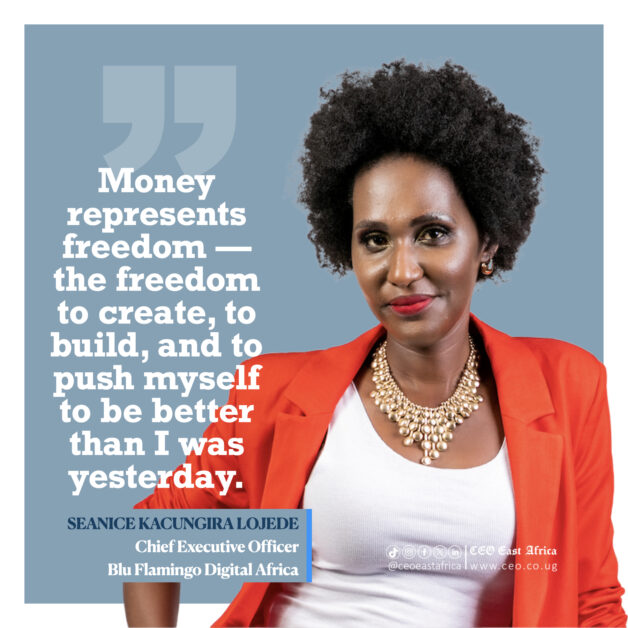
I love that question. I truly believe that growth starts with a mindset. From my experience, you have to get your intention right. Personally, I’ve never hidden the fact that I love money, but what most people miss is why I love it. They assume it’s about the houses or the cars—and yes, I have those things, just like many others—but for me, money represents freedom. It’s the freedom to create, to build, and to push myself to be better than I was yesterday. That’s what drives me.
What many people don’t understand is that the same intention that drives the founder will ultimately drive the company. Take a typical case: someone gets their first big client—a telco, a bank, a blue-chip brand—and suddenly they get a big payday. And the first thought is, “Let me buy a car.” Me? I only bought my first brand-new car this year. Until then, I drove good secondhand cars. Why? Because my money had better things to do.
People often ask, “Did you plan your expansion?” And I always say, “No, not at all.” I’m not ashamed of that. Airtel said, “You’re doing a great job in Uganda. Can you replicate it in Kenya?” I said, “Hell yes, let’s go.” The money we had saved helped us set up in Kenya. Then they said, “We also have Rwanda.” Again, I said, “Hell yes.” That’s how we expanded into those markets.
Later, I thought, my husband is Nigerian, so why not try Nigeria? And eventually, I emigrated to South Africa. Honestly, a lot of people aren’t truthful about how they built their businesses. They want to look like they had some master plan. But in reality, you see an opportunity in front of you, and you either take it or you don’t. What determines how you respond is your intention.
If my only goal had been to make money, I wouldn’t be in five markets. It took too long to make money in five markets. It would’ve been easier to stay in Uganda, use my network, and build slowly. And when I left Uganda, we took a huge hit—we lost clients. It was understandable; I wasn’t in the market, and I had been a major driver of the business. But over time, we rebuilt, gained international clients, and those are clients we never would’ve landed if I had stayed in Uganda.
 Ruparelia Group Wins Key Entebbe Land Case, Clearing Path for the New Mega Speke Resort and Convention Centre, Entebbe
That’s the thing—yes, I’ve made mistakes. I’ve lost money. A lot of money. If I told you how much, you might cry. And I’ve asked myself, “What’s my problem?” But every time I’ve lost money, I’ve learned. And I’ve remembered: if you believe in your ability to build and create value, the money will come again.
For me, it’s about creating value for people. When a client calls and says, “I’m happy with what you did,” that means everything to me. It’s not about validation, but about using my gifts to the fullest. Everyone is driven by different things, but as the Bible says, “You will know them by their fruits.” Your results reveal your true motivation.
I see it all the time—young people starting agencies, doing great work. But somewhere along the way, they burn out. Because business doesn’t just reward brilliance—it rewards consistency. That’s the difference. And it’s why I deeply respect what you’re doing with your platform, Kyam. Your site may not pay all the bills, but the consistency and passion you bring to it? Everyone sees it. That’s why I made time for this conversation, because I believe in rewarding that kind of energy.
Yeah, okay—so, as a ‘commander’, like we like to say here in Uganda—how do you lead your teams, especially during the hard times? You know, when you’ve just taken a big fall and there’s another battle waiting right ahead. How do you keep your people motivated, keep yourself going, and avoid burning out in the process?
That’s a good question. I’ve experienced burnout—two or three times in my life—and I can tell you, it’s not fun. I wouldn’t recommend it to anyone. But those moments taught me to start taking better care of myself.
What’s helped me most is learning to trust my team. It’s not easy—and yes, there have been times when that trust has led to deep disappointment. In fact, some of the biggest losses I’ve experienced came from trusting people who let me down. But the truth is, you can’t scale if you don’t build a team you can trust. And unfortunately, you have to trust them before you know if you can trust them. That’s the hard part.
Funny enough, just yesterday I was talking to my Group CEO—she’s been with me for nearly 10 years—and she said something interesting: “What I find unique about you is that you allow people to fail.” She’s right. I usually micromanage in the beginning, just to set the standard, and then I step back. At that point, it’s up to the person—they’ll either fail or fly. I don’t know exactly where that approach comes from, but it’s become part of our culture.
Another way I stay motivated—personally and as a leader—is through continuous learning. I invest in myself and in my team. For example, I enrolled all of us in the Stanford Seed program, which wasn’t cheap, but it was important. We’ve built a strong culture of learning, and I think that’s been our biggest anchor during tough times. No matter what hits us, we keep learning, we keep growing—and that helps us get through.
My leadership style has evolved a lot. In the early years, I was a complete micromanager. I obsessed over every detail—every PowerPoint slide, every typo. If there was an error, you’d definitely hear about it. That’s because I’ve always believed that quality is what won us our first clients, and I was determined to protect that.
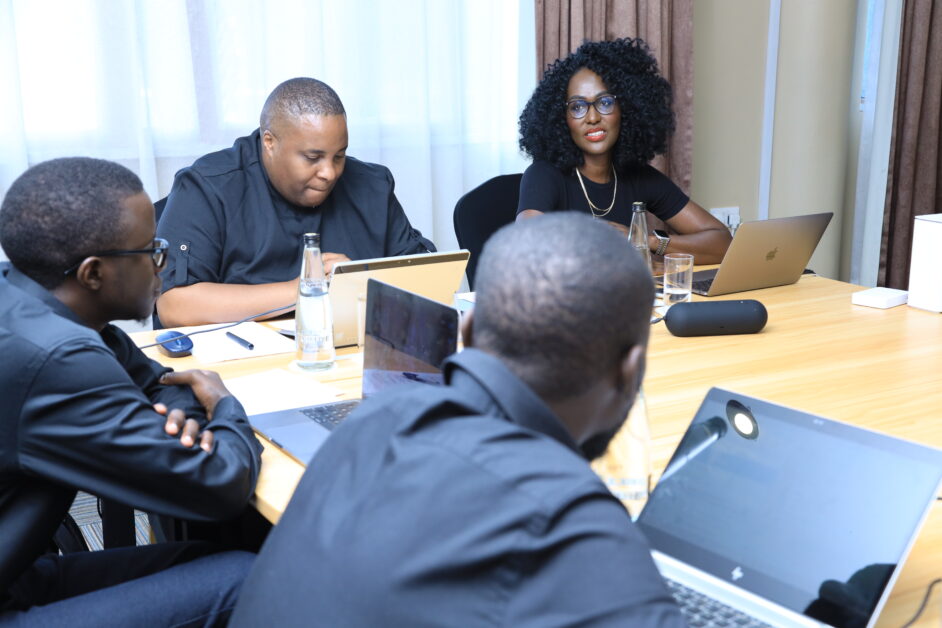
Over time, though, I’ve learned to let go—at least a little. I haven’t relaxed on quality, but I’ve accepted that not everyone will work the way I do. So I now involve the team more in strategic decisions—where we scale, what we prioritise, and what we ignore. It’s a more inclusive and mature culture.
Of course, that kind of freedom comes at a cost. When you give people space, you also have to give them room to make mistakes. You can’t have one without the other. And yes, we’ve paid for that. But I also believe it’s what has allowed us—and me—to stay in this game, and to stay alive as a business and a leader.
As we talk about managing growth, there’s also the critical aspect of managing money. I remember someone from Maad Advertising once emphasising this—how financial discipline touches everything, from how you structure contracts, to whether you offer discounts to secure early payments, to how you manage supplier relationships. It’s also about deciding when to invest or save for a rainy day. From your experience, what lessons can you share with agencies that might be struggling to navigate this financial maze?
You never really stop struggling with money management, no matter how big you get. That’s the part no one tells you. The issues evolve, but they don’t go away. From day one, one of the most important principles I put in place at BluFlamingo was maintaining a three-month runway—always. That means having enough cash flow to sustain the business for three months, even if no revenue comes in. There were times I didn’t pay myself just to protect that buffer. It’s what helped us survive through COVID. It’s what carried us through unexpected crises, like a copyright dispute in Nigeria that nearly went to court. You don’t start an agency expecting to be sued over an image, but things happen. The rainy days come.
Second, when times were good, we invested. We bought land—a plot that cost UGX 5 million ten years ago is now worth many times more. We also invested in other businesses, especially in early-stage tech startups we came across. And in one case, we even bartered our services for equity. A client had a promising solar energy business during a power crisis. We told him, “Don’t pay us in cash. Give us shares.” That deal paid off. But those kinds of decisions stem from one thing: intention. My intention has never just been to make money for the sake of it. I’ve always wanted to build—to create. So when I see someone else building something great, I want to be part of it. That’s how growth opportunities are born.
The third and most critical part of money management: hire a great CFO. Don’t try to do it all. Many founders think they can double as their company’s CFO, but those are two different talents. Money has three stages: you make it, you manage it, and then you grow it. Most businesses stop at managing it—they never think deeply about how to grow it strategically. That’s where opportunities are lost.
And yes, the basics still matter—structure your contracts wisely, negotiate payment terms, and offer early payment discounts if needed. But just as important is your relationship with your suppliers. Take them out to lunch. Nurture those ties. Because when your client delays payment for three months—and it happens—you’ll need suppliers who believe in you enough to give you grace.
At the end of the day, financial discipline isn’t just about spreadsheets. It’s also about creativity, relationships, and staying grounded in your intention. That’s how we’ve approached it. And we’re still learning every day.
You work with a lot of young people—what many today refer to as Gen Z. Interestingly, when I interviewed the Group CEO of Absa recently, he mentioned that Gen Zs aren’t that different from how we were in our youth—ambitious, curious, and sometimes rebellious—the only real difference is the digital exposure and tools they now have. From your experience, how is it working with Gen Zs in today’s fast-evolving digital world? What’s different about their mindset, work ethic, or expectations compared to previous generations? And how would you advise other leaders or entrepreneurs to manage and get the best out of them?
Absolutely—it’s very different working with Gen Z. But it all comes down to understanding how they think and how the world they’ve inherited shapes that thinking.
You see, Gen Z is standing on our shoulders, just as we stood on the shoulders of our parents. Our parents stayed in jobs for 30 years, retired with a pension, and created the stability that allowed us to job-hop in pursuit of better opportunities. Now, we’ve gone even further—we’ve created a world where Gen Z doesn’t even need to have a job in the traditional sense. And with that freedom comes a very different approach to work and fulfilment.
One of the biggest complaints people have is that Gen Z employees rarely stay long in one place. But the truth is—we gave them that option. They’ve grown up in an era of flexibility and possibility, and they prioritise purpose, fun, creativity, and impact. For them, it’s not just about survival or earning a living—it’s about doing something that matters to them.
At the same time, this is probably the most self-focused generation we’ve seen—and again, it’s not entirely their fault. We made it about them. Their entire digital experience—from tailored ads to algorithm-driven content—is designed around individual preferences. They’ve been told they’re special from childhood, and digital tools have reinforced that idea.
So, how do I manage that? I challenge them. I make time to listen. They want to be heard. They want to contribute. And importantly, they come to the table with access to information we didn’t have at their age. When we were in university, we had to wait for newspapers or TV to tell us what was happening in the world. Today’s Gen Z can pull out their phones and access global trends, case studies, and tools like ChatGPT in seconds.
But they also lack something we have—structure. We’ve been trained to think about sustainability, long-term growth, and scalability. So the real power lies in marrying their fresh thinking with our strategic discipline. It’s a balancing act.
I’ve also learned not to expect loyalty in the traditional sense. We don’t plan for 10-year stints anymore. In fact, from day one, we talk about career paths openly. It’s part of our onboarding process. They want to know their growth trajectory—even if they just joined yesterday. And that’s okay. We lean into it.
We’ve invested in building systems and processes so that even if someone only stays a year or two, they can plug in quickly and meaningfully. High turnover isn’t always a bad thing—if your systems can absorb and benefit from it. We get fresh energy and new ideas regularly. It’s not easy, but that’s how we’ve adapted—and it’s working for us.
As a tech leader on the continent with a deep perspective across multiple markets, what keeps you up at night? What are some of the things that genuinely worry you—those quiet fears that surface during a midnight pause or early morning reflection? The kind of concerns that make you think: if we don’t fix this, where are we really headed—as an industry, and as a business ecosystem in Africa?
I often say fear is like a rocking horse—it keeps you busy but takes you nowhere. Still, I’m human, and I do have my worries. One of my biggest concerns is the growing digital divide. My mother comes from Soroti District in Eastern Uganda—a place I love and visit often. Yes, people there have mobile phones and internet access, so on the surface, it might seem like they’re not being left behind. But when I think about AI and the direction the world is taking, I genuinely worry that we risk being excluded from the global economic value chain—not because we lack talent, but because we’re under-informed and under-prepared.
I recently read a report that spoke about a silent race for water resources, where powerful interests are buying land in seemingly obscure places, not for the land itself, but for what’s beneath it. When you hear that Elon Musk has acquired land somewhere in rural South Africa, it’s likely more strategic than speculative. This speaks to a larger fear: if Africa doesn’t understand or anticipate these shifts—whether digital, environmental, or geopolitical—we’ll end up dancing to the tune of those who do.
Bringing it closer to tech, I think the real problem is education, or the lack of it. We don’t need handouts or even more funding, necessarily. What we need is a shift in mindset. You can’t be what you can’t see, and what you see is only as broad as what you know. That’s where we lose out—by not knowing what’s possible. So yes, like any business leader, I worry about the performance of the company, but this deeper concern about Africa’s digital readiness and mindset gap—that’s what truly keeps me up at night.”
As a female tech leader operating on the continent, have you encountered moments where you felt the challenges you were facing were specifically because you’re a woman, particularly in environments that are still traditionally male-dominated? And building on that, I know you’ve been deeply passionate about equipping others with digital skills, such as through initiatives like the Digicon Academy you ran in Uganda. Based on that experience, what advice would you give to women who are trying to rise and lead in the tech sector today? What should they be prepared for, and how can they navigate the space in a way that builds on the gains made by early trailblazers like yourself, without having to fight the same battles all over again?”
That’s a great question. The first thing I’ll say is—don’t pay too much attention to the noise. It’s a waste of time. Yes, discrimination exists. I’ve walked into meetings with one of my GMs and watched people turn to him and say, “Oh, you must be the founder of Blu Flamingo,” and he’s had to say, “No, she is.”
Now, I can choose to let moments like that diminish me, or I can remind myself that how people treat you often starts with how you treat and think about yourself. I don’t believe in a victim mindset—I never operate from one. Have I lost deals to men who play golf together? Absolutely. But I’ve always told myself that the deal wasn’t mine. What’s mine will come, and protecting my mindset is more important than fixating on those setbacks. There’s always a next opportunity—if you believe there is.
I’ve had deeply uncomfortable moments. I remember one instance with a potential client—we’d had a few drinks, and he looked at me and said, “I don’t know what to do with you.” I asked, “What do you mean?” And he said, “I don’t know what to do with a woman I can’t control or sleep with.” That moment was incredibly revealing. He simply didn’t know how to categorise me because I didn’t fit into the roles he was familiar with.
That experience opened my eyes to how some men see power and control, especially in business settings. When they can’t offer you something you don’t already have, and they can’t dominate you, they’re at a loss. So, they retreat to familiar territory—doing business with other men. It’s not personal; it’s conditioning. And understanding that has helped me navigate the space better. I don’t have to accept that reality, but I need to understand it—and that’s the power.
For women rising in tech or leadership, I always say: find the spaces and people that are rooting for you. Don’t spend too much time worrying about those trying to derail you. And don’t internalise their limiting perceptions. If you believe you’re not enough, you’ll act like it—and that impacts how you show up.
We’ve made progress, but there’s more to do. I’ve mentored many women through these exact situations, and what I tell them is simple: stay grounded in who you are, be aware of the barriers, but don’t be defined by them. Confidence and clarity of purpose go a long way. And so far, that approach has worked for me.
As we wrap up, I want to bring it back to the core of your journey—founding and growing Blu Flamingo across multiple markets. No doubt there have been countless lessons along the way. But if you were standing in front of a masterclass of aspiring agency founders—especially those looking to build digital agencies—what’s the one or two hard truths you would want them to walk away with? What are the tough lessons they must be prepared for if they’re serious about building and sustaining something meaningful?
Hard lessons? I love that question, because I’ve had to learn many of them the hard way.
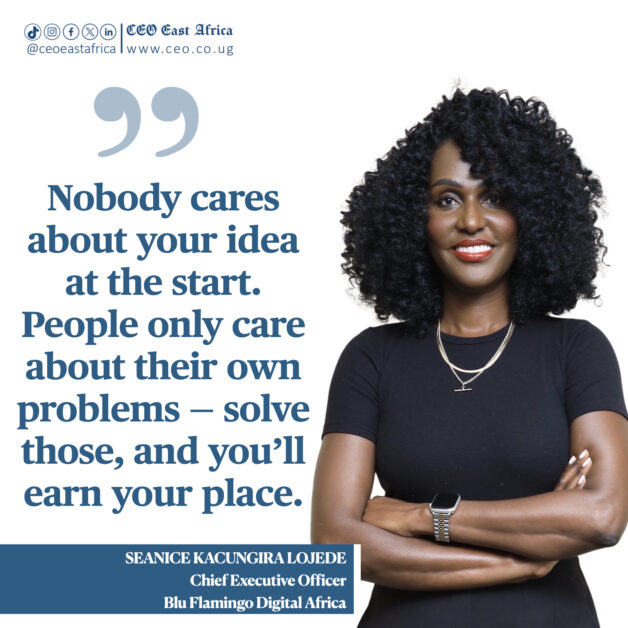
First, nobody cares about your idea. Nobody cares about your dream, your logo, or your brand story—not at the start. You love it, sure. But people only care about their own problems. So the sooner you stop centring yourself and start solving someone else’s pain point, the better your chances of success. One of the biggest shifts for me was realising that it’s not about how brilliant my campaign is; it’s about whether my client can take it and look good to their boss. Sometimes that’s the real problem—not performance metrics, but internal politics. So stay curious, ask better questions, and listen deeply.
Second, you have to get over yourself. Ego will destroy you before you even start. Clients will criticise your work. People will say it’s rubbish. You’ll be told you’re not worth what you’re charging. And that’s okay—humble yourself and focus on delivering value. Let your work speak, not your emotions.
Third, people do business with people they like. It’s not just about credentials or past performance. It’s chemistry. If I don’t like you, I’m not giving you my money—period. And we don’t talk about this enough with young entrepreneurs. We teach them to work hard, build great products, but we don’t teach them the soft stuff: emotional intelligence, human behaviour, understanding how people make decisions. Those are critical.
And finally, align with values. Don’t chase money at all costs. I’ve fired clients—clients who were paying me very well—because they didn’t treat my team with respect, or our values just didn’t align. Money is important, yes, but so is dignity. So build a business that lets you sleep at night. That’s the real win.
I once heard Peter Magona from TBWA Uganda mention that at their agency, they use something called the “3Fs” to evaluate which clients to pursue or retain—Famous (will the work build our reputation?), Financial (does it make good business sense?), and Friends (is the client respectful and easy to work with?). Do you have a similar internal framework—formal or informal—that guides your decisions on which clients to take on, retain, or pass up, especially when you have to choose between competing opportunities or pitches? What are your own “non-negotiables” when it comes to client fit?
Yes, absolutely—and it’s actually built into our name: B.L.U, Blu Flamingo. The first question we ask is about the Benefit. Does this client bring benefit to the wider community? Does their product or service add value to society? And on a more internal level, will working with them allow us to produce our best work? So, very similar to what Peter Magona shared—will this relationship be mutually beneficial, not just for us, but for the broader ecosystem?
The second is Leadership. This aligns with the idea of “famous” in a way—will they let us do work that stands out? But for us, leadership goes beyond publicity. Are they leaders in their industry? Do they show vision in how they run their business? Because we’re not trying to be better than Agency X. I care about whether we’re better than we were yesterday. That’s the standard—our own growth and evolution.
The third is Utility. This one’s a hard line for us. If a client doesn’t have internal processes—say, no marketing department—that’s a red flag. We’ve been burned too many times. If you don’t believe in marketing enough to structure for it, chances are we’ll suffer downstream. So we assess whether they have systems and a basic framework to support what we do. Utility is about their readiness and seriousness.
But here’s the thing—we don’t just hold clients to these three pillars. We hold ourselves to them, too. Are we creating benefits? Are we showing leadership in how we think, work, and show up in the market? Do we have the systems—CRMs, finance, invoicing, HR, internal marketing—that reflect what we expect from others? So it’s a two-way mirror. That’s how we decide who to work with—and how we keep evolving ourselves.
As we wrap up, is there anything you feel we haven’t touched on—something important that you’d like to emphasise or leave as your final thought or parting shot?
Maybe just one thing I’d like to emphasise—two actually: the future of digital in Africa and the importance of personal mastery and mindset. These are deeply connected. The future is moving toward individualised storytelling. It’s no longer about big brands alone—it’s about you. You, Kyam—what’s your story? How do you leverage it?
We’re already seeing it. In Kenya, for instance, someone is selling live on TikTok from what looks like Nasser Road—a guy with just one phone, showing a product, taking orders, and delivering in 10 minutes. That’s the future: one person, one phone, one business. Highly personalised, highly nimble.
But that future also demands a different kind of strength. It demands personal mastery. And for me, that comes from continuous learning. That’s how I stay energised and keep my vision clear. This weekend, for example, I’m attending a training by the Demartini Institute in South Africa—Dr. John Demartini has been a thought leader for decades in neuropsychology and mental awareness. He blends disciplines like psychology, mathematics, and behavioural science to help us understand how the mind works, how patterns emerge, and how we create meaning.
And honestly, that’s what I believe the future is about—understanding patterns. Life is a cycle of patterns and numbers. History doesn’t really repeat; it just follows patterns. We’ve been here before—when tractors came and people feared for farmers. When social media arrived, everyone panicked about the death of traditional media. It’s the same thing now with AI—it’s just moving faster, more intensely.
And here’s something wild: AI is now reportedly communicating with other AI systems subliminally, without human prompting. That’s how fast we’re moving. So, if we don’t invest in educating ourselves individually, we’ll get left behind.
So, my parting shot is this: the future is individual. Our businesses, our money, our relationships, even how we parent—it’s all becoming more personal and self-directed. And the only way to thrive is to keep learning, stay aware, and master yourself.
Given all the perspectives you have about the future of work—and as someone who’s both deeply involved in the digital space and also an employer—how is that shaping the way you’re raising your kids? What are you prioritising in terms of the schools they attend, and what specific skills or values are you intentionally passing on to prepare them for the world ahead?
I love that question—funny enough, I was just thinking about it yesterday. There’s a whole homeschooling movement gaining momentum in Uganda, and I find it really impressive. But more importantly, I believe we can’t sit on the sidelines anymore—we have to get involved. For instance, I serve on the parent committee at my children’s school, where I help drive the tech and AI agenda. We’re working to integrate tech learning into the school pipeline, because if we don’t lead that conversation as parents, who will?
I’m very intentional about exposing my kids to what I do. They travel with me for work, they sit in boardrooms with me, and they hear the real conversations. Around the dinner table, we don’t dumb things down. I’ve never spoken to my kids like kids, and I know some people criticise that—but I believe in challenging them to think critically, to express ideas, and to engage with the world as it is. I’ll bring up things like AI, ask for their thoughts, and you’d be surprised—kids rise to the challenge.
In fact, my six-year-old daughter makes pancakes from scratch, all from watching YouTube. So why limit her? I’m learning to challenge all the old beliefs we held about what kids are capable of. Children are sponges—they absorb, process, and contribute more than we give them credit for. Sometimes they even give me ideas for work, and I’m amazed at how sharp and intuitive they are.
As they grow, my vision is to expose them even more—to take them on trips, show them different parts of the world, and help them form their own worldviews. Because truthfully, Kyam, the traditional education model is already becoming outdated. I foresee a future where formal education as we know it—maybe even up to Primary Seven—won’t be necessary. Kids will learn differently. They’ll specialise early, guided by technology, by AI. So for me, it’s not just about preparing them for school—it’s about preparing them for life.”