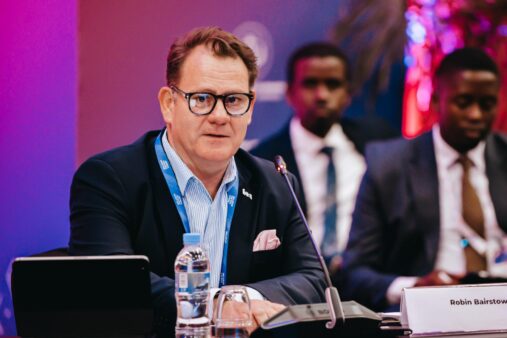
With retail and SME lending delivering double-digit growth and a major digital overhaul complete, Robin Bairstow, CEO of I&M Bank Uganda, is steering the bank into its next growth phase.
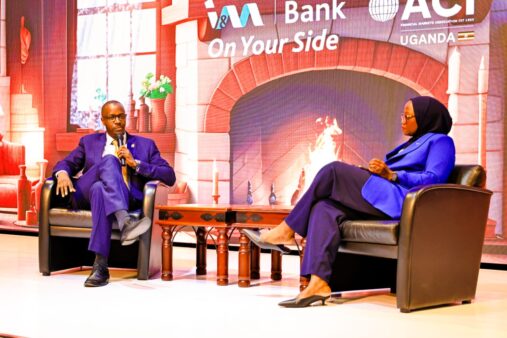
Speaking to CEO East Africa Magazine’s Paul Murungi on the sidelines of the Annual Bankers Conference, Bairstow reflects on I&M’s trajectory, the enduring value of long-term customer relationships, and the bank’s sector focus — from coffee and construction to agro-processing and education.
He also addresses lending rate concerns, regional stability risks, and the cultural shift inside I&M aimed at keeping teams engaged, healthy, and growth-focused.
Looking back at the first six months of 2025, what does I&M Bank’s growth story look like?
We started the year exceptionally well, and we continue to build on that. One of the surprising areas has been our retail and SME business, which have shown a double digit growth in a market where we’ve seen a lit bit of crowding out of the consumer market because of high bond yields at the moment.
But we’ve still been able to maintain our positions, banks are there to take money from depositors and lend to people who require the finances.
We have a lot of new bank customers but we also have bank customers who have stayed with us for close to 30 years since the bank was established and that gives us something to build on.
How would you rate the bank’s growth across key metrics such as loans, deposits or even the balance sheet?
We’ve maintained our trajectory from last year. If you recall, we were very distracted from the start of last year where our core banking system was being set up.
We basically re-built the bank from October 2023 until June of 2024. We re-did our core banking system and online banking. We re-configured our data centres at MTN and Raxio, we physically replaced every single ATM in the market, but at the same time, we were able to grow just shy of 8 percent year-on-year.
Our performance mid-way through the year just below 50 percent year-on-year. So the growth is there, and we’re maintaining that trajectory.
We set our strategy at the beginning of 2024, and maintained our trajectory based on that. We’ve launched new digital products especially with the ease of opening an online bank account using our application.
We have doubled the number of customers than those who previously came into the bank. We’re emulating our Kenyan counterparts who are now at 30,000 new customers per month.
Our ambition is to revamp some of our branches, and in fact three of our branches in Ntinda, Bweyogerere and Entebbe were moved this year to new premises within the same areas.
By the end of next year, we will have doubled the business in terms of size and the kind of money we’re making. We have a great team!
Which sectors have you observed having tremendous growth, and which ones do you think are still lagging?
We’ve always been involved in the coffee industry since the bank’s origins. Coffee prices have dropped and people have been holding stock, and we’re not just there when it shines, we want to hold the umbrella when it starts to rain by providing solutions, and sometimes it is even putting together a buyer and a seller that we know about.
We’ve also seen good growth within the construction industry right from commercial to demand for mortgages and within the retail sector based on property. Everyone wants to own their little piece of Africa, and we are making that possible!
 Stanbic’s Five-Year Scorecard: How Profit Growth, Deposits, Lending and Dividends Reshaped Performance
We’re taking a keen interest in primary agriculture, and agro-processing where we have strong roots where we see more growth and demand. But we’re also supporting schools where you have an entire ecosystem of teachers, parents and students.
What’s your evaluation of the banking industry’s performance in 2025, particularly in the context of persistent public concerns over high lending rates?
We have an extremely stable currency compared with other countries within the region. Foreign Direct Investment is a key to the stability of the currency. Government has made commitments and therefore its need to borrow. But they’re [government is] also talking to concessional lenders such as World Bank, IMF to provide funding.
Government is also borrowing in the market at the moment, it’s not only repaying debt because if you compare our debt to GDP levels to other developed markets, we’re actually quite low in the scheme of things.
Although no one likes to be in a position where we have large government debt but to be able to fund big infrastructure projects, you need the money.
In a stable environment that we have, we can see the government is borrowing long term at a higher rate than consumers and that’s what is driving rates at the moment.
But in any market, if you have a successful business, the rates are not the barrier, it’s about access to finance, hence our campaign launch for ‘Tukikube’ which seeks to empower SMEs with essential knowledge and tailored offerings, and we believe it is extremely important to make that information available.
What keeps you awake?
I worry a little bit about regional stability, we’ve seen a lot of conflict across the region and that’s a concern because whenever that happens, trade stops and money gets blocked.
We’re lucky that we’re stable here in Uganda but here comes the issue that Kenya is our largest trading partner, if there’s instability with demonstrations, it impacts on trade and slows down on imports and exports.
We’re all looking forward to the impact that the oil and gas industry is likely to have on the market and I believe we all need to look at future plans, and align ourselves in that area.
You lead a major bank with a Group regional footprint. How do you personally manage the pressures that come with such a demanding role? Do you turn to golf, mentorship, or perhaps unwind with a good book?
I think work-life balance is really important, and you’ve got to know when to switch off and to compartimentalise.
Anyway we put in the hours, but there’s time to be off but never disconnected. In this day and age of digital technology, you’re never switched off but you can know mentally when you’re really in the office and out of the office.
We always have a lot of fun at work while we’re doing business. It’s about having that light attitude and that’s what we have within our people. It’s an organisational cultural attitude that we embarked on three to four years ago now.
We looked at bringing everybody into the larger I&M Group, we figured that if you’re running a strategy, you need a right culture within the organisation. We partnered with someone to provide wellness sessions by focusing on things creating a healthy work-life balance, weekly sports programme, all which goes to creating a healthy environment.