Ugandans are living longer but saving less—a dangerous mismatch that is quietly reshaping the country’s financial future and demanding a fundamental shift in how professionals approach retirement planning. As life expectancy rises and traditional support systems weaken, the burden of financial security in old age is increasingly shifting to individuals, many of whom remain unprepared.
This reality took centre stage at a recent gathering of procurement professionals in Kampala, where the Institute of Procurement Professionals of Uganda (IPPU) hosted its Coffee Connect session at the Sheraton Hotel on March 28, 2026. What might have seemed like a routine networking event quickly evolved into a candid and, at times, uncomfortable conversation about money, discipline, and the future.
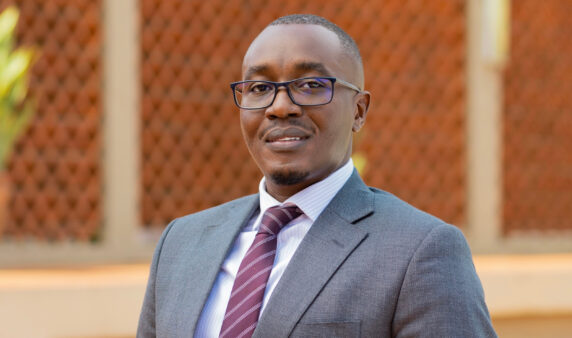
At the heart of the discussion was Geoffrey Waiswa Sajjabi, Chief Commercial Officer at the National Social Security Fund (NSSF), who delivered a compelling keynote that challenged deeply held assumptions about retirement. His message was clear: the longer Ugandans live, the more deliberate they must become about how they save, invest, and plan.
A platform for connection, mentorship and professional growth
For IPPU Ag. CEO, Nicholas Kabanda, the Coffee Connect is not just another industry event—it is a deliberate effort to build a stronger, more connected procurement profession in Uganda.
“A brief about the Coffee Connect… It’s an idea of a platform, a mentorship platform, where we’re all supposed to come together as a procurement fraternity to share ideas, best practices… and get to know each other,” Kabanda explained.
In his remarks, Kabanda framed the initiative as a response to a growing need for collaboration across the profession, particularly as procurement continues to evolve beyond the traditional public sector boundaries. With regulatory reforms and increasing integration between public and private sector procurement, he stressed the importance of building relationships early.
“We need to know everyone within the procurement fraternity… be it a student, be it someone in the public sector or private sector, so that we share a thing or two and understand the challenges we face,” he said.
The Coffee Connect, he noted, is intentionally informal—structured around introductions, interaction, and dialogue rather than rigid presentations. It creates a space where junior professionals can learn from seasoned practitioners, and where practitioners themselves can exchange practical insights drawn from real work environments.
Kabanda also hinted at the broader ambition behind IPPU’s programming—building not just technical competence, but a community of professionals who support each other both professionally and personally.
“Thank you for making time… I know it’s a Friday, and everyone has other plans, but you chose to come and network with your fellow procurement practitioners,” he added.
Teamwork as a professional and personal necessity
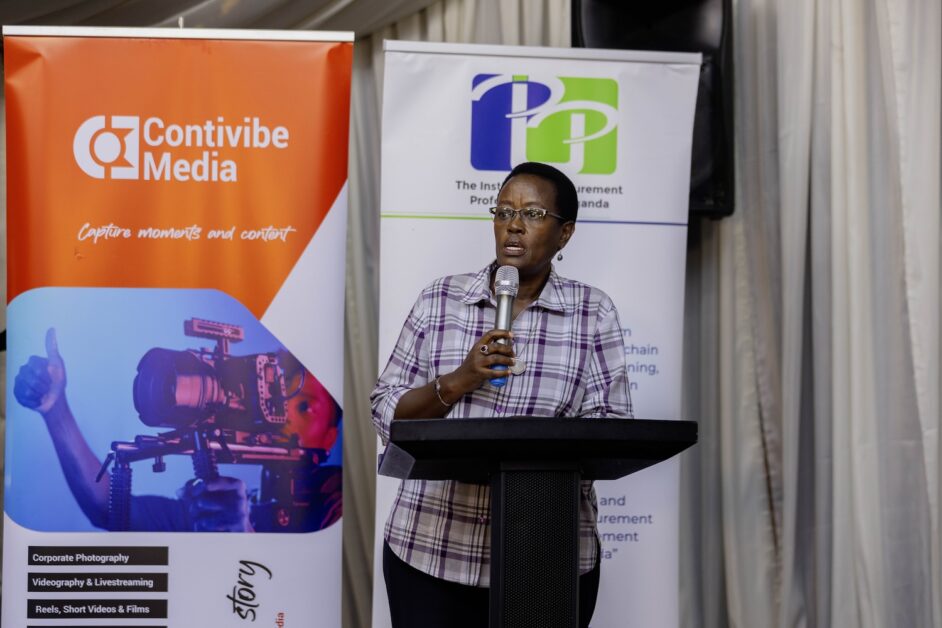
If Kabanda defined the purpose of the platform, Pelly Mugasi, Emeritus Director of Procurement at the Bank of Uganda and Chairperson of the day, anchored the discussion in a foundational principle—teamwork.
“I believe we all know that teamwork is a survival skill… without it, at any level, life is difficult,” Mugasi told the audience.
Drawing from decades of experience in procurement, she emphasised that success in the field is rarely individual. Instead, it depends on how well professionals work within interconnected structures—from user departments to evaluation committees and accounting officers.
“You need a good relationship with the users, with the evaluation committee, with the accounting officer… when the relationship is good, you do things together,” she said.

But Mugasi extended the concept beyond institutional processes to include professional networks and social support systems. In a profession that often faces high scrutiny and pressure, she noted, having a reliable network can be invaluable.
“You never know where God opens the door for you—just stick with each other,” she urged.
She also spoke candidly about the role of professional communities in times of difficulty, referencing instances where colleagues have come together to support one another through legal or financial challenges.
“We have done lots of contributions… collected money, got lawyers, helped each other. We needed that teamwork for survival,” she said.
Her message reinforced a critical point: professional success and resilience are built not only on individual competence, but also on collective strength.
The uncomfortable truth about retirement
It was against this backdrop of community and collaboration that Sajjabi’s keynote took on added weight. While the earlier speakers focused on relationships and professional growth, he turned the conversation inward—toward personal responsibility and financial discipline.
“This topic can be misleading when we say planning for retirement,” Sajjabi began. “People who are 20 or 30 think it doesn’t concern them. But I want to tell you that there is no better time to plan for retirement than when you are still young.”
He introduced the concept of “beginning with the end in mind”, urging professionals to think about their long-term future even as they start their careers.
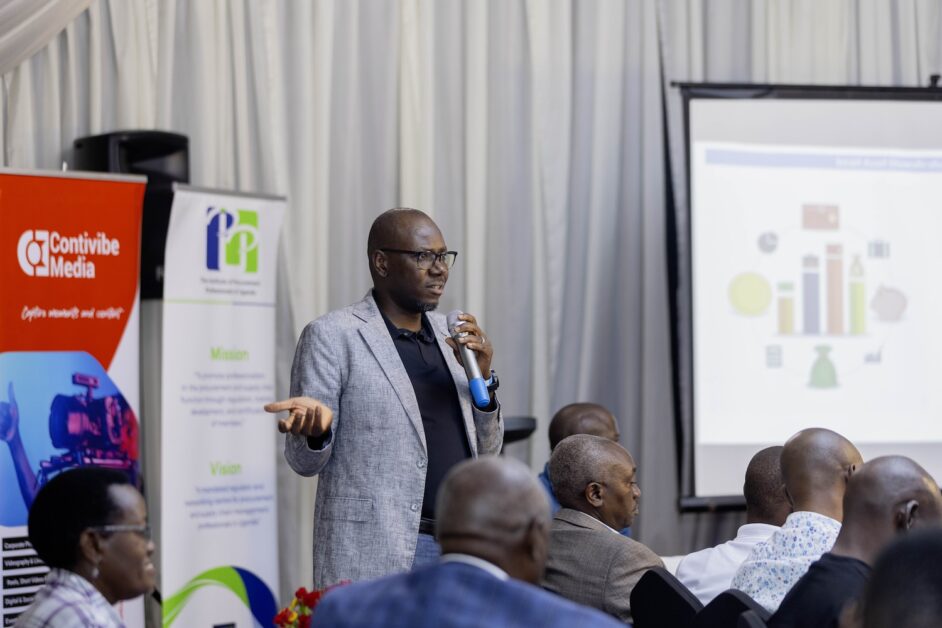
“If I’m getting my first contract, I must be aware that there will be a time when that contract comes to an end,” he said.
Central to his argument was the concept of longevity risk—the risk of living longer than one’s financial resources can sustain.
“What makes it a risk is if you live longer, but you don’t have sufficient income to take care of yourself,” he explained.
With Uganda’s life expectancy now approaching 70 years—and even higher for those who reach retirement age—the implication is clear: retirement is no longer a short phase, but a potentially decades-long financial commitment.
No safety net: a shift in responsibility
Sajjabi dismantled several assumptions that many professionals continue to rely on.
One of these is the belief that children will provide financial support in old age. While acknowledging cultural expectations, he pointed to changing realities.
“It is very unlikely that my own children will financially take care of me… I need to invest better and make more money to take care of myself,” he said.
Related
 Behind Every Step, A Child’s Story: Why Uganda Must Show Up for the 2026 Childhood Cancer Colour Run
He also addressed expectations around government support, citing limited social assistance programs that provide minimal financial relief.
“Never at any one point should you think that government will look after you… ” Your government will not look after you,” he said bluntly.
Even employment, he noted, cannot be relied upon indefinitely. Careers end, contracts expire, and income streams can disappear unexpectedly.
“The best time to plan is not when you have five years left… many times there are things you cannot undo,” he warned.
Lifestyle, culture and financial discipline
Beyond structural realities, Sajjabi identified behavioural patterns that are undermining financial security—particularly lifestyle inflation and social pressure.
As incomes rise, many professionals increase their spending disproportionately, often driven by status and comparison.
“The day your salary increases, your costs increase faster than your salary,” he said.
He also spoke candidly about cultural obligations, including contributions to weddings, funerals, and community events, which can place significant financial strain on individuals.
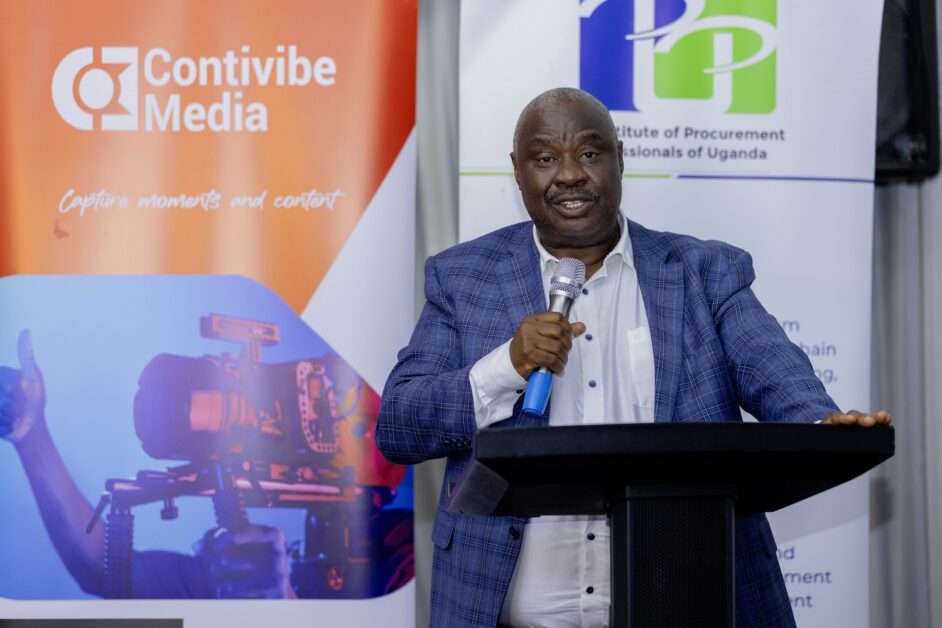
“Never borrow money to contribute… if you are unable to contribute, it is okay,” he advised.
In one of the more relatable moments of his address, he challenged the culture of pledging money that one does not have.
“I do not pledge… I give what I have,” he said, emphasising the importance of financial honesty and discipline.
A practical roadmap for financial security
Despite the stark warnings, Sajjabi offered clear, actionable steps for professionals seeking to secure their financial future.
He emphasised the importance of starting early, noting that compounding allows even small savings to grow significantly over time.
“Nothing beats people who begin saving early… even interest earns interest,” he said.
He also encouraged professionals to increase their contributions beyond mandatory levels, diversify their investments, and build emergency funds to reduce reliance on debt.
“Don’t put all your eggs in one basket,” he advised.
Crucially, he highlighted the need to focus on cash flow rather than just asset accumulation, noting that liquidity becomes critical in retirement.
“There is nothing as useless as extra space in a house when you retire… what you need is income,” he said.
As the session drew to a close, Sajjabi offered a more optimistic perspective—retirement, he said, can be the most fulfilling phase of life if properly planned.
“Retirement can be the best time of your life… but it doesn’t happen accidentally. It requires deliberate choices,” he concluded.
Rebuilding IPPU and Resetting the Soul of Procurement
For Isaac Kyaligonza, Commissioner for Procurement Policy and Management at the Ministry of Finance, the evolution of the Institute of Procurement Professionals of Uganda (IPPU) reflects a broader shift that the profession itself must undergo. From its beginnings in 2008, he noted that IPPU has grown beyond academic discussions into a more practical, experience-driven platform that equips professionals with real-world insights.
“We have moved from presentations that are academic to… non-academic subjects that really empower and build a cadre,” he said.
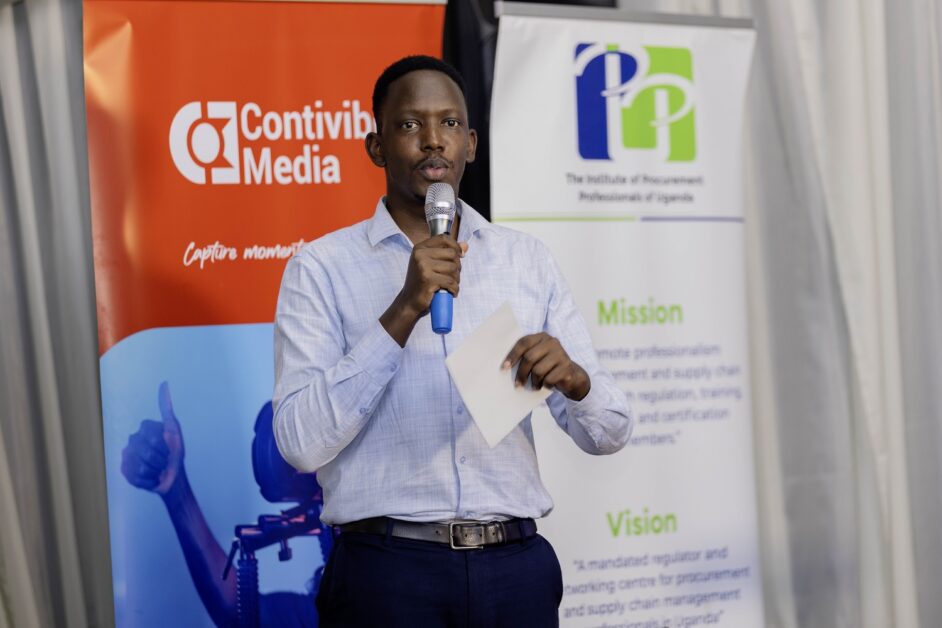
But for Kyaligonza, this progress must now translate into stronger participation and ownership. He called on members to actively grow the community, urging each attendee to bring others into the fold while committing institutional support from the Ministry of Finance to sustain the initiative. He also took a moment to commend the IPPU Secretariat for its growing impact, applauding the team led by Acting Executive Secretary Nicholas Kabanda alongside Stanley Nuwagaba and Julius Tugume Rutatina for “doing a big job” in mobilising and organising the fraternity.
Beyond community building, however, his most pointed message focused on integrity. He challenged procurement professionals to confront corruption at its roots, not just within systems, but within society itself.
“Corruption must be fought right from homes, families, and society,” he said, adding that the profession must be “baptised” into a corruption-free system.
At the same time, he criticised the increasing complexity of procurement processes, arguing that the profession has become overly legalistic and disconnected from everyday users. What is needed, he said, are professionals who can innovate, simplify processes, and make procurement accessible.
“We need procurement that the common person understands… not intimidating suppliers with heavy legalese.”
Ultimately, Kyaligonza’s call is for a profession anchored on integrity, driven by innovation, and strengthened by collective purpose.