
When you joined Ecobank Uganda in September 2021, what was the mandate given to you, and how did you envision transforming the bank? Looking back, how has that initial vision evolved over the past three years?
It’s actually quite interesting to realise that it’s already three years down the road—I’m now in my fourth year at the bank. When I joined in 2021, the brief was very clear: we had to turn around the bank, and we had to do it fast. There was no luxury of time.
Coming in with close to 20 years of experience—and having worked for the two largest banks in Uganda—I already had a good grasp of the market, the competitive landscape, and the industry as a whole. So, top on my agenda was to reposition the bank—to redefine it as a high-performing, customer-centric institution.
Given our size, I often compare Ecobank Uganda to a boutique setup—a niche player. And when you’re running a boutique or niche operation, the one thing you simply can’t compromise on is the customer experience. It’s not just about service delivery—it’s about how people feel when they see your brand, how they feel when they interact with it. That emotional connection matters deeply, and for me, it was critical that we step back and start painting a new picture of the bank—the bank we wanted to become, and the bank we wanted our customers, the market, the regulator, and our shareholders to believe in again.
Ecobank Uganda had faced a number of challenges prior to my joining, largely due to multiple leadership transitions and the inherent difficulty of building from scratch. Unlike some other players, we didn’t acquire an existing bank or a portfolio—we built this institution from the ground up. And as you can imagine, that kind of greenfield operation comes with a high level of investment and risk. For 13 years, the bank struggled with limited market visibility, and the performance mirrored those struggles.
That said, I saw a lot of untapped opportunity. The potential was there, within our Pan-African foundation. Ecobank Uganda is part of a large and well-established banking group that operates in 33 countries commercially, and when you add Ethiopia and South Africa, that number goes up to 35. In at least seven markets across the continent, the group ranks among the top three banks. That’s significant. I saw immense value in this foundation, the digital investments already made, and in the team, some of whom had been around for a while and simply needed the right direction and support to truly thrive.
So, my immediate focus was to stabilise the bank. That meant building a solid, secure foundation, and the starting point for that is governance. Governance is what a bank stands on; it underpins everything. We had to strengthen it.
In parallel, we needed to enhance our approach to risk management, which, after all, is the essence of banking. We also had to streamline operations, making sure our internal processes were clear, lean, and resilient, but also intuitive and user-friendly for our staff and customers. Our systems had to be reliable, and we needed a culture that would hold people accountable while inspiring them to deliver.
Interestingly, the bank already had a value system in place—what we call RACEIT: Respect, Accountability, Customer Centricity, Excellence, Integrity, and Teamwork. These values define what it means to be an Ecobanker. They guide how we behave, how we work together, how we support one another, and how we deliver as a team. That framework was already there; my role was to breathe life into it and embed it across the organisation.
Looking back now, I believe we’ve done just that. We’ve built a strong foundation. And with that in place, I see this moment as a launchpad—one from which the bank is now ready to accelerate. We are far better positioned today than we were three years ago. Everything we lacked then—governance, team cohesion, strategic clarity, systems stability—we now have. And that gives me confidence in the growth journey ahead.
In your first year, the focus was clearly on stabilising operations and laying a strong foundation. From a leadership perspective, what were some of the most pressing internal challenges you encountered, and how did you go about addressing them?
I think I’ll speak to two main challenges. The first, and probably the biggest, was the leadership vacuum I found when I joined—this was right at the tail end of COVID-19. As you’ll recall, the lockdown started in March 2020, and I came on board towards the end of 2021. While my appointment was effective September 2021, I formally took over in November after a brief handover period.
Because of that prolonged period of disruption during COVID—and frankly, the bank hadn’t been performing well for a while—we had lost a number of strong, capable people, particularly in critical roles like business. Several top management positions had been vacant for quite a long time, and that created a serious leadership gap. In fact, there had been no substantive Managing Director for almost a year before I joined—just someone acting in the role.
Beyond that, many of the executive roles, especially in business and other critical functions, were either vacant or being held by people in acting capacity. So, essentially, there was no real leadership team in place. Even if a strategy existed, there was no one to drive it, and that naturally affected execution and slowed down decision-making. Most decisions had to be escalated beyond Uganda, which wasn’t sustainable.

So for me, the work was clearly cut out. I had to go to the market and prioritise sourcing credible, experienced professionals with a strong track record and deep market knowledge. And that’s exactly what we did. We brought in good people, built a diverse and well-rounded team, with a mix of backgrounds, expertise, and strong goodwill in the industry. You can actually see the impact of that team on our performance today. Filling those gaps was absolutely critical to restoring direction, strengthening execution, and driving the bank’s performance.
The second challenge was around market visibility—or rather, the lack of it. Despite being in Uganda for over 13 years and being part of a large and respected Pan-African banking group, Ecobank wasn’t top of mind for most people. We were present, but not necessarily known or appreciated for who we are and what we do.
So my second priority became lifting the brand, elevating Ecobank’s visibility, and helping people reconnect with our identity. It was about repositioning the bank in the minds of our stakeholders: customers, communities, regulators, and partners. We needed to tell our story better—who we are, what we stand for, and how we contribute to the communities in which we operate.
So, yes, those were the two major hurdles I had to face head-on: rebuilding leadership from within and raising the bank’s profile externally. Both were essential to laying the foundation for the turnaround we’ve seen.
Ecobank Uganda has just posted its highest profit in over a decade—truly a historic performance. Beyond the foundational decisions you’ve already touched on, what would you say were the most critical drivers of this transformation? What specific actions or choices made the biggest difference in delivering this kind of result?
The 2024 performance didn’t just happen in isolation—it was the result of work that started much earlier. I always like to take it back to 2022, because that’s when we really began laying the groundwork. One of the first things we did was define our strategy—who we were, what we wanted to be known for, and which spaces we wanted to play in. We needed that clarity so that, if someone described Ecobank Uganda, they would know exactly what we stood for.
We started by repositioning the brand, with a clear focus on two core segments: local and regional corporates, and the emerging affluent. That direction was anchored in our Pan-African presence. We’re part of a large banking group operating in 33 countries—35 if you include South Africa and Ethiopia. We’re number one in Ghana and Senegal, number four in Nigeria, and strong across the continent, especially in sectors like oil and gas. That gives us real leverage when clients move across borders. So, we saw an opportunity to become a natural financial partner for regional trade players and corporates doing cross-border business.
The second key focus was on the emerging affluent. Uganda’s middle class has been growing steadily, and by late 2023 or early 2024, we had formally crossed into middle-income status. That opened up a window. Ugandans, by nature, love quality—they have refined tastes and preferences. And yet, this segment hadn’t really been captured in the market. Most banks were either serving SMEs or the upper-end private banking clientele. But in between, there was this missing middle—what I call the emerging affluent. So, we went for that space, knowing we had the digital tools, regional network, and customer propositions to serve it well.
Now, if you look at the structure of Uganda’s banking sector, there are roughly three categories of banks, regardless of how the regulator classifies them. There are the legacy players like Standard Chartered, Barclays (now Absa), and Stanbic, who have been here for 50–100 years. Then there’s a group of large, aggressive banks that came in with full force. And finally, there’s our category—those of us who entered the market around 2008–2009 when the central bank opened up space for regional banks. That middle category has, interestingly, been growing faster than the top tier in recent years.
Most of us in this space came in with an SME focus. But not everyone can be SME-focused. The top banks are firmly entrenched in corporate and consumer banking, and the middle segment had been left wide open. We saw the opportunity to serve both the emerging affluent and the corporate ecosystem, including suppliers and partners, through a strong commercial banking arm. And because we’re part of a Pan-African group, we already had ready-made propositions, especially for youth, payments, and digital-led services.
Once the strategy was clearly defined and endorsed by the board, we launched a major brand campaign—Go For More—to reposition the bank in the market. That was in 2022 and 2023, and it set the tone for everything that followed.
The next step was people. We asked: who do we need to make this strategy happen? We brought in a solid blend of talent from different banks, different backgrounds, and different specialities. When we combined them with the internal team we already had, it made for a very strong and well-rounded leadership team.
The third focus was culture. With strategy and leadership in place, we needed to ensure that delivery would happen consistently and sustainably. So, we went back to our values—RACEIT (Respect, Accountability, Customer Centricity, Excellence, Integrity, Teamwork)—and refreshed them. We created what we called people clinics, where we broke down the strategy into smaller, more digestible pieces and cascaded it down to every level of the bank. The idea was that no one would be left behind, whether they sat at our head office on Kafu Road or worked in a branch at Forest Mall. Everyone had to understand where we were going and why.
That alignment created buy-in. The strategy stopped being management’s alone—it became everyone’s. And when people own the vision, execution becomes much easier.
The fourth area was our systems and processes. We invested in making them lean, robust, and customer-focused. As a smaller bank, we had the advantage of agility, and we leaned into that. One of our goals was to be nimble, bold, and competitive. And I think you’ve started to see that translate into real wins. We’re now taking on—and winning—major mandates from clients, including government. That tells me two things: one, our strategy is working; and two, the market is ready to bet on us.
And I must mention the board. I’ve been fortunate to work with a young, dynamic, and very growth-oriented board. Many are in their 40s—some even younger than me—but they are incredibly supportive and clear on the direction we’re taking. That kind of backing has been invaluable.
We’ve also worked hard to build confidence, not just with our clients, but with our shareholders, the regulator, and the broader market. And today, I hear people say, we see Ecobank. And I tell them, Don’t just see us—feel us. That’s the energy we’ve created.
So, yes, the 2024 performance was historic, but it was built on years of work. From the brand to the people, to the systems, to the culture—everything came together. Our client profile has completely shifted. We’re not just working with local and regional corporations, we’re now attracting global clients, thanks to the confidence we’ve built and the relationships we’ve cultivated. We have a fully-fledged bank in Paris—Ecobank International—and offices in London and Dubai. That gives us access to global flows, and we’re also tapping into those.
So for me, the success we saw in 2024 is simply the manifestation of all the foundational work we began in 2022.
From cleaning up the loan book to growing net lending and deposits, Ecobank’s performance has been both strong and steady. Given the pressure to grow, how did you strike the right balance between growth and risk? What was your strategy to ensure that the bank grew sustainably without running too fast and risking instability?
Interestingly, in banking, no matter how much pressure there is to grow, you always have to be cautious. Banking, by nature, comes with inherent risk, so even when you’re ambitious, you must be disciplined.
For us, the strategy was very clear: grow with discipline. That’s something we were intentional about from the very beginning. You’ll notice we didn’t rush out aggressively in 2022 or even 2023. We knew it was important to take our time and make sure the fundamentals were right before scaling.
In banking, everything sits on policies, procedures and processes. So, we focused on strengthening the quality of our credit origination, making sure we brought in the right clients, the right business, and that we could grow with them sustainably. Whether it was on the consumer side, commercial, or corporate, our emphasis was on quality, not just quantity.

We also put a lot of effort into credit governance—enhancing our controls, embedding early warning mechanisms, and ensuring we had proper visibility into client performance. In addition, we invested heavily in client-centric solutions, especially in payments and cash management, which gave us healthier inflows and improved customer stickiness.
As a result, our balance sheet today looks strong, not just in terms of deposits and liquidity, which have grown steadily, but also in the quality of our loan book. Lending has grown, yes—but in a very structured and measured way. That has been key to building the kind of sustainable growth you’re seeing now.
We’re now approaching the halfway mark of the year. While I understand you may not be able to comment in detail on unaudited figures, do you see the growth momentum from 2024 being sustained so far into 2025?
Yes, the trajectory is continuing. We’re now well into the second quarter of the year, and I must say we exited 2024 on a strong note. In banking, how you exit one year and enter the next is critical—it sets the momentum.
Thankfully, both our exit and entry were strong, and that has created solid momentum going into 2025. So far, we’re seeing encouraging growth, and if all goes well—touch wood—we’re on track for an even better year ahead.
Transforming an organisation often requires securing buy-in from many stakeholders, but perhaps the most difficult part is getting internal alignment. People tend to be comfortable with the status quo. What was your experience like in building internal buy-in for the turnaround, particularly from key departments such as credit, operations, and business development?
Okay, so first of all, when I came to the bank, I was an outsider. I had not been part of Ecobank for the past 13 years—I came in from outside. But I must credit the team for one thing—for their quick support. And for me, I think being Ugandan—probably being the first Ugandan and, you know, woman, to take up this role—must have created some level of curiosity. But they quite warmed up to me.
And for me, it was simple. The one thing I was very clear about was that, you see, I’m not a magician. I keep telling the team, I’m not a magician, and I’m not Jesus—that I’ve come to change the world. So it was very clear from the beginning that this was going to be shared responsibility, right? It was for all of us. It was an opportunity that had been given to us—as Ugandans—to run this bank, and not just run it, but change it and transform it. So the success wasn’t going to be mine alone—it was going to be a shared success.
So, for me, I anchored everything I did on shared purpose and transparency. I keep telling them, Don’t tire from my communication, because it’s communicate, communicate, communicate. And the second thing I kept saying was: clarity, clarity, clarity. That helped.
I communicated openly and frequently—aligning everyone around the idea of one bank, one goal. That we will win this together, or we won’t win at all. There’s no win-lose; it’s win-win or lose-lose. That one bank, one goal mindset is what I focused on.
We then introduced very structured performance discussions and quarterly town halls, where we shared and communicated our performance as a team. Within those sessions, we celebrated small wins, which is very, very important. And everyone was accountable. Really—everyone, across the board. Whether you’re in operations, in service, in sales, or in risk, it’s a standard approach when it comes to delivery.
That helped. It created a sense of belief, discipline, and momentum. Especially when people started to see that, you know, we were doing well. When I had just come in, it was probably still just a story to some people, something they had heard. But when we started to win, and this winning became a big deal for all of us, I saw the buy-in. And the team adapted quite fast.
And I think today, I can actually take a holiday and be confident that not much will break, which is very important for me.
I also tell them that I’ve been lucky enough, as a leader, to work with very good leaders who believed in me, and that belief is what I pursue. It’s my prayer that I build succession within. Because now, no one should come from outside to tell us what to do. Everyone knows what we are doing—because it is transparent, it is communicated, it is known, and it is owned by everybody.
That has helped—whether you’re in credit, operations, or business development.
Every time someone talks about Ecobank, one thing that consistently comes up is how strong your digital infrastructure is. Let’s talk about that. How have your technology platforms—especially your investments in digital—contributed to customer growth, operational efficiency, and overall profitability?
It’s actually interesting—and I hope you’ve downloaded the app—but let me tell you about my experience when I joined. My first question was: where has this been? How come nobody knows about it? Why is this such a well-kept secret?
We genuinely have one of the best mobile banking applications in this country, and I’ll bet my money on that. It’s extremely user-friendly, very functional in terms of capabilities, and just seamless to use. I’ve been here for close to four years now, and I hardly walk into a branch—because I can do almost everything, absolutely everything, on the app.
If anyone here has an Ecobank number—whether in Ghana, Nigeria, or Rwanda—I can send them money right now, instantly. They’ll receive it either on their phone or as a code to withdraw at any Ecobank branch where we are present. It’s immediate.
The app works both locally and across borders. You can transfer funds internally or externally, transact with mobile money platforms, pay bills, pay school fees—you name it. And even more exciting, especially for young people, is that you can do things like split a bill. You know how we go out and go Dutch? With the Ecobank app, you can actually split payments with friends. So what else do you need?

Another really cool feature is Rafiki, our virtual banking assistant—‘Rafiki’ means ‘friend’ in Swahili. You can chat with Rafiki right within your WhatsApp or even while scrolling TikTok. Just say, Hi, Rafiki, and the assistant will help you with things like checking your balance or guiding you through a transaction.
For example, I can just ask, What’s my balance?—No need to go to an ATM or branch. Rafiki will confirm your identity and give you your account details. It detects multiple accounts, too, so you just select which one, and it responds instantly.
There’s also the Ecobank Africa feature within the app—it allows you to send money across any of our 33 African markets, with the exchange rate automatically calculated and applied in real time. No paperwork, no forms, no branch visit—you do it all from your phone, including the foreign exchange conversion.
And that’s just for individuals. We also have Ecobank Online, which is equally superb for personal banking. Then, for our business clients, we have Omni—a robust platform with two variations: Omni Lite for commercial clients and Omni Plus for corporates. It honestly rivals the best in the market—if not the best.
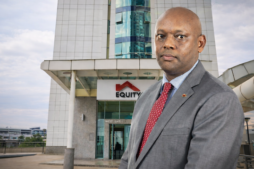 6 Ugandans Arrested in Connection to USD 3.4 Mn Equity Bank Rwanda Digital Heist
These platforms have been a game changer for us. They’ve allowed us to acquire and serve customers much faster, more efficiently, and with significantly reduced transaction costs—for both the bank and the customer. More importantly, they’ve helped us expand our reach without needing to add more physical branches.
I find the platforms not just efficient, but also very intuitive and customer-friendly. They’re exactly what a modern bank should offer.
Listening to your transformation story, there’s a clear emphasis on governance, operational discipline, and customer-centricity. Do these reflect your personal leadership style? Were they values you brought with you from the start, or did they evolve in response to what you found on the ground at Ecobank?
Before I even get into my leadership style, I think it’s important to emphasise that I’m a banker, truly a banker through and through. It’s the only thing I’ve known since school. It’s the only thing I’ve done. So I’d call myself a banker, 311—it’s what I’ve done from day one.
My banking experience is actually a blend of what I would call the traditional banker becoming modern. But there are certain things that don’t change about banking. So when you talk about governance, operational discipline, and customer centricity, like you’ve said, do they define my leadership style? Yes… and no. Yes, in the sense that these values are part of who I am as a person. I believe in discipline in everything I do. But also, as a banker, if you’re not disciplined, you will fail flat. So that discipline is both personal and professional.
For me, these values reflect what I call anchored agility, which simply means leading with values. It’s who you really are. And I think especially for us as women, we tend to bring our whole selves—100%—into whatever we do. That’s something I’ve always held onto.
But while that grounding is important, I also believe in staying adaptable and responsive. Governance, for example, gives you credibility—it grounds your leadership. Discipline gives you structure—you do things a certain way, consistently. Customer centricity gives you purpose. It’s why we do what we do.
Having worked in consumer banking for a long time, I’ve seen what this means on a personal level. Every time I supported a customer to buy their first piece of land, it fulfilled me. Every time I helped a couple get their first home, or helped someone drive their first car—that emotional connection, being the one giving them the key to that milestone—it gave me deep purpose. Even now, when we support a customer project, or a government project, and you see it executed, you can say: “I was part of that.” That really matters.
So yes, these things—governance, discipline, customer focus—they shape how I lead. I try to set a clear tone around them because they shape how we run the business. But more importantly, they help build something that’s sustainable. You don’t want to build a business, only for it to disappear tomorrow.
And finally, I believe in listening. Listening intently. Listening actively. Empowering teams, but also holding people accountable. That’s how we grow. That’s how we lead. And that’s how we build a business that lasts.
As a leader carrying the weight of an institution, what gives you peace of mind at the end of the day? What makes you sleep well at night?
What makes me sleep well at night—of course, beyond knowing that my family is well and healthy, because that’s very, very central to who I am—is the knowledge that I’m building a sustainable business. That I’m supporting and growing other businesses and that I’ve created an environment where teams can show up, be their best, grow, and thrive. I’ve seen it in my past life—how far people can go when given the right space and support. It’s so heartwarming to look back and see how the clients, the businesses, and the teams I’ve worked with have grown. That brings me real joy.
Beyond banking, Ecobank has made significant investments in areas like health, education, and gender empowerment. I know you personally have a strong passion for causes like malaria, which deeply affect our continent. Why is social impact such an important part of your strategy? What drives your commitment to these specific areas—and why do you choose to lead with impact when you could easily focus solely on the bottom line?
So, as a bank—and across the Ecobank Group—we’re very intentional about our focus areas for impact. These include education, financial inclusion (especially as we go digital), and health. I’ll speak about those three.
First, we believe that our communities are our customers, and their progress directly fuels our growth. So for us, it’s not even just about giving back—it’s about responsibility. True, meaningful responsibility. It’s about sustainability—not just of our business, but of the communities that support it. For me, banking goes beyond transactions. It should be a platform for real impact.
Take women, for example. We’ve built a whole proposition called Ellevate—inspired by the French word ‘elle’, meaning ‘she’—which focuses on financially empowering women. Because we know when you support women, the ripple effect goes far beyond the individual—it touches families, communities, and society at large. We also run youth mentorship programs and, in Uganda specifically, we’ve focused on mental health, especially post-COVID.
On health, I’m particularly passionate about malaria. We partnered with Malaria Free Uganda through a Group initiative called Zero Malaria Business Leadership. The goal is to drive awareness, mobilise resources, and educate people on proper mosquito net usage. You’d be surprised—some still use them as fishing nets or don’t see the need to sleep under one. So we’re working closely with the National Malaria Control Division under the Ministry of Health to change that narrative.
I was actually appointed Vice Chair of Malaria Free Uganda, and under that role, we’ve brought in other corporates and even engaged Parliament on advocacy. As part of that commitment, in early 2024, we supported the Uganda Blood Transfusion Services (UBTS) by donating essential equipment, two double-door refrigerators, four platelet agitators, and four floor preparative centrifuges —worth about UGX 1.3 billion.

On the education front, we’ve partnered with the Uganda Red Cross Society to support young girls who miss school due to a lack of menstrual hygiene products. It’s heartbreaking that some still use cloth or even grass because they can’t afford sanitary pads. Many miss four days a month, every term—that’s a huge academic disadvantage, especially in refugee camps. The Red Cross has set up a factory to produce reusable pads, and we’ve joined their ‘Keep a Girl in School’ initiative. Just UGX 20,000 can provide a girl with a year’s supply. Imagine—UGX 100 million can keep 5,000 girls in school for an entire year. We’re mobilising support through our staff, customers, and wider networks to make this happen.
Finally, we continue to use our branches and frontline staff to educate youth and communities on financial literacy and inclusion. That kind of long-term, grassroots impact is what drives us.
Looking ahead, what would you say are the top three strategic priorities for Ecobank Uganda over the next two to three years? Are you planning to consolidate the gains made so far, or should we expect a shift in focus to new areas of growth?
The next phase is moving from stability to real, ambitious growth. Over the last three years, our vision has evolved into building a nimble, bold, and competitive bank—one that is not just stable, but truly ambitious, digitally enabled, and deeply committed to delivering value for our customers, shareholders, and the community.
When I look at where we are today, especially over the last four months, it’s clear that the hard work we’ve put in over the last three years is bearing fruit. We’ve started to win unprecedented relationships, not just deals, but real confidence from the market. We’re now being trusted by large, credible clients—because of the visibility we’ve built, the stability we’ve achieved, and the fact that we are part of a strong global network with a pan-African and international footprint.
To me, that confirms two things: first, that our strategy is working; and second, that the market is now willing to bet on us. That trust is invaluable.
Going forward, we need to sustain and build on the stability we’ve created within the team. Longevity and institutional vintage are key because banking is built on trust, and trust isn’t something you switch on and off. It takes time and consistency.
We’re making great strides across the different segments. In consumer banking, we’ve now landed. We’re training and continuously developing quality relationship managers who can confidently advise customers on not just day-to-day banking but on broader issues like private banking and wealth.
In the commercial space, especially with SMEs, we’ve brought on board some of the best talent in the market. And we’re taking a customer-led approach—outside-in, not inside-out. We’re going out to the market, listening to customers, and co-creating solutions with them. It’s not about building based on what we think but based on what they need.
I also have to say our board has been very agile, young, energised, growth-oriented, and incredibly supportive. The culture within the bank is strengthening. Our corporate strategy is winning us big mandates, and we’re beginning to see the results.
Honestly, I’m proud of how far we’ve come—and I’m excited about the road ahead.
In this journey of nearly four years, what are some of the key personal leadership lessons you’ve learned? Especially since this was your first time serving as CEO of a bank, what insights would you share with other business leaders who may be in similar turnaround situations or just starting out with a fresh mandate?
You know, just the other day I was reflecting on this journey and thinking—this is my first time as Managing Director. And to be honest, there’s no manual. Regardless of how many books are written about leadership, nothing truly prepares you for it. You learn on the job.
This experience has taught me a number of things. First is clarity—clarity, clarity, clarity. As a leader, you must be clear about your vision. Where are you taking people? That clarity of vision, mission, and strategy is absolutely critical.
Second, it’s never easy. Your level of tenacity must be out of this world. Your skin has to be thicker than a crocodile’s. Resilience is key.
And then, you’ve got to be people-centric. You can have the best strategy in the world, you can be a superstar, but if you’re a lone star, you’ll go nowhere. Without people, there is no journey, there is no impact, there is no transformation. That intentionality around people is non-negotiable.
You also have to be adaptable, because we operate in an ever-evolving world. You’re dealing with customers, shareholders, regulators, and your team. Being adaptable is just as important as strategic foresight.
Another big one for me: you have to lead from the front. If you’re leading hunters, you must be willing to lay the bets/traps for them. You can’t lead from the back. You have to empathise, understand what people are dealing with, be in the trenches with them, because that’s how you earn trust and learn how to support effectively.
Early on, you don’t have the luxury to step back and simply direct. You haven’t tested the waters yet yourself. So you need to make tough decisions when necessary—hard as they may be—but never lose sight of people.
You must also listen deeply to your teams, to your customers, to the market. Your market intel has to be razor-sharp. Keep your ear to the ground.
Another critical one is the ability to course-correct without losing sight of the bigger picture. Some lessons only come through doing. You’ll make mistakes, but keep adjusting, keep moving forward.
If I were to offer one piece of advice to any first-time MD or leader walking into a turnaround, I’d say: always start with your ‘why.’ That word—why—is incredibly powerful. Even children ask it first: “Why?” If people don’t understand why they’re doing what they’re doing, you’ll lose them. People don’t rally around numbers. They rally around meaning.
And then there’s communication. You have to communicate consistently, constantly, and honestly. People talk about authenticity, and for me, authenticity is that alignment of your head, heart, hands, and feet. You do what you say and say what you mean.
Empower your people. Yes, strategy may be shaped in boardrooms, but execution happens on the ground. You have to equip your teams, especially those interfacing with customers. Trust them. Some will disappoint, yes—but not everyone.
And finally, keep a long-term view, but act decisively in the short term. It’s that balance that builds momentum. And through all of it, you must stay grounded. Even when the ground shakes—and it will—you must find your centre and stay anchored.
While it’s important to stay grounded and centred, what I would add, finally, for me, is the power of humility and empathy. And one critical thing that becomes even more powerful as we grow in leadership is emotional intelligence. Honestly, emotional intelligence, for me, matters more than even technical brilliance. Your IQ will get you to a certain level, yes, but what really helps you break through and sustain that success is your level of emotional intelligence.
You’ve talked a lot about people—and rightly so. But nowadays, ‘people’ seem to be increasingly segmented. There’s the broader team, and then there’s Gen Z, who often bring a very different set of expectations about how they want to be led, managed, and engaged. I’m sure you have a number of young people on your team—what’s been your experience working with them, and how do you balance managing across generations while still driving results as one team?
First of all, I mean, some of us didn’t have the luxury or the opportunity to even be labelled. I don’t know whether we’re Gen X or some generation with no name at all. But the first thing I’ll say is—I love the Gen Zs. I really do. I just love the fact that they’ve destabilised everything. They’ve completely put us off balance, in how we used to do things, in what we believed to be the “right” way of doing things. It’s not how they believe things should be done today.
Where we believed in an 8-to-5, they don’t. They focus on output, on value. And I think that’s not a bad thing. So for me, it’s really about creating an environment where they can thrive, grow, and contribute. I’ve been lucky—back in my previous life, I worked on an innovation hub where we had this team of young people, full of ideas and energy. So it’s something I’ve experienced firsthand. And I’ve seen how brilliant they are when you just let them be.
Of course, in a setup like ours, we must have guardrails—there are dos and don’ts, and some things you just can’t compromise. But even within that, you allow them to apply themselves, and it’s incredible what they can do.
Just the other day, we needed to do a competitor market analysis. I gave it to two young ladies, and by the next day, it was done! I looked at it and thought, “Wow.” They said, “Oh, we used Power BI… just played around with the numbers.” And I was blown away. So the value they bring is immense.

It’s important to shape them into your culture, yes, but don’t let them lose themselves in the process. I’ve seen this work. Most of the brilliant people I’ve worked with—both here and in my past life—were young men and women. And today, many of them are doing fantastic work.
So I honestly think they teach us just as much as we teach them. It’s a two-way street—we are learning from each other. And for me, they really keep us going, keep us thinking, and yes, keep us young.
I’m sure you know this—there’s often an unsaid pressure that comes with leadership. People are watching, judging, and expecting. So I’m curious: how do you stay grounded? How do you organise yourself as a person and a leader? For instance, how do you give or receive hard feedback and still sleep at night? In your world, how do you navigate that pressure? What are some of your personal survival hacks?
First of all, in leadership, one thing I’m very clear about is that it’s not a popularity contest. I’m not here to be liked. I’m here to do the right thing. My approach has always been to bring people along as much as possible, to empathise, to extend grace—sometimes even beyond my name. But ultimately, I’ve learned that what helps me sleep at night is saying what I need to say—unflinchingly. I remove myself from the emotion of the moment. It’s never personal. It’s about what we have to do. That honesty—that clarity—is what keeps me from tossing and turning in bed.
I also surround myself with people who anchor me. I have mentors—like the MD of Ecobank Tanzania, a very experienced leader who’s been at it for more than a decade. I bounce ideas off him, off my board, off my personal support system. Sometimes we agree, sometimes we don’t—but I value the counsel. At the end of the day, my filter is: is it the right thing? Would I do it again? And if the answer is yes, then I’m at peace.
It’s really about conscience. If my conscience is clear, then I have no problem at all. People may say, “Oh, that MD, that lady…” and that’s fine. It’s not easy being a leader—especially not as a woman—but I’ve learned to compartmentalise. When it’s time to move, we move. When it’s time to do the right thing, we do it—over and over again. That’s what keeps me grounded. Keeps me sane.
Unless there’s something else you feel we’ve left out, I think I’ve asked everything I needed to. But is there anything you’d like to add or leave us with as a final thought?
Well, for me, I’ll just say this: as a bank and as a team, we find ourselves in a very good place. We’ve been fortunate to receive strong market goodwill, and more importantly, we are deeply committed—not just to transforming Ecobank Uganda, but to reimagining how banking is delivered in this market.
Banking is an interesting thing. I always say, your banker is as important as your doctor or your lawyer. Think about it—your doctor is the custodian of your health; your lawyer holds your deepest truths, even when you’ve done wrong, because they need to defend you. Your banker, on the other hand, knows your financial life—your ambitions, your fears, your risks, and your responsibilities. That’s a sacred space, and we don’t take that trust lightly.
So what I would really love to see is that we, as Ecobank, become part of the conversations at people’s breakfast tables. When families sit and talk about which bank they trust, we want to be one of those names that naturally come up. And that doesn’t happen by accident. It takes work—consistent work. It takes the right customer propositions, the right relationship model, and an exceptional client experience.
We’re aware of the task ahead. It may sound simple, but it’s a big responsibility—building trust, building confidence, and building a bank that people can count on. And we’re here for that.

