PostBank in 2020 posted a better-than-expected performance, especially considering the impact of the pandemic on the economy. We have now crossed the first half of 2021, into the second half— how is the year is progressing for PostBank? Are you on course with the 2021 agenda?
The year has been challenging, not just for PostBank but for the industry and the economy in general due to the effects of COVID-19 lockdown. A lot of time and effort has been spent in supporting our customers to ride through the tough times.
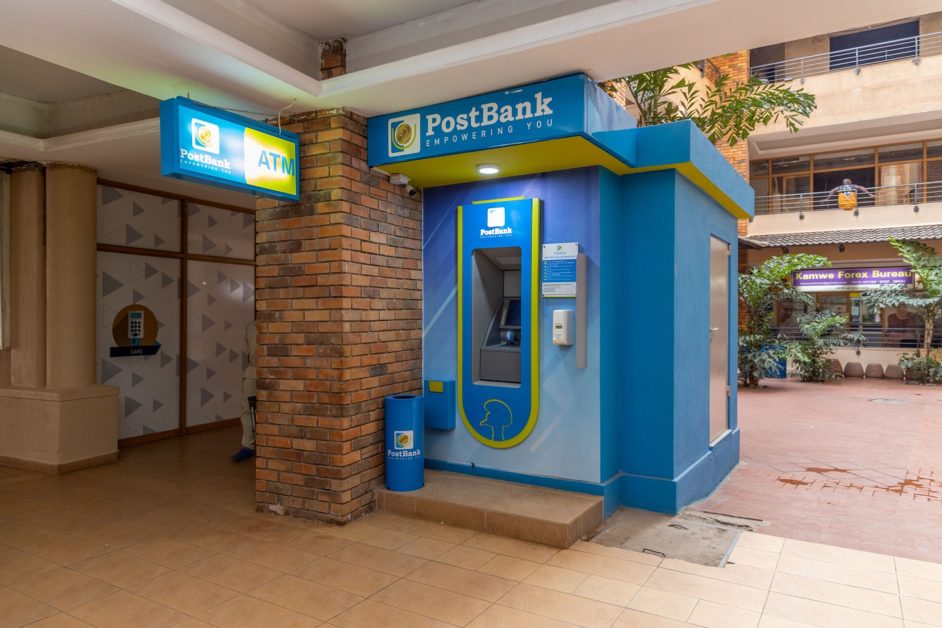
However, the bank has remained firmly focused on its 2021 agenda which includes finalizing its restructuring process that is now 100% complete, expansion of its branch network with Rushere, Butogota, Kamdini, Forest Mall that are now operational with 3 other new branches in the pipeline, upgrading its core banking system and ATM switch, updating the ATM infrastructure (already 24 new smart ATMs with recycling capability have been installed and the remaining ATMs shall be replaced early next year. A multilingual contact centre that was rolled out earlier in the year.
The pandemic has been disruptive, but we remain committed to building the foundation that will drive seamless service to our customers.
All the above initiatives are part of our transformation journey aimed at achieving the bank’s long-term mission “To offer affordable and sustainable financial services that drive financial inclusion for social-economic development.”
Previously the bank has reiterated its digital agenda to delivering an excellent customer experience, but also remain lean, efficient, and profitable. How far are you progressing on the planned digital investments?
The bank has made significant progress with the planned digital investments since the inception of our first-ever digital banking campaign dubbed Beyi Powa in October 2020.
In only 12 months, about 60% of our customer base are using online channels – PostApp, PostMobile, PostOnline and ATMs to conveniently transact as opposed to the traditional brick and mortar.
We are confident that in no time, our customers will not have to come to the banking halls to access services/products that can be accessed from anywhere now. PostBank is keeping abreast of the different technological advancements and trends in the market that meet our customer’s needs.
Therefore, we are determined to not only advance and further improve the already existing digital banking platforms but are also in preparations to launch new and improved banking technologies that will accelerate our customers’ banking experiences even further.
Specifically, we do understand that PostBank is so passionate about agriculture- the entire value chain- from grain to plate- how is this agenda performing?
These are hard times for the Agricultural sector. The COVID-19 pandemic and associated control measures have had far-reaching effects on societies worldwide, on the global economy. Agri-businesses have not been spared in Uganda. Despite it being categorized as a essential service, the pandemic has immensely affected the productivity of the sector as a whole. Grain prices have decreased with less demand following the closure of schools.
In the beans sub-sector, there is an acute lack of working capital as the conventional finance providers have a diminished appetite for risk. PostBank understands the plight of today’s farmer and solutions are in place to recapitalize, restructure and resuscitate small-large scale agribusinesses.
PostBank continues to penetrate the different agricultural communities and support the full value chain at affordable rates ranging from Seasonal Loans for production, Marketing Loans, Transport and Logistics Loans, storage, and more in order to facilitate customers purchase or refinance their capital assets. These loan products also come with an insurance cover for both life and calamity.
As part of the government’s stimulus package to support the recovery of the economy from the impacts of COVID-19, PostBank in partnership with Uganda Development Bank (UDB) are providing a competitive lending at only 13% p.a to all eligible Ugandans. It is tailor-made for customers in the production of essential goods and services for import replacement and export promotion. Small, medium and large enterprises in the sectors of primary agriculture, Agro Industrialization and Manufacturing/Industry are eligible to receive funding of up to UGX. 2Bn to enable them to recuperate their businesses from the COVID-19 shortfall.
 Tanzanian Executive Justin Mollel Named Incoming EABL Group Chief Financial Officer
With 10,000+ agriculture loans, PostBank is the leader in agriculture lending based on number of borrowers. Agriculture lending accounts for 25% of the PBU entire lending portfolio.
In 2019, PBU was named the Best Financial Institution in advancing agricultural financing in the country under the Bank of Uganda Agricultural Credit Facility (ACF) program. It was recognized for having the highest outreach to small borrowers, having the highest National coverage, having the highest absorption rates and for having the highest number of loans applications submitted to the Bank of Uganda.
In a quest to advance the agriculture credit financing portfolio, PostBank has partnered with several companies in the agriculture sector including Abi Finance, Cooper Motors Corporation (CMC), Terra Agric Solutions, Engineer Solutions Ltd (EngSol), NUAC among others to equip farmers with technology-driven farming techniques through farm equipment financing loans.
Agriculture is the backbone of Uganda’s economy, contributing 23.7% to the Gross Domestic Product (GDP) as per a FY19/20 economic report released by the Uganda Bureau of Statistics (UBOS).
Speaking of the digital agenda, recently PostBank got a vote of confidence, from Government, to distribute the COVID-19 relief funds. How far has this delicate task gone? And what would you say have been some of the key lessons learned that can be used to better your big fintech ambitions?
PostBank has a remarkable record in mass disbursement of funds for different initiatives including the Social Assistance Grants for Empowerment (SAGE) Program and to refugees under the World Food Program (WFP), World Vision, Catholic Relief Services, Danish Refugee Council (DRC), Oxfam International and UNDP programs.
The assignment to disburse the COVID-19 Relief Funds indicated the government’s confidence in the bank’s capability to seamlessly disburse huge amounts of money in a short period.
I am happy to announce that PostBank paid 494,984 beneficiaries spread across the country. This was a milestone achievement in the history of government payments and sets a marker for future payments. Also, this was a testament that digital payments can be faster, more reliable and more transparent compared to cash.
With the support of the Office of the Prime Minister, Ministry of Gender, Labor and Social Development and the telcos, we were able to glide over the challenges that come with the project of this magnitude.
It comes without a doubt that telco-bank partnerships are the game-changer in financial inclusion. The disbursement process wouldn’t have been as seamless as it was if not for mergers/partnerships with telcos. The key take-out and learning for us from this disbursement assignment has been the need to strengthen our existing partnerships with telcos and FinTechs to be able to tap into unbanked (89% or 16.5 million of the 18.6 million adult population of Uganda) to deliver on our mission to offer affordable and sustainable financial services that drive financial inclusion.
Yet again this year, Uganda went into the second wave of COVID-19, necessitating another lockdown. How did this impact your operations and those of your customers? How is the bank responding to especially those customers that are constrained by the pandemic and therefore not able to meet their obligations in time?
The impact of the 2nd wave of the COVID-19 pandemic necessitated us to adjust our modus operandi. Our banking hours were adjusted with the 7 pm curfew directive in time while observing SOPs. The bank has invested in media to create awareness across the network on usage of our alternative banking channels (PostMobile, PostApp, ATMs and Online Banking).
As part of our intermediary approach, we implemented COVID-19 recovery frameworks as per the Bank of Uganda (BoU) guidelines to bolster our customers against financial distress. For borrowers, loan restructuring and rescheduling of loan repayment periods are on a case-by-case basis to enable everyone to amicably handle their loan. We have also advised customers to approach loan officers at our different branches for assistance.
As part of the government’s stimulus package to support the recovery of the economy from the impacts of COVID-19, PostBank in partnership with Uganda Development Bank (UDB) are providing the lowest lending rates of 13% p.a to all eligible Ugandans in the production of essential goods and services for import replacement and export promotion. If you are in Agro-Processing, Manufacturing, Cottage Industry, Medical Supplies and Equipment Production, this package is for you. Call us on 0800 217 200 or email us via customerservice@postbank.co.ug.