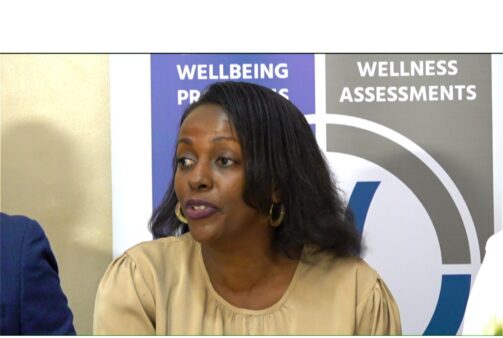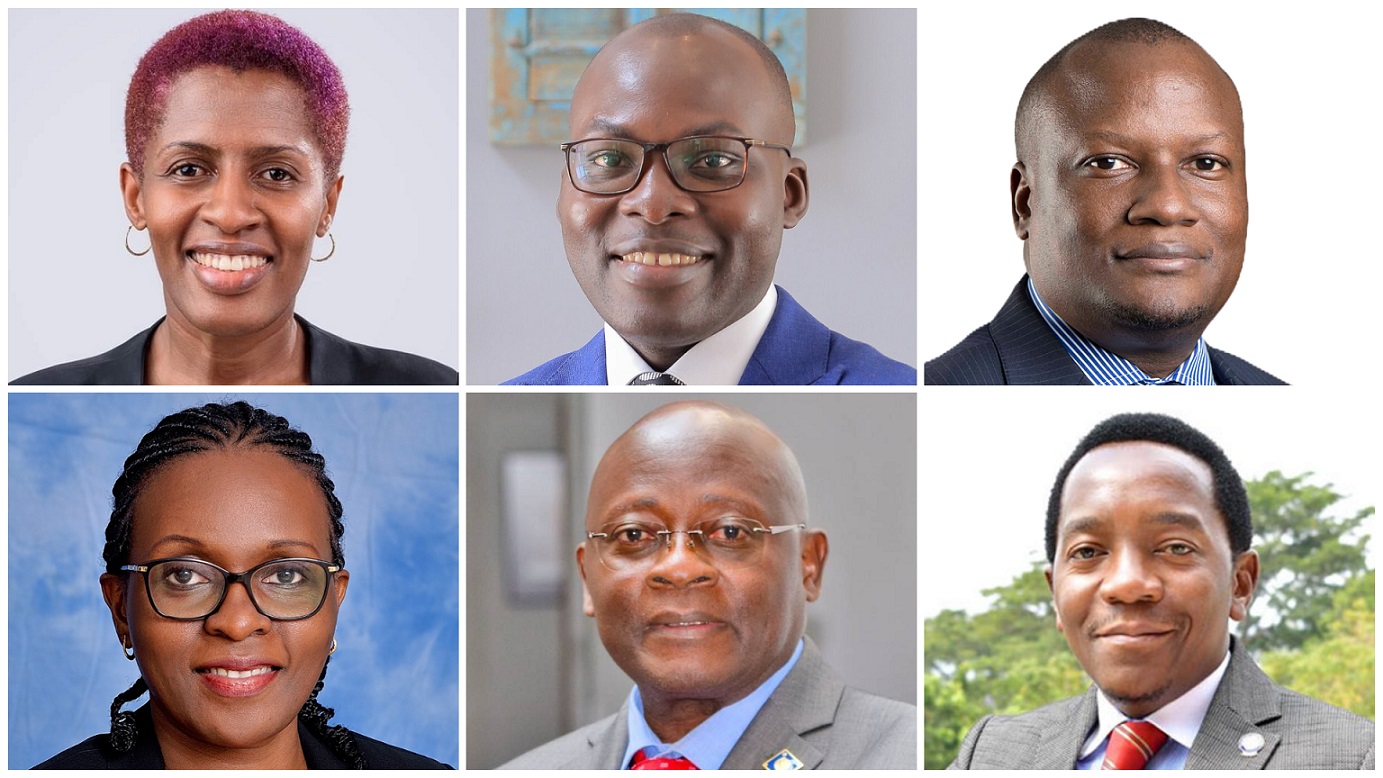
It is now two years since ICF Uganda was founded. Briefly take us through these two years and the key highlights therein that are worth celebrating.
JM: I would describe ICF Uganda as the home to professional coaches; professional coaches in the sense that every member of the ICF Uganda chapter has been trained and certified to practice coaching. Our coaches are also part of a global network of the International Coaching Federation (ICF)- one of the fastest growing coaching bodies that uphold global standards of coaching. Being part of ICF Global means that we are held to the highest levels of standards that there are.
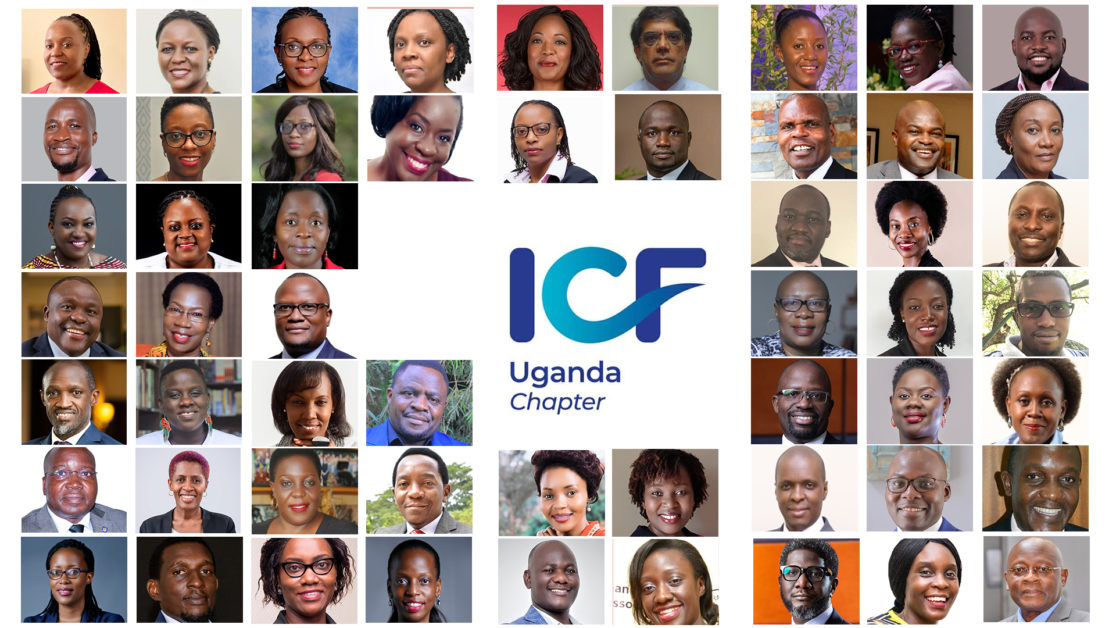
We began the process of registering the ICF Uganda Chapter around March or April 2019. We (Joan and Joseph), who were Coach Masters Academy trained coaches came together with the Strathmore University Business School coaches, led by Mr. Steven Mukasa, the former Strathmore Country Director, and Dr. Peter Kimbowa- PK, Mathias Katamba and Josephine Mukumbya and set upon the journey of registering this chapter. At our very first meeting, the challenge was, I was the only one at the time that had subscribed to ICF Global. So, the first assignment for members was to agree to all subscribe to ICF Global so that we could be legitimate members before discussing forming ICF Uganda. We needed to raise at least the first 20 members before becoming a chapter. So we approached Stanbic Bank, which at the time had about 15 certified coaches, making us a total of 21 members.
Between July and September of 2019, we formed a chapter in record time- in just two months. No chapter globally had ever done such a thing. We officially launched on the 07th of October at the Sheraton Kampala Hotel, although by September of that year, we had already been legally approved by ICF global office to become a chapter in Uganda because we had met all the criteria of certification, and the minimum number of 20 and the subscription fees had also been paid. Our members had all been deemed to be in good standing to be admitted into the ICF fellowship.
Around August of that same, there were an additional 16 coaches from Stanbic who had finished their training and then underwent certification around October-November of the same year so by end of the year, we were nearly 40 coaches.
For the uninitiated, what exactly do coaches do? Who is your target audience? Why does someone need a coach in the first place? How do I even tell that I need a coach?
JM: I normally love to describe coaches as your thinking partner―thinking, in the sense that on average most people are always busy, with too much ‘noise and pressure around us that people don’t get moments to stop and reflect on the things that matter to us as individuals or to our businesses, families, careers etc. So when a coach comes into your life, or when you choose to find that coach, they help you to think and explore things that are meaningful to you as an individual. Some of those things are lying in your subconscious, that somebody might not even be thinking about them. When a coach comes into that space, they work with the clients to navigate around and discover the answers to the issues that they could be facing.
In terms of the target audience, it is as diverse as the interests of the individual coaches, for example, I am an employment transition coach, so, a lot of the things that I do are around career transition- it could be that someone wants to take on a new opportunity, it could be that they have just gotten a promotion, and they’re not sure how to settle into that or it could be transitioning into self-employment or retirement.
So coaching has different arms. There are people who, trade as executive coaches, as life coaches, business coaches or even teen coaches etc.- it is more of a niche definition, so to speak. I know that in most cases, when people hear coaching, the first thing that comes to their mind is executive coaching and that is probably because coaching has always been looked at as a preserve for the C-suite and people in the boardrooms.
Secondly, because coaches are trained in different methodologies, some coaches might decide to trade using the methodology that they’ve been trained in, for example, Strength Finders, one of the tools that we are trained in, so these will call themselves, Strength Finder coaches. Then you’ll find others who are transformational coaches, such as myself and Joseph. But generally, as a certified coach, you’ve only been equipped to do coaching- it is only when you get into the field that you decide which niche you want to focus on.

Coaching is a science- we are dealing with the mind, and the mind thinks in a certain way. So, the coach is trained to get the mind of the client into that reflective space and then extract out key things that are useful for the client.
That gets me to the question of why does one need a coach in the first place? The answer is simple- to help you do your thinking so that you can reflect together because in most cases, people who show up for coaching, at least from my experience, are stuck in a certain space. They are not sure what to do yet they are at a point of decision making. So usually, they are looking for three things- either they want to gain awareness of something; they want to get a better understanding of something or simply gain clarity on some issue. That’s why you realise that most people who are attracted to coaches when we look at them, appear successful because they have had a breakthrough.
Yes, some people will say, I have been in this business for 10-15 years, what can you tell me? But usually, after this time, there is always the next step you can be and usually, you are stuck at what is the next agenda and or direction? The major question is what do I do with my success? As they say, there is loneliness at the top so people sometimes have no one around them that they trust enough to share with, some conversations. Sometimes you can’t tell your boss that you are tired, what if they show you the exit? You can’t tell your colleagues because you don’t want them to look at you in a certain way.
JA: Lastly, why does one need a coach? Well, research has shown- Fortune 500 magazine and all of those, you know, CEOs and founders, every single one of them has at least one coach, and at most five, and on average three, on average three coaches. Why? Because these Fortune 500, CEOs and founders, whilst they look very successful, also suffer from blockages in their career or their personal lives. And at times like those when they are so vulnerable, they want a trustworthy partner, a thinking ally that can help them think things through, clarify some confusion, help bring about some clarity or bring about some way forward clarify on some choices that they need to choose from because they could have up to 10 choices, but are all of them efficient and effective? Maybe only one or two. So the coach will, through making the right inquiry, help them to reflect and to think they can arrive at all those solutions themselves.
How different is coaching different from mentoring or counselling?
JM: Coaching is different from training, mentoring, counselling, which are usually confused with one another. Coaching and mentoring, especially in the workspace, are used interchangeably but mentoring usually works best for people who are still on their career growth. They are teamed with someone more knowledgeable, competent, or experienced to share their experiences and wisdom. But in coaching, we normally would simply look at it as a partnership, where the coach is supporting the client in a thought-provoking and creative process.
JA: Coaching helps you to unpack, or to unfreeze, or to unlock or unblock any set of circumstances or situations that might be emerging in your life. Once you’ve gotten to that point of increased awareness about yourself, you’ve also unblocked what is emerging as blockages or roadblocks or you know, things that are standing in your path to success, then you can be able to scale your business plan or your personal growth plan. When I talk about scaling, coaching helps with clearing the confusion, it helps you to free up what’s in the coaching technical language we call a loss frame. A loss frame simply means that you are in a state of confusion, you are at a crossroads, you’re at a roadblock. You’re unsure of what next, even if you seemingly are very successful financially and with a big brand name, reputation and recognition.
Coaching is not mentorship, counselling or teaching yet often, because somebody is very good at public speaking, they present as a coach, yet they have never attended a day’s training to become certified as a coach and neither have they been credentialed or accepted by the ICF, one of the FASTEST GROWING coaching bodies that uphold global standards of coaching.
But it could also be that you’re going through individual moments of loss and grief, and pain and hurt. Sometimes you need a coach to help you reflect and act as your sounding board. Not that they will tell you what to do. We don’t do that. But by asking the right questions, we help you to think deeply and to ponder and to reflect deeply on what truly matters and what is truly emerging as important for you in your life that you can focus attention on because we all have a finite number of hours in a day and a finite amount of resources to use in a lifetime. So, the coach helps you unpack and clarify what is truly important and what you can latch on to, to gain meaning and purpose.
Related
 MTN vs Airtel: Balance Sheet Strength Meets Earnings Momentum in the Race to Win the Telecom Market
JM: Coaching is not mentorship, counselling or teaching yet often, because somebody is very good at public speaking, they present as a coach, yet they have never attended a day’s training to become certified as a coach and neither have they been credentialed or accepted by the ICF or any other key global body that uphold the gold standard for coaching globally. All these other people development initiatives are okay, but it’s best to tell clients what exactly it is you’re doing. If it’s consulting, let it be known that it’s consulting, because even as coaches we consult. It is okay to tell the client at this point, that you are not wearing your coaching hat and that you are just a consultant coming in with a solution- but as a coach, we don’t prescribe solutions.
When you are at the top, there is a tendency for people to get so ‘political’ with the kind of advice they give because they always want to please the big boss. Is coaching a solution to this?
JM: It is lonely at the top, that’s a given fact. One of the things that I have seen in my coaching experience, every time I’m engaging executives, they feel that the coaching space is a space where they can be vulnerable. It’s a space that is trusted because it’s confidential. And therefore, they know that they can bounce off things without anybody reading through what they are saying. Whereas in other places, they have to kind of be calculative. For example, how do you land an issue with your supervisor or junior? But in coaching, we are more like thinking partners, who helps you sort through your mind. The mind is very interesting. It processes so many different messages per minute. So you can imagine how much a CEO would be taking in from the entire stakeholders’ range- the board, direct reports, customers etc. Sometimes this causes a lot of confusion. The CEO has to have the big picture of the organization, you have everybody trying to come in from different angles, you have the board, you have your direct reports, you have several stakeholders outside and all that. So sometimes it’s a lot of confusion. The coaching space is a safe space to clear the confusion and non-judgmental. And by the way, professional coaches are also bound by professional ethics. So, if you went around messing around, your certificate can be withdrawn.
So, how real is the problem of people fearing to be vulnerable?
JM: Vulnerability is a gift. It is amazing how much you can unravel yourself when you allow yourself to be vulnerable and how that can help you get faster results. So this thing that we fear, is actually the gem that coaches extract from clients. that is stigmatized is the gem that that coaches are extracting from clients.
JA: Leaders need a safe space because they are leaders. There is a certain perception that their staff and the community has of them but they too get depressed; they cry, they too suffer grief, and bereavement, loss especially during this tough time. When you have these coaching conversations, because sometimes we meet these CEOs in very private coaching conversations, which are never recorded, never reported on anywhere because one of the ethics in ICF is you know, confidentiality, is one of the strongest ethics that we stand for is confidentiality. So you’ll find that these clients open up because everyone is human, and the more you go up the ladder the more these spaces to open up reduce. So coaching is a safe space, where executives can also become normal and human and together, we think through things.
Given the sensitive nature of the conversations that you have, what is the degree of confidentiality? Is this confidentiality protected by law- like can I sue you if there are information leaks? How is the coach and coaches relationship built up in terms of confidentiality?
JM: For every coaching client that you get, you must have a coaching agreement. And in that coaching agreement, you stipulate what is going to bind that relationship. But sometimes there are other dynamics especially where we have sponsors e.g. if an organization has decided to pay for coaching for their staff, then there is an agreement guiding what information can be and can’t be shared with the sponsor. It then becomes very clear to the coaches and the sponsor what kind of relationship there’s. The key thing here is that for a coaching relationship to achieve its purpose, coaches must be in a position where they are very free to share as much as they can without any fear whatsoever- fear that there will be repercussions or that they will be judged. Confidentiality is the name of the game. Confidentiality is thin that we go by. We are bound by global standards and your certificate can be withheld if you breach our codes.
How does one join ICF Uganda Chapter? What do I need?
JM: First of all, ICF Uganda is a voice representing those who do a training programme that is approved by the International Coaching Federation. There are also other coaches from different academies- people are trained by different institutions. But when you’re looking for an International Coaching Federation, Uganda Chapter coach, one quick way of course of ensuring that that person is part of us, you check with the chapter so that we can assure you that this person is in good standing because remember, we renew our membership every year. So, somebody could have been a coach with us last year and who knows maybe they withheld their certificate and you have no clue. But the easiest thing is to ask them about the institution they trained with then you can go online and find out if that institution exists and if they are approved by ICF. In addition, they will have a certificate because they are certified by the academy that trained them.
Sometimes if you’ve gone ahead and done credentialing, like me, and Joseph, we will have the credential certificate from ICF, which also expires every three years. As coaches, we are bound by the fact that learning is a continuous journey. Because coaching is a muscle, you’re dealing with the science of the mind, so you must be growing daily. You can’t just go there and say, hey, I’ve been conducting interviews, so, come, I am your interview coach because I’ve been doing this thing every day. We are saying you must continue to learn, and learning is part of that game. And it’s part of what will inform whether you’re going to renew your credentials or not. There are a couple of different other people that call themselves coaches, we don’t know what kind of programmes they do or did and they are not necessarily approved by ICF. So, we don’t want to bring on board coaches whose programmes are not approved by ICF, because that’s the body that brings us together.
It is said that coaching does contribute to building a thriving society. Your corporate purpose, as stated on your website says, Unlocking Uganda’s potential, through transformative coaching.” How exactly is coaching relevant to the transformative agenda of a society or a people like Uganda?
JM: Let me start from the perspective that of late, we are beginning to see development programmes, advertising for opportunities and including professional coaching as a requirement. I’m also glad to note that even as they ask for professional coaching, they’re asking people to be part of a body like ICF Uganda so that they can be sure of what they are buying into, but more importantly, before you become an ICF member, you must be in good standing and a background check has already been done.
JA: Every nation is as good as the quality of leaders- so by raising the quality and the power of leadership in this country and by extension, building lasting institutions, we’re not exaggerating when we say we are contributing to the transformation of this country.
By lifting the bar of leadership, we’re helping build institutions, lasting institutions. If the general bar of awareness of our leaders is increased, their awareness of their values, their strengths, their ability to scale, and therefore they bring those values to the boardroom, they bring it to exco, their homes- as husbands and wives, or boyfriends and girlfriends, or parents- or the boardrooms where they are directors of boards and as managing directors and CEOs, and founders and executive directors and whatnot. If the level of authentic leadership is increased tremendously, then collectively as a nation, we are uplifted.
I can almost bet you that all organizations that have their leadership team being coached are guaranteed at least 3x performance. Every organization that has allowed themselves to go through coaching or leadership to go through coaching, have experienced a minimum of 3x if not 10x of the valuation of their top-line growth indices.
JM: One of the biggest things happening in this country is the CEO Apprenticeship Programme and one of the key game-changers for many of those participants is the fact that they have coaching as part of the package of their learning process. I bet if you go to any top institution in this country, you’re going to find a leader who has gone through the CEO Apprenticeship Programme at least in the last 10 years. Coaching is one component that they have realized is something that is a must for leaders. And these days, apparently, in boardrooms, if you go for two interview panels, and you’re looking for a CEO role, an executive role, one key question you’re likely to find is do you have a personal coach? And if you don’t, most likely, you’re not going to get that job, because they are wondering who is challenging your thinking?