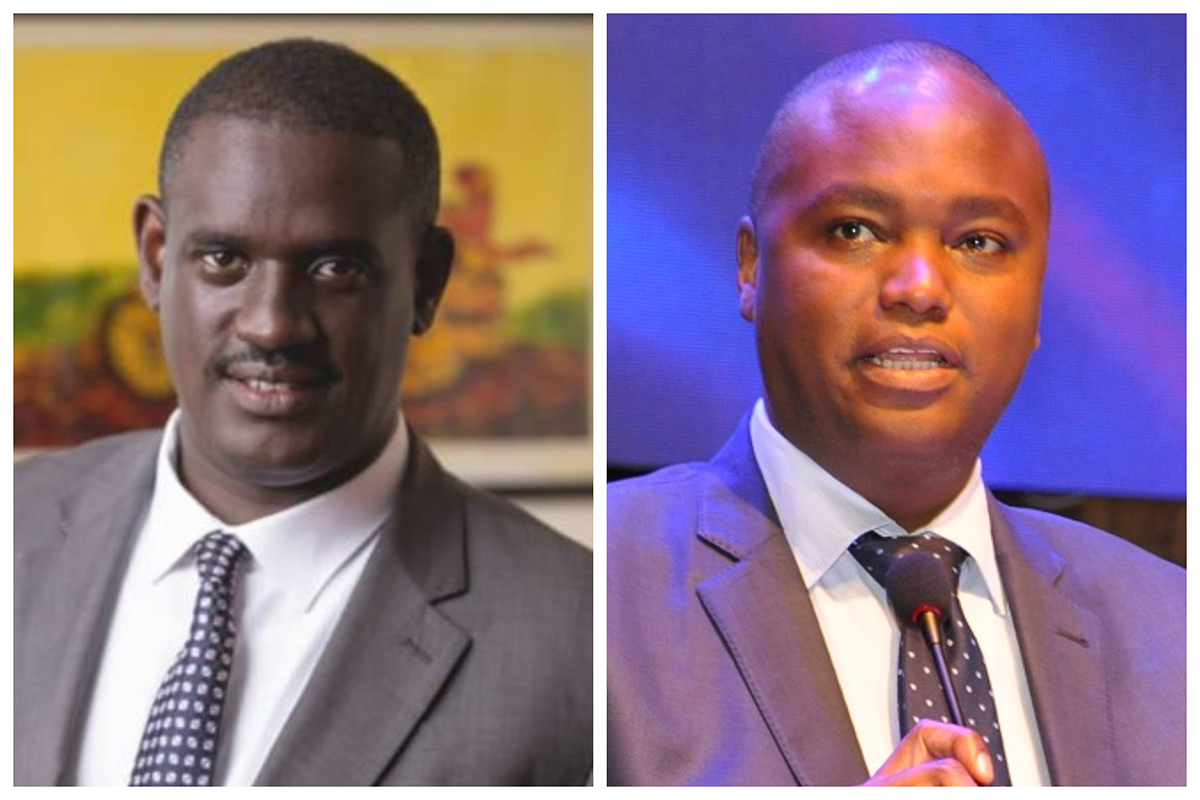
As chairman of the Uganda Chamber of Mines and Petroleum, what does the chamber focus on?
At the Chamber, there are a few things we have tried to focus on. In the initial stage, we were more of a lobbying and advocacy group but since we had the final investment decision on oil and gas, we have realigned and focused on four arrears, namely:
Local content and employment creation— there is a significant amount of investment coming into oil and gas in the coming 3-5 years about USD 20 billion. Our focus has been, how much of that can we capture locally? How many indigenously owned Ugandan companies will get contracts? What is the value of those contracts? And most importantly, how many jobs will be created by those contracts that can be handled locally? The last time I checked, USD6bn worth of contracts had been awarded and less than USD1 billion has gone to indigenous Ugandan companies which is a good number but not what we wanted. We are aiming for 30% or higher. We are focusing on how to get that number up.
The other thing is how do we support access to finance to these SMEs? How many of these can we provide credit to?
The third thing is information. There is a very huge information asymmetry problem in the oil and gas space, especially between the oil majors and what the tier 1 suppliers have. Our goal is to drive up local content and for that to happen, information has to be shared. That is very critical.
The key arrears are local content, employment creation, access to finance and support, upskilling and training and stakeholder support and advocacy.
As a former chairman of the Uganda Bankers Association, how prepared are financial sectors in Uganda to facilitate the oil and gas industry?
One of the most misunderstood things is that oil and gas as an industry sits in isolation. I believe it is a catalyst for the economy so there is a ripple effect on other sectors be it agriculture, retail, logistics, FMCG, telecom etcetera. The banks are very much involved in funding the entire value chain that supports the oil and gas sector.
The reality is though; when you have an investment of (USD) 20 billion-plus coming into an economy of USD30bn GDP there is going to be some limitation on what we are going to be able to do from our financial perspective because we are not set up. We don’t have the capital and capacity to do certain things. But that’s fine because the banks will continue to participate especially at the bottom of the chain. After all, supporting local content is very important.
The beauty of oil and gas is that it is very transparent. You get a contract which you take to the bank and the bank can see through the risks they are going to be taking and fund you. That is easier compared to the risks on the other side which are highly capitalised.
I believe the banks are ready. We have been waiting for this for a very long time. And I think we will continue to fund the entire value chain and all the parts that oil and gas continue to touch on.
As Standard Bank, can you give us the possible synergy that can be exploited by the players in the region from the banking perspective?
We believe that Uganda’s GDP will double by 2028. From roughly USD33bn to USD66 billion in 2028. That is a significant movement in a very short period. We also believe that the GDP of East Africa will go from USD180 billion to USD400 billion by 2028. I don’t believe there is any other region in Africa that has that growth momentum.
The other thing that is very fascinating about East Africa is that we are very connected as a region. We trade amongst each other in a very significant way, more than any other region. There are historic reasons for that.
I believe the leadership of the East African region has been able to deliberate through the East African Community to make sure that it is allowing us to extract these synergies that are coming through. The pipeline going from Hoima to Tanzania for example; what kind of impact is it going to have? It is more than a pipeline. It is a trade corridor being created between Uganda and Tanzania which did not exist before.
The number of small towns that are going to be impacted and the economic activities around them and the ripple effect on both economies are huge. The size of the FDI that is coming into Uganda and the region is huge too. The East African Crude Oil Pipeline Project (EACOP) is the single largest FDI investment that has ever been made in East Africa.
Because of the connectivity we have, USD20 billion coming into Uganda has a ripple effect on the region. Also, remember that Tanzania also has gas. One of the things being talked about is how to bring gas to Uganda. So, oil goes to Tanzania and gas comes to Uganda. That will bring cheaper natural gas. It will reduce our reliance on wood and charcoal. It is all very positive. We must commend the leaders who have continued to push for this.
How does Kenya tap into this opportunity?
Kenya is one of the more developed economies in the region. It’s got a lot of depth in terms of skills and that is the role they are going to continue to play. In the region, many corporate entities refer to Kenya as their base. When you look at the ecosystem of East Africa, Nairobi has a huge role to play in connectivity. But I don’t want to separate the roles. What we have to say is that we are a connected region, and there is going to be a lot of transfer of skills and capital in the region. It is bigger than any of us can accommodate.
There is a lot of capital coming in externally. We need to organise ourselves to participate from a local perspective. We shall need a lot of collaboration on this.
How will oil and gas shape Uganda’s economy?
With our GDP doubling in five years, that’s a huge impact. And when you think of USD20 billion being invested in an economy of USD30 billion today, the impact that will bring is significant. We should also look at the knock-on sectors like agriculture that are going to be impacted.
But at the end of the day what counts for me is local participation. What we need to see is how much of the USD20 billion is going to Hoima other than flying from Paris to Beijing. That is the prize. And are we prepared to participate, that is the major question.
What is the role of African export banks and credit institutions in this sector?
The evidence is out there. The quickest way of improving our wealth and development is through trade and trade amongst each other. Africa generally has had a problem with that. We haven’t generated the network to trade amongst ourselves and remove the friction. East Africa has made a lot of progress though, with a one-stop border, reducing the number of times goods move across countries. But at the end of the day that is the role that these banks can play i.e., promote, trade, trade, trade.
During Covid-19, we saw the vulnerabilities that came up. The supply chain shut off and we saw how quickly we ran into problems. We have started to recorrect that and recognise that it is a lot much safer when you rely on each other. We need to get more and more connected. The more capital we can put together to remove the friction around trade and support regional businesses will help us in supporting and getting bigger and stronger.
 Give to Gain: The Quiet Evolution of Women and the Question We Are Afraid to Ask
Is there any opportunity with the Democratic Republic of Congo?
The fact that we have this amount of capital flowing into East Africa reinforces this destination as an attractive investment spot. And I think South Sudan and the DRC will benefit from that too. The recent addition of the DRC to the East African region is huge potential. It adds 80 million people. It also now forces the DRC to harmonise its trade, customs and all the other things an economy has to harmonise to be part of the big thing and that is good.
There is a lot of trade that happens between Uganda and Eastern DRC at Kisangani and up north and that too will be enhanced.
Beyond throwing money at local companies, how are you addressing the question of enhancing local capacity?
This is something we have been trying to work on. That is why we started the Stanbic Incubator. We were told, SMEs fail because they have no access to capital but it turns out, it is not true. The mortality rate of businesses in Uganda was a concern to us. ⅔ of the businesses, do not make it to their third anniversary. We tried to investigate and find out why. That is how we set up the incubator.
It has been an interesting journey running, the incubator since 2018. One of the craziest things was the inclusion of local businesses in the oil and gas sector. Many businesses were doing business the right way but not the oil and gas way. Very many of them were not in touch with things like policies, oil and gas bids (a very big document) or how to deal with the basics of health and safety.
What we saw as an opportunity was;
- Get information in for the businesses to appreciate the sector
- Support the businesses and align them with the expectations of the sector.
What we are seeing now is the crazy area of joint venture partnerships which we are trying to push for and promote the conversations that our brothers at the Petroleum Authority of Uganda (PAU) are pushing. If local companies do not have the capacity or manpower, we can then position and pair them with companies that have been doing this for years by maximising the opportunity for joint venture partnerships. With time they will gain knowledge on how to operate in the sector. Fortunately, enough, Uganda started before the oil is up from the ground and by the time it is up, we will have upped our game.
How would you consider the SME landscape, how are they doing? How prepared are they now?
I think we have some work to do. SMEs are the lifeblood of the Ugandan economy. 70% of employment is in SMEs which is not appreciated enough. Jobs are created by SMEs. For us to have continued growth, we have to focus on SMEs. It is absolutely critical. The oil and gas industry in particular is an industry which has huge compliance requirements and they are never going to lower them. By its nature, the oil and gas industry requires that. It is about all the other smaller things that need to be taken into consideration. It is a journey that all of us have to take. Building capacity is a massive thing we all have to do. We are in partnership with the banks, the PAU and insurance companies. We have set a goal of training up to 3,000 businesses for this and building them in that capacity. We are not there yet but we need to focus on this area.
What is the strategic value of EACOP? Can’t we just build our own refinery?
That was a huge debate but was settled. We decided to have both the pipeline and a refinery. At the end of the day, we might discover more oil. We cannot accommodate or use all the oil & gas that has been discovered and or will be discovered locally. So at the end of the day, we have to export some of it. We cannot consume that much oil locally. That’s why we need both.
What financial tools can the local banks use to create a more robust financial system that can help us fund mega projects like oil and gas?
The short answer is that we have to save more as a country. We have to create our own capital base locally. I will give you an example, currently, Stanbic has the highest lending limit. It is about USD70-80 million dollars. We have about 30% market share. If you extrapolate, that means that all Ugandan banks can probably do only USD4-5 million dollars on one particular transaction. That is dismal. It is not acceptable given the growth requirement we have as a community. If you think about the problem and reverse engineer it, it comes back to savings. We don’t save enough and that is a problem.
NSSF has done a great job in creating capital and they are the largest fund in the region. We need to grow more of our own capital so that we can deepen our own.
Many Ugandans are asking, how can we get in? And is it going to mess us up?
In many ways, the delay of this project allowed us some time to develop this capacity. We had a goal at the Chamber to ensure that 30% of the investment has to go to local companies. Out of the USD20 billion, we wanted at least USD6 billion to be invested locally. As I said earlier, we are clearly not punching where we need to be and the question is why?
We have to look in the mirror. We are not developing the capacity that we need to. We tend to think it is a fixed pie. We don’t collaborate. We need to develop collaboration skills and reach out to each other. The pie is massive. Sitting back to think you can do this on your own is wrong!
I don’t think it is going to mess us up. Our GDP is going to double in five years and everyone is going to benefit from this. It will have trickle-down effects on the other parts of the economy. And again, because of the delay, we have benefitted from the lessons of what others have done wrong that we should not do. The delay has helped us to become stronger and get the setup that we have now to participate.
How are Ugandan banks adjusting to the oil and gas sector in terms of funding?
We need to adjust our risk appetite for oil and gas as banks. At the end of the day, as banks, we are just custodians of your money and we don’t want to lose your money. We have to figure out a way how we can bring the risk down and do the funding and that is where we should spend our time. The question then is how do we mitigate risk?
We have done thorough exchanges with oil majors on how they can come to the table and help reduce the risk of SMEs and help them to participate. We have to reduce the risk so we can provide the money. We need to meet each other halfway.
What are the challenges ahead and what plans do you have to address them?
The major challenges are participation and local content, how do we get involved? How do SMEs participate to create jobs? That is the biggest challenge. How do we unblock the issues SMEs face in participating? One is information, we can remove the information asymmetry. Secondly, we need to do more capacity building not just in terms of finance but also in human capital so that SMEs can show up. The third is encouraging SMEs to show up. Small SMEs should partner with the bigger ones.