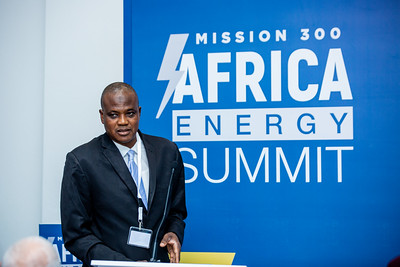
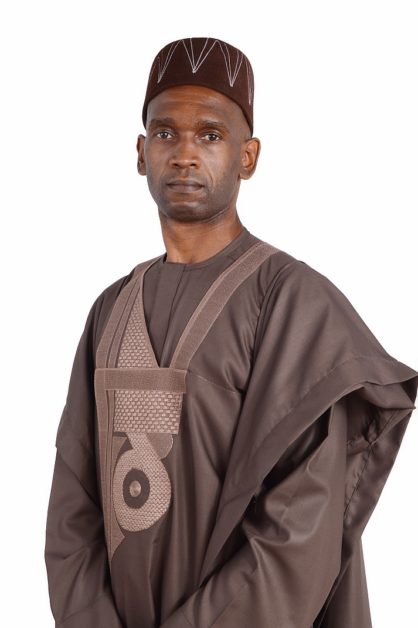
Congratulations Dr Mbaziira upon your appointment to head, AMCOW. For starters and in summary, what is AMCOW and what is its mandate?
The African Ministers’ Council on Water (AMCOW) is a Delivery Mechanism on Water and Sanitation for the Specialized Technical Committee (STC) on Agriculture, Rural Development, Blue Economy and Sustainable Environment (ARBE) of the African Union (AU). We are the mandated institution for coordinating Water and Sanitation policy systems in Africa.
We provide political leadership, policy direction and advocacy on water management and provision of sanitation services. We do this through, first, convening all relevant actors in the pursuit of the Africa Water Vision; the NGor commitments on water security and sanitation; and the SDGs. Our constituents in this regard are the political leadership of the Member States; the various technical, implementing and funding partners; and the stakeholders.
The second aspect of our mandate is to mobilise and facilitate concrete action to achieve water and sanitation goals. In essence, streamlining the contribution of the different categories of actors to broaden and deepen the impact of our collective action.
Thirdly, we broker and network knowledge and information to support evidence-based policy formulation and implementation at all levels. The overarching goal is to ensure that our initiatives are both informed by, and responsive to the real needs of the water community in Africa. Application of the available knowledge and information to guide efficient and effective utilisation of sector funding and investment opportunities is a key element of this function.
From what we know, AMCOW is mandated to provide political leadership in the implementation of the Africa Water Vision 2025 and water components of the African Union’s Agenda 2063. We are just a few years to 2025― how far or how close is the continent to achieving the milestones set out in Vision 2025?
Information from our Water and Sanitation Sector Monitoring and Reporting System (WASSMO) indicates that concerted effort by the Member States is moving us closer to achieving the Africa Water Vision, which is:
“an Africa where there is an equitable and sustainable use and management of water resources for poverty alleviation, socio-economic development, regional cooperation, and the environment.”
A noted challenge, though, is the low profile and value attached to water in national systems for economic planning and development. As a direct consequence, domestic allocations and investment into the water and sanitation sector are incommensurate to the requirements to release Africa’s development potential. In turn, this has major implications for our Member State’s aspirations to eradicate poverty; end hunger; ensure good health and well-being and ensure climate-resilient development.
From that perspective, a significant number of Member States are off-track to achieve the targets of the Africa Water Vision 2025 and, indeed, the SDGs, come 2030.
It is, therefore, a key priority for me to advocate for making the principles of valuing water as the backbone of the action framework for the post-2025 Africa Water Vision. The application of these principles holds promise for highlighting the vitality of water security and sustainable sanitation to Africa’s agenda for economic growth and social transformation. In turn, a compelling case can be made for commensurate funding to the sector to strengthen water security.
I also commit to ensuring that the post-2025 Africa Water Vision is aligned to, and is adopted as an implementation framework of Agenda 2063.
How critical is the water component in the African Union’s Agenda 2063?
Agenda 2063 comprises seven key aspirations of the people of Africa for the year 2063 with set quantitative targets. The first of these aspirations are:
“a prosperous Africa based on inclusive growth and sustainable development.”
Among the seven goals of this aspiration are ambitions for:
- a high standard of living, quality of life and wellbeing for all citizens;
- healthy and well-nourished citizens;
- transformed economies;
- modern agriculture for increased productivity and production;
- blue/ ocean economy for accelerated economic growth; and,
- environmentally sustainable and climate-resilient economies and communities.
Safeguarding sustainable access to adequate quantities of acceptable quality water for health, agriculture, livelihoods, production and the environment is a key success factor of those ambitions.
 Stanbic, Absa and Centenary Control Nearly Half of Uganda’s Bancassurance Market as Premiums Top UGX 302 Billion
By inference, therefore, ensuring water security plays a pivotal role in our efforts to achieve the goals of Agenda 2063.
As the new ES, have you zeroed in on your key priorities to ensure that AMCOW achieves its vision?
Indeed, I have.
The vision of my tenure as Executive Secretary is to transform AMCOW into an effective mandated organ of the African Union’s efforts to assure water security in Africa. My strategic plan to actualise this vision is centred on leveraging political support; mobilising partnerships; and facilitating the application of knowledge and information to support:
- action to meet water demands for all – and here I have to emphasise the element of ensuring equity and equitability in water, sanitation and hygiene services provision;
- action to ensure availability of water for economic production, particularly in the industry, energy, and agriculture sectors;
- action to reduce disaster risks from such water-related hazards as floods, droughts and pollution; and,
- action to enhance climate resilience.
In your assessment, what are some of the challenges that need to be surmounted to achieve the above?
The biggest challenges are improving the investment outlook for water infrastructure development; and improving water governance and management capacities at all levels.
We need to inject new approaches into ongoing efforts to increase domestic allocations and investment into the water and sanitation sector. These approaches should focus on making a compelling business case highlighting the vitality of water security and sustainable sanitation to Africa’s agenda for economic growth and social transformation.
This calls for establishing economic accounting for water as a framework underlying the development, utilisation and management of the resource in Africa. In so doing, water use information will be directly linked with its contribution to economic production. In turn, the spotlight will be shone on the opportunity cost of incommensurate funding to the sector.
With effective planning and improved sector financing, the bulk of the challenges facing the sector should be addressed more efficiently than we are currently in a position to.
Most often when we think of such important things as Water and Sanitation services provision – responsibility is put upon governments. Is there any role of other players to play?
The COVID-19 pandemic has highlighted the gaps there are in the prioritisation of water and more importantly of sanitation. Part of the solution to this is mobilising strong partnerships and collaboration between sectors and stakeholders.
At AMCOW, we don’t just work with Ministries of Water and Sanitation or sectoral Ministries. We also work with a broad spectrum of state and non-state partners and stakeholders that include the beneficiaries; the private sector; advocacy and sensitisation actors; technical and implementing partners; multilateral financial institutions; and development partners.
Worthy of mention, within the category for advocacy and sensitisation actors, is the media. Partners and stakeholders like the CEO East Africa Magazine are instrumental to our efforts to share knowledge and disseminate the right information. The media is also a very strategic entry point to the private sector ecosystem.
It is therefore our appeal to work closely to ensure active and informed public involvement in the protection and conservation of our water and environmental resources. Only then can we have a realistic chance of sustainably securing sufficient water supplies to meet the water demands in all sectors.
The responsibility starts with each one of us at the individual level.