
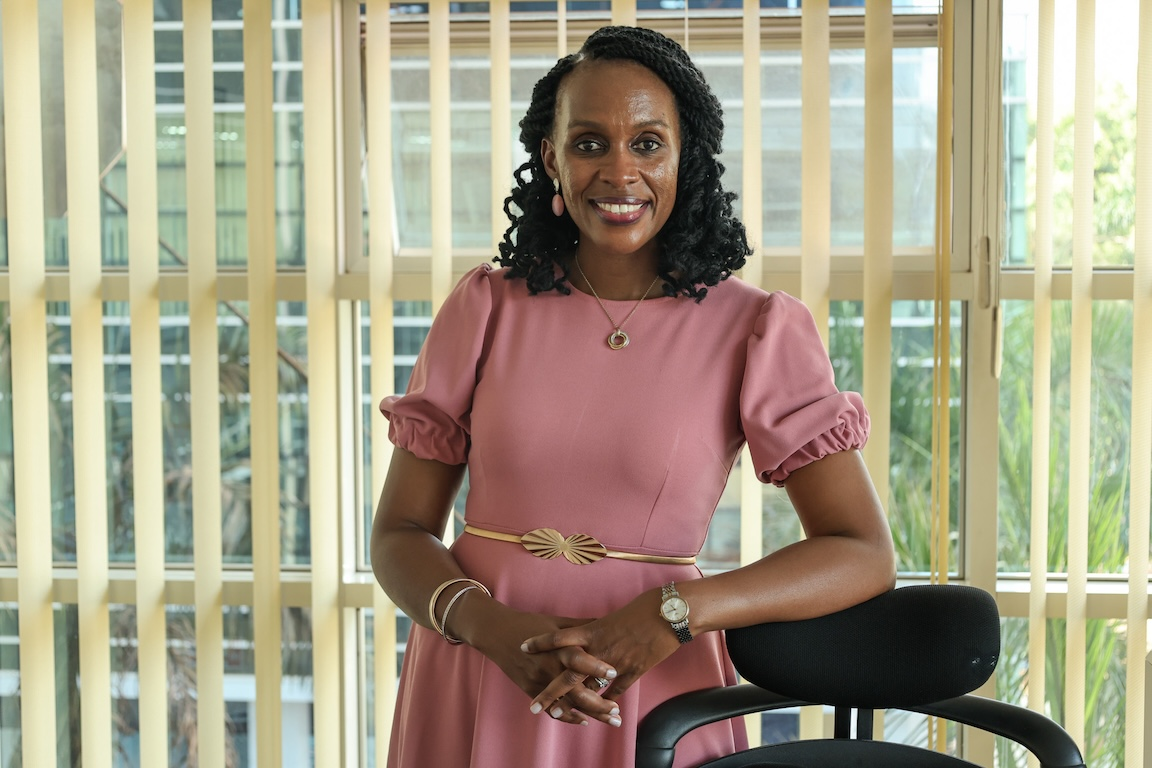
Many people remember aBi Trust, but today there is aBi Finance and aBi Development. Could you walk us through the journey and describe aBi Finance’s current strategic position within Uganda’s financial ecosystem and the unique role you play today?
When I talk about aBi’s evolution, I like to start with why it was created: to support Uganda’s agribusiness sector, particularly smallholder farmers and agribusinesses. In aBi Finance’s case, the goal was to enhance financial inclusion for these smallholder farmers and agribusinesses.
It all started as an engagement between the Royal Danish Embassy and the Ministry of Finance, Planning, and Economic Development. This led to the creation of a permanent institution to support Uganda’s agribusiness sector over the long term. In 2010, the Royal Danish Embassy came on board as an investor and continues in that role, while the Government of Uganda, through the Ministry of Finance, Planning and Economic Development, remains a strategic partner to ensure alignment with national development goals.
Initially, aBi had two complementary arms: aBi Trust, which was visible and farmer-facing, worked directly with farmers and cooperatives to support their development; and the Agricultural Loan Guarantee Company, which evolved into aBi Finance. With an initial endowment of $10 million, now grown to $70 million, aBi Finance quietly worked behind the scenes with banks, microfinance institutions, and Savings and Credit Cooperative Organisations (SACCOs) to unlock lending for farmers who lacked formal collateral — a common challenge given that most smallholder plots, or ‘bibanja,’ are informally titled.
By 2015, the model matured. aBi Trust became aBi Development, focusing on improving the production capacity and resilience of smallholder farmers, while aBi Finance was restructured to attract new investors. In 2018, Impact Fund Denmark and the European Union came on board as shareholders to support the ever-increasing appetite for agribusiness lending.

Today, the two arms work closely together. aBi Finance promotes financial inclusion and now also invests in the sustainability of the agribusiness sector, focusing on environmental management, social inclusion for women, youth, refugees, and underserved regions such as Northern and Eastern Uganda, as well as promoting good corporate governance. aBi Development complements this by ensuring smallholder farmers and agribusinesses are resilient and maximising their productivity, and are poised to absorb finance from financial institutions.
The ideal is that a farmer in rural Uganda can access a loan to buy drought-resistant seedlings while also receiving training in climate-smart practices, and a farmer cooperative can expand its maize storage capacity while accessing working capital. The names have changed, but the mission — supporting Ugandan smallholder farmers and agribusinesses grow sustainably, create jobs, and contribute to Uganda’s economic growth and development— remains the same.
This is quite a unique model—I haven’t seen anything quite like it elsewhere. How impactful has it been so far? Both in terms of the response from stakeholders, but also in the tangible benefits to people on the ground—women, farmers, and the wider communities whose daily economic resilience is tied to agriculture?
Our main role is to support financial institutions in providing credit to smallholder farmers and agribusinesses. Many of these institutions would otherwise invest in less risky sectors, like personal banking, real estate, or government securities, rather than agribusiness, which is often seen as high-risk with moderate returns, despite its strategic importance to the economy. As a result, agriculture attracts only about 12% of private sector credit, even though it contributes 24% of Uganda’s GDP. An allocation, we are working to improve.
To bridge this gap, we provide liquidity through lines of credit to financial institutions, which they then commit to lending to smallholder farmers and agribusinesses. This is the core of our wholesale model, and we work across the full spectrum — lending to institutions ranging from Tier 1 to Tier 4, including SACCOs.
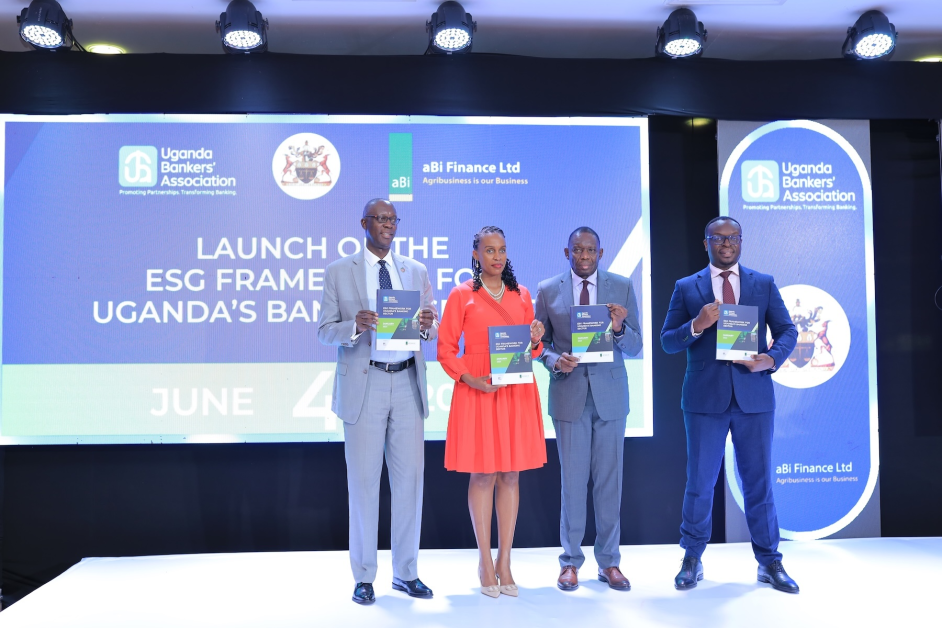
We also take a blended approach, combining liquidity with technical support. For example, we’ve worked with the Bank of Uganda and the Uganda Bankers Association (UBA) to develop an ESG framework for the banking sector and have also partnered with the Uganda Institute of Banking and Financial Services (UIBFS) to create the sector’s first Green Finance Curriculum, which we will launch together in November. We also partnered with the Climate Finance Unit at the Ministry of Finance, Planning, and Economic Development, and developed the Agribusiness Taxonomy as our contribution to the National Taxonomy.
Additionally, we support institutions by training their boards, management, and staff in green and sustainable finance, upgrading their data systems, and developing loan products that channel this finance effectively to farmers and agribusinesses.
The aBi Finance guarantee mechanism has been particularly catalytic. While the standard cover is 50%, we raise it to 70% for higher-risk segments such as women, youth, refugees, and underserved regions like Northern and Eastern Uganda. During the COVID-19 pandemic, we extended 70% coverage across the sector to sustain agricultural lending, as institutions were understandably cautious about lending, particularly to agriculture.
In short, aBi Finance is helping to build resilient financial institutions that can consistently serve smallholder farmers and agribusinesses, thereby contributing to the country’s economic growth and development.
I’m sure that in these 10 years or so, you must have gathered some very interesting lessons and insights. What are some of the key insights you’ve picked up from these experiences?
We’ve learned a lot over the past decade, and we’re always happy to share. The harvest is plentiful, but the labourers are few, so the more players that come on board, the better.
Over the past 10 years, a few big lessons stand out.
One is that governance is critical for agribusinesses and even smallholder farmers. Even at the most basic level, farmers need to keep records. Something as simple as a notebook showing monthly sales can make the difference between being successfully assessed for a loan or not. Capacity building around record-keeping, financial literacy, and ‘green literacy’ is non-negotiable. Farmers need to understand not just climate change but also how to adapt to it—through improved seed, irrigation, or better farming practices. The same applies to the institutions that channel finance—banks, credit institutions, Micro Deposit Taking Institutions (MDIs), SACCOs—also need robust governance and systems. Too often, we’ve seen mismanagement and its consequences, and that underlines the importance of building governance capacity within these institutions.
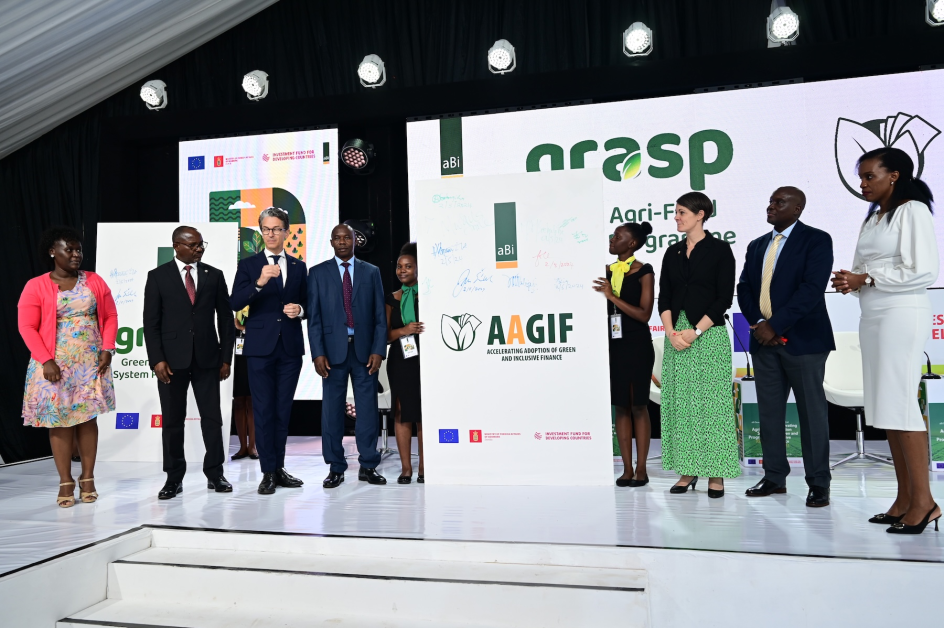
The second lesson is that sometimes the market alone is too slow. You need to catalyse, accelerate, and propagate ideas. In a developing and vulnerable sector like agribusiness, commercial banks rarely find low-risk, quick wins. Catalytic interventions, including smart use of grant financing, are therefore necessary to de-risk innovation, accelerate adoption, and crowd in sustainable private investment.
Third is that marginalised demographics, such as women, youth, and refugees, and geographies such as Northern and Eastern Uganda, do not automatically benefit when capital flows into the agribusiness sector. Guarantees and targeted facilities must intentionally address their structural exclusion from finance.
Finally—partnerships, partnerships, partnerships! This sector is too wide and too complex to go it alone. Partnerships help to avoid mistakes, reduce duplication, and pool scarce resources. Partnerships allow for smarter collaboration. At a national level, we collaborate with our partners, the Ministry of Finance, Planning and Economic Development (through the Climate Finance Unit), Ministry of Agriculture, Animal Industry and Fisheries, Ministry of Environment and Natural Resources, Bank of Uganda, the Uganda Bankers Association (UBA), the Financial Technologies Service Providers Association (FITSPA) and the Association of Microfinance Institutions in Uganda (AMFIU), Uganda Institute of Banking and Financial Services (UIBFS), Uganda Cooperative Savings and Credit Union (UCSCU) Limited among others. Together, we’ve co-funded critical initiatives, such as the ESG framework, which now guides financial institutions. Partnerships are absolutely critical to progress.
These are not just lessons for agribusiness—they apply to any new sector.
Speaking of fundraising—and with the new shareholders that have come on board—what value would you say you’ve delivered back to them in terms of their interests and objectives? And linked to that, if someone out there is considering a partnership or investment in aBi Finance, why should they see you as the preferred partner? What makes aBi Finance the right choice, given the impact you’ve already created in the financial sector?
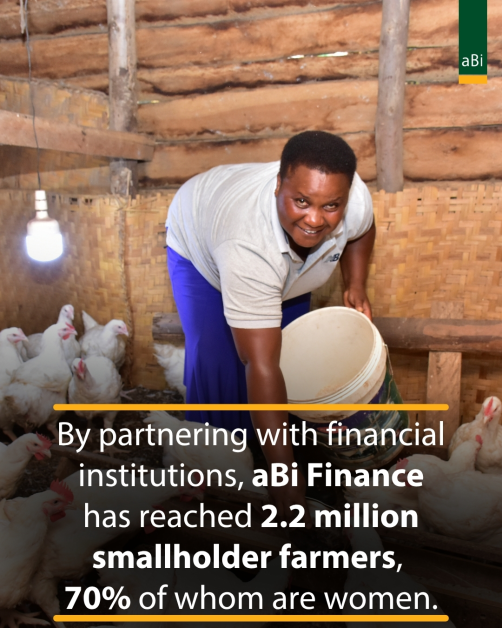
Between 2010 and 2023, through our partner financial institutions, we reached 2.2 million smallholder farmers— 70% of whom are women. By December 2024, we had channelled over $175 million in financing, supported by a balance sheet of $70 million. This funding has enabled farmers and agribusinesses to expand their operations, hire additional labor, invest in higher-quality inputs, and increase productivity. As a result, we’ve helped create 300,000 new jobs and generated $154 million in additional revenue for the sector.
Our focus on measurable ESG outcomes distinguishes us. We prioritise climate adaptation—97% of our green loans support resilience—and social inclusion of underserved demographics and geographies. We go beyond lending by strengthening financial institutions through training, systems upgrades, and literacy initiatives.
Looking ahead, we aim to grow our balance sheet to $250 million in the next eight years and explore regional expansion. Investment with aBi Finance means supporting sustainable, impactful agribusiness in line with Uganda’s National Development Goals, backed by credible, transparent governance.
You’ve mentioned before that the harvest is plentiful but the labourers are few — clearly the need in the sector is much bigger than the current interventions. As you look to scale, how are you investing in innovation to accelerate your impact and ensure that aBi Finance can keep meeting this growing demand?
The very first investment we made was in our people —building deep expertise in sustainability, ESG, and climate adaptation across staff and leadership, including exposure to global best practices. Today, our staff are proficient in enhanced sustainability reporting standards, and many hold professional ESG qualifications tailored to the financial services sector. Some have also gained global exposure in market systems, agri-food systems, and climate change adaptation.
Another has been knowledge partnerships. A key partner here has been the Uganda Institute of Banking and Financial Services (UIBFS). Together, we’ve co-developed training materials, supported training-of-trainers, and designed the Green Finance Curriculum that I mentioned earlier. This means sustainability and green finance will become part of what every future banker learns in Uganda. We’ve also partnered with the Association of Micro-finance Institutions in Uganda (AMFIU) to embed the same developments into microfinance and Tier 4 training programs. This way, we’re raising the bar for the whole financial sector, not just our direct partners.

Third, we’ve upgraded systems. What used to be very rudimentary Excel-based programs are now sophisticated management information systems. This builds the Monitoring, Reporting, and Verification (MRV) capability that investors increasingly rely on to make investment decisions.
Fourth, we have remained intentional about engaging our stakeholders- from our shareholders and the Government of Uganda to regulators like the Bank of Uganda, apex institutions such as Uganda Bankers Association (UBA), the Association of Microfinance Institutions in Uganda (AMFIU), Uganda Cooperative Savings and Credit Union (UCSCU) Limited, CRB bodies, and Financial Technologies Service Providers Association (FITSPA), and of course our partner financial institutions. Those one-to-one relationships at the operational level are critical to trust and credibility.
And finally, technology and digitisation. Beyond the MIS upgrades, we invested close to a billion shillings into the Agent Banking Company in our last business plan, which supported the nationwide rollout of agent banking. We have supported SACCOs and MFIs to digitise their operations. The lesson was stark during the COVID-19 pandemic: the institutions that had digitised early were far more resilient, while laggards struggled. That experience has made digital systems non-negotiable in financial inclusion.
Those five layers are how we’re innovating to stay credible, agile, and impactful as demand in the sector keeps growing.
You’ve spoken about your ambition to grow the balance sheet to about $250 million. What are some of the concrete steps you’re already working on to get there? And on the other side, what expectations do you have of potential partners or investors who may want to join you on this journey?
Beyond people and systems, we balance commercial capital with catalytic funds focused on governance, training, and risk management. This blend ensures investments don’t just move capital but achieve real outcomes, making risky agricultural investments bankable.
 Nicholas Mukasa Appointed Bank of Namibia Deputy Governor
This is where aBi Finance stands out. Our capital fund allows us to sustain this work without depleting resources or depending solely on concessional lending. Together with partners, we are innovating, shifting grant funds into revolving grant models, for example, so that resources multiply instead of being spent without the sustainability of being recycled.
It’s a balancing act: delivering measurable returns for commercial investors while financing the critical, yet often overlooked, work of risk management, climate adaptation, and financial inclusion. Agribusiness is risky, but with the right blend of liquidity, de-risking, and capacity building, we are proving it can be bankable.
We seek partners aligned with this long-term vision, open to innovative funding models, and committed to catalyzing transformational change in agriculture. Professional advisory on this journey is already on board with very promising discussions.
In your leadership experience, how have you managed the generational mix at work—particularly integrating Gen Z talent alongside more experienced professionals? How are you adapting to lead this new generation effectively?
One vital strategy we have found to be effective is approaching leadership with a growth mindset as opposed to a fixed mindset. It is important to let go of long-held assumptions and face the reality that what worked perfectly in the past may not work as well moving forward.
For instance, Gen Zs are digital natives, while their predecessors are digital migrants. As a result, Gen Z’s worldview is fundamentally different from that of earlier generations. For example, I vividly recall when UTV (now UBC) used to broadcast at 6 pm, after the multi-coloured test screen, and go off at 10 pm. In that, we learned patience and how to cope with scarcity. In contrast, most Gen Zs have had the incredible advantage of instant access to information and technology in their hands- mobile phones, tablets, and laptops. So, when they seem impatient or frustrated at the first sign of scarcity or disruption, we must understand that we grew up in a system that made us tolerant of such, which is not the case for them. The first step is acceptance: understanding their reality without judgment.
Once one accepts that reality, one becomes more open-minded. At aBi Finance, we make it a practice to listen deeply to all voiced perspectives and, crucially, give people ownership—regardless of their generation. When challenges arise, we ask, “What solutions do you propose?” rather than defending the status quo. This empowers individuals to design and, often, lead initiatives.
We also create multi-generational project teams to foster collaboration and ensure diverse voices shape outcomes. Even if budget or timing mean some ideas can’t be implemented immediately, we acknowledge them transparently and revisit them later. This clarity sustains engagement and trust.
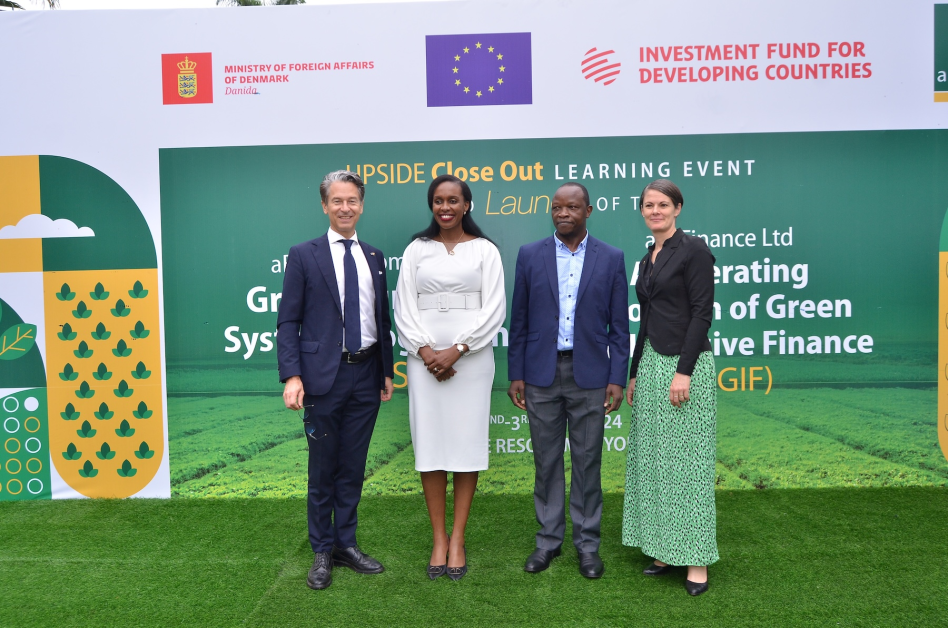
A concrete example: an employee recently gave us feedback that our induction process is lengthy and overwhelming. We partnered the employee with HR to redesign it, and they are now championing the improvement process. This approach turns critics into advocates and solution finders.
Our organisation’s lean size helps too; employees have access to senior leaders and board-level engagement. This visibility significantly boosts retention.
Lastly, embracing flexibility and remote work has been critical. Post-COVID, we retained hybrid working because we saw how well teams embraced it. Our people value flexibility and autonomy in managing their work. Team members adjust schedules to accommodate life realities while still delivering high performance. This flexibility supports both productivity and morale.
In essence, leadership grounded in humility, acceptance of differences, open-minded listening, shared ownership, transparent communication, and flexible work models fosters an environment where all generations can thrive. The lesson is that leadership must adapt continuously—not just with Gen Zs, but to a workforce whose expectations and realities are evolving constantly.
If I get you well, what you’re really saying is that these Gen Zs are not a problem at all — in fact, they’re a great generation coming into the workplace. The challenge is on us as leaders not to judge them by our old templates, but to recognise that they are different, just as we were different from the generations before us. And once we accept that, it becomes about meeting in the middle — finding the common ground where we can work together, learn from each other, and make the most of what each generation brings to the table. And of course, just because we are their leaders and can dictate to them, it’s important that we don’t abuse that fact, but instead use our influence to guide, mentor, and support them.
Yes, and I think the trick is to genuinely embrace new ideas and act on them.
However, that doesn’t mean that we can never say no. There is a place for experience. Those with more experience can see where the less experienced are headed. It’s clear what’s driving them, but it’s also clear when the timing isn’t right—so we ask them to trust us. In those moments, we defer to our judgment, always with clear explanations and open conversations.
The key is balance. After embracing and acting on a number of their innovative ideas, the team understands that a no comes from a place of wisdom, timing, and context. Over time, this builds appreciation for seasoned and reasoned decisions.
From a talent management perspective, how do you see the pipeline of talent, especially given that what you’re doing is quite unique and different from conventional financing? Do you find challenges in terms of talent flow, demand, and supply? And is it something you struggle with — having to hold on to your people? I ask because, for example, the Group CEO of Absa recently remarked that the real competition for talent today isn’t just local, or even regional; it’s global. More and more, African talent is being sought after in Europe and elsewhere. What has your own experience been like in that regard?
Because we serve the wholesale segment rather than the retail segment, our contexts are different. Our team’s average age is between 30 years and 40 years, with most employees consolidating their careers here rather than moving frequently.
That said, we invest a significant portion of our resources in talent development- both technical and soft skills training. We also provide employees with practical exposure by involving them in key organizational discussions and entrusting them with meaningful project responsibilities.
We also focus on culture change and inclusivity initiatives. For example, we’ve started unique in-house initiatives tailored to expressed needs. One of them is the Men’s Series — championed and patronized by our board chair, Felix Okoboi, and facilitated by Sam Bakutana, with leaders such as Grace Munyirwa and Robert Kabushenga leading some sessions. They have guided the team through meaningful conversations on responsible resource stewardship, emotional well-being, navigating life’s transitions, and building healthy relationships. This program complements our existing female leadership initiatives to address various development needs, like the Female Future Program by the Federation of Uganda Employers.
So, in short, we remain very intentional about investing in people collectively and broadening their exposure and providing opportunities for visibility. Ultimately, that’s what keeps talent engaged and prepares them for the future.
You’re not only a leader but also a coach and mentor, with a wealth of experience supporting others on their leadership journeys. We often hear about breaking the glass ceiling — and while this has traditionally been discussed in the context of culture and male-dominated systems, today the conversation is evolving. From your own experience, how can women play an even stronger role in opening doors for other women? Do women feel that enough is being done to open doors for them, and what message would you share both with women who have the influence to create opportunities for others, and with those who feel they are still waiting for doors to open?
The reality is that men still open more doors because they occupy more leadership roles. For example, only about 33% of bank CEO and deputy CEO positions in Uganda are held by women, and 24% in institutions like SACCOs.
The real issue, therefore, is that we still don’t have enough women in executive leadership positions with the ability to open those doors. That’s why so much focus remains on programs like Women on Boards, Women in the C-Suite, and women’s leadership initiatives — because we need to shift the statistics upwards.
That said, the responsibility to open doors lies with everyone, men and women alike. It’s about what we call the “paying it forward”—a deliberate choice to help others rise as someone once helped you. That’s one of the reasons I pursued an executive coaching qualification. I wanted to coach, mentor, and sponsor others intentionally. Looking back, I wish I had understood the importance of coaching, mentoring, and sponsorship much earlier in my career. Some of it happened to me without me recognizing it at the time. A senior leader would say, ‘Mona, go have a chat with this person; it could be useful,’ and they would make the necessary introductions. I now realize that that was sponsorship because many of those conversations opened doors to some of the significant opportunities in my career. I wasn’t aware of it at the time. Today, I’m intentional about doing the same for others.
Sometimes people hesitate to open doors, often out of fear or insecurity, but true leadership requires self-reflection and growth. Shifting to a coaching mindset—where feedback is given with empathy and accountability—has been crucial. Leading with emotional intelligence and decency is challenging and demands consistent effort, but it is essential for developing strong leaders and achieving lasting organizational success.
I intentionally coach, mentor, and sponsor emerging leaders. Part of a leader’s role is to build and contribute to talent growth and development.
In many organisations, you’ll find that at different levels, people are hungry for growth — they want coaching, they want mentorship. But it’s not always straightforward. Some people are naturally confident and find it easy to present themselves, while others struggle to show up or even put themselves forward. As someone who has both coached and mentored, what advice would you give on this? Specifically, how does one identify the right coach or mentor? Once you’ve approached them, how do you show up in a way that keeps that relationship meaningful? And because mentorship can be laborious and time-consuming, what practical tips would you share with those who may be struggling, to not only stay the course but also keep their coach or mentor genuinely interested and invested in them?
I’d say, first, muster courage. Courage is not the absence of fear — it’s acting in spite of it. Reach out and find ways in through gatekeepers or networks. Also, be aware that some don’t do it for free. Be willing to invest in yourself if that’s the case. Others will do it pro bono, but either way, don’t be discouraged — find your way in.
The second is, authenticity is vital. Be real and vulnerable, but in a measured way. Trust and confidentiality are earned over time. So don’t pour out everything on day one. Start small, observe how your mentor handles your concerns, and grow the relationship from there. Feeling comfortable with a coach and mentor is essential.
Another is that most of the work lies with the mentee. Mentors guide by asking questions and suggesting resources, expecting the mentee to follow through and honestly reflect on their progress. The key is follow-through. Do the work. And if a mentee can’t keep up, they should be honest about it. That honesty keeps the relationship real and sustainable.
Four, stay engaged with mentors by providing updates between meetings—stay on their radar. Don’t wait until the next scheduled meeting. Drop quick updates on WhatsApp or email—whatever mode they prefer. A simple message like, ‘I’ve finished the first three chapters, here’s what stood out, here’s how I’m applying it,’ keeps the mentee top of mind for the mentor.
Finally, be realistic about access and costs. While top-tier mentors may charge fees and be less accessible, many quality mentors are available at different levels. Start where you can, grow your network over time, and build your way up.
The bottom line: be courageous, authentic, diligent, and respectful of the process to keep mentors interested and invested in your growth.
