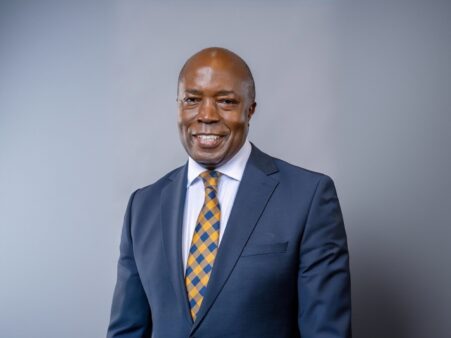
In this wide-ranging conversation, Nambafu reflects on his personal journey from agent to CEO, the lessons learned from leading in a highly competitive industry, and the strategies driving Minet’s resurgence. From redefining client relationships and embracing technology to nurturing Gen Z talent and championing industry-wide collaboration, he offers candid insights into the future of insurance, the challenges that keep him awake at night, and the opportunities that make him hopeful about Uganda’s next decade.
Edward, many people know you for your role and presence in the industry, but on a more personal level, how do you see yourself as a leader? How would you describe your leadership style, and perhaps take us back to where it all began — the early experiences that shaped your journey to where you are today?
I’m Edward Nambafu, a seasoned business leader in the insurance industry with over 25 years of experience. I started my career at NIC — the National Insurance Corporation — where I spent seven years. From there, I joined UAP for two years and later moved to Britam, where I rose through the ranks to become General Manager, a role I held for 13 years. In September 2022, I was attracted to Minet, where I came in as the team leader.
My entire professional journey has been in insurance — I can’t really say I have experience in any other field. Over the years, I have done just about everything in insurance: underwriting, claims, business development, and leadership. But I would say my strongest areas are business development and the technical side of the business.
In terms of professionalism, I am a Fellow of the Insurance Training College and also a Chartered Insurer with the Chartered Insurance Institute of the UK. So, business-wise and professionally, I believe I have all it takes to be a company team leader.
Given how much you know about the business in its different forms and practices, how do you resist the temptation to get involved everywhere? I imagine sometimes you see things not going right and feel like rolling up your sleeves, even if that means stepping outside your role as CEO. How do you manage that temptation and stay focused on your leadership role?
I think for me it’s all about believing in my team. My style of leadership is really centred on empowerment. I trust my team to act, and I step in only where I’m needed. If you truly trust your people, you allow them the space to do the work. But if you don’t, then you’ll find yourself chasing after every line of business and trying to control everything that happens in the organisation. For me, it’s all about trust and empowerment.
Of course, trusting your team also comes down to hiring the right people for the job. But as you know, finding the right talent can be tricky because there are so many things to consider. From your experience, what works best? Do you rely on what’s on paper, recommendations, or more on your gut feeling? What tips have you picked up over time about spotting the right talent?
I think, as you have rightly said, getting the right people sometimes feels like a gamble; there’s always an element of luck. But from my experience, especially at Britam, where I held a senior leadership role as number two, and now here at Minet, I’ve learned that the most important thing is attitude.
From the engagement itself, you can quickly sense whether someone has the right attitude. Skills and technical knowledge can be taught; those are trainable. But attitude is something you can’t easily change, and it’s often the difference between success and failure. So, for me, it’s not just about what’s on paper. As you engage with someone, you observe how they look at things, how they think, and from that, you can make the right decision.
That’s interesting. Before we go further, let me ask — you’ve been in insurance all your life, but did you always see yourself in this field? Because honestly, when most of us were in school, careers like engineering or medicine seemed more obvious than insurance. How did you actually end up here?
I can tell you, it’s a long story. Like many of us — even yourself — I don’t think we ever really knew where we would end up. Sometimes you just find yourself where you are meant to be. For me, after university, having studied Economics, I was sure I would end up in a bank. But along the way, an opportunity came.
There was a gentleman called John Ndyabagye, who was then Chairman of the NIC Board and also a family friend. I invited him to my graduation party, and as we talked, I told him I had finished school and was looking for an opportunity. He immediately asked me: Edward, do you want a job? Do you want to be in insurance?’ Without hesitation, he picked up the phone and called the then Chief Marketing Manager, Mr Charles Omagor, whom you probably know, he used to lecture at Makerere before retiring to MUBS. He told him, ‘There is a young man here I want you to give a job.’
The following day, I went there, expecting to be given a desk and a formal job. Instead, I was told, ‘Yes, I will give you a job — I’ll assign you to someone who will show you what to do.’ Little did I know he meant I was joining the sales force as an agent! But with the right attitude, I took the gamble. I told myself, after all, I had nothing else I was doing at home, so why not give it a try?
I was taken into the general agents’ office. The agents then were mainly older men, and there I was, fresh from university, sitting among men I could have called my grandfathers, without even a permanent seat — and yet I was told to go and sell insurance. After just two days of training, they simply said, “Go swim in the deep waters.”

With the right attitude, I looked for quick wins in my family and social network. I reached out to friends, relatives, and family contacts, and that became my starting point. I will never forget my first business — about UGX 3 million — which was a lot of money back in 2002. I earned that commission after six months, and my dear, you don’t know what that did to me. From that moment, I never looked back.
Soon after, there was an opening for a Branch Manager in Mbarara. I challenged my bosses and told them to give me the opportunity based on the results I had achieved.’ They did, and I went to Mbarara. With my networking skills and a good team, we grew that branch significantly, and by the time I left in 2008, we were generating almost UGX 1 billion in business, which was very big for a branch back then. I don’t think anyone else has ever hit that.
Of course, at some point, I started feeling ‘very important’ and even began complaining about the salary I was earning. My boss at the time, Mr. Omagor, challenged me. He asked, “Edward, what do you really have?” And the truth was that I had nothing beyond my Economics degree. He advised me: ‘If I were you, I’d join the Chartered Insurance Institute, get a professional qualification, and see what the world has in store.’
I took his advice and enrolled on the CII. Thereafter, my story was shaped. With hard work, focus, God’s grace, and the support of many people along the way, I rose steadily through the ranks — and I find myself here today.
So, in those first six months before you finally closed your first major deal, what kept you motivated? What made you wake up every morning and keep going back to work?
I think I simply wanted to prove a point — to prove that I could actually do something. That was my biggest motivation. First, I didn’t want to disappoint the person who had given me that opportunity, which I’ve never taken for granted. But more importantly, I saw a lot of potential in the business.
At the time, there were some very successful salespeople I looked up to. I remember one gentleman, Fred Mukasa, who was handling the Uganda Revenue Authority. He had his own mini office, carried himself with confidence, and commanded so much respect — it was very inspiring. He had a certain intimidating presence that he carried wherever he went, and that inspired me even more.
And then there was my boss, Mr. Charles Omagor, my Chief Manager- Marketing. He, too, was dominating — very firm, very direct, and utterly candid. Those two gentlemen, in their own ways, shaped how I began to look at insurance and played a big role in my early professional days.
You’ve been at the helm of Minet since September 2022. What has the journey been like for you so far, and how would you describe the experience of leading the company over this period?
I can say it has been a very interesting journey for me since stepping in as CEO in late 2022. Transitioning from an underwriter to a broker was not easy, and honestly, many people doubted whether I would make a positive impact. This was my first time taking on the role of team captain. At Britam, I had been number two, so it wasn’t surprising that many doubted my potential to take on the number one role.
Moving from the insurer’s side — where you have many hands feeding into the business — to a broker, where you rely on a single source line of business, was a tough decision. However, I was very focused and determined and said to myself, ‘Let me give it a try.’
The priority was aligning the team around a shared vision. I had succeeded Mr Maurice Amogola, who had spent close to 25 years with Minet and whose reputation and legacy set a high bar. Stepping into that role meant earning trust, not just assuming authority.
The team reflected two distinct generations: seasoned professionals who had built the company’s foundation, and younger talent bringing fresh perspectives. Navigating this dynamic required thoughtful change management. Through the support of our senior leaders, the energy and belief of our younger colleagues, and strategic guidance from Minet Group leadership, we successfully unified everyone around a common purpose.
As a leader, I believe the fundamentals never change: set a clear vision, communicate the mission relentlessly, and ensure everyone understands not just where we’re going, but why it matters.
The second step was reviewing the business and identifying opportunities. Minet is a very big brand — formerly Aon, the oldest broker in Uganda. Almost every major corporate, both public and private, has at some point been insured through Minet. So we had to ask ourselves where the opportunities were. We looked at partnerships and collaborations — especially with banks, some of whom are our clients — and began exploring how to leverage them as aggregators.
Government was another area. Historically, we hadn’t been so active in government business, largely because of the group’s position at the time. Aon, given its global heritage, considered the government risky in terms of brand exposure. But since Aon divested in 2018 and Minet became a purely Pan-African entity, our leadership agreed that we couldn’t ignore the government space. We have since explored that space too, and it’s one of the areas we’re now actively engaging.
Beyond traditional brokerage, we’ve also looked at new growth areas: human resource consulting, employee wellness, and risk advisory. Wellness, in particular, is an area where we’ve picked up strong momentum. You’ve seen the statistics on mental health challenges — and we’ve positioned ourselves to support organisations by giving their employees psychosocial support. This is about ensuring resilience and productivity and not just ticking a box. Today, most of the big employers in Uganda are our clients in that space, and the numbers are very encouraging.
On top of this, we’ve strengthened our innovation play: expanding our risk advisory services, modernising our tech platforms, and introducing Minet Re, a dedicated reinsurance broker that brings top-tier A-rated securities and world-class reinsurance services to our clients. That’s a big step in widening the solutions we can bring to market.
So, when I look back, these past three years have really been about ‘fixing the kitchen’ — aligning the team, repositioning the business, widening our opportunities, and strengthening our Pan-African identity. And now, I can say with confidence, we are ready for full take-off.
The latest H2 2025 figures from the Insurance Regulatory Authority show Minet regaining momentum toward the No.1 position, with a 19.27% market share and UGX 8.03 billion in gross commission. Beyond the factors you’ve already mentioned, what else do you attribute this resurgence to? And looking ahead, how does this current performance shape your trajectory for the next two to three years?
Our rise back to the top is no accident. It’s the result of a relentless focus on operational excellence, risk advisory, insurance brokerage, and human capital consulting. By consistently investing in these areas, we’ve deepened client loyalty, attracted new business, and positioned ourselves more strongly in the market.
Yes, it’s true — at one point, Minet was the undisputed number one broker. But as new players entered the space, the competition became a back-and-forth: one year we held the top spot, the next year we were displaced by a small margin. That’s why looking at the H2 2025 half-year numbers is so exciting — it shows that position coming back. Credit goes both to the group and especially to my team for their commitment and contribution.

That said, from where I sit, this is not yet the full picture. Historically, we haven’t been very active in government business, whereas many of our peers who have consistently dominated the top rankings have been heavily engaged in that space. The second half of the year is typically when most of the government-related business comes through, and that can significantly shift the numbers.
Still, when I compare where we were last year to where we are now, the progress is very encouraging. It shows that with the right alignment — particularly around government ministries, departments, and agencies — our trajectory is positive. While I’d prefer to reserve final judgment until the year closes, the signs are clear: we are regaining our leadership position, and the momentum is on.
What specific strategies or initiatives have driven this growth — team rebuilding, enhanced customer experience, technology adoption, or other factors?
It’s all about being there for our clients when they need us the most. By standing side by side with them during their toughest moments, we’ve built trust and loyalty that translate into referrals and sustainable growth.
How do you see Minet’s growth trajectory over the next 2–3 years?
Looking ahead, Minet’s growth will focus on expanding market share in underserved segments, such as SMEs, agriculture, and climate-vulnerable clients. We’re also scaling our cross-border placements and leveraging technology to streamline operations, reducing processing time by 30–40% while keeping costs under control.
What products and services does Minet currently offer, and how have they evolved to match changing industry trends?
Minet’s suite of solutions is comprehensive, spanning corporate and speciality covers, employee benefits, SME packages, and third-party health administration. We’ve evolved by integrating digital tools, data analytics, and a more robust claims advocacy framework to stay ahead of emerging risks and meet the diverse needs of our clients.
Many people don’t fully understand what insurance brokerage is all about. How would you explain the role of an insurance broker to someone unfamiliar with the industry? And more specifically, why should someone choose a broker, e.g. Minet, over going directly to an insurance company?
An insurance broker is like a personal guide and advocate in the often-complex world of insurance. At Minet, we act as professional intermediaries — and I emphasise the word professional because, unlike the way people may think of a real estate broker, we provide regulated advisory and risk management services under the Insurance Regulatory Authority (IRA).
Our role is first to understand your business, identify the risks you’re exposed to, and then design solutions to manage or mitigate them. Some of those may involve insurance, others may not — but our goal is to make sure your risks are fully covered. Think of it the same way you think of a lawyer: just as a lawyer represents you in court, we represent you in your dealings with insurers.
In a world of increasing complexity and emerging risks, this role has become even more important. Unlike going directly to one insurer, where you’ll only get what they want to sell, we have access to the full market. That means we can benchmark across multiple insurers — comparing coverage, pricing, and even the financial strength of providers — to negotiate the best solution for you.
Most importantly, we don’t just place a cover and walk away. We make sure the coverage is adequate and stand by your side when it matters most — during claims. For many clients who are not insurance experts, this advocacy is critical. We do all the heavy lifting, ensure nothing is left out, and fight to make sure your policy responds when you need it.
That, for me, is the real value of a broker like Minet: we help you navigate risk, balance protection with cost, and remain your advocate every step of the way.
Recently, I came across an interesting case where a broker actually went as far as suing an insurance company on behalf of a client. I found that quite surprising. Do brokers really go to that extent in representing their clients?
Yes, what you’re saying is very true. Once we are your broker, we walk with you all the way. Today, the Insurance Regulatory Authority has established a complaints tribunal where clients can lodge complaints. In such situations, if we are your broker and the issue is with an insurance company, we stand by you. We make sure you have all the necessary information and documentation, and we represent you throughout the process. Even if it means going to the Appeals Tribunal, we are there with you. That’s the value we bring.
It’s like going to court — yes, you can represent yourself, but your chances of success are minimal compared to having a lawyer. A lawyer knows the language, the technicalities, and how to interpret the fine print. That’s exactly the role we play in insurance.
Sometimes a policy doesn’t fully cover a claim—but that’s where our relationships make all the difference. The goodwill we’ve cultivated with insurers over the years gives us leverage to advocate on your behalf. We can say: ‘This client has been loyal for a decade—what can you do for them?’ More often than you’d expect, we secure ex gratia payments even when the policy technically excludes the claim. That advocacy—that ability to unlock value beyond what’s written in the contract—is something you simply can’t get on your own without broker support.

Having been on the insurer’s side myself, I know that if you go directly to an insurance company, they’ll give you what’s available in their product portfolio. But as brokers, we benchmark widely, even outside the local market if necessary, to ensure that the solution we deliver is credible, competitive, and comprehensive in terms of coverage, pricing, and service.
And the best part? Clients don’t pay us directly. Our remuneration comes from the premiums you pay to the insurance company. So whether you use a broker or go directly, you’ll pay the same premium — but if you bypass us, you miss out on the advisory services, representation, and extra value we provide.
In your view, what does Minet do better than its competitors? What strategic differentiators set Minet apart in service delivery, product innovation, or client relationships?
For us at Minet, it’s all about putting the client at the centre. We don’t just show up; we engage deeply with our clients — learning about their businesses, understanding their unique challenges, and then crafting solutions that create real value.
Our approach rests on three key pillars:
- Client-Centric Solutions: We design tailored offerings that address today’s emerging risks, including people-related risks such as Employee Assistance Programs and wellness initiatives.
- Risk Consulting & Advisory: We go beyond simply selling policies. Our role is to help clients identify, anticipate, and mitigate risks, giving them confidence and resilience in a changing world.
- Strong Client Relationships: We prioritise trust, communication, and responsiveness. Instead of a transactional approach, we promote a consultative partnership that grows and adapts alongside our clients.
In short, we don’t just provide insurance — we build long-term value and walk the journey with our clients.
What do you want clients, partners, and the public to know about Minet that they might not be aware of?
What many clients don’t realise is that our commitment to them doesn’t end with the policy placement. The real value comes in how we handle claims, interpret policy terms, and ensure that insurers live up to their promises. At Minet, we understand risks deeply, and that knowledge helps us deliver tailored solutions that provide real stability, especially during volatile times.
You’ve been in the industry for quite some time and have had the chance to experience both sides — as an insurer and now as a broker. From your perspective, how has the industry evolved over the years? Is it getting better, and what do you think still needs to be done?
The truth is that as an industry, we’re not where we need to be. The numbers tell the story: Uganda’s insurance penetration is less than 1%. Meanwhile, our regional peers have pulled ahead—Rwanda sits at 1.5%, Tanzania above 2%, and Kenya is approaching 3%. We’re not just lagging; we’re being left behind.
That gap represents both a challenge and an enormous opportunity. Clearly, we have significant ground to cover
That said, I believe we are moving in the right direction. The numbers have been growing year after year, which shows progress. A lot of credit goes to the Insurance Regulatory Authority, which has been very key in enforcing professionalism. For example, they have introduced controlled functions that require certain qualifications, ensuring that only qualified people occupy critical roles. They also introduced the training levy, which has supported the Insurance Training College of Uganda. This has been a game-changer. Before, we could only talk about international institutions like the CII in the UK, ANZIIF in Australia, or the College of Insurance in Kenya. Now we have our own Insurance Training College, a local college providing professional certifications, which is helping to professionalise our industry.
Regulation has also helped to put our house in order — we know who is doing what, and the regulator has been very firm. We are also seeing increased brand visibility for insurance, unlike before, when the sector operated quietly in the background. Another positive trend is the entry of international and regional brands. They bring world-class practices, which allow us to benchmark and adopt higher standards.
Most importantly, the customer has changed. The customer is no longer just king or queen — today, the customer dictates. They define what they want and expect. This shift is partly why we are seeing growth, particularly in life insurance. People are beginning to appreciate insurance more. For example, those investing in endowment policies now understand what they will receive after a certain period, and this is driving uptake among the younger working population and middle class.
Finally, regulation has also ensured the growth of local talent. For instance, international companies are limited to only one expatriate in senior leadership, and that role cannot be CFO. The CFO must be local. That has created opportunities for Ugandan professionals to rise in the industry.
So while we are not yet where we need to be, the direction is right. With professionalism, regulation, customer appreciation, and global best practices coming in, the industry is on a strong growth path.
Let’s talk about competition. From your vantage point at the top leadership level, how has Uganda’s insurance brokerage landscape evolved in recent years? Would you say competition is growing in a fair and healthy way, and where do you see peers beating you fair and square? How is the overall dynamic changing?
I tend to look at competition a little differently. Yes, Uganda has over 52 licensed brokers, but if you study the statistics, the top five control between 60% and 70% of the market. When we talk about genuine head-to-head competition—it’s really concentrated among those top five players. Beyond that, the market fragments quickly.
That said, I believe our biggest competitor isn’t necessarily other brokers — it’s the insurance agents. Unlike brokers, agents can operate with far fewer governance constraints, and sometimes clients are attracted to that flexibility. This makes them a strong force in the market.
 Ruparelia Group Wins Key Entebbe Land Case, Clearing Path for the New Mega Speke Resort and Convention Centre, Entebbe
In the past, some people also saw bancassurance as a threat. But today, I see banks and telecoms as partners rather than competitors. At Minet, we’ve positioned ourselves very well with several of the big banks, and there’s a lot we are doing together in terms of collaboration and product innovation.
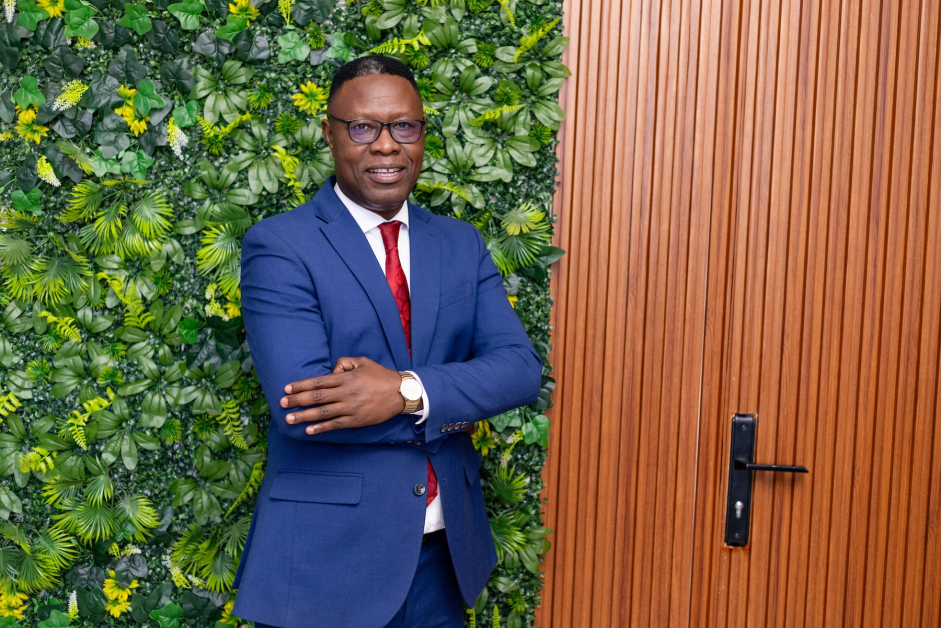
Where the competition does bite is when insurers themselves encourage clients to bypass brokers and deal directly or through their agents. Some companies see that as their business model. But the truth is, when it comes to complex risks — energy, cyber, ESG, or other specialised areas — you need a broker. That’s where we bring immense value, combining local expertise with international capabilities to build robust risk management structures.
So yes, competition has intensified. The top brokers are raising the bar, new players are shaking things up with bancassurance, digitalisation, and Insurtech, and clients themselves are becoming more demanding. The landscape is evolving fast, but for us, the real contest is at the top — and beyond that, it’s the agents and direct channels that pose the bigger challenge to our space.
What would you say are the main challenges facing the insurance and brokerage industry today? And looking back, how have these challenges shifted or evolved over the last five years?
The industry is grappling with several challenges: low insurance penetration, rapid digital disruption, increasingly complex emerging risks (such as cyber threats, ESG concerns, and geopolitical shifts), and a shortage of next-gen talent.
The pace of change has only accelerated, especially with the rise of digital technologies and the growing complexity of risks. The need for brokers to innovate and stay ahead of these trends has never been greater.
For a long time, we’ve kept hearing about insurance penetration being below 1%. Even as premiums grow, it feels like the economy is growing faster than the insurance sector. What, in your view, needs to be done to accelerate growth? I know there have been efforts through legislation and reforms, but what more can be done to increase uptake so that insurance contributes more significantly to GDP and to the wider economy?
One of the biggest things that needs to happen is government participation. Government is the largest spender, yet in Uganda, mainstream government is largely uninsured. Apart from a few parastatals with decentralised decision-making, most government institutions do not insure their people or assets. Public servants like teachers, police, and the army are not insured. Kenya offers a striking contrast: the government is the industry’s largest client by far. Minet, for instance, insures every teacher in Kenya through a single national scheme. That kind of scale transforms the entire market—it drives penetration, builds capacity, and creates momentum that ripples across the industry.
So for us, the priority is to keep engaging the government — to show them the need to ensure both their human resources and their physical assets. If the government came on board the way it has in Kenya and other countries, uptake in Uganda would grow significantly.
The second issue is awareness and sensitisation. Many Ugandans still don’t fully understand insurance or trust it. There’s a long-standing perception that insurers are ‘thieves’ who will let you down when you need them most. Changing that mindset requires a more coordinated, industry-wide effort, not just isolated campaigns by individual companies. The good news is that the regulator has made progress here, especially through complaint tribunals that give clients confidence that their grievances will be heard. The growing number of claims settled every year is also helping restore trust.
Third, we need to tap into sectors with massive potential. Oil and gas, for example, present huge opportunities. The challenge, however, is capacity — most of the premiums end up being ceded to foreign markets because we don’t have the capital base to retain those risks locally. Building that capacity will ensure Uganda benefits more directly from these big-ticket opportunities.
Fourth is that digitalisation and Insurtech must become game changers. Look at the banks: many of them have drastically reduced physical branches because technology allows them to reach customers more efficiently. Meanwhile, insurance is still largely dependent on face-to-face interaction. If we embrace technology, leverage aggregator platforms with telecoms, and develop digital distribution for products like personal accident, medical, and life cover, the numbers will shift significantly.
Finally, product customisation is critical. Generic solutions don’t resonate anymore. The growth we have seen in individual life insurance is because insurers have begun designing products that fit real customer needs. For example, Ugandans value land and property, so products that combine protection with an investment component — where you get your money back after five or ten years — are very attractive. These kinds of solutions, especially for the younger working population, are driving uptake.
So for me, the drivers are clear: stronger government participation, more awareness and trust, capacity-building in high-value sectors like oil and gas, embracing technology, and offering customer-centred products. If we get these right, insurance’s contribution to GDP will grow significantly.
This whole issue of customisation also points back to talent — having the right people with the right exposure. From your perspective, are you finding enough of the right talent in the market? How do you see the current supply of talent for the industry’s needs?
Of course, we always say there’s a shortage of the right skills in the market. But for me, it’s really about mentorship and coaching. I look at my own journey — if I hadn’t been given that first opportunity straight out of university, you wouldn’t be speaking to me here today. It’s about creating those starting points for young people.
The good thing is we now have the Insurance Training College here in Uganda, which provides a foundation. From there, it’s our responsibility as industry leaders to support young graduates, give them exposure, and show them what the world of insurance has to offer. That’s why I believe strongly in empowerment, coaching, and mentorship rather than simply complaining about a skills gap.

At Minet, we pride ourselves on taking on fresh graduates through our Graduate Trainee Program and growing them internally. A good example is our current Chief Operations Officer, Winnie Kiwuuwa. She joined Minet as a young graduate and has risen through the ranks to become one of the top technical professionals in this market. If you asked me, I’d rank her among the top three technical minds in Insurance in the country. That’s what happens when you invest in young talent and create space for them to grow; potential becomes excellence. The younger generation has it easier than we did. In our time, you had to physically attend training sessions. Today, with the internet and online resources, they can access knowledge much faster. So yes, there may be a skills gap, especially at the very top, but at the middle and operational levels, the talent is there. It’s up to us to nurture, grow, and guide them to where we want them to be.
There are often mixed views about this younger generation — their outlook, attention span, and work ethic. What has been your own experience working with and managing young talent, particularly Gen Z? How do you bridge the generational gap so they gel with the rest of the team, and what lessons have you learned about motivating, retaining, and leading a multigenerational workforce?
You know, when people talk about Gen Z, Generation X, and the rest, there are always mixed opinions. Some say the younger generation is lazy, rebellious, or lacks focus. But for me, it comes down to one thing: believing in them. Once you’ve recruited them, you can shape them in the direction you want. If you give them trust and opportunity, they can turn out to be the best people you’ll ever work with.
At Minet, close to 70% of our workforce is millennial, and about 35% is Gen Z, and many of these are already holding middle-level positions. We’ve made mentorship and coaching central — pairing young talent with senior colleagues so there’s constant knowledge transfer. But beyond that, it’s about understanding them: how they think, how they work, and then creating an environment that allows them to thrive.
The mistake many leaders make is condemning them upfront — calling them lazy or rebellious — instead of giving them the chance to prove themselves. In my own experience, when you are deliberate about supporting them and being intentional about their growth, they will surprise you. I’ve watched our younger colleagues work through the night to hit critical deadlines—but on their own terms. Music playing in the background and a cool drink or two at their desk. If that’s what keeps them focused and productive, I have no issue with it. The workplace has evolved from when I started out. We’ve learned that rigidity doesn’t drive performance—results do
Gen Z also brings fresh perspectives, digital fluency, and a real hunger for purpose. At Minet, we harness those qualities by giving them challenging assignments and empowering them to influence how we innovate. And the key lesson I’ve learned is that mentorship should flow both ways. Senior staff provide institutional knowledge and experience, while younger talent contributes new ideas and digital insights. When you create a culture of reverse mentoring, you don’t just bridge the generational gap — you build a collaborative environment where everyone learns, grows, and moves faster together.
So for me, the lesson is simple: if you approach young talent not just as a boss, but as a big brother who listens, supports, and genuinely wants them to succeed, they will go the extra mile for you. They’ll not only get the job done, but they’ll give you their all.
When you listen to these young people, whether directly or through your leadership team, what are some of the concerns they raise about leadership and the work environment? What issues do they tend to voice most strongly?
From listening to them, one of the biggest concerns for young people today is work–life balance. That’s very key for them. They value their personal space and peace of mind, and they don’t want anyone infringing on it. Unlike our generation, which was wired to be in the office from 8 a.m. to 6 p.m. without question, this generation wants flexibility. If there’s an event or something important to them, they expect you to understand.
So flexibility, being listened to, and being believed in are very important. For them, it’s not about sitting in the office for long hours — it’s about delivering results. If they finish their work, they don’t see the need to be policed on time. As leaders, sometimes you have to close one eye on the small things and focus on outcomes.
The other concern is around leadership style. They don’t respond well to leaders who come across as authoritarian or power-driven. What they prefer is a brotherly or sisterly approach — leaders who listen, guide, and walk with them rather than simply commanding them. If you impose authority too heavily, they’ll resist, and you won’t get the best out of them. But if you treat them with respect, give them space, and trust them, they’ll deliver far beyond your expectations.
You’ve spoken about Gen Z in the workplace, but you’re also possibly a parent of Gen Z. Do you see commonalities between managing young talent at work and raising your own children? Are there lessons you draw from parenting that also help you in leading this younger generation?
Definitely, yes — I see a lot of commonalities. Independence is very important for Gen Z, whether at home or in the workplace. As a parent, you have to allow it, but within certain boundaries. I have a son in Senior Three and another in Primary Seven. If either of them says they want to go somewhere, I won’t refuse, but I will ask for the necessary details and seek to know what they are doing and who they are doing it with. Once I’m sure it’s safe, then I let them go.
It’s the same at work. Young people want space and freedom to do things in their own way, but they still need guidance and boundaries. If you show trust, but also set the framework, they thrive.

Another parallel is technology. Just like our children can spend an entire holiday on the phone, young people at work are also deeply tech-savvy and always connected. The challenge is how to balance that — ensuring they don’t lose touch with real-world interactions and responsibilities.
So for me, whether at home or in the office, the principle is the same: listen to them, understand them, and support them. That’s what brings out the best in this generation.
If you were addressing young people considering careers in insurance, what would you tell them?
I would tell them to be curious and open to learning. Insurance is an evolving field, and the most important skills — like problem-solving, communication, and empathy — are ones that you can cultivate. Don’t wait for opportunity; seek out challenges, ask for feedback, and continuously grow.
What opportunities does the insurance and brokerage sector offer young professionals?
The industry is diverse, and it offers much more than just underwriting or sales. There are opportunities in tech, data analytics, cybersecurity, employee benefits, and more. The insurance world is ripe for innovation, and young professionals can be at the forefront of that change.
How is technology influencing the future of insurance brokerage in Uganda?
Technology is at the core of Minet’s strategy. It’s not just about scaling — it’s about scaling smartly. We’re using data platforms and digital tools to streamline our processes, deliver faster service, and enhance how we advise and place risk for our clients.
What do you love most — and least — about working in insurance?
What I love most is the opportunity to provide real value to our clients. It’s a rewarding industry that truly makes a difference. What I enjoy least is the perception that insurance is just a “commodity” rather than a vital part of risk management.
What personal and professional principles guide your leadership?
My leadership is guided by integrity, a focus on people, and a commitment to innovation. I believe in empowering my team, fostering a culture of trust, and continuously adapting to the needs of the business and our clients.
How have you approached building and leading a high-performance team at Minet?
Building a high-performance team is about creating clarity of purpose, fostering accountability, and establishing a culture of trust. We place a strong emphasis on collaboration and open communication, ensuring that everyone is aligned toward our common goals.
As a middle-level manager, it’s often easier to connect with the team. But the higher you rise — especially at the very top — leadership can sometimes feel lonely. How do you balance that? How do you stay grounded and sane while maintaining a brotherly connection with colleagues, yet keeping the professional distance required of a CEO? And more broadly, how do you manage your day, maintain balance, and handle the pressures of a fast-paced leadership role?
I have always strived to be a leader, not just a manager or a boss. I remind my team that I’m CEO today because of experience — but if any one of them were given the same opportunity, they could also make an excellent CEO, maybe even better. Once you demystify that gap and show that leadership is about responsibility, not privilege, it becomes much easier to connect.
Across Britam, UAP, and now Minet, I’ve made it a point to keep interactions open at every level — whether it’s a graduate trainee, a middle manager, or senior staff. I never want to be “alone at the top.” That’s why I try to keep things simple. You gain nothing by complicating yourself or creating unnecessary barriers. For example, at Minet, we have a true open-door policy: people can walk into my office anytime; It makes it easier for them to share ideas freely.
I also look for opportunities to connect outside formal office settings. At Minet, we have a daily gym session at 4 p.m. and I ensure to be a part of it. We laugh, joke, and bond as a team. The same goes for team-building activities — I participate fully, not as “the CEO” but as a colleague. But the line is always clear: when it’s work time, it’s work. The same people I laugh with at the gym know that if something is not right, I’ll hold them accountable. We work hard, but we also play hard together.
That balance — being approachable and brotherly, but also professional and firm when it matters — is what keeps me grounded and makes leadership at the top less lonely. It’s really about prioritising what matters, staying focused, and building in time for self-care. In a fast-paced leadership role, it’s easy to get caught up in the hustle, but maintaining perspective and balance is key.
As CEOs of Uganda’s Top 100 companies, the decisions you make shape not just your organisations but also the country’s growth — from the kind of talent we raise, to the solutions we create, to how Uganda is perceived globally. If you were addressing a room of fellow CEOs, what would you say we should be doing differently or better, so that together we can grow Uganda’s economy and expand the national cake for all of us to share?
That’s very true. As CEOs, the first thing I would emphasise is the power of synergy. There is so much we can achieve together that we cannot achieve alone. Many of us serve multinational and regional clients with cross-border needs, yet often each company operates in isolation. If we approached these opportunities collectively, we could unlock enormous value.
That is why I strongly believe in collaboration and partnership. Even with those we call competitors — I prefer to call them peers — there are opportunities to work together. Look at how banks and telecoms once saw each other as rivals, until they discovered the power of collaboration. Today, they share infrastructure like masts and create solutions that serve millions. In insurance, we too can ask: where can we ride on each other’s strengths to deliver more for the market and for Uganda?
Second, we cannot ignore technology and innovation. Artificial intelligence, digital platforms, and InsurTech are already transforming banking and telecoms. As insurers, we must embrace them, not run away. Technology has the power to expand reach, cut costs, and build trust — and it’s something we should be investing in collectively.

Third, we must focus on talent nurturing and empowerment. I don’t believe in the stereotype that Ugandans are lazy. It’s often about opportunity. If you haven’t given someone a chance, how can you expect them to grow? As leaders, we must empower our teams, trust them, and let them take ownership — even make mistakes. I’ve often found that when I assign work, I may only need to add a small contribution because my team already has great potential. But you only discover that when you give them space.
So if I were speaking to fellow CEOs, my message would be this: let’s collaborate more, embrace technology, and empower our teams. If we do that, we will not only grow our companies but also grow the Ugandan economy, expanding the national cake so we all benefit.
Looking beyond insurance to Uganda’s broader economy and governance — especially as parents thinking about the country our children will inherit — what gives you hope and confidence about the future? What makes you optimistic, and on the other hand, what concerns keep you awake at night? And as you look ahead, where do you see the biggest opportunities for Uganda over the next 5–10 years?
When I think about Uganda and our industry, I like to begin with what gives me hope. For me, it’s the progress I’ve witnessed over the years. I still remember joining insurance straight out of university — if you compared my first ID card photo with how we present ourselves today, you’d hardly believe it’s the same profession. Today, we have agents who own real estate, drive good cars, dress sharply, and carry themselves with real confidence. The level of professionalism has grown tremendously.
I also see hope in regulation. Yes, regulation can sometimes feel like a double-edged sword, but it has brought accountability, structure, and credibility to our industry. Under the leadership of IRA’s CEO, Hon Al Hajji Kadunabbi, the Insurance Regulatory Authority has become very intentional. Today, as insurance professionals, we can stand shoulder to shoulder with bankers, accountants, and lawyers and confidently say, “We belong at the table.”
What excites me even more are the emerging opportunities — in energy, mining, infrastructure, renewable energy, climate change, ESG, and employee wellness. These are spaces where insurers can step up as thought leaders and truly differentiate themselves. Coupled with the country’s overall stability, these opportunities give me confidence that Uganda has a bright future.
Of course, there are things that worry me. Unprofessional practices — especially fraud in areas like medical insurance — continue to undermine public trust. When one card is used to treat a whole clan, it damages the reputation of the entire industry. Rebuilding that trust remains one of our biggest challenges.
I also worry about generational gaps. If Gen Z has already challenged us, what about the Alpha generation — our children’s children — who are even faster, sharper, and more tech-savvy? As leaders, we must think of them not just as future employees, but also as future customers. What solutions are we designing for them today? Honestly, as an industry, we are not yet there.
Finally, the speed of change keeps me awake. Banks, accountants, and lawyers have all evolved very quickly, while in insurance, sometimes it feels like we are moving too slowly. If we don’t accelerate, we risk being left behind.
So yes, I remain very hopeful, but also realistic. The biggest opportunities for us lie in addressing complex, underinsured risks such as cyber threats, climate change, and ESG-related challenges. These are areas ripe for broker-led innovation, both in terms of product design and advisory services.
Earlier, you spoke about the government not insuring its assets and people. If I put you in a room with the top executives at the Ministry of Finance, what would you tell them they are losing by not insuring? Would insuring government assets and employees actually save the country money? What benefits are other governments realising from insurance that Uganda is currently missing out on?
It comes down to serious dialogue with the government so they can clearly see the value proposition that insurance brings to the table. I don’t think we’ve yet had that full opportunity to make the case, but there are encouraging signs. For example, look at how the government has stepped in to subsidise agriculture through the Agriculture Insurance Consortium. By covering part of the premiums, they are protecting farmers against loss of crops and animals — and that intervention has worked. It shows the government understands the importance of insurance in safeguarding livelihoods.
Another area is the National Health Insurance Scheme. If fully implemented, it would guarantee all Ugandans at least a basic level of medical care, channelled through medical insurance. Unfortunately, every time it comes close to passing in Parliament, it gets pushed back by other forces. But I remain hopeful, especially with the regulator having built goodwill and credibility. Sooner or later, it will happen — it’s only a matter of time.

Now, if you look at the financial side, the truth is simple: when the government fails to insure assets or people, it ends up paying more. Every time assets are destroyed or public servants suffer loss without cover, the replacement costs come directly out of the national budget. A proper cost-benefit analysis would show that insurance is the cheaper option. It cushions the government, smooths expenditure, and ensures continuity without unplanned financial shocks.
So my message to the Ministry of Finance would be this: insurance is not an expense, it’s a safeguard. It protects national assets, secures the well-being of public servants, and frees up resources that would otherwise go to emergency payouts. Done well, it would be a game-changer for Uganda.
What advice would you give to rising leaders in any industry?
Always keep learning, be open to new ideas, and lead by example. Leadership is not just about guiding others but setting the tone through your habits and attitude.
Any final reflections on where the insurance industry is headed and Minet’s role in shaping it?
The future of the insurance industry will be shaped by brokers who are customer-centric, tech-savvy, and ready to innovate. At Minet, we’re focused on combining deep local knowledge with forward-thinking strategies, helping clients anticipate risks, not just to insure but rather implement risk mitigation measures to prevent them or, better still, reduce them. The future is about delivering smarter, seamless solutions that truly make a difference.