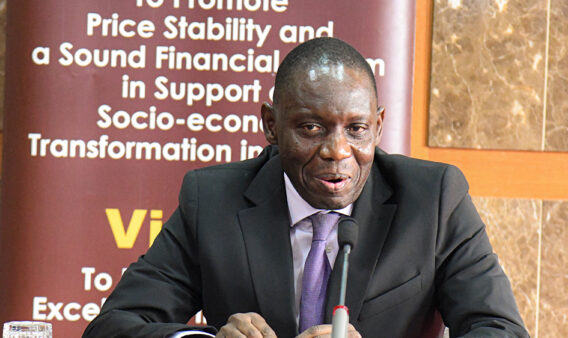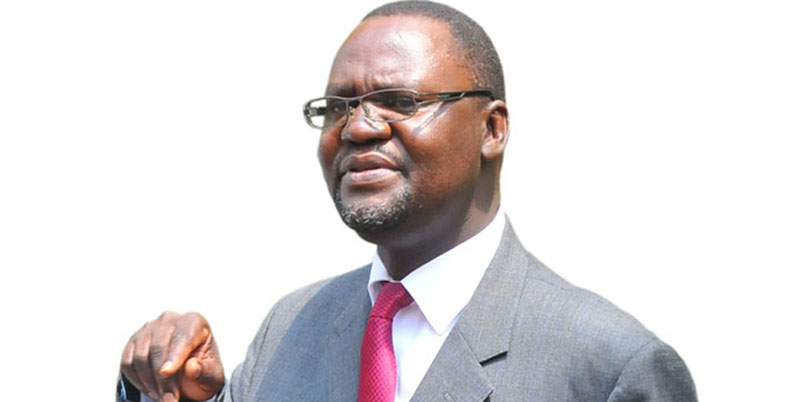
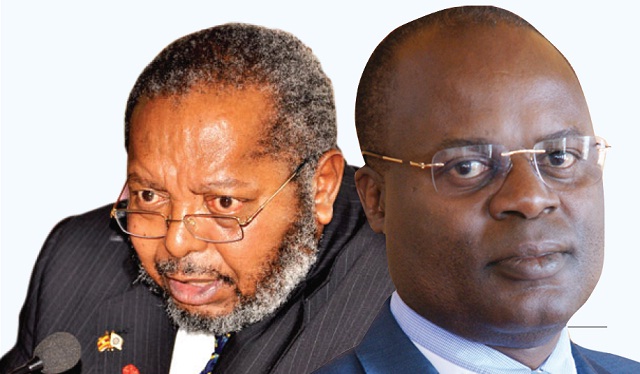
A committee appointed by President Yoweri Museveni to study several complaints made to the Inspectorate of Government and Parliament about Bank of Uganda, has recommended “urgent and comprehensive review” of what it believes is an archaic “legal regime governing the Bank of Uganda.”
“The Bank of Uganda Act Cap 51 was last amended in 1993, two years before the promulgation of the 1995 Constitution of Uganda. In the case of the Bank of Uganda by-laws established under Statutory Instrument 51-1, the situation is even worse as they were passed in 1968 and continue to be applied despite being inconsistent with the Constitution in some important respects such as the authority of the Governor versus the authority of the Board,” reads part of a leaked Confidential Report of the Presidential Tripartite Committee to the President.
The committee was formed by the president to partly investigate numerous allegations surrounding a decision taken by the Governor of Bank of Uganda, Prof Tumusiime Mutebile on 7th February 2018 to fire then Executive Director of Bank of Supervision, Justine Bagyenda.
The governor also made several staff transfers and made new appointments from without BoU to several senior positions. This included Dr. Twinemanzi Tumubweine who replaced Bagyenda. As a result of the Governor’s communication complaints were made to the Inspectorate of Government and the Parliamentary Public Accounts Committee on Statutory Authorities and State Enterprises (PAC-COSASE) challenging the legality of the governor’s decisions.
The Committee conducted interviews, document reviews and benchmarked the central banks of Kenya, Indonesia, South Africa and Rwanda. Various staff of BoU as well as current and former Board Members and Hon. Matia Kasaija, Minister of Finance, Planning and Economic Development were also interviewed.
In total, 74 people were interviewed.
Mutebile defends his decisions
In his defence, the governor said that the appointments were in in accordance with Section 28(4) of the Bank of Uganda Act and the by-laws created thereunder. He referred to Section 28(4) of the Bank of Uganda Act which provides that “except as may otherwise be provided in the by-laws of the bank, all appointments of employees shall be made by the Board. The Governor then went on to refer to Sections 8(2)(a) and 8(2)(e) of the by-laws of the Bank created in 1968 which he said entrusted the Governor with the responsibility of organization and management of the Bank as well as ensuring proper discharge of duties of the other officers and other employees of the Bank.
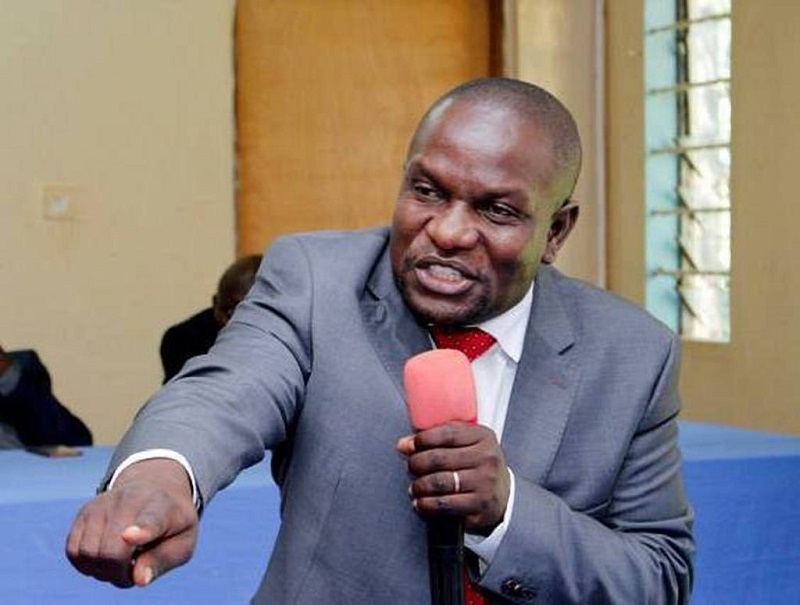
“In this particular case the governor made reference to responsibilities attributable to his office as Governor under the by-laws and yet the same responsibilities were constitutionally attributable to the Board of Bank of Uganda. A review therefore needs to be urgently undertaken and the Bank of Uganda laws (by-laws) brought into harmony with the Constitution along with any other matters necessary for the stability and smooth functioning of the central bank,” recommended the 8-member committee in their February 2019 report.
Although the committee did not reverse the decisions of the governor, it noted that the gaps in the legal regime governing the set up and running of the central bank “created a complicated situation from a corporate governance point of view whereby the Governor made a decision as a Chief Executive and yet also assumed the role of the Board within the same decision.”
It is for this reason that the committee recommended a “splitting or separation of the functions of the Governor and the Chairperson of the Board especially with regard to administrative matters”, noting that “most of the problems caused as a result of the Governor’s decision could have been avoided if the two roles were separate with no opportunity for the Governor to function as both Board and Chief Executive Officer.”
Growing voices to reform BoU
 Inside the Balance Sheet: CFO Doreen Kyomugisha on Building Capital Strength and Financial Discipline at SanlamAllianz General Uganda
This latest recommendation adds weight on an earlier recommendation by MPs on the PAC – COSASE probing Bank of Uganda who also recommended amendment of Article 161 (4) of the Constitution that provides that the Governor and deputy Governor shall be Chairperson and Vice Chairperson of the Board respectively, so as to ensure “objectivity of the Board and its independence from management.”
Recently, two members of Parliament, Michael Mawanda (MP, Igara East) and Paul Mwiru (MP, Jinja Municipality East) said they were in the process of drafting a private member’s bill seeking to amend the Bank of Uganda Act so as to effect the above recommendations.
The MPs said this was because government has, despite promising to respond to the PAC-COSASE report in 90 days, has to date failed to act, more than 120 days later.
Several other experts, including Mr. Onegi Obel, an economist and capital markets expert, as well as economists and researchers Dr Fred Muhumuza and Dr Patrick Wakida, have previously called for a review of BoU’s powers in the face of recent failures.
More proposed reforms
The Committee also recommended that a new additional position of Deputy Governor be created to unburden the governor, who they said was “too overloaded in terms of responsibilities” some of which risked “exposing the position of Governor to unnecessary controversies.”
“It may therefore be prudent to consider the creation of an additional post of Deputy Governor, which Deputy shall largely be responsible for the general administration of the Bank while the Governor and the other Deputy are free to concentrate on the core functions of the Bank as stipulated in the Constitution,” recommended the committee.
The committee further recommended that there should be periodic individual-focused appraisals of the performance of all the Board members including the Governor. Relatedly, the committee also wants the Bank of Uganda Act be amended to operationalize Article 161(5) of the Constitution to provide for legal provisions which a President may rely upon to set in motion, the process of removal of any of the Board members including the Governor and Deputy Governor.
They also called for a review of BoU’s administration manual to clarify ambiguities surrounding entry requirements and job descriptions.
Regarding human resource management, the committee called for the removal of the board from direct involvement in recruitment. They also want the process of internal promotions reviewed while the ratification of externally recruited persons is outsourced.
It is not clear when the president received the report, but in a recent interview with NTV, then, acting Information minister, Dr. Chris Baryomunsi said that cabinet has considered the PAC-COSASE report and will be able to give a report on the progress so far in addressing the COSASE recommendations in the coming weeks.