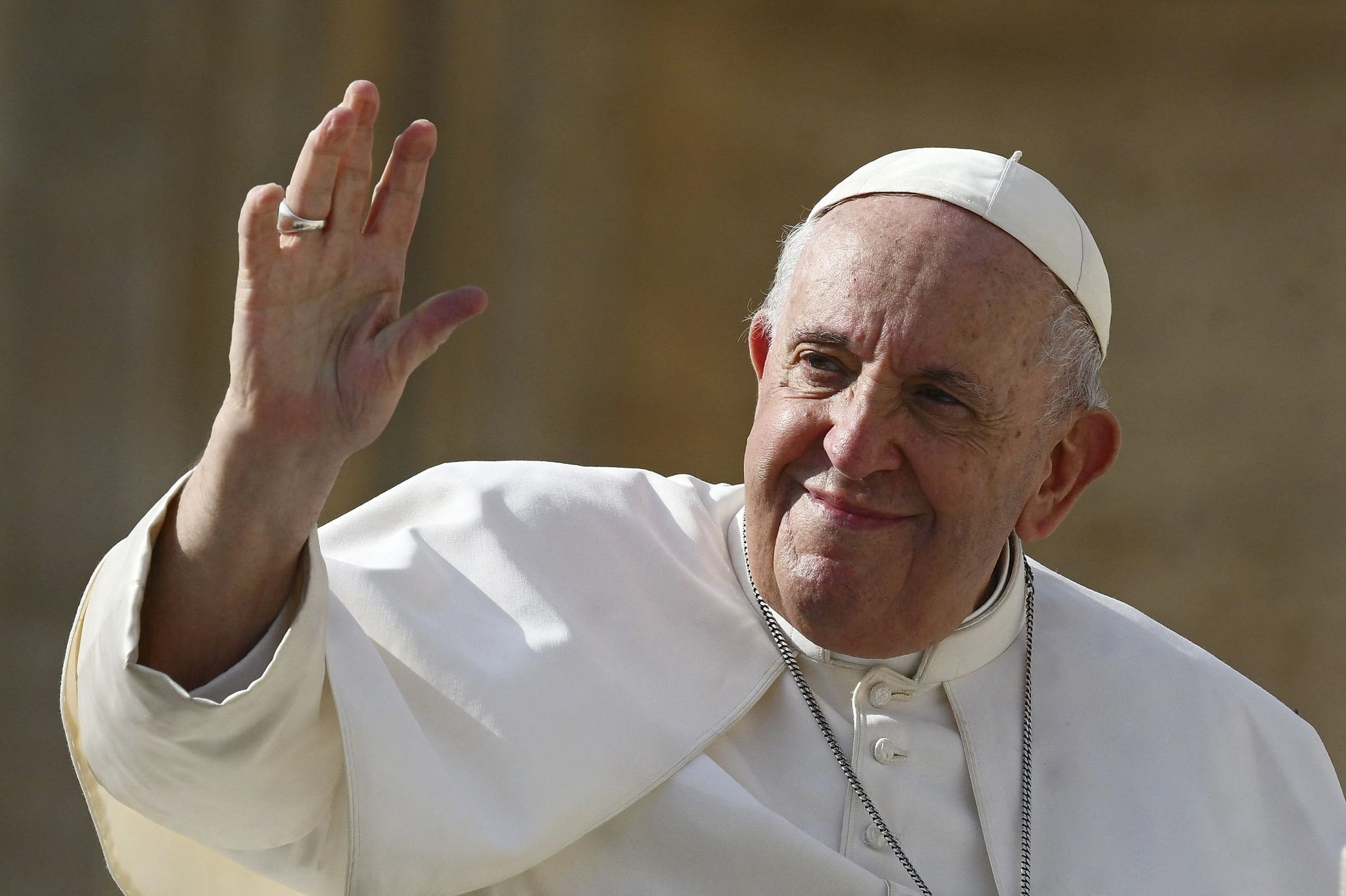
27th November, 2015 will forever be etched in history as a memorable day of the third papal visit to Uganda, and remains a symbol of religious significance to many Catholic faithful.
Pope Francis who died today, aged 88, became the third Pope to visit Uganda following in the footsteps of his two predecessors- Pope Paul VI visit in 1969, and Pope John Paul (now a Saint) visit in 1993.
Pope Francis’ visit to Uganda started from Nairobi, Kenya on November 27, 2015. Again like his two predecessors, he came as a pilgrim to venerate the holy martyrs, at Namugongo Catholic shrine.
The former Archbishop of Kampala, late Dr. Cyprian Kizito Lwanga, initiated his pastoral visit during an audience with the Holy Father in 2013.
Worthy to note is that the Pope’s visit had been prepared in advance with major refurbishment of the Martyrs’ shrines in Namugongo with the construction of new pavilions, tarmacked roads and improvement of other existing facilities.
The visit also marked a significant milestone for Uganda’s religious tourism offerings and a landmark across Africa.
The most significant day during his visit was on November 28th where he held a holy mass at the Namugongo Catholic Shrine, a religious site for Uganda Martyrs which has since gained more prominence since his visit.
Millions of pilgrims made their way to Namugongo for the holy mass, while others thronged the roadsides to catch a glimpse of the most popular religious figure in the world.
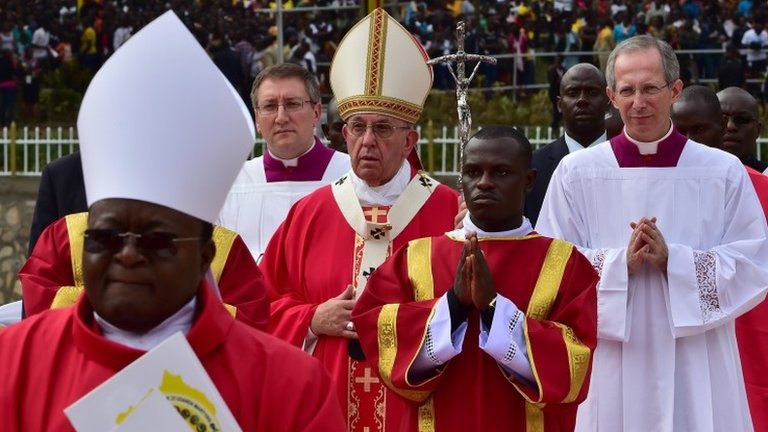
The Pope’s visit was not a matter for only Ugandans, but foreigners as well, especially those from other African countries, who sent delegations for the once-in-a-life opportunity to see and meet the Pope. The signature event also united several religious denominations.
According to a detailed programme released by Archbishop Augustine Blume, who was then, the Apostolic Nuncio to Uganda, and announced by the Secretary General of the Uganda Episcopal Conference, Msgr. John Baptist Kauta, Pope Francis made several visits and conducted meetings including one with President Museveni at State House Entebbe, a meeting with authorities and diplomatic corps, a visit to Munyonyo Martyrs’ Shrine and the Anglican shrine of the Uganda Martyrs in Namugongo, a holy mass at Catholic shrine, a visit to the Kololo airstrip, a meeting with catholic bishops of Uganda at Rubaga as well as a meeting with priests, religious men, women and seminarians.
“The most dangerous enemy of remembrance is forgetfulness but it is not the only one. The most dangerous enemy of remembrance is when we take for granted everything we have received, Everything that has been passed down to us” Pope Francis is said to have told Priests, Religious men and women and Seminarians at St. Mary’s Cathedral Lubaga on Saturday, November 28, 2015.
Who was Pope Francis?
Pope Francis was born Jorge Mario Bergoglio in Buenos Aires, Argentina on 17 December 1936, the son of Italian migrants. His father was employed by the railways and his mother was a committed wife dedicated to raising their five children.
He graduated as a chemical technician, then chose the path of the priesthood. In 1958 he entered the novitiate of the Society of Jesus. He completed his studies in the humanities in Chile and returned to Argentina in 1963 to graduate with a degree in philosophy. From 1964 to 1966 he taught literature and psychology at two different colleges.
On 13 December 1969, he was ordained a priest. In 1973 he made his final profession with the Jesuits. During the same year, he was appointed Provincial of the Jesuits in Argentina, an office he held for six years. He then resumed his work in the university sector and from 1980 to 1986 served once again as Rector of the Colegio de San José, as well as parish priest, in San Miguel.
 MTN and Stanbic: A Comparative Look at Two Market Leaders
After finishing his doctoral thesis in Germany, his superiors sent him back to Buenos Aires where he served as spiritual director in Cordoba for 18 years. On 28 February 1998, he became Archbishop of Argentina. Three years later, John Paul II created him cardinal.
In 2002, in the spirit of poverty, he declined to be appointed President of the Argentine Bishops’ Conference, but three years later he was elected and then, in 2008, was reconfirmed for a further three-year mandate. Meanwhile, in April 2005, he took part in the Conclave in which Pope Benedict XVI was elected.
As Archbishop of Buenos Aires he conceived a missionary project based on communion and evangelisation. He had four main goals: open and fraternal communities, an informed laity playing a leading role, evangelisation efforts addressed to every inhabitant of the city, and assistance to the poor and the sick. He aimed to re-evangelise Buenos Aires and asked priests and lay people to work together.
In 2009, he launched the solidarity campaign for the bicentenary of the country’s independence, which saw 200 charitable agencies set up by 2016.
Following the resignation of Pope Benedict XVI on 28 February 2013, a papal conclave elected Bergoglio as his successor on 13 March.
He chose Francis as his papal name in honour of Saint Francis of Assisi. Throughout his public life, Francis was noted for his humility, emphasis on God’s mercy, international visibility as pope, concern for the poor, and commitment to interreligious dialogue.
Global influence
He was known for having a less formal approach to the papacy than his predecessors by, for instance, choosing to reside in the Domus Sanctae Marthae (House of St. Martha) guest house rather than in the papal apartments of the Apostolic Palace used by previous popes.
He maintained that the Catholic Church should be more sympathetic toward members of the LGBTQ community, and stated that although blessings of same-sex unions are not permitted, the individuals can be blessed as long as blessings are not given in a liturgical context.
Francis was a critic of unbridled capitalism, consumerism, and overdevelopment;[6] he made action on climate change a leading focus of his papacy.
He is widely interpreted as denouncing the death penalty as intrinsically evil, stating that the Catholic Church is committed to its abolition.
In international diplomacy, Francis criticized the rise of right-wing populism, called for the decriminalization of homosexuality, helped to restore full diplomatic relations between the United States and Cuba, negotiated a deal with China to define how much influence the Communist Party had in appointing Chinese bishops, and supported the cause of refugees.
Francis died at the age of 88 in the early morning of 21 April 2025, Easter Monday. In the weeks before his death, he had been treated for chronic lung disease—including a respiratory crisis and pneumonia.